The Secret Codes in Matthew: Examining Israel’s Messiah, Part 18: Matthew 22:41-23:39, by Kevin M. Williams

In this installment of this unique commentary on the Gospel to the Hebrews, Yeshua asks His examiners a question, “What do you think about the Christ, whose son is He?â€

Now while the Pharisees were gathered together, Jesus asked them a question, saying, “What do you think about the Christ, whose son is He?â€
They said to Him, “The son of David.â€
He said to them, “Then how does David in the Spirit call Him ‘Lord,’ saying, ‘The Lord said to My Lord, “Sit at My right hand, until I put Thine enemies beneath Thy feetâ€â€™?
“If David then calls Him ‘Lord,’ how is He His son?†And no one was able to answer Him a word, nor did anyone dare from that day on to ask Him another question (Matthew 22:41-46).
As we begin part 18 with a cunning yet indirect declaration of Jesus’ messiahship, it seems prudent to remember the purpose of this series. Matthew is out to demonstrate that this man from Galilee was the long awaited Messiah of Israel. His gospel is written for the Jewish people to help them discover the reality of their Redeemer.
Here are a few thoughts on what transpires as Yeshua (Jesus) artfully dissuades the Pharisees from troubling Him with more questions.
First, Yeshua gives us an insight into the character of King David when He states that David was “in the Spirit.†That is an interesting commentary on the 110th Psalm. The Old Testament text does not say that David was “in the Spirit,†but the Messiah—the Word made flesh—clearly establishes that the King of Israel was “in the Spirit.†There is no argument on this point from the Pharisees. Those who might criticize the Pharisees for being “non-spiritual,†need to understand that they do not make Yeshua’s commentary a point of contention. There appears to be a tacit agreement that a person could/can be “in the Spirit.†For those of us today, it also helps establish that before the giving the Holy Spirit at Pentecost, there were those who could operate “in the Spirit.â€
Next, Yeshua is an artful asker of questions—a very Jewish trait. In our society we have a tendency to talk more than we ask; we lecture more than we engage. In the Hebrew culture—then as well as now—this is not so. The Messiah asks an easy question, “What do you think about the Messiah, whose son is He?†This question is one to which all Jewish people knew the answer, regardless of religious sect. The Messiah (Christos in the Greek) will be the son of David. There is no argument here and thus Yeshua paints these learned men into a proverbial corner.
In 2 Samuel 7, the prophet Nathan comes to King David and through Nathan, God speaks to David about building the Temple. The Lord tells the king that because he is a man of war, he will not be allowed to build the temple, but that it will be built by one of David’s offspring. The text reads: “I will be a father to him and he will be a son to Me†(2 Samuel 7:14).
The message is clear—by divine adoption the descendant of David would be God’s son. By inference, this man Yeshua of the tribe of Judah and of the line of King David is helping the Pharisees draw a conclusion that they cannot retract.
Many times in the psalms, the Lord and his anointed king are described in equally exalted terms, and similar reverence is required for both. Consider these following clear parallels (which I have translated for greater clarity): In Psalm 83:18, God is “the Most High over all the earth,†wile in Psalm 89:28, it is the Davidic king, designated significantly as “firstborn†who has been appointed “the most high of the kings of the earth.†In Psalm 86:9, “all nations will bow down†to the Lord, yet in 72:11, the foreign kings will bow down to the Davidic king. First Chronicles 29:20 is even more to the point; “They [i.e., the people] bowed down and did obeisance to the Lord and to [David] the king.†So also in Psalm 2:11 and 100:2, the rulers and peoples are exhorted to worship/serve the Lord, while in 18:44 and 72:11, it is the Davidic king whom they must worship/serve.1
The parallels Yeshua draws for the Pharisees are clear. Had they thought their response through beforehand, taking a moment to realize what they were saying, they might have answered differently, or not at all. But as it was, they answered Yeshua—in the presence of anyone else standing there to hear—that the Messiah would be the son of David. By biblical precedent and acknowledged in their own scholarship, the Messiah is indeed the Son of God.
___
Then Jesus spoke to the multitudes and to His disciples, saying, “The scribes and the Pharisees have seated themselves in the chair of Moses; therefore all that they tell you, do and observe, but do not do according to their deeds; for they say things, and do not do them (Matthew 23:1-3).
This is a thorny passage for some Christians, but it need not be. Some say it has no real relevance for today’s world as there is no “seat of Moses,†while others discredit it for its association with the Pharisees. Yet what Yeshua says to the Pharisees may be just as important for those in leadership today as it was then.
As Yeshua gave this admonition, Pharisees may have still been in the area and overheard everything He said to the multitudes. The text is not explicit. What is explicit is that Yeshua is speaking to the multitudes and His disciples “about†the Pharisees’ authority.
The “chair of Moses†was a well-known concept in Israel. In their tradition, the right to judge and make policy rested with the one who sat in Moses’ seat, a position—according to their oral tradition—than had been passed down since Moses’ day. A third-century example of such a seat or chair is on exhibit in the Israel Museum in Jerusalem. Those who “chaired†such positions, common in synagogues throughout the Roman Empire, had the authority to officially interpret the Torah and set doctrine.
Biblically, we need look no further than the book of Ezra for an example.
Now while Ezra was praying and making confession, weeping and prostrating himself before the house of God, a very large assembly, men, women, and children, gathered to him from Israel; for the people wept bitterly. And Shecaniah the son of Jehiel, one of the sons of Elam, answered and said to Ezra, “We have been unfaithful to our God, and have married foreign women from the peoples of the land; yet now there is hope for Israel in spite of this. So now let us make a covenant with our God to put away all the wives and their children, according to the counsel of my lord and of those who tremble at the commandment of our God; and let it be done according to the law (Ezra 10:1-3).
There is no indication that God commanded them to “put away all the wives†who were not Israelites, but they sat—as it were—in the chair of Moses with the authority to interpret the Torah and set doctrines. So stern was their judgment that if any did not obey, “whoever would not come within three days, according to the counsel of the leaders and the elders, all his possessions should be forfeited . . .†(v.8).
Nowhere does the text indicate that God directed Ezra and his associates to do this, but it is clear also in the text that the people of Israel recognized their authority. In the synagogues, it is understood that Ezra sat in the seat of Moses.
In our modern age, this idea might be akin to the highest officials in a denomination. These officials (some with very impressive sounding titles) set policy for what is and what is not acceptable, what is expected and what is prohibited within their movement.
For example, in April of 2005, Virginia’s largest and oldest association of Baptists severed a 145-year affiliation with Averett University in Danville over a gay-pride parade on the university’s campus. They sat—as it were—in the “seat of Moses†and rendered judgment.
Also in April of 2005, Pope John-Paul II passed away and the assembly of cardinals will appoint a new pope (which at the time of writing, the voting process has not yet begun). This man, whoever he may be, will become the head of the Roman Catholic Church and as such, will set doctrine and make policy as if he were seated in Moses’ chair.
Regardless of denomination (or even non-denominational church) there are those who have taken up the seat of Moses—who decide how their flock shall live according to some scriptural litmus test of their own making. They may not call it the “seat of Moses,†but the principle remains alive and well today.
Therefore, Yeshua’s words, “all that they tell you, do and observe,†are still binding as seen in the life of most believers in most churches.
However, their divinely recognized authority to assign Halakhah2 does not thereby give these leaders license to hide behind their titles and do as they please. Readers can likely call to mind a list of political and religious leaders who rose to such prominence as to consider themselves above God’s Word. Hence Yeshua’s stern warning, “do not do according to their deeds; for they say things, and do not do them.â€
“But they do all their deeds to be noticed by men; for they broaden their phylacteries, and lengthen the tassels of their garments†(Matthew 23:5).
Yeshua gives us an example of this abuse of power to make policy. However, the casual reader unfamiliar with the oral traditions might not comprehend the weight of this example.
In the Jewish tradition, phylacteries are called tefillin: leather boxes containing a portion of the Torah which are bound to the forehead and the left arm, in keeping with Deuteronomy 6:8:
And you shall bind them as a sign on your hand and they shall be as frontals on your forehead.
Similarly, the “tassels of their garments†spoken of here are called tzit-tzit (or tzitziyot in the plural). They are a literal application of the command in Numbers 15:37-41:
The Lord also spoke to Moses, saying: “Speak to the sons of Israel, and tell them that they shall make for themselves tassels on the corners of their garments throughout their generations, and that they shall put on the tassel of each corner a cord of blue. And it shall be a tassel for you to look at and remember all the commandments of the Lord, so as to do them and not follow after your own heart and your own eyes, after which you played the harlot, in order that you may remember to do all My commandments, and be holy to your God. “I am the Lord your God who brought you out from the land of Egypt to be your God; I am the Lord your God.â€3
 Both the tefillin and the tzit-tzit are worn while praying (though there have been some in every age who wear them every waking moment). According to the oral law, the tefillin and tzit-tzit are supposed to be the same regulated size as everyone else’s; the spiritual principle being that everyone stands equal before God in prayer.
These regulations regarding the length and appearance of both the tefillin and tzit-tzit were set by Pharisees, set with good and godly intentions. The length and appearance of these were to be the same because all people are equal before God in prayer.
In Yeshua’s day, the very wealthy Pharisees had taken to making grander tefillin, larger and more ornate, and longer tzit-tzit. Their scholarly ancestors had set the doctrine, but they had broken their own rules. As Yeshua said:
“But they do all their deeds to be noticed by men . . . And they love the place of honor at banquets, and the chief seats in the synagogues, and respectful greetings in the market places, and being called by men, Rabbi†(Matthew 23:5-7).
These religious leaders lost sight of the godly principles set down by their forefathers, and in their own sense of self-importance decided they were “more equal†in prayer than the common man, and so they made their tefillin and phylacteries longer. The people, according to Yeshua’s instructions, were to follow the rules set down, but not to become like those Pharisees who “bent†the rules.
Recognizing the potential of leaders and the rich to want to be noticed by men, Yeshua sets spiritual precedence here as well that becomes part of the New Testament doctrine. It becomes official Halakhah for believers in James 2:2-4:
For if a man comes into your assembly with a gold ring and dressed in fine clothes, and there also comes in a poor man in dirty clothes, and you pay special attention to the one who is wearing the fine clothes, and say, “You sit here in a good place,†and you say to the poor man, “You stand over there, or sit down by my footstool,†have you not made distinctions among yourselves, and become judges with evil motives?
In other words, if a wealthy man comes into the assembly (literally “synagogueâ€), do not give him special recognition and thereby, potentially feed his need to be “noticed,†and remember that God does not show partiality.
The dangers in Yeshua’s warning demonstrate that those like the Pharisees who want to be noticed by man may have lost their way. Those who greedily love honor may have already gotten the entirety of the honor they deserve, and when they stand before the Judge of all the earth, they may find themselves lacking true and eternal honor from the King of all creation.
Therefore on the one hand, Yeshua upholds the Pharisees’ and potentially all religious leaders’ right to set policy—Halakhah—but cautions the laity, and His own disciples, to beware becoming like them, susceptible to moral corruption. It would appear that while “absolute power corrupts absolutely,†even a small measure of power or influence can tempt one toward spiritual corruption as well.
___
“But do not be called Rabbi; for One is your Teacher, and you are all brothers. And do not call anyone on earth your father; for One is your Father, He who is in heaven. And do not be called leaders; for One is your Leader, that is, Christ. But the greatest among you shall be your servant. And whoever exalts himself shall be humbled; and whoever humbles himself shall be exalted†(Matthew 23:8-12).
There are those who would use this passage to say that no one should be called “rabbi,†“father,†or “leader.†So why not simply strike the words from our dictionaries and be done with it? Because mankind would find other words to substitute and accomplish the same task.
The problem is not the title, nor the use of the words. Do we not need “teachers?†If not a “teacher†then someone else with a different title would instruct us nonetheless. Do we not need “fathers?†Abraham was given his name by God (Genesis 17:5), a name that means “Father of multitudes,†so it would appear God does not have a problem with using such titles. We all have and need fathers.
What then of the designation “leader?†Shall we be without earthly leaders? Again, God speaks of leaders repeatedly in the Hebrew Scriptures, recognizing their positions and the need for them.
The conflict is not with titles, nor with the ones who honorably discharge their roles in those offices. The conflict is when the people in those positions are elevated above God and/or His word—such as had happened with the Pharisees and Scribes.
I remember when I was in the eighth grade; I became disenfranchised with the church precisely because the people seemed incapable of discussing the Bible without beginning each sentence, “Reverend [so-and-so] says …†At that young age, I understood that no matter what the text said, the only way the people would drink in the Word of God was if it first passed through the filter of the pastor. The “Reverend†had been elevated too highly.
Titles or labels need not conflict with the will of God. Used correctly, they help define our religious culture and bring order to what might otherwise be anarchy. The King of the universe used them and applied them, so we too may follow His example. Of what we need be wary is abusing those titles.
“But woe to you, scribes and Pharisees, hypocrites, because you shut off the kingdom of heaven from men; for you do not enter in yourselves, nor do you allow those who are entering to go in†(Matthew 23:13).
The verses that follow, the “woe to you’s,†have often been offered as “evidence†that the New Testament is anti-Semitic in nature. However “woe†is not a foreign word in Hebraic history, and therefore, not without precedence for The Rabbi of Israel, Yeshua.
In the Hebrew, the word “woe†is often a prolonged form “alas†a permutation of the root word hah, as if “caught in the act.†These “woes†are common enough in the warnings in the prophets, for instance: “Woe to those who call evil good, and good evil; who substitute darkness for light and light for darkness; who substitute bitter for sweet, and sweet for bitter! Woe to those who are wise in their own eyes, And clever in their own sight!†(Isaiah 5:20-21) or “Woe to you, O Jerusalem! How long will you remain unclean?†(Jeremiah 13:27).
“Woe†is common enough in the Scriptures of Israel, and many are the warnings given to the Israelites. If Yeshua is being anti-Semitic, then He is in good company.
In fact, this Messiah who is both King and Priest, is operating here as Prophet as well. The prophets of Israel were sent of God to warn, to give a chance for redemption, and to make straight the ways of the Lord.
Like those esteemed prophets before Him, Yeshua warns. He presents the opportunity for redemption, and seeks to make straight the ways of the Lord.
Apart from the characters of Nicodemus and Joseph of Amemathea, His warnings did have some affect on the Pharisees (see Acts 15:5, 21:20), and of course the Pharisee of Pharisees, Paul of Tarsus.
Yet, on the whole, these religious leaders (a distinction which must be made as compared to the common people) were a “brood of vipers.â€
While the Pharisees, as a whole, set a high ethical standard for themselves, not all lived up to it. It is mistakenly held that the New Testament reference to them as “hypocrites†or “offspring of vipers†are applicable to the entire group. However, the leaders were well aware of the presence of the insincere among their numbers, described by the Pharisees themselves in the Talmud as “sore spots†or “plagues of the Pharisaic party†(Sot. 3:4 and 22b).4
The “woes†are straightforward and understandable. For the sake of understanding Matthew from a Hebrew perspective, let us look at one from verse 25:
“Woe to you, scribes and Pharisees, hypocrites! For you clean the outside of the cup and of the dish, but inside they are full of robbery and self-indulgence.â€
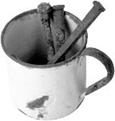 Yeshua is not merely drawing a metaphor here, but addresses their own theology, demonstrating His mastery not only of Torah, but as we have noted before in this series, of Israel’s ritual theology as well. The Mishnah5 says, “If the outside of a vessel has been rendered unclean by liquids, its outside is unclean while its inside, its rim, its handle and its haft are clean. If its inside has been rendered unclean, it is all unclean†(Berakhot 52a).
Yeshua’s declaration on the Pharisees uses their own theology to drive home His point, proving that He was not an uneducated commoner from the Galilee, but a skillful theologian in His own right.
Those who think of this stretch of Matthew is anti-Semitic do well to consider that here we find a master of Jewish Scripture and theology—the Prophet6—and not some upstart carpenter lashing out at detractors. For the multitudes standing there, as well as His disciples, the evidence of his messiahship was becoming more and more concrete.
“O Jerusalem, Jerusalem, who kills the prophets and stones those who are sent to her! How often I wanted to gather your children together, the way a hen gathers her chicks under her wings, and you were unwilling. Behold, your house is being left to you desolate!For I say to you, from now on you shall not see Me until you say, ‘Blessed is he who comes in the Name of the Lord!’†(Matthew 23:37-39).
Here Yeshua is speaking as the Father in heaven with a heart full of compassion and yearning. The warning is that their house7 is being left desolate, and yet, there is a hope too. The phrase “Blessed is he who comes in the name of the Lord,†is the opening blessing in the Jewish wedding ceremony, when the Bridegroom is united with the Bride. If they will but turn—as the prophets of old have said—then there is a redemptive hope.
___
In our next examination of Matthew, we look at chapter 24, and the signs of the “Son of Man.â€
Endnotes
1 Answering Jewish Objections to Jesus: Theological Objections, Volume II, by Michael L. Brown, ©2000, Baker Book House Company, Grand Rapids, Michigan, p. 40
2 Literally, “the way to walk†but more specifically, the code of ethics based on biblical principles on how one lives out one’s faith.
3 It is interesting to note in the commandment regarding the tzit-tzit is that they are not to “follow after†their own heart and their own eyes, the very warning Yeshua is handing down in our Matthew passage.
4 Jewish New Testament Commentary by David H. Stern, ©1992, Jewish New Testament Publications, Clarksville, MD, p. 69, referencing the Encyclopedia Judaica 13:366
5 The 2nd Century predecessor to the Talmud
6 See Deuteronomy 18:15
7 Likely a reference to the future generations of Hebrews (as in “the house of Davidâ€) and not the Temple—doomed for destruction in only four decades.
Â