On Fire and Up to Date

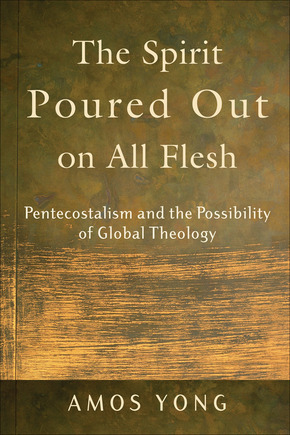
An extended review of Amos Yong, The Spirit Poured Out on All Flesh: Pentecostalism and the Possibility of Global Theology (Baker Academic, 2005). Reviewed by Tony Richie. Read the shorter review in the Winter 2007 issue.

The oft overused term “instant classic” is, of course, an oxymoron. To become a true classic takes time; by definition, it cannot be an instant occurrence. Still, in a less straightforward sense that a potentially classic contribution to the Pentecostal conversation seems immediately apparent, Amos Yong‘s The Spirit Poured Out on All Flesh may indeed be an instant classic. Whether one is interested in diverse Pentecostal origins and activities around the world, Pentecostalism’s inherent ethos as a movement, or an in depth application of its underlying pneumatological theology and spirituality addressing many of the most pressing themes of our day—or all of the above—this book has something solid for you. It can be guaranteed to inform, challenge, provoke, and otherwise stimulate theological thought and praxis. But it is not only an intellectual work but a spiritual one as well. The Spirit Poured Out on All Flesh is “on fire and up to date,” that is, it is filled with both Pentecostal power and contemporary relevance. I am particularly pleased to see this fine offering from a great scholar and good friend by whom I have been personally blessed so very much.

Though Yong addresses general Christianity, he presses home interests and insights from and for Pentecostalism (e.g., multiple dimensions of holistic salvation; a Spirit Christology avoiding subordination or displacement of either Son or Spirit). But for him Pentecostalism is “deep and wide”—his is definitely not a narrow or shallow portrait of the movement. Laying aside sectarianism, Yong includes classical Pentecostals, neo-Pentecostals/Charismatics, and Pentecostal-like groups from around the globe in an ongoing conversation about life and faith in one of contemporary Christianity’s most vital branches of the family tree.
To begin with, the Preface explains a variety of Pentecostal, ecumenical, eschatological, and personal contexts. Here readers detect the diversity driving a theological vision rooted in a unifying pneumatological orientation. Then the Introduction sets the stage by identifying “emerging global issues” forming the foci for what follows in the bulk of the book: multidimensional salvation; pneumatological soteriology and ecclesiology; ecumenical potential; Oneness and Trinitarian identity and plurality; public theology and world religions; and, a theology of creation and science. Everything from Pentecostal history, theology, and spirituality to the politics and practices of racism, feminism, and colonialism are discussed alongside issues of interfaith relations, liberation of oppressed peoples, and the problems and potentials of Spirit-filled walk and witness in a postmodern world. Always Yong exegetes the Scriptures and engages the theological discipline with an increasing command of resources. Convinced that today’s “late modern world” is characterized by increasing complexity and ambiguity, he is nonetheless persuaded “not only that Christian theology can continue to speak in this new global context but also that pentecostal theology in particular can do so” (pp. 17, 18). Indeed, if anything, the remainder of the work amply illustrates the relevance of “world pentecostal theology” (p. 135). Yong clearly elucidates his presuppositions and methodology, which he consistently applies throughout the work. Truly, typically, and distinctively Pentecostal, he builds on a Lukan hermeneutic, a pneumatological framework, and an experiential base while stressing the centrality of Christ and insisting Pentecostals can no longer put off apologetic and systematic theology.
Here is intelligent, articulate thinking that is more than a bit bold at times (e.g., ecumenical/inter-religious emphases). Still, it attempts to anchor even its more speculative suggestions in the best Pentecostal tradition (striving throughout to be “Christ centered and Spirit driven”—pp. 83, 156; cf. pp. 28, 203, 226). Some readers may occasionally question whether Yong always quite pulls that off (e.g., on the provisional authority of the papacy or episcopacy). Those willing to listen long enough to really consider his ideas and their implications will often end up answering in the affirmative. Doubtless, even when disagreeing they will benefit from the process. At times Yong suggests pneumatological theology reinvigorates old doctrines (e.g., integrating atonement theories; more organic, less privatized ecclesiology). At other times he tackles new terrain (e.g., theologically exploring science). We do well to remember his “pneumatological theology of quest” (p. 30). To employ early American pioneer imagery, Yong is a scout more so than a settler, always pushing beyond theological frontiers into uncharted territory; yet he marks well the trails he blazes precisely because he is mindful of those following who are doing the hard work of homesteading necessary for building a lasting spiritual civilization capable of sustaining and nurturing Christian faith and life.
Close to the heart of Yong’s endeavor is conceptualizing Spirit baptism as a broad metaphor for a dynamic and eschatological pneumatological soteriology characterized by less rigidity and more fluidity.1 Accordingly, it could encompass all experience of the Holy Spirit in Christ. In a carefully qualified sense, therefore, Spirit baptism would include initial conversion (justification/new birth), ongoing and entire sanctification (holiness), and charismatic endowment and vocational empowerment through spiritual gifts. Drawing on John Wesley, Yong argues more for a “via salutis” (way of salvation) than an “ordo salutis” (order of salvation) (p. 104). Through an overarching rubric of Spirit baptism salvation can be conceived as a conversionary process of ever intensifying transformation including multiple bilateral (nonhierarchical) stages of spiritual experience on a journey culminating in glory. Salvation as process means, “I was saved, I am being saved, and I will be saved” (p. 118). With this move Yong hopes to avoid stalemate debates about unconditional eternal security, without sacrificing Pentecostal experiences of the Spirit. Not entirely without precedent (cf. “pentecostal pioneer David Wesley Myland”, p. 99 fn. 46), this nevertheless represents an innovative and irenic attempt to take Pentecostal pneumatological soteriology beyond conventional categories. It implies that in different ways at the same time both Pentecostals and their detractors have been both right and wrong on key points! It also affects other interrelated areas in somewhat surprising ways (e.g., a less symbolic, more pneumatic sacramental theology). Questions arise. Have Pentecostals overly dogmatized about dynamic experiences and thereby at least partially undermined their own testimonial purposes? Is any single metaphor broad enough to encompass all Christian experience? What are the possibilities and pitfalls here? Will Pentecostals and the wider Christian community gain ground together? Or do Pentecostals end up giving up hard won land our forefathers and foremothers fought for so sacrificially? Whichever track is taken, wrestling with these issues seems sure to enliven and enrich Pentecostal theology for some time to come.
Many Pentecostals will perhaps wonder how Yong’s dynamic pneumatological theology addresses traditional teachings on subsequence and initial evidence or even the Evangelical litmus test of biblical inerrancy. On inerrancy and initial evidence Yong specifically suggests that his system allows room for faithfully more nuanced understandings and applications but argues that in order to avoid “the letter of a dead law” (p. 297) focus should be fixed more on the Holy Spirit and life in the Spirit rather than legalistic formulations. The doctrine of subsequence receives similar treatment in his idea of ever intensifying multiple experiences in a conversionary process (see above). Yong consciously struggles to consistently maintain continuity with historic classical Pentecostalism even while aiming at creativity in constructs for contemporary contexts. Many Pentecostals for years have testified that Pentecost is not primarily about tongues or doctrine but about experiencing the Holy Spirit. In this Yong agrees. Yet tongues and doctrine are important. Again, Yong agrees. Working out the interrelatedness of such issues is part of his purpose in these avowedly “programmatic essays” (p. 29). We could wish he would already be more explicit, but an implicit promise of more to come is encouraging. I have called The Spirit Poured Out on All Flesh “on fire and up to date” because it retains the spiritual fervor of traditional Pentecostalism while it reaches toward enhanced relevance in today’s context. Striking just the right note will require some working out over time by both Yong and his dialogue partners.2 Is it possible to interpret the sacred tongues of Pentecostalism in language that can be heard and understood by today’s listeners? Yong thinks so. I do too.
A broader view of “charismology” or theology of charismata is also advocated by Yong. He suggests: (1) Abandoning an overemphasis on natural versus supernatural categories as “fallacious dualisms”; (2) Affirming manifestation of the charismata as a sign of the “interpenetration divine and the orders of creation” such as is most obviously also evident in the Incarnation; (3) Acknowledging that the charismata can be cultivated and developed as “Walking in and after the Spirit sharpens our capacity to discern and imitate the Spirit’s ways”; (4) Eliminating tendencies toward self-aggrandizement in operation of charismata; and, (5) Emphasizing the constant need for discernment with the life, death, and resurrection of Jesus Christ serving as “the supreme Christian norm” (pp. 294-96). Yong integrates biblical, theological, philosophical, and pastoral insights in an attempt to achieve an advanced approach to spiritual gifts that conserves charismatic values and vitality, conditions pneumatic practice more openly, and confines all-too-common excesses or abuses. Taken seriously, his suggestions can revolutionize the understanding and operation of the charismata. Yong’s charismology has considerable ability on one hand to elevate our understanding of the gifts of the Spirit to a more sublime level, while, on the other hand, to offer a less elitist, more inclusive operation of spiritual gifts throughout the corporate Body of Christ. In my own opinion, two equal and opposite errors, as C. S. Lewis loved to say, regarding the charismata have to do with either over divinizing until the human element is diminished or destroyed or over humanizing until the divine element is diminished or destroyed. In either case, God’s people cease to be partners with God’s Spirit. And if anything at all ought to be stressed about reception and operation of spiritual gifts it is that they involve God’s people and God’s Spirit in holy partnership.3
One of Yong’s strengths is his skillful use of comparative theology. He is a master synthesizer. He is particularly adept at taking apparently disparate views and demonstrating, without denying their real differences, ways they might appreciate, inform, and enhance one another. Results are never merely condescending or compromising, but always truly creative. He employes this process surprisingly successfully with Christians and non-Christians, Pentecostal Christians and non-Pentecostal Christians, various “liberal/post-liberal” and “conservative” ideologies, Roman Catholics and Pentecostals, and political-sociological agendas and spiritual-individual experiences, and others. Along this line his discussion of Trinitarian and Oneness Pentecostal theology is especially intriguing. Potentially cross-fertilizing concepts of unity and plurality are creatively explored. One suggestion I question, however, is Yong’s admittedly “ambivalent” discussion of possibilities in Oneness theology as points of contact with non-Christian radical monotheists (see pp. 227-31, 264). The idea is that since Jews, Muslims, and Oneness Pentecostals share some form of unitarian monotheism then dialogue on that basis might stimulate better relations. I am cautious here on the basis of two considerations, one practical and the other theological. Before listing them, I should mention that my own extended family has for several years suffered painful and permanent splits centering on controversies over the Godhead. Trinitarian myself by choice rather than by tradition, I have close family and friends in both camps. Undeniably devout persons exist on both sides of the divide. Yet the debate cannot be easily by-passed even from an academic perspective for ideological purposes. My overall sympathy is nonetheless for Amos Yong’s ecumenical and inter-religious objectives.
My practical concern evolves out of an intuition that genuinely effective dialogue between Christians and non-Christians may not be best served by focusing on views imported from outer fringes of Christian faith. Without intending any disrespect to Oneness devotees, they are not representative of the majority of Christianity or even of most Pentecostals. That fact in itself may say little or nothing about their position as such, but it does actually add (not subtract, as implied by Yong) another hurdle to be overcome in efforts at inter-religious dialogue. Even if Jewish, Islamic, and Oneness theologies do gel at some level, most other Christians will still not be on board. In fact, a backlash could occur if other Christians become more convinced than ever that Oneness Pentecostals are after all essentially not really Christian since they are more compatible with non-Christians on the most distinctive (from the Trinitarian perspective) dogma of historic Christian faith. My theological concern arises out of an understanding that although Jews, Muslims, and Oneness Pentecostals share commitments to unitarian monotheism, their systems are radically different at precisely the point they most necessarily would have to converge in order to establish an effective point of contact: Jesus Christ. The main difficulty to hurdle in dialogue with Jews and Muslims is their (to us) misplaced pious horror over Christian commitment to the divinity of Christ. Oneness Pentecostals cannot help us here. They are not the usual unitarians in that they do indeed avidly affirm the deity of Jesus Christ. In fact, Oneness Pentecostalism is a particularly Jesus-centered piety. The debate between Trinitarian and Oneness Pentecostals is not about the divinity of Christ, which both affirm, but about how he relates to the Godhead. Oneness advocates argue that Jesus Christ is the incarnate fullness of the entire Godhead (cf. Colossians 2:9), Trinitarians that he is the Son of God, the Word made flesh (cf. John 1:14). Though they are unitarians, Jesus Christ is as much or, if possible, more of an obstacle for interfaith dialogue from the Oneness perspective as from that of Trinitarians. Dr. Yong, of course, who himself espouses a “robustly trinitarian theology” (p. 111), knows and notes these or related concerns but wonders if they may be overcome. Sadly, I am not so sure.
I am inclined to conclude that the most effective inter-religious dialogue includes candid conversation about who we (meaning both “them” and “us”) really are in our most authentic identity—and for most Christians, including most Pentecostals, that identity is Trinitarian.4 Practically and theologically, I think involving fringe views from Oneness Pentecostals may not be the best way forward for interfaith efforts. Having said all that, there is one way Yong, who is after all perhaps the foremost expert on Pentecostal theology of religions, may not be so far off the mark after all.5 Pentecostalism’s history of internal struggle regarding the Godhead may indeed help prepare us for dialogue with religious others involving the same subject. That statement assumes we can learn to conceive our experience in contructive ways. It will not work if we only regurgitate others’ responses, whether classical, creedal, or contemporary. In other words, after nearly a century of struggle over understandings of the Godhead have Pentecostals learned anything positive that can be passed along or pressed into service? What is the truth Oneness Pentecostals try to preserve? What is the truth Trinitarian Pentecostals refuse to relinquish? And, for the discussion at hand, how does all this inform inter-religious dialogue? Answering these kinds of questions is where Amos Yong shines. And these are the kinds of questions Pentecostals need to ask ourselves.
Reading The Spirit Poured Out on All Flesh is an exciting adventure well worth undertaking. Enjoyment is enhanced in that this is a most readable work. Without sacrificing substance, Yong avoids a pedantic tone and keeps the pace of the text moving along briskly. More advanced scholarly subtleties are adequately theology of nature, is the most obtusely abstract, addressing “the triadic, social, realistic, and semiotic metaphysics of experience” in “a viable framework for interpreting creation, the scientific enterprise, and God for our late modern environment” (p. 302). Yet a crisp, groundbreaking pneumatological theology of nature confronting traditional dualisms and dichotomies of nature-spirit, natural-supernatural, or reason-experience is gripping even here.6 As a matter of fact, the philosophical framework of the entire book’s “dynamic, holistic, and multidimensional soteriology” and “ecumenical, sacramental, and charismatic ecclesiology” (p. 294) is finally here declared most forthrightly. Readability is further fostered by especially well done organization. Attention-getting and attention-directing chapter titles and well marked and cross-referenced section and sub-section headings, beginning and ending with clear, concise overviews and summaries, are helpful indeed. One wishes for a fuller subject index. Overall, Amos Yong has accomplished a most difficult task: writing a deep book with a wide appeal. Most importantly, it has worldwide applicability. Anyone interested in anything about today’s developing Pentecostalism will want to read it. It will make an exceptional textbook for scholars and students.
PR
Publisher’s page: http://bakerpublishinggroup.com/books/the-spirit-poured-out-on-all-flesh/232981
Preview The Spirit Poured Out on All Flesh: http://books.google.com/books/about/The_Spirit_Poured_Out_on_All_Flesh.html?id=65DsASd_ORMC
Notes
1. For an excellent recent survey of various major views regarding Spirit baptism see Perspectives on Spirit Baptism: Five Views, ed. Chad Owen Brand (Nashville: Broadman, 2004). “Spirit Baptism: A Pentecostal Perspective,” pp. 47-104, by Stanley M. Horton, presents the traditional classical Pentecostal viewpoint. “Spirit Baptism: A Dimensional Charismatic Perspective,” pp. 105-80, by Larry Hart, presents a viewpoint with several similarities to that of Yong’s though Yong is more purposely Pentecostal.
2. For a good introduction on the issues at stake, esp. regarding Spirit baptism and initial evidence, see Robert W. Graves, “The Speaking in Tongues Controversy: A Narrative Critical Response, Part 1 of 2”, The Pneuma Review 8:4 (Fall 2005): pp. 6-23.
3. See Tonie Richie, “Transposition and Tongues: Pentecostalizing an Important Insight of C. S. Lewis”, Journal of Pentecostal Theology 13:1 (October 2004), pp. 117-37 (esp. pp. 127-29) for my exploration of this issue.
4. M. Thomas Thangaraj’s Relating to People of Other Religions: What Every Christian Needs to Know (Nashville: Abingdon, 1997) is a good little book for getting an introductory grip on inter-religious relations. Sir Norman Anderson, Christianity and World Religions: The Challenge of Pluralism (Downer’s Grove, IL: InterVarsity Press, 1984) is an Evangelical standard bearer on the subject.
5. For more on Yong’s theology of religions see Tony Richie, “Review of Amos Yong, Discerning the Spirit(s): A Pentecostal-Charismatic Contribution to Christian Theology of Religions“, Journal of Pentecostal Theology Supplement Series 20 (Sheffield, Eng: Sheffield Academic Press, 2000), 392 pages, The Pneuma Review, 8:4 (Fall 2005): pp. 68-71.
6. Elsewhere Amos Yong suggests dialogue between religion and science is “one of two essential conversations” for Pentecostals and other Christians today (the other being between the Christian faith and the world’s religious traditions), “Academic Glossolalia? Pentecostal Scholarship, Multi-Disciplinarity, and the Science-Religion Conversion,” Journal of Pentecostal Theology 14:1 (October 2005): pp. 61-80 (65, fn. 7).
Originally published on November 6, 2006. The shorter review was published in the print edition of Pneuma Review in the Winter 2007 issue.