
The Bible’s Undertaker: Cessationism in Contrast to a Living, Miraculous Christianity


Introduction
Twentieth century Pentecostalism reawakened the world to miracles. The growth of this movement activated individuals in established religion to wrestle with a major player on the world scene of Christianity. Even so, as Pentecostalism expands, the cessationist view resuscitates a theological position that corresponds with the European intellectual development of the late seventeenth and eighteenth centuries named the Enlightenment. The proponents of cessationism believe that their cause is true and just. As a consequence of the strict emphasis on Enlightenment presuppositions in theology, their belief system allows no place for the miraculous in Christian living. The thesis of this paper argues for the clear biblical authority and support for miracles in contrast to the problem of the unbiblical history of cessationism. The topic is divided into five sections. First, a presentation of the problem of cessationism and the purpose of this study is submitted. Second, specific historical figures from church history represent the foundation for cessationism. Third, historical antecedents supporting miraculous experiences are surveyed. Fourth, a theological and biblical critique of cessationism is examined. Fifth, concluding thoughts and reflections on the unbiblical basis for cessationism is contested by the biblical revelation of the miraculous in Christianity.
The problem and study
The purpose of this paper exegetes the faulty presuppositions underlying cessationist opinion. This study examines the historical ethos behind cessationism and buttresses the biblical belief in the miraculous with Holy Scripture. In fact, the modern day cessationist view is not grounded in Scripture but rather in the principles of the Enlightenment, which support the secular American culture. An honest evaluation of cessationism would cause many conservative fundamentalists to reconsider the underpinnings of their belief system.
Notable persons from church history supporting cessationism
Specific historical antecedents for the unbiblical belief in cessationism are copious. Numerous Christians holding a cessationist theology have contributed to this investigation. This section discusses the remarks of five particular people: John Chrysostom, Augustine, John Calvin, B.B. Warfield and John MacArthur. Their outspoken influence creates a thread of unbelief and skepticism enduring two millennia of Christianity.
Living in the late fourth century, John Chrysostom is the Archbishop of Constantinople. He is known as an eloquent preacher and respected by the church. In one of his surviving sermons on 1 Corinthians, he reveals his views on the cessation of the miraculous gifts. In his commentary on 1 Corinthians (Homilies on 1 Corinthians), Chrysostom interprets 1 Cor. 12 and writes concerning the gift of tongues,
This whole place is very obscure; but the obscurity is produced by our ignorance of the facts referred to and by their cessation, being such as then used to occur but now no longer take place. And why do they not happen now? Why look now, the cause too of the obscurity hath produced us again another question: namely, why did they then happen, and now do so no more?[2]
Chrysostom’s noted comments are just the beginning of historic cessationism.
One of the famous theologians and Christian philosophers is the Bishop of Hippo in the Roman province of Africa named Augustine. In his previous writings, Augustine composed observations expressing a belief that miracles discontinued in his generation. He asserts,
We have heard that our predecessors, at a stage of faith on the way from temporal things up to eternal things, followed visible miracles. They could do nothing else. And they did so in such a way that it should not be necessary for those who came after them. When the Catholic Church had been founded and diffused throughout the whole world, on the one hand miracles were not allowed to continue till our time, lest the mind should always seek visible things, and the human race should grow cold by becoming accustomed to things which when they were novelties kindled its faith. On the other hand we must not doubt that those are to be believed who proclaimed miracles which only a few had actually seen, and yet were able to persuade whole peoples to follow them. At that time the problem was to get people to believe before anyone was fit to reason about divine and invisible things.[3]
In addition, his homily on First John explains that speaking in tongues was a miracle suitable for the early church, but that it was no longer evident in his time.[4] Chapters eight and nine of Book XXII of The City of God, written circa A. D. 425, Augustine notes that miracles in his day are not as spectacular or noteworthy as those at the dawn of Christianity, but they continue to take place.[5] However, Augustine’s belief in the supernatural wanes throughout his lifetime. He eventually records, “in the earliest times, the Holy Spirit fell upon them that believe and they spoke with tongues, which they had not learned, as the Spirit gave them utterance. These were signs adapted to the time. For there was this betokening of the Holy Spirit in all tongues [languages] to show that the gospel of God was to run through all tongues over the whole earth. That thing was done for a sign, and it passed away.â€[6] Augustine’s impact on cessationism has swayed many people in the church to oppose the miraculous in Christianity.
During the birth of the Wesleyan revivals, Higher Life and Azusa Street era, Calvinist minister B. B. Warfield (1851-1921) became a major cessationist promoting that miracles exist only for past history. In his book Counterfeit Miracles he combats the growing enthusiasm with his cessationist arguments. “Warfield taught that miracles ceased with the death of the last apostle and that, once the Church had been established, demons had been banished and could no longer harm Christians.â€[9] J. E. Meeter notes the foundation supporting the famed cessationist’s belief:
It is the distinction of Christianity that is has come into the world clothed with the mission to reason its way to its dominion. Other religions may appeal to the sword, or seek some other way to propagate themselves. Christianity makes its appeal to right reason, and stands out among all religions, therefore, as distinctively “the Apologetical religion.†It is solely by reasoning that it has come thus far on its way to its kingship, and it is soley by reasoning that it will put all its enemies under its feet.[10]
Warfield’s appeal to reason in the Princeton Seminary environment grounds his thought process to reject miraculous experiences based on natural theology.
Radio Bible teacher John MacArthur describes the conviction of those who believe in miraculous experiences as continuationism.[11] Desiring not to employ charismatic theology’s terms, he opposes the miraculous work of the Spirit with fundamentalist vocabulary. In MacArthur’s rigid worldview, those seeking prayer for healing, tongues, prophesy, and a sense God’s presence in an emotional manner have stepped beyond the pale of orthodoxy. He teaches that “the apostolic gift of healing has ceased.â€[12] In addition, his popular radio program Grace to You and ministry institute The Masters College have spread the cessationist view to a large segment of conservative evangelical Christianity.
Historical antecedents supporting the miraculous in church history
Historically, miraculous experiences in Christianity have their advocates. At the close of Jesus’ ministry, he declares in John 14:11-14,
Believe me when I say that I am in the Father and the Father is in me; or at least believe on the evidence of the works themselves. Very truly I tell you, whoever believes in me will do the works I have been doing, and they will do even greater things than these, because I am going to the Father. And I will do whatever you ask in my name, so that the Father may be glorified in the Son. You may ask me for anything in my name, and I will do it.
For twenty-one centuries the church has observed and recorded miraculous experiences. Jesus proclaims that his followers would do “greater things†than he accomplished. The extraordinary miracles of God in the lives of Roman Catholics include visions, prophecy, physical healings, and speaking in tongues. Francis MacNutt writes that “Catholics seem to be more open to healing prayer and the other charismatic gifts—even prayer in tongues—than are many evangelicals.â€[13] This section of the paper will deal with the topic of miraculous experiences in the early church, the reason for their disappearance, and their renewal in the twentieth century.

Showcase of an urn shop in Nice, France. Image: Ikar.us / Wikimedia Commons.
Jesus teaches his disciples that demons are subject to his Name (Luke 10:17-19). The primitive church is filled with stories of triumphs over Satan. “The early church kept a lively practice of the baptism in the Spirit…[and] carried on Jesus’ healing and deliverance ministries.â€[14] Noted church fathers testify to this knowledge. “Tertullian claimed that the noblest Christian life is to exorcise evil spirits—to perform cures.â€[15] Also, “Justin Martyr, who wrote around A. D. 150, stated that Christians were able to drive out those demons that the pagans were helpless in casting out.â€[16] Others such as “church father Origen (martyred ca. 253), noted that Christians cast out demons merely by prayer and simple adjurations which the plainest person can use.â€[17] However, Jack Hayford aptly observes that “the Roman emperor Constantine’s conversion and the emergence of ‘Christendom’ in the fourth century brought an even more dramatic loss of charismatic activity.â€[18] Not only was the church weak in influence, but she lost the mission of Jesus to save and heal. “The Catholic mystical tradition continued to allow for a few saints possessed of ‘heroic holiness’ to exercise some of the gifts, but such holiness was reserved, in the minds of most, for the clergy and religious (bishops, priests, monks, and nuns), not for the masses of ordinary Christians.â€[19] Eventually, “by the year 800—more or less—a desire for baptism with the Holy Spirit had disappeared.â€[20] Following the collapse of the Roman Empire, an intellectual darkness and economic regression occurred in Europe. The dark ages and crusades caused the Church to neglect the miraculous ministry that Jesus promised. For centuries, the miracles of Christ are limited to relics, apparitions and veneration of the saints.
According to Newbigin, the first was the Catholic tradition which emphasized continuity, orthodoxy, and the importance of the sacraments to the life of the church. The Protestant tradition, on the other hand, emphasized the centrality of the scriptures and the importance of the proclaimed word of God. The Pentecostals added to these two historic expressions of the faith an emphasis on the present action of the Spirit in the church through the gifts of the Holy Spirit. According to Newbigin, the church needed all three emphases in order to be a powerful force in the modern world.[23]
Jack Hayford recognizes that God through Pentecostalism is “at work renewing and moving His church along in His purposes just as He has done for the last two thousand years.â€[24] Thus, though the church began with powerful miracles, the formalized structure of the church and cessationism caused a decline in miraculous experiences. Still, through the Pentecostal movement, God has been rekindling the charismatic gifts for a new generation.
A theological and biblical critique of cessationism
Cessationists believe in Scripture but have no expectation that God supernaturally intervenes in humankind. R. T. Kendall states that “cessationists have chosen to believe that God does not reveal Himself directly and immediately.â€[25] For the cessationist, God has sovereignly decided not to demonstrate his power. Jon Ruthven maintains, “during the Enlightenment, the basis of religious authority underwent a profound shift: from the Protestant basis of biblical authority to the human authority of perception and reason. The Enlightenment era is generally regarded as the watershed in thought about miracles.â€[26] Hence, God withholds miracles because the Bible is all that is necessary for Christian faith and practice.
New Testament passages supporting miraculous experiences
The ministry of Jesus is to preach, teach, and heal. Matthew 9:35 says “Jesus went through all the towns and villages, teaching in their synagogues, proclaiming the good news of the kingdom and healing every disease and sickness.†This verse contains the threefold aspect of Jesus’ vocation. Everywhere he walks he preaches the Gospel, heals the sick, and teaches the way of the Father. Nearly every ministry day includes the three mainstays of what Jesus Christ considers the Gospel: preaching, teaching, and healing hurting humanity from the bonds of Satan. Those in the liberal camp of the historical Jesus seminar believe Jesus performs no miraculous works; perhaps a few psychosomatic healings; consequently, the apostles and church invented the healing pericopes. Cessationists insist that miracles occur in biblical days, and expect a wondrous return of Christ in the clouds, but no supernatural ministry should be legitimized at present. Miraculous healing ceased after the first century, and modern claims from preachers in Pentecostal Christianity are suspect at best. These elaborate theories of cessationism lose not only the power that Jesus’ ministry commissioned, but his compassion as well.
Furthermore, miracles and healings have not ceased after the apostolic age, but have continued through the entire church age. To be sure, large portions of the church lost the original vision, but various individuals and groups are found at any period of history healing the sick, casting out demons, prophesying and working miracles. Since the Pentecostal revival of the early twentieth century, such phenomena have become widespread. In fact, the second largest assembly of Christians in the world (after the Roman Catholics) is people who believe in the baptism in the Holy Spirit with signs following.
The ministry of the apostle Paul is characterized by healings and miracles. His dramatic conversation to Christ in Acts 9:1-18 commences his miracle ministry and the restoration of sight is his first personal miracle. Additionally, Luke records several events in Acts of healings and exorcisms. A list of the recorded miracles of the apostle Paul from the New Testament includes,
Paul’s first missionary journey:
- Acts 13:6-11 Paul strikes Bar-Jesus (Elymas) the sorcerer blind on Cyprus for trying to turn the proconsul Sergius Paulus from the faith.
- Acts 14:3 Paul enabled to do miraculous signs and wonders at Iconium.
- Acts 14:8-10 Paul heals a man lame since birth in Lystra.
- Acts 14:19-20 Paul survives being stoned in Lystra.
Paul’s second missionary journey:
- Acts 16:16-18 Paul heals a demon-possessed girl in Philippi after she follows him and interferes with his preaching.
- 1 Thess. 1:4-5 Paul performs miracles during his stay in Thessalonica.
Paul’s third missionary journey:
- Acts 19:11-12 Miraculous healing of those who touch Paul’s garments and handkerchiefs during his eighteen months in Ephesus.
- Acts 20:9-11 Paul brings Eutychus back to life after he falls from a second story window during a late night meeting of the church in Troas.
Paul’s journey to Rome:
- Acts 28:3-6 Paul survives snakebite on the island of Malta.
- Acts 28:7-8 Paul heals the father of Publius on Malta.
- Acts 28:9 Paul heals the sick on Malta.
Thus, throughout his labors he retains the miraculous ministry that Jesus initiated in his time on earth. Paul is not a cessationist or one who denies the supernatural ability of God. Graham Twelftree says of the apostle in Paul and the Miraculous, “the historical Paul is to be understood not only in terms of his theological enterprise, but also through taking into account his life and work, which includes his understanding and experience of the miraculous and the place of miracle working in his mission.â€[27] In addition, in 1 Corinthians he encourages the gifts of miracles, healing, tongues and discerning of spirits (1 Cor. 12) and writes in his second letter “I persevered in demonstrating among you the marks of a true apostle, including signs, wonders and miracles†(2 Cor. 12:12).[28] Hence, Paul certainly supports the miraculous in the life of a believer.
Developing a theology that supports miraculous experiences must begin with taking apart the arguments advanced by cessationists. Pentecostals maintain that all the spiritual gifts, including tongues, prophecy and healing, remain in operation since the days of the apostles. However, cessationists contend that the revelatory gifts have not functioned in the church since the close of the apostolic age. A key battleground passage of scripture for debate is 1 Cor. 13:8-10. Jon Ruthven insightfully acknowledges that “1 Cor. 13:8-13 is perhaps the locus classicus in the discussion on the continuation of spiritual gifts.â€[29] For the purposes of this section, the King James Version is utilized. Paul pens in 1 Cor. 13:8-10,
Charity never faileth: but whether there be prophecies, they shall fail; whether there be tongues, they shall cease; whether there be knowledge, it shall vanish away. For we know in part, and we prophesy in part. But when that which is perfect is come, then that which is in part shall be done away.
Sandwiched between two chapters highlighting a proper understanding on the spiritual gifts, his instruction teaches that certain gifts will cease when “the perfect is come†(1 Cor. 13:10, KJV). The question is, “what does Paul mean by ‘the perfect?’†This slice of scripture presents an exegetical and hermeneutical interpretation that must place the meaning in context with Paul’s letter and teaching to the Corinthian church.
The interpretation of the word Ï„Îλειον has a monumental impact on this crucial debate. Though the King James Version and older translations have “perfect,†the accurate translation of the word is “complete, bring to an end, finish, accomplish.â€[30] Thus, completeness is a better understanding of the word Ï„Îλειον. In other words, when we are with the Lord in complete condition with him “face to face†(1 Cor. 13:12), the partial revelations of all the gifts will be removed for the perfect or complete disclosure of knowing God in all his fullness. That is why Paul metaphorically admits “we see through a glass, darkly†(1 Cor. 13:12). A state of wholeness and completeness serves as a better interpretation of the word in its context. Typically, cessationists teach that the conclusion of the canonical Bible by the last living apostle denotes that the miraculous gifts are no longer necessary. God bestows the gift to establish the church, hence, the Bible contains the only source for revelation in the church and equipping the saints (2 Tim. 3:16-17). Thus, because the Bible exists, there is no need for miracles or spiritual gifts. This interpretation cannot be supported exegetically in Scripture’s context. Reformed minister D. Martyn Lloyd-Jones rejects this idea expounding,
It means that you and I, who have the Scriptures open before us, know more than the apostle Paul of God’s truth…It means that we are altogether superior …even to the apostles themselves, including the apostle Paul! It means that we are now in an position which…‘we know, even as also we are known’ by God…indeed, there is only one word to describe such a view, it is nonsense.[31]
The notion of a completed canon is foreign to the apostle at the moment of his writing and such a notion forces him to address a topic that is not on his mind. In addition, those who support this flawed opinion disregard Paul’s earlier admonition when he wrote in 1 Cor. 2:10-13,
These are the things God has revealed to us by his Spirit. The Spirit searches all things, even the deep things of God. For who knows a person’s thoughts except their own spirit within them? In the same way no one knows the thoughts of God except the Spirit of God. What we have received is not the spirit of the world, but the Spirit who is from God, so that we may understand what God has freely given us. This is what we speak, not in words taught us by human wisdom but in words taught by the Spirit, explaining spiritual realities with Spirit-taught words.
Cessationists forget that on this side of eternity the same letter promises the illuminating ministry of the Holy Spirit who would search and disclose the deep ideas of God to believers.
Several logical criticisms from Scripture require discussion. If the spiritual gifts of prophecy and knowledge ceased, why does Peter’s declaration in his first sermon (Acts 2:17-21) quote Joel 2:28-32 depicting future prophesying? In addition, Revelation 11:1-6 describes two witnesses prophesying in a forthcoming era of human history. Stating that knowledge ceased is incompatible with present reality. Obviously, knowledge has not ceased and the gift of teaching continues in the church. The cessationist view is based on western European Enlightenment presuppositions that negate the supernatural and define God’s present ability with empirical scientific realities. In his magnum opus, Truth and Method, Hans-Georg Gadamer criticizes the Enlightenment as a methodology of understanding Scripture and argues that these notions produce false prejudices about the interpretation of history.[32] His book tackles the Enlightenment prototype that science is the only legitimate means to decipher life. Thus, western civilization’s acceptance of the Enlightenment has intrinsic weaknesses in its processes.[33] Cessationists incorrectly assume that those who accept a miraculous view will promote heretical movements that are incongruent with Scripture. Yet, any responsible and reasonable Pentecostal identifies that revelation which does not harmonize with scripture is false revelation. Thus, the cessationist view is not tenable by Scripture and church history (Roman Catholic and Protestant) demonstrates the obvious continuation of the gifts.
Conclusion
The unbiblical claims made by cessationism are filled with disingenuous comments toward those who believe in the miraculous and the Holy Spirit. John MacArthur is a familiar critic of charismatic theology. He unfairly claims that “charismatics treat Him [the Holy Spirit] like an impersonal force of ecstatic energy and evangelicals have generally reduced Him to the caricature of a peaceful dove.â€[34] MacArthur believes charismatics are guilty of an unhealthy focus on the Holy Spirit and that the Spirit points only to Jesus. Yet, Jesus teaches about the Holy Spirit and His powerful work is highlighted in the book of Acts and the epistles. Certainly, the Spirit desires to extend all the credit to Christ, but it is a mistake to ignore the Spirit or limit His power. The church requires God’s miraculous power in a world imbued with satanic manipulation.
– R. T. Kendall
 On the issue of tongues, MacArthur continues his unfounded analysis. He charges that “there is no New Testament warrant for the modern charismatic practice of vainly repeating gibberish, either at home by oneself or especially at church during a group session of indecipherable mass numbers.â€[36] He completely dismisses tongues as psychobabble contending that “all efforts to reconcile the biblical miracle of speaking foreign languages and the modern practice of nonsensical jabber fail.â€[37] Ultimately, MacArthur ignores the Pauline injunction “covet to prophesy, and forbid not to speak with tongues.†(1 Cor. 14:39).
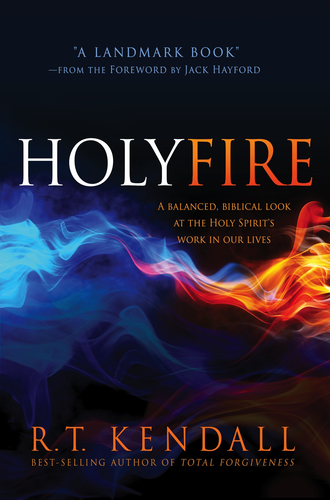
On the other hand, reformed charismatic R. T. Kendall discerns that MacArthur’s “cessationism quenches the Spirit.â€[38] His significant book Holy Fire presents a balanced biblical example the Holy Spirit’s work. Kendall aptly perceives the motives of cessationism as he notes,
Cesssationism is a hypothesis. It is not a teaching grounded in Holy Scripture—like the virgin birth, the deity of Christ, the resurrection of Jesus, and salvation by the blood of God’s Son. Cessationists have chosen to believe that God does not reveal Himself directly and immediately today.[39]
Regrettably, those who follow the principles of cessationism have adopted a secular Enlightenment worldview to justify their beliefs. It is telling that both fundamentalists and liberal historical criticism utilize Enlightenment concepts as the basis for their presuppositions. Mainline Protestant Christianity rarely aligns itself with fundamentalism and yet on this topic, they are in unison.
PR
Â
Â
Notes
[1] Jon Ruthven, On the Cessation of the Charismata: The Protestant Polemic on Postbiblical Miracles Journal of Pentecostal Theology Supplement Series, no. 3, ed. John Christopher Thomas, Rick D. Moore, and Steven J. Land. (Sheffield: Sheffield Academic Press, 1993), 3.
[2] Gerald Bray, ed. 1,2 Corinthians. Ancient Christian Commentary on Scripture New Testament Vol. VII. (Downers Grove, IL: InterVarsity Press, 1999), 146.
[3] J.H.S. Burleigh, ed. Augustine: Earlier Writings, Library of Christian Classics (Philadelphia: Westminster Press, 1953), 248.
[4] Translated by H. Browne, From Nicene and Post-Nicene Fathers, First Series, Vol. 7. Edited by Philip Schaff. (Buffalo, NY: Christian Literature Publishing Co., 1888.) Revised and edited for New Advent by Kevin Knight. Accessed August 14, 2014, http://www.newadvent.org/fathers/170206.htm.
[5] Translated by Marcus Dods, From Nicene and Post-Nicene Fathers, First Series, Vol. 2. Edited by Philip Schaff. (Buffalo, NY: Christian Literature Publishing Co., 1887.) Revised and edited for New Advent by Kevin Knight. Accessed August 14, 2014, http://www.newadvent.org/fathers/120122.htm
[6] Augustine, From Nicene and Post-Nicene Fathers, First Series, cf. Schaff, Homilies on the First Epistle of John, 6.10. 7:497–98. Accessed August 14, 2014. http://www.ccel.org./schaff/npnf107.toc.html
[7] John Calvin, Commentary on Matthew, Mark & Luke, vol. 3; Matthew 28:16-20; Mark 16:15-18. Accessed 20 June 2010, http://www.ccel.org/ccel/calvin/calcom33.ii.li.html
[8] John Calvin, Institutes of the Christian Religion, The Library of Christian Classics, ed. by John T. McNeill, trans. by Ford Lewis Battles (Westminster John Knox, 1950), 18.
[9] Francis MacNutt, The Nearly Perfect Crime: How the Church Almost Killed the Ministry of Healing (Grand Rapids, MI: Chosen Books, 2005), 180.
[10] J. E. Meeter, ed. Selected Shorter Works of Benjamin B. Warfield Vol. 2 (Phillipsburg, NJ: P & R Publishing, 2001), 98.
[11] John MacArthur, Strange Fire (Nashville, TN: Nelson Books, 2013), 96.
[12] Ibid., 176.
[13] MacNutt, 162.
[14] Ibid., 82.
[15] Ibid., 83.
[16] Ibid., 84.
[17] Ibid., 83.
[18] Hayford, Jack H. and S. David Moore, The Charismatic Century: The Enduring Impact of the Azusa Street Revival. (Nashville, TN: Warner Faith, 2006), 22.
[19] Vinson Synan, The Century of the Holy Spirit (Thomas Nelson, 2001), 21.
[20] MacNutt, 96.
[21] MacNutt, 188.
[22] Donald W. Dayton, Theological Roots of Pentecostalism (Grand Rapids, MI: Zondervan
Publishing House, 1987), 136.
[23] Vinson Synan, In the Latter Days (Ann Arbor, MI: Servant Books, 1984), 139-40.
[24] Hayford, 44.
[25] R.T. Kendall, Holy Fire (Lake Mary, FL: Charisma House, 2014), 113.
[26] Ruthven, 24.
[27] Graham Twelftree, Paul and the Miraculous: A Historical Reconstruction (Grand Rapids, MI: Baker Academic, 2013), 26.
[28] All scriptural references are from the New International Version of the Bible unless otherwise noted.
[29] Ruthven, 131.
[30] Bauer, Danker, Arndt and Gingrich, A Greek-English Lexicon of the New Testament and Other Early Christian Literature 2nd edition, (Chicago: University of Chicago, 1979), 809.
[31] D. Martyn Lloyd Jones, Prove All Things (Eastbourne, England: Kingsway, 1985), 32-33.
[32] Gadamer, Hans-Georg, Truth and Method 2nd Edition, Trans.: Joel Wiemsheimer & Donald G.M, (London, Sheed & Ward, 1989), 239.
[33] Ibid., 210-214.
[34] MacArthur, 181.
[35] Ibid., 74.
[36] Ibid., 151.
[37] Ibid., 236.
[38] Kendall, 117.
[39] Ibid., 113.
[40] MacNutt, The Nearly Perfect Crime 95.
[41] Francis MacNutt, The Power to Heal (Notre Dame, IN: Ave Maria Press, 1978), 129.
[42] Scanlan, Michael, Let the Fire Fall (Ann Arbor, MI: Servant Books, 1986), 111.
Â
Bibliography
Bauer, Danker, Arndt and Gingrich. A Greek-English Lexicon of the New Testament and Other Early Christian Literature. 2nd edition, Chicago, IL: University of Chicago, 1979.
Bray, Gerald. ed. 1,2 Corinthians. Ancient Christian Commentary on Scripture. New Testament. Vol. VII. Downers Grove, IL: InterVarsity Press, 1999.
Burleigh, J.H.S. ed. Augustine: Earlier Writings, Library of Christian Classics. Philadelphia: Westminster Press, 1953.
Calvin, John. Institutes of the Christian Religion, The Library of Christian Classics. ed. by John T. McNeill, trans. by Ford Lewis Battles. Louisville, KY: Westminster John Knox, 1950.
Dayton, Donald W. Theological Roots of Pentecostalism. Grand Rapids, MI: Zondervan Publishing House, 1987.
Gadamer, Hans-Georg. Truth and Method. 2nd Edition, Trans.: Joel Wiemsheimer & Donald G.M, London, Sheed & Ward, 1989.
Hayford, Jack H. and S. David Moore. The Charismatic Century: The Enduring Impact of the Azusa Street Revival. Nashville, TN: Warner Faith, 2006.
Kendall, R.T. Holy Fire. Lake Mary, FL: Charisma House, 2014.
Lloyd-Jones, D. Martyn. Prove All Things. Eastbourne, England: Â Â Kingsway, 1985.
MacArthur, John. Strange Fire. Nashville, TN: Nelson Books, 2013.
MacNutt, Francis. The Nearly Perfect Crime: How the Church Almost Killed the Ministry of Healing. Grand Rapids, MI: Chosen Books, 2005.
MacNutt, Francis. The Power to Heal. Notre Dame, IN: Ave Maria Press, 1978.
Meeter J. E. ed., Selected Shorter Works of Benjamin B. Warfield. Vol. 2. Philippsburg, NJ: P & R Publishing, 2001.
Ruthven, Jon. On the Cessation of the Charismata: The Protestant Polemic on Postbiblical Miracles. Journal of Pentecostal Theology Supplement Series, no. 3, ed. John Christopher Thomas, Rick D. Moore, and Steven J. Land. Sheffield: Sheffield Academic Press, 1993.
Scanlan, Michael. Let the Fire Fall. Ann Arbor, MI: Servant Books, 1986.
Synan, Vinson. In the Latter Days. Ann Arbor, MI: Servant Books, 1984.
Twelftree, Graham. Paul and the Miraculous: A Historical Reconstruction. Grand Rapids, MI: Baker Academic, 2013.
Electronic Articles
Augustine, From Nicene and Post-Nicene Father, First Series, cf. Schaff, Homilies on the First Epistle of John, 6.10. 7:497–98. Accessed August 14, 2014. http://www.ccel.org./schaff/npnf107.toc.html
Calvin, John. Commentary on Matthew, Mark & Luke, vol. 3; Matthew 28:16-20; Mark 16:15-18. Accessed 20 June 2010. http://www.ccel.org/ccel/calvin/calcom33.ii.li.html
Translated by H. Browne. From Nicene and Post-Nicene Fathers, First Series, Vol. 7. Edited by Philip Schaff. (Buffalo, NY: Christian Literature Publishing Co., 1888.) Revised and edited for New Advent by Kevin Knight. Accessed August 14, 2014. http://www.newadvent.org/fathers/170206.htm
Translated by Marcus Dods. From Nicene and Post-Nicene Fathers, First Series, Vol. 2. Edited by Philip Schaff. (Buffalo, NY: Christian Literature Publishing Co., 1887.) Revised and edited for New Advent by Kevin Knight. Accessed August 14, 2014. http://www.newadvent.org/fathers/120122.htm








Who wants yesterday’s paper? That is all that the Bible without the action narrative is. I quit a cessationist church in 3d grade because it was BORING and, although a heathen myself, I had outgrown it. I really don’t know how cessationism survives. I have a Jewish friend who claims they are few in number vs. Christians because they “don’t have an end to their story” and we do. Cessationist’s story has ended, plain and simple, and then they wonder why they can’t get people in church.