Basil the Great: On the Holy Spirit

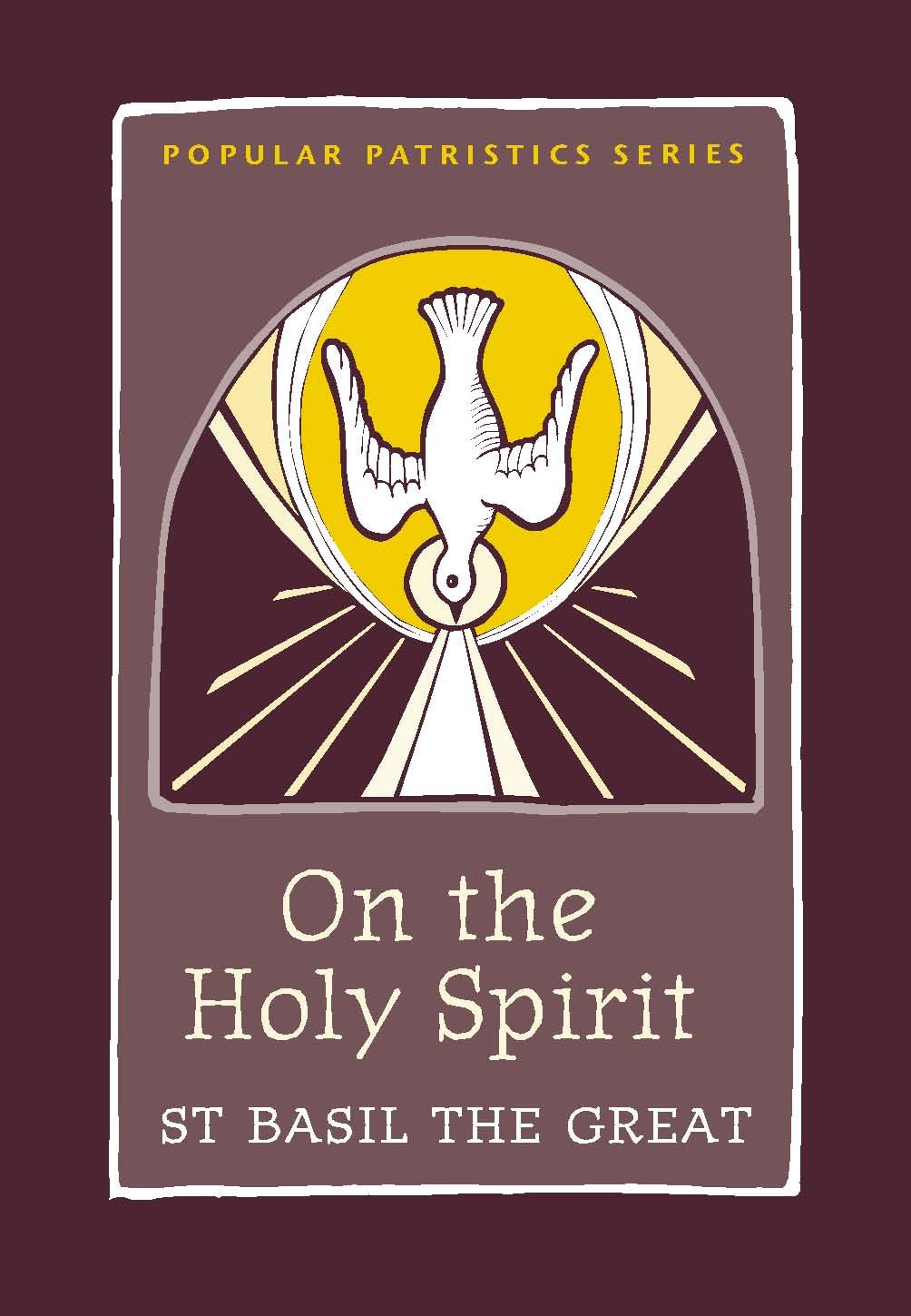
 Basil the Great, trans. Stephen Hildebrand, On the Holy Spirit, Popular Patristics (Yonkers, NY: St. Vladimir’s Seminary Press, 2011).
In the fourth century after Christ, with the full deity of the Third Person of the Trinity at stake, St. Basil the Great comes firmly establishing a scriptural basis for the divinity of the Holy Spirit. This book review analyzes the theological underpinnings of St. Basil’s treatise On the Holy Spirit. In an age when Arian theology holds official sway over the people, St. Basil contends for the faith utilizing Holy Scripture and tradition as his guide. On the Holy Spirit was his magnum opus on the Spirit’s position in the Godhead of the Trinity. In this exposition, he set the theological foundation for the future of orthodox trinitarian theologia.

St. Basil began his treatise addressing the accusation the Arians brought against him. He wrestled with the “hair-splittingâ€[1] that the Arians created as they speciously differentiated between the Father, Son, and the Holy Spirit. Heretic Aëtius stated that “‘through whom’ is different than ‘from whom’; therefore, the Son is different from the Father.â€[2] He asserted that St. Basil’s doxology “glory be to the Father, with the Son, together with the Holy Spirit†was unscriptural. However, St. Basil attributed such meticulous manipulation of prepositions by his opponents on their reliance of pagan philosophy. In the end, he accused his adversaries of striving to subordinate the Holy Spirit through their pagan distinctions.
St. Basil believed that the Scriptures affirmed both “through him’ and “from him.†He quoted the apostle Paul’s doxology in Romans 11:36 (NRSV) “for from him and through him and to him are all things. To him be the glory forever. Amen.†Holy Scripture did not follow the pattern proposed by the Arians. Therefore, their exploitation of pagan fetishes became the epistemological springboard for St. Basil to commence his treatise on the divinity of the Holy Spirit.
The initial debate with St. Basil centered over his doxology. Specifically, the axis of the deliberation focused on the Holy Spirit. For St. Basil, the Holy Spirit was divine. Quoting Scriptures from Wisdom 1:7; Psalm 138:7 and Haggai 2:4-5, he asked several piercing questions about the divinity of the Holy Spirit.
What sort of nature should he be thought to have, who exists everywhere and co-exists with God? … Should we not exalt him who is divine in nature, unbounded in greatness, powerful in his energies, and good in his deeds? Should we not glorify him?[3]
The fundamental core of his questions affirmed that he unconditionally embraced the divine nature of the Holy Spirit. The Spirit lacks nothing less of God and his attributes were not characteristics of a created being.
The unity of the Godhead reflected the work of the Holy Spirit. St. Basil testified, “now the greatest sign of the Spirit’s union with the Father and the Son is that he is said to be related to God as our spirit is to each of us.â€[8] The cooperation of the three persons in unity revealed both the divinity of the Holy Spirit as well as the unity of the Holy Trinity. Therefore, God was one, sharing the one divine essence (οá½ÏƒÎ¯Î±). The Spirit was unique and shared the common nature of the Holy Trinity.
St. Basil’s theology acknowledged both the essence (οá½ÏƒÎ¯Î±) and distinct persons (ὑπόστᾰσις) of the Holy Trinity. He defined οá½ÏƒÎ¯Î± as “the goodness of the will, which, because it is coincident with substance, is considered similar and equal, or rather the same, in the Father and the Son.â€[9] In addition, St. Basil protested against the “Spirit-fightersâ€[10] and engaged Holy Scripture demonstrating their faulty logic about the Spirit. Also, he refuted the modality of the followers of Sabellius with the meaning of ὑπόστᾰσις stating “if they say that the persons are divided by being three, there are three even if they wish not; or let them destroy the divine Trinity altogether.â€[11] His sarcasm surfaced in the midst of his defense as he championed the equality of the Spirit with the Father and Son. Indubitably, he endured the battle with holy valor.
The doctrine and theologia of the Holy Trinity avowed that there was one God, in three persons, Father, Son, and Holy Spirit. Although the teaching as such was not fully explicated in the NT, the raw materials were stated in the Christian worship practice and experience. It was important to note the biblical witness which led St. Basil to contend for its veracity. In Scripture, unity and equality linked the three persons of the Trinity. In the baptismal formula in Matthew’s gospel we read “in the name of the Father and of the Son and of the Holy Spirit†(Matt. 28:19). This same traditional formula found development in later writings such as the Didache 7:1-4 and Justin’s Apology (1.61). In addition, the Pauline corpus of 2 Corinthians discovered this basic rubric of trinitarian belief. In his benediction to the church in Corinth he penned these words, “the grace of the Lord Jesus Christ, the love of God, and the communion of the Holy Spirit be with all of you†(2 Cor. 13:13). Certainly, the apostle’s words sanctioned the root of the mystery of the Holy Trinity. One can understand why St. Basil and the church dedicated their reasoning to contend for the doctrine.
St. Basil’s refutation of the Arians’ charge against his teaching as innovative initiated his writing On the Holy Spirit. His great work demonstrates the frivolity of their arguments. Without a doubt, the Holy Trinity and the Holy Spirit’s position in the Godhead are one of the distinct tenets of Christianity. A proper discernment of the Holy Spirit is crucial to understanding the Holy Trinity. His relationship with the Father and Son is significant to understanding his position in the Godhead. Therefore, not only is he equated with divine essence (οá½ÏƒÎ¯Î±), but there is relationship between each person (ὑπόστᾰσις) and ultimately with the spiritual life of humankind.
Reviewed by Cletus Hull
Notes
[1] St. Basil the Great. Popular Patristics Series. trans. (trans. Stephen Hildebrand. Yonkers, NY: St. Vladimir’s Seminary Press, 2011), 30.
[2] Ibid., 30.
[3] Ibid., 92-93.
[4] Ibid., 45.
[5] Ibid., 78.
[6] Ibid., 73.
[7] Ibid., 52-53.
[8] Ibid., 75.
[9] Ibid., 51.
[10] The Spirit-fighters or pneumatomachians, confer decreasing essence to the Holy Spirit, as the Arians granted to the Son. See St. Basil’s scrutiny of their opinions in On the Holy Spirit, 57-58.
[11] Ibid., 112.
[12] Ibid., 122.