An expert in European Pentecostal history, Geir Lie, introduces readers to his in-depth look at Pentecostal pioneer T. B. Barratt and the early emphasis of Pentecostals that has often been forgotten.
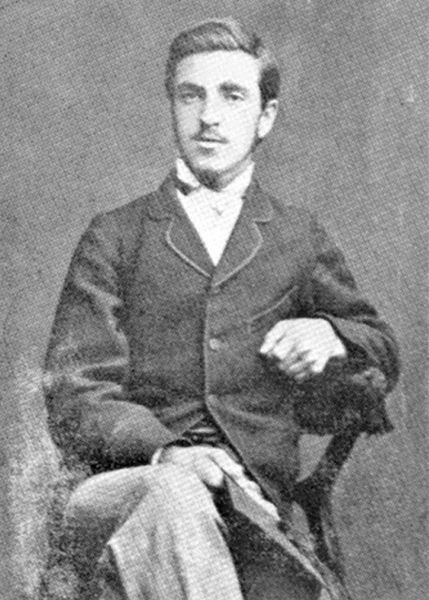
The history of Thomas Ball Barratt (1862-1940) and his role in the origins of not only the Pentecostal movement in Norway, but in most countries within Western Europe, is fairly well known among Pentecostal scholars. The purpose of this article is partly to challenge a previous claim that Norwegian Pentecostalism in its initial stage did not reflect the missionary tongues concept. What is implied by that claim is that speaking in tongues was not the most characteristic feature of the early Pentecostal movement, contrary to what many tend to believe. In fact, tongues speech was generally understood to be secondary to and arising out of what could be characterized as a millenarian belief system.
Early Pentecostals believed Christ’s imminent return would be preceded by a world-wide revival, and the gift of missionary tongues would function as a tremendous evangelistic tool.
It is common knowledge among Pentecostal scholars that Charles F. Parham, who gave notoriety to the initial-evidence Spirit baptism teaching in the USA, preached a millenarian message. Christ’s imminent return would be preceded by a world-wide revival, and the gift of speaking in tongues (not understood as glossolalia but instead as xenolalia) would function as a tremendous evangelistic tool, as it implied speaking existing human languages. Tongues speech was actually the very key to spreading the Gospel effectively to all corners of the world, which, in turn, would usher in the return of Christ. The understanding of tongues as an eschatological sign and as a legitimization of the missionaries’ end-time message, however, only lasted through 1908-9 as several returned to their home country in disappointment and failure, although Parham never abdicated from this doctrine. From about 1909, tongues were redefined as a ‘heavenly language’ (now understood as glossolalia), although God, exceptionally, might give somebody a human language they had never learned naturally (xenolalia), as was the case with the 120 believers on the Day of Pentecost. This redefinition of the purpose of tongues speech was not published from the rooftops, though, and gradually people seemed to forget that the concept of missionary tongues was no minority position, but rather, the accepted belief by all the early Pentecostals.
In addition to strongly suggesting that the missionary tongues concept was also taught by Barratt during the first stage of his Pentecostal experience, this article will challenge the identification of the millennial thesis to have originated with Robert Mapes Anderson in his first edition of Vision of the Disinherited in 1979. This is a serious challenge since Anderson’s thesis was considered groundbreaking among American academicians. This same claim was set forth as early as 1928 in a Norwegian book entitled Dommedagsventing by author Thorstein Gunnarson. As the originator of Anderson’s millenarian thesis, Gunnarson should be duly credited.
Geir Lie is an educator and archivist of Northern European Pentecostal history. Geir was the editor of Refleks: med karismatisk kristendom i fokus (from Scandinavian and English speaking authors) throughout its publication life, 2002 through 2009 (1:1; 1:2; 2:1; 3:1; 4:1; 4:2; 5:1; 5:2; 6:1; 7:1; 8:1). He is the author of E.W. Kenyon Cult Founder or Evangelical Minister (Refleks Publishing, 2003) and editor of Norsk pinsekristendom og karismatisk fornyelse: Ettbinds oppslagsverk (Norwegian Pentecostalism and Charismatic Renewal: One-Volume Dictionary, Refleks Publishing, 2007). See also his article, "E.W. Kenyon and Dispensationalism" that appeared in the January 2008 issue of Cyberjournal for Pentecostal-Charismatic Research.
Nicholas Perrin and Richard B. Hays, eds., Jesus, Paul and the People of God: A Theological Dialogue with N. T. Wright (Downers Grove: InterVarsity Press, 2011), 294 pages. Every time I read N. T. Wright I come away edified, instructed, inspired, and even transformed. This book is no exception. As in much if not all…
Christopher Partridge, General Editor, Introduction to World Religions, (Minneapolis: Fortress, 2005), 495 pages. Here is a great introductory overview of the major religions of the world that will be an invaluable resource for scholars, clergy, interested laity, and just about anyone seeking accessible, understandable information regarding the rich religious diversity of humanity. An update…
Todd Michael Rutkowski, Coming to Life: The Journey to Identity, Passion and Purpose (Sisters, OR: VMI Publishers, 2004), 172 pages. Rutkowski subtitled his book “The Journey to Identity, Passion and Purpose.” It has eight chapters that are largely filled with pleasant anecdotal materials. We learn that Todd, a Canadian, was quite a hockey player in…
Amos Yong explores the impact of Pentecostalism on Christianity. This lecture was given on February 12, 2015 as part of the annual Murray W. Downey Lectureship at Ambrose University. This is Part 3 of the series. Watch Introductions and Part 1, Part 2. [This streaming content appears with advertisements PneumaReview.com has no control…
David B. Burrell, Deconstructing Theodicy: Why Job Has Nothing to Say to the Puzzle of Suffering (Brazos, 2008), 144 pages, ISBN 9781587432224. How can a Good God allow evil to happen? This question has troubled philosophers and theologians for millennia. In this book by David Burrell, Professor of Philosophy and Theology at the University…
Kristina LaCelle-Peterson, Liberating Tradition: Women’s Identity and Vocation in Christian Perspective (Grand Rapids, MI: Baker, 2008), 253 pages, ISBN 9780801031793. Kristina LaCelle-Peterson proposed that the church can be faithful to scripture, to Christ-centered faith, and embracing of biblical feminism with an egalitarian perspective. The stated purpose of the book is “about listening to each…