Cletus L. Hull, III, The Wisdom of the Cross and the Power of the Spirit in the Corinthian Church: Grounding Pneumatic Experiences and Renewal Studies in the Cross of Christ (Eugene, OR: Wipf & Stock, 2018), pages x + 183, ISBN 9781532639258.
Cletus Hull provides an exegetical engagement with Paul’s Christology and Pneumatology from the first chapters of 1 Corinthians. His proposal is that, for Paul, these cannot be separated from one another particularly with regard to the life of the church as church. For Hull’s reading of Paul, Christ crucified is the enfleshment of the Spirit poured out in power, and the Spirit in power in the midst of the church is Christ crucified. This approach to “Christ crucified” by no means excludes such things as Christ’s life, resurrection, and ascension, but reimagine these in light of the cruciform Christology of Paul.
This volume is the edited fruit of Hull’s doctoral work at Regent University and thus bears some marks of such a project by way of historical bases, narrow exegesis, and proposals for application. Hull has divided his work into two broad sections: the first concerns background and the primary exegetical work, with the second proposing the theology of Pauline pneumatology in Paul’s Christology and conclusions for practical ministry.
Hull’s proposals concerning maintaining Spirit and Christ, cross and power, wisdom and weakness in proper relations drawing upon the work of Paul’s first letter to Corinth bear meditation and application in the local church.
The primary bases of first section includes chapters of exegesis, historical background of Corinth, ancient ideas of wisdom, power/weakness, and Pauline Christology and Pneumatology. It is this section which lays the groundwork for Hull’s proposed constructive contributions to Pauline Pneumatology and Christology toward ecclesiological implications. The background information pertaining to text, location, and ideas (wisdom, power/weakness) provide a solid basis for understanding Paul’s address to the Corinthians. In Hull’s engagement with “wisdom” he seeks to root Paul’s use of this term within the texts of the OT, the Hellenistic milieu, and the specifics of his understanding of Corinthian appropriations of such. His work on power/weakness (while offering an introduction to issues for Paul drawing upon the OT) would likely have benefitted from further engagement with the socio-cultural ramifications present in the Corinthian context and much of the emerging socio-rhetorical work carried out on the Corinthian correspondences over the last several decades.
The readership of this volume would best be suited to advanced students of the NT, scholars, and ministers with advanced education in Greek exegesis. This volume is not easy reading (nor intended) for general readership interested in the general topic of the book. The untranslated Greek terms/phrases/verses require the reader to have sufficient acumen in reading Koine NT Greek. Despite this caveat, this volume offers a helpful introduction to the topic of Paul’s Christology and Pneumatology drawing upon the Corinthian correspondences (with particular work on the first chapters of 1 Corinthians).
Minister in the humility and weakness of Christ crucified: the empowering of the Spirit producing the character of service and sacrifice.
The pastoral implications of Hull’s work remains perhaps the greatest contribution of this work overall. His proposals concerning maintaining Spirit and Christ, cross and power, wisdom and weakness in proper relations drawing upon the work of Paul’s first letter to Corinth bear meditation and application in the local church. For example, pastors are called upon to pray for expect healing provided by the power of the Spirit as the work of Christ’s atoning sacrifice upon the cross. Hull also reminds such pastors to minister in the humility and weakness of Christ crucified which he argues is precisely the empowering of the Spirit producing the character of one committed to service and sacrifice for the other.
Reviewed by Rick Wadholm Jr.
Preview The Wisdom of the Cross and the Power of the Spirit in the Corinthian Church: https://books.google.com/books?id=qCB0DwAAQBAJ&newbks 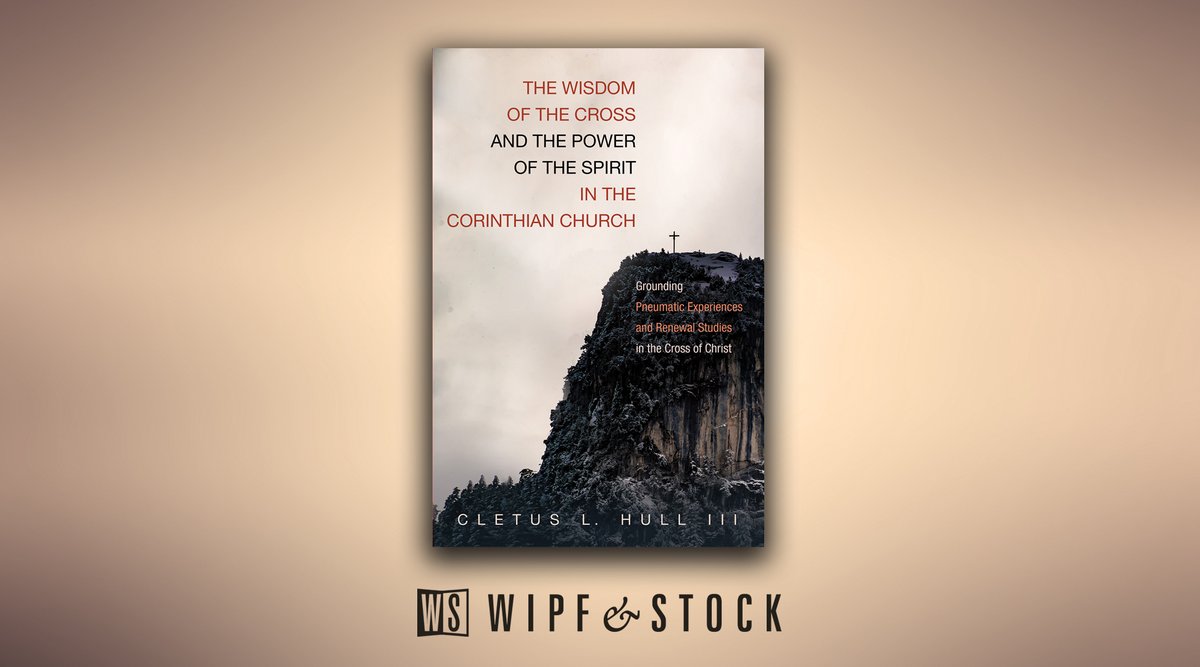 Excerpts from The Wisdom of the Cross and the Power of the Spirit in the Corinthian Church
Christology and the Cross
There is power in the cross of Christ. In this excerpt, pastor, theologian, and historian Cletus Hull introduces us to his new book.
The Cross Divides the Saved and Lost by God’s Power
It is the power of God that uses all that the Cross of Christ represents to separate those that are being rescued from those that are lost. This excerpt from Cletus Hull’s book, The Wisdom of the Cross and the Power of the Spirit in the Corinthian Church, is an exegetical study of First Corinthians 1:18-21.
Healing and Salvation in the Cross of Christ
What are some of the practical implications of a theology of the cross and the Spirit in the realm of healing and ministry? This excerpt comes from the final chapter of Cletus Hull’s book, The Wisdom of the Cross and the Power of the Spirit in the Corinthian Church.
-
Rick Wadholm Jr., Ph.D. (Bangor University, Wales, UK), is Associate Professor of Old Testament at Assemblies of God Theological Seminary. Rick has pastored several rural congregations in North Dakota and Minnesota for 22 years and is ordained with the Assemblies of God (USA). He is a regular speaker for churches, camps and conferences. He enjoys reading and discussing theology and Biblical Studies, most particularly the works of Dietrich Bonhoeffer and Karl Barth. Rick is an active member of the Institute for Biblical Research, the International Bonhoeffer Society, the Society of Biblical Literature, the Society for Pentecostal Studies, and was the Executive Editor of The Pentecostal Educator published by the World Alliance for Pentecostal Theological Education (2013-2019). Rick is author and editor of numerous articles and books. He has helped found the Society for Pentecostal Studies Student Caucus. He also enjoys blogging on topics of translation, Biblical studies, pastoring and theology by contributing to four different blogs—his personal blogging adventures hosted at rick.wadholm.com. Facebook. Twitter.