“A good man out of the good treasure of his heart brings forth good things. And an evil man out of the evil treasure brings forth evil things” (Matt. 12:35, MEV).
This statement from Jesus shows the three stages of goodness: first, the man is essentially good; second, he has good stored up in his heart; and third, he brings out the good to share with others.
Goodness is both passive and active—a part of our natures and the good works we do. Paul tells us in the letter to Titus, “those who have believed in God might . . . maintain good works” (Titus. 3:8, MEV). Jesus tells all believers to live in such a way that men will “see your good works and glorify your Father who is in heaven” (Matt. 5:16, MEV).
Jesus is our example of goodness. Throughout His ministry on earth, we are told that He went about doing good. In addition, in the Old Testament we hear about the goodness of the Father God: “The Lord is good” (Nahum 1:7, MEV). The moral government of the universe is established on a throne of righteousness. We are told to “give thanks unto the Lord, for He is good” (Psa. 107:1, MEV). The underlying gospel of the fruit of the Spirit is that men can become like God by walking with Him through the indwelling Spirit of His Son.
Goodness is the power of God overcoming evil.
However, even though Jesus did good to those around Him, His antagonists often spoke of His good as evil. Their words seemed so unfair when His works were so good. However, this kind of response is natural because good and evil are mutually exclusive.
The selfless sharing required to help others goes beyond the money we may give. God will put His finger on our time, talents, interests, strength, energies, and capacities to enrich others’ lives.
The goodness of God and the evil of the enemy are irresistibly opposed. The unrelenting antagonism between the two explains the chaos that characterizes human history. Ultimately, of course, the goodness of God will prevail over evil. Love will overcome despair, and life will supplant death. Until that day comes, however, we must expect evil to try to counteract any goodness we attempt to put into this world. Goodness is the reality of God Himself coming to grips with the awfulness of sin. Goodness is the power of God overcoming evil.
Goodness is often the reward for those who can never be conspicuous for brilliant contributions to the ministry of God. For example, Dorcas was no prophetess like Deborah, but the fact of her being full of good works has been recorded for all to read about through the ages (Acts 9:36). In Barnabas this fruit of the Spirit appeared in such prominence and fullness that it is recorded of him that, “he was a good man, full of the Holy Spirit and of faith” (Acts 11:24, MEV). What a testimony. He didn’t need to be the well-known evangelist that Paul was, or the preacher that Peter was, for he walked close enough to God to show God’s own character.
Goodness is both passive and active—a part of our redeemed natures and the good works we do.
Goodness costs. Personal privation is part of that cost. It takes a lot to be good and generous in a world where the majority move the other way and are apt to taunt good people by calling names such as “goody-goody” or accuse the good of trying to be “holier than the rest of us.” The selfless sharing required to help others goes beyond the money we may give. God will put His finger on our time, talents, interests, strength, energies, and capacities to enrich others’ lives. We will have to set aside our own self-interest in order to give to others. Only the presence of Christ can alter our characters enough to make such sacrifices a blessing instead of a trial. The presence of Christ remakes our entire characters—we are no longer the flesh-centered persons we used to be. Becoming spiritually centered is part of growing the fruit of the Spirit. Consequently, the goodness that begins to come out of us is not our own goodness, but God’s goodness—the natural outgrowth of the Spirit of God within us.
James F. Linzey studied church growth under C. Pete Wagner and signs and wonders under John Wimber at Fuller Theological Seminary. He served on the large ministry team at the Anaheim Vineyard and is the chief editor of the Modern English Version Bible. He has a BA degree in Biblical Studies from Southern California College, and an MDiv degree from Fuller Theological Seminary. He is the author of numerous articles and books, speaker, and recording artist. MilitaryBibleAssociation.com. Wikipedia.org/wiki/James_F._Linzey.
I was honored to be this year’s guest speaker for the Presbytery of Eastern Virginia’s MLK Day Service. In the picture with Micah and me is Dr. Christine Darden, one of NASA’s hidden figures from the book entitled Hidden Figures. Dr. Darden attended the MLK Day Service. Dr. Darden is featured in the History Makers archives. As the archives report: She received…
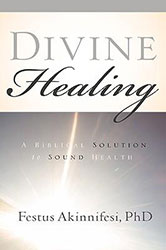
Festus Akinnifesi, Divine Healing: A Biblical Solution to Sound Health (Longwood, FL: Xulon Press, 2005), 344 pages. When it comes to the subject of divine healing, there is too much fear, a lack of knowledge, and a tendency toward extremes, according to Dr. Festus Akinnifesi. But the day is coming, he believes, when the…
Bible teacher Eddie Hyatt briefly looks at the unhealthy emphasis some place on supernatural signs and wonders. He challenges us to “Follow Jesus and let the signs follow you.” If there arises among you a prophet or a dreamer of dreams, and he gives you a sign or a wonder, and the sign or the…
The fifth chapter from Professor Williams’ book, The Gift of the Holy Spirit Today, about the greatest reality of our time. Chapter Five: Reception The Holy Spirit is given to those who believe in Jesus Christ. From all that has been said about the Holy Spirit being the Spirit of the exalted Lord and…
Graham Cooke, Approaching The Heart Of Prophecy: A Journey Into Encouragement, Blessing And Prophetic Gifting (Winston-Salem, NC: Punch Press, 2006), 282 pages, ISBN 9780977080786. Graham Cooke’s new book Approaching The Heart Of Prophecy: A Journey Into Encouragement, Blessing And Prophetic Gifting is volume one of what will be a six book set known as…
To provide the best experiences, we use technologies like cookies to store and/or access device information. Consenting to these technologies will allow us to process data such as browsing behavior or unique IDs on this site. Not consenting or withdrawing consent, may adversely affect certain features and functions.
Functional
Always active
The technical storage or access is strictly necessary for the legitimate purpose of enabling the use of a specific service explicitly requested by the subscriber or user, or for the sole purpose of carrying out the transmission of a communication over an electronic communications network.
Preferences
The technical storage or access is necessary for the legitimate purpose of storing preferences that are not requested by the subscriber or user.
Statistics
The technical storage or access that is used exclusively for statistical purposes.The technical storage or access that is used exclusively for anonymous statistical purposes. Without a subpoena, voluntary compliance on the part of your Internet Service Provider, or additional records from a third party, information stored or retrieved for this purpose alone cannot usually be used to identify you.
Marketing
The technical storage or access is required to create user profiles to send advertising, or to track the user on a website or across several websites for similar marketing purposes.