Self-control, temperance, moderation, and self-restraint are all terms used to define the last of the fruit listed in Galatians 5:22-23.
The word used in the Bible for self-control is intended to cover the whole range of human appetites, not only the physical, but the mental and spiritual as well. The power to be temperate in all things is an important Christian virtue, a mark of growth in grace. The necessary self-control cannot be attained by natural self-discipline. It is a fruit of the Spirit and is the result of His help and grace, and the outworking of His life in the believer. The possibilities are just as great for those with minimal personal strength of character as for those with strong wills of their own.
The demands for physical self-control are fairly obvious for most of us. However, often we overlook the need for mental self-control or temperance. For example, anger is a common form of intemperance of the soul: “He who is slow to anger is better than the mighty, and he who rules his spirit than he who takes a city” (Prov. 16:32, MEV). Sulking day after day is as intemperate as a violent outburst. Allowing the tongue to run away with us is intemperance, regardless of whether it is uncontrolled levity, gossip, criticism, or abuse of confidences. James gives the remedy by telling us to “bridle” our tongues (James 1:26, MEV). Inordinate love of praise is intemperate and shows a lack of self-control and an unwillingness to give glory to God. Such an attitude focuses on ourselves rather than on God.
The demands for physical self-control are fairly obvious for most of us. However, often we overlook the need for mental self-control or temperance.
The Greek word for temperance means to have inward strength. Our inward strength of will must become greater than all the outward strength of temptation, desire, excitement, or peer pressure. This is perfect self-control. Most of all, we must remember that a continuous walking with God will change the weakest of us into His image so that others will begin to see in us something of the self-control that marked the Son of God on earth. The inward strength is not ours—it is His.
If we wonder why our lives are in such a mess, we may need to be brought under the control of the Good God and follow His plan for us.
Self-control is not being a stoic. It is not being a stern, rigid, strong-willed cynic. It is not a case of “grin and bear it.” Self-control for a person of God is not severe self-discipline. Nothing we can do ourselves is enough to bring the self-control that is the fruit of the Spirit. Most of us can do some of this some of the time. There are days when we behave in exemplary and commendable ways. However, there are other days when we behave in less than commendable ways—in ways we wish we could later erase. These days when we do not behave in Godly ways are the days we are out of control, living our own strong-willed, wayward lives. Because of this inconsistency, we need the Holy Spirit in us to bring the control only He can give.
Self-control for the Christian means that my “self” (my whole person, my whole being—body, soul, spirit) comes under the control of Christ. It means that I am an individual governed by God. My entire life, every aspect of it (whether spiritual, moral, or physical) has become subject to the sovereignty of God’s Holy Spirit. I am now a person under authority—the authority of God.
Self-control for a person of God is not severe self-discipline. Nothing we can do ourselves is enough to bring the self-control that is the fruit of the Spirit.
If we want to see this kind of control, we should not look at other human beings. Even the best of them have faults and make mistakes. Instead, we look at Jesus who patterned our behavior for us. Jesus was completely under divine control. He came to do the will of His Father. He spoke the words of His Father. He carried out the will of His Father. He did the works the Father had called Him to do. Because of this inner control, Jesus in turn was in control of every situation He faced. He was never at a loss for words or at the disadvantage of other people. Because the Father was in Jesus fully, Jesus operated under the complete control of the Father. If we wonder why our lives are in such a mess, we may need to be brought under the control of the Good God and follow His plan for us.
Christians do not live under the tyranny of their own temperaments. They live by faith in Christ’s capacity to control their tempestuous emotions. Christ must come to control our wills if we are to be of any help in His Kingdom. Only as our wills are brought into harmony and submission to His will do we discover the secret of divine power. And only then does the fruit of the Spirit grow in us. It is the Spirit of God in us who guarantees growth, maturity, and conformity to Christ.
James F. Linzey studied church growth under C. Pete Wagner and signs and wonders under John Wimber at Fuller Theological Seminary. He served on the large ministry team at the Anaheim Vineyard and is the chief editor of the Modern English Version Bible. He has a BA degree in Biblical Studies from Southern California College, and an MDiv degree from Fuller Theological Seminary. He is the author of numerous articles and books, speaker, and recording artist. MilitaryBibleAssociation.com. Wikipedia.org/wiki/James_F._Linzey.
A Prayer Alert from the World Evangelical Alliance On 15 December, Bolivian lawmakers approved a new penal code, which effectively criminalizes evangelism in the country. According to the National Association of Evangelicals in Bolivia (ANDEB), the new provisions in Article 88 of the penal code states: “Whoever recruits, transports, deprives of freedom or hosts people with the aim of recruiting…
Ernest B. Gentile, Your Sons & Daughters Shall Prophesy: Prophetic Gifts in Ministry Today (Grand Rapids: Chosen Books, 1999), 432 pages. In the foreword to Your Sons & Daughters Shall Prophesy, C. Peter Wagner says that this book could qualify as a textbook on the subject of prophecy. I wholeheartedly agree. There are a…
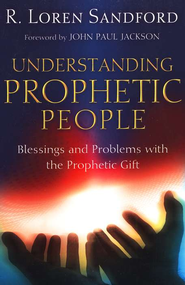
R. Loren Sandford, Understanding Prophetic People: Blessings and Problems with the Prophetic Gift (Grand Rapids, MI, Chosen Books, 2007), 240 pages. R. Loren Sandford is pastor of New Song Fellowship in Denver, Colorado; he is also the son of John Loren Sandford, co-founder of the Elijah House. Pastor Sandford is himself prophetic and grew up…
Historian of Revival, William De Arteaga, makes it clear that heresy is an ancient and persistent threat to genuine revival. However, the heresies he examines might surprise you. This essay asserts that there have been three unrecognized discernment heresies in operation throughout Church history that have retarded revival and hindered the Church from coming into…
Eugene Bach speaks with PneumaReview.com about the amazing things he has seen God doing in China, Iran, North Korea, and other difficult places. What can we learn about the causes of the greatest revival of our age? How can you learn more about these Jesus movements that few others seem to be talking about? …
John MacArthur, Strange Fire: The Danger of Offending the Holy Spirit with Counterfeit Worship (Nashville, TN: Nelson Books, 2013), 333 pages, ISBN 9781400206414. Introduction In this highly polemical book, John MacArthur argues that as an aggressive though “counterfeit” form of Christian spirituality, the global Pentecostal-Charismatic movement is neither founded on nor representative of orthodox Christian…
To provide the best experiences, we use technologies like cookies to store and/or access device information. Consenting to these technologies will allow us to process data such as browsing behavior or unique IDs on this site. Not consenting or withdrawing consent, may adversely affect certain features and functions.
Functional
Always active
The technical storage or access is strictly necessary for the legitimate purpose of enabling the use of a specific service explicitly requested by the subscriber or user, or for the sole purpose of carrying out the transmission of a communication over an electronic communications network.
Preferences
The technical storage or access is necessary for the legitimate purpose of storing preferences that are not requested by the subscriber or user.
Statistics
The technical storage or access that is used exclusively for statistical purposes.The technical storage or access that is used exclusively for anonymous statistical purposes. Without a subpoena, voluntary compliance on the part of your Internet Service Provider, or additional records from a third party, information stored or retrieved for this purpose alone cannot usually be used to identify you.
Marketing
The technical storage or access is required to create user profiles to send advertising, or to track the user on a website or across several websites for similar marketing purposes.