
Gordon Fee: Jesus the Lord according to Paul the Apostle, reviewed by Craig S. Keener

 Gordon D. Fee, Jesus the Lord according to Paul the Apostle: A Concise Introduction (Grand Rapids: Baker Academic, 2018), 201 + xxii pages.
Jesus the Lord according to Paul the Apostle will both educate and resonate well with its intended audience. One who has heard Gordon Fee preach can hear him preaching in this book, passionately communicating the fruits of his exegesis in language that can profit nonscholars as well as academicians. As I noted in my comments to the publisher, the book is “intertextually rich and theologically provocative,†inviting readers “to rethink traditional academic constructions of Paul’s theology in light of the primary data provided more conspicuously by Paul’s own letters.†While not ignorant of wider scholarly opinions, in this book Fee plunges the reader into more immediate contact with Paul’s own words.
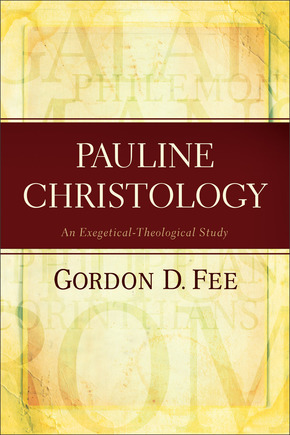 Fee’s extensive Pauline Christology: An Exegetical-Theological Study (Hendrickson, 2007; Baker, 2013), which treats all the present work’s questions in far greater detail, is not on a level accessible to the average reader (sort of like my four-volume Acts commentary). By contrast, Jesus the Lord offers a more accessible introduction, in the way that his Paul, the Spirit, and the People of God (1996) complemented Fee’s larger academic tome on Pauline pneumatology, God’s Empowering Presence: The Holy Spirit in the Letters of Paul (1994).
Jesus the Lord according to Paul the Apostle is certainly accessible. The foreword also is a touching tribute from Fee’s daughter Cherith Fee Nordling, a theologian in her own right.
As an exegete who has written commentaries on 1 Corinthians, Galatians, Philippians, the Thessalonian correspondence and the Pastorals, Fee systematizes some elements of Pauline Christology only after inductive study of the biblical text. Granted, he displays unabashed theological commitments, but they are commitments ably articulated and defended, reflecting carefully considered convictions. For example, although he sees Jesus as divine, he rejects application of the title “God†to Jesus in Rom 9:5 (124n1).
Some of the convictions that he articulates are less widely shared than others. As defended in his Pastorals commentary, Fee accepts a thirteen-letter Pauline canon (albeit with a different amanuensis and thus different vocabulary in the Pastorals; cf. Jesus the Lord, 125n1). Nevertheless, Fee establishes his central case for divine Christology more than adequately from the undisputed letters. (Given their distinctive content, the Pastorals do not figure as heavily in this work as do the earlier letters in any case.) For those of us who do accept the more disputed letters as Pauline at any level, however, Fee’s treatment of ideas there, alongside those in the undisputed epistles, may prove very enlightening for interpretation.
Although a more popular work includes much less documentation than the academic work on which it is based, it can sometimes also provide a more mature synthesis of the issues, highlighting the issues that further reflection deems most central. In Jesus the Lord, Fee develops the central elements of his case clearly.
 The book’s first section, on Jesus as savior, includes chapters on Jesus as divine savior (ch. 1) and Jesus as preexistent and incarnate savior (ch. 2), debated topics that will be revisited at points later in the book. The second section of the book addresses the second Adam, including the new creation (the divine image restored in Christ, ch. 3) and Jesus’s genuine humanity (ch. 4). The third section addresses the Jewish Messiah and Son of God, including the anticipation of Jesus in the story of Israel (ch. 5), Jesus as the son of David (ch. 6), and Jesus as the eternal Son of God (ch. 7). The fourth section, the Jewish Messiah and exalted Lord, includes Paul’s use of the “name†of the Lord (ch. 8), Paul’s understanding of the role of Jesus as Lord (ch. 9), and Jesus’s sharing of other divine prerogatives (ch. 10). After examining all uses of “Lord†in the Pauline corpus, he shows that in Paul they always function as a title for Jesus, usually with reference to Christ’s reign and not applied to his crucifixion with the exception of 1 Thess 2:14-15 (125; but see also 1 Cor 2:8).
I appreciate Fee’s caution regarding Adam Christology at points and whether some passages are genuinely pre-Pauline hymns. Such matters are, of course, debated. Particularly debated, however, and perhaps partly for that reason repeatedly emphasized in the book, are Christ’s preexistence and divine character. Although he balances his treatment with other Pauline emphases, it is here that his intertextual approach seems particularly enlightening.

Most significantly, Paul applies texts about YHWH to Jesus, for example, in Rom 10:9-10 (Joel 2:32) and Phil 2:10 (Isa 45:23). Likewise, the OT “day of the Lord,†referring to YHWH, in Paul becomes the day of Christ (1 Thess 5:2; 2 Thess 2:1-2; 1 Cor 1:8; 5:5; Phil 1:6, 9-10). God’s coming with holy ones in Zech 14:5 applies to Christ in 1 Thess 3:13; YHWH’s coming with fire in Isa 66:15 applies to Jesus in 2 Thess 1:7-8, and the judgment in 2 Thess 1:9 echoes Isa 2:10 LXX. Boasting in YHWH in Jer 9:24 becomes boasting in Jesus in 1 Cor 1:31. YHWH’s mind/Spirit in Isa 40:13 applies to Christ in 1 Cor 2:16. Also likely, God revealing hidden matters in darkness in Dan 2:22 applied to Jesus in 1 Cor 4:4-5. This may contrast with the rarer use of indubitably Davidic-messianic passages from the prophets in Pauline literature (Fee cites the allusion to Isa 11:4 in 2 Thess 2:8; one may add at least the quotation of Isa 11:10 in Rom 15:12).
Some connections depend on Fee’s identification of Jesus as always the referent of “Lord†in Paul’s writings, but the pattern does appear remarkably consistent there. Some of his proposed allusions (e.g., Ps 47:5 in 1 Thess 4:16) seem more debatable, even if the OT passages might supply some vocabulary or imagery. Why, for example, must God as avenger in 1 Thess 4:6 refer to Ps 94:1 rather than, e.g., 99:8 (LXX 98:8)? Nevertheless, the number of clear quotations is sufficient to make Fee’s point: there is a clear intertextual pattern of Paul applying divine texts to Jesus. Commentators have noticed individually most of the stronger allusions that Fee cites, but I find their cumulative force for a Pauline YHWH Christology enlightening.
Fee plausibly connects most Christological images in Paul with LXX roots, drawing heavily on the Pentateuch and especially the language of the creation and exodus narratives.
Moreover, Fee shows that the Spirit acts as a person in various Pauline passages: for example, the Spirit teaches (1 Cor 2:13); cries out (Gal 4:6); has desires opposed to those of the flesh (5:17); leads believers (5:18; Rom 8:14); bears witness (Rom 8:16); intercedes (8:26-27); and is grieved (Eph 4:30). If the evidence is less overwhelming than that for Paul’s application of OT language about YHWH to Jesus, it will nevertheless come as a surprise to those influenced by the scholarly orthodoxy that such ideas began to emerge only much later in history.
Fee does not always force one to choose between alternatives in apparent tension; he embraces both royal Davidic son of God Christology and eternal Son Christology (e.g., in Rom 1:4, p. 98). Yet in some cases I believe that he has too quickly ruled out other, potentially complementary areas of exploration. Given his emphasis on divine Christology, his exclusion of Wisdom Christology may seem understandable, but I believe that it is unfortunate. I believe that his conviction that “wisdom Christology has not an exegetical leg of any kind on which to stand†(xix; cf. 88) prematurely rules out far too much data. Against Fee, I do find echoes (albeit admittedly not quotations) of the Wisdom of Solomon in Paul, and Philo testifies to views certainly in circulation in this period. As for Paul himself, he does seem to speak fairly explicitly of Christ as divine Wisdom (1 Cor 1:24, 30). (Fee’s detailed response, by contrast, appears in his Pauline Christology, pp. 595-630.)
Notwithstanding such reservations, I believe that this concise work will reward readers with much to consider. Certainly it has done so in my own case.
Reviewed by Craig S. Keener
Publisher’s page: http://bakerpublishinggroup.com/books/jesus-the-lord-according-to-paul-the-apostle/351880