A Short Review of the Society for Pentecostal Studies 2018 Conference

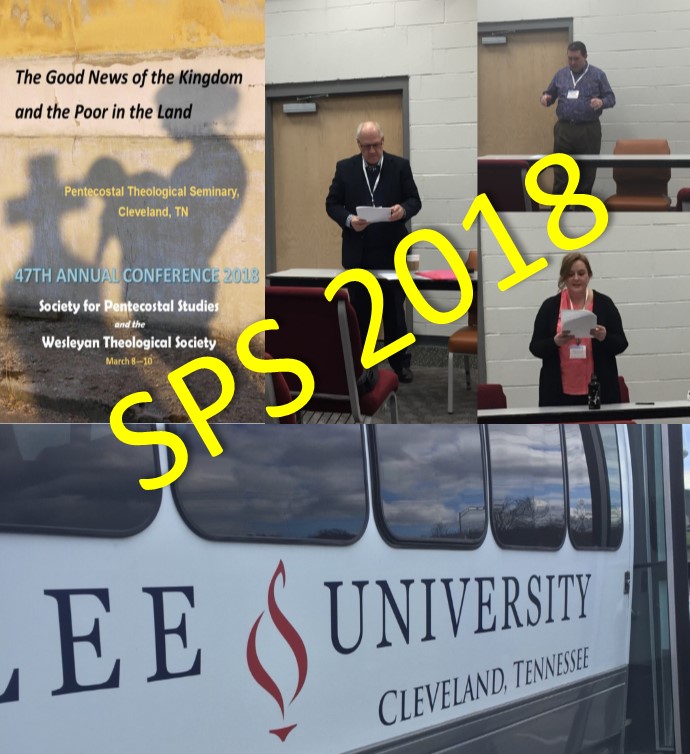
Rick Wadholm Jr. shares his highlights and reflections from the Society for Pentecostal Studies 2018 Annual Conference held at Pentecostal Theological Seminary, on the campus it shares with Lee University in Cleveland, Tennessee.
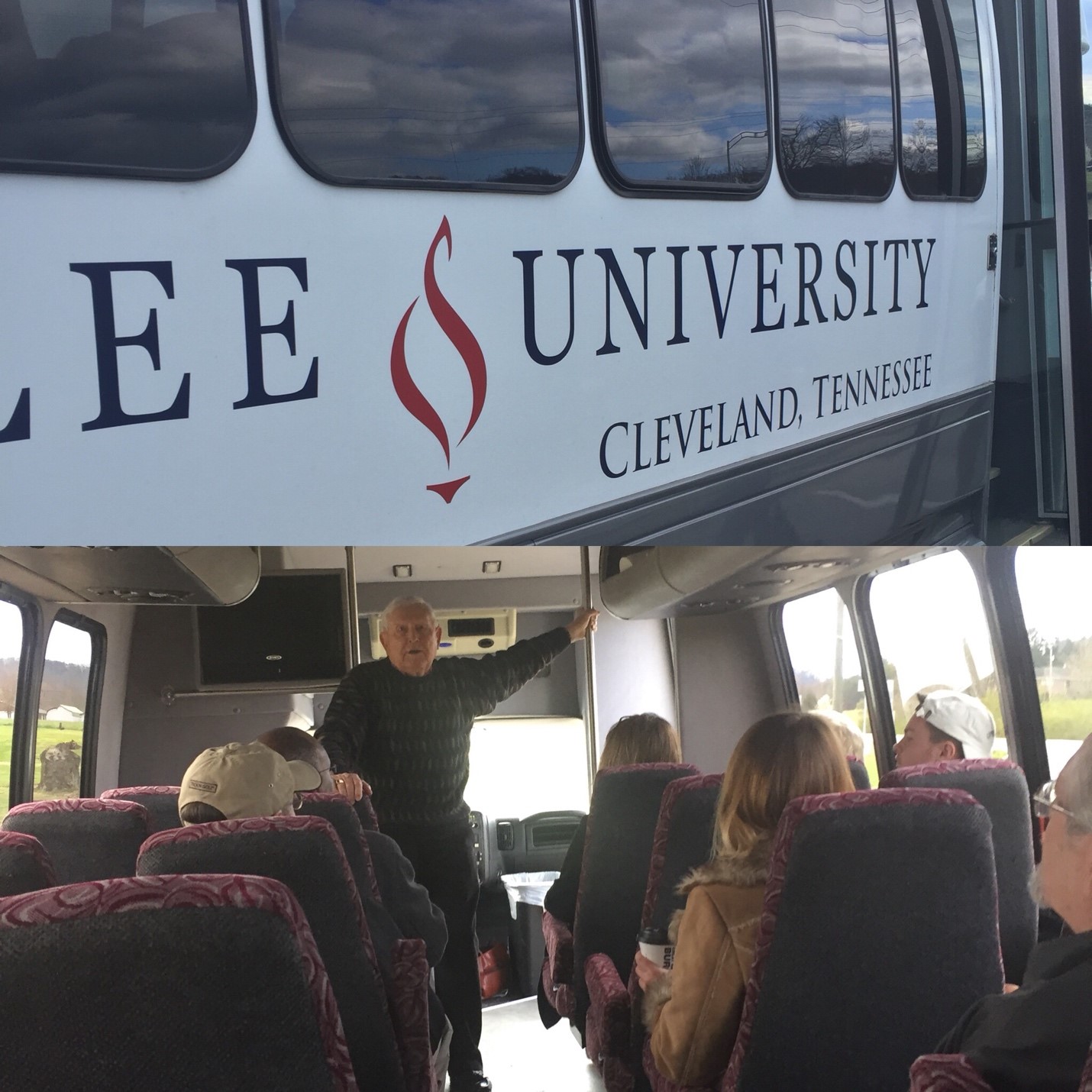 The day before the meetings officially commenced for SPS in Cleveland, Tennessee, I took four of my students from Trinity Bible College & Graduate School in Ellendale, ND, on a historical tour of Church of God sites organized by the The Dixon Pentecostal Research Center and led by Dr. Henry Smith.
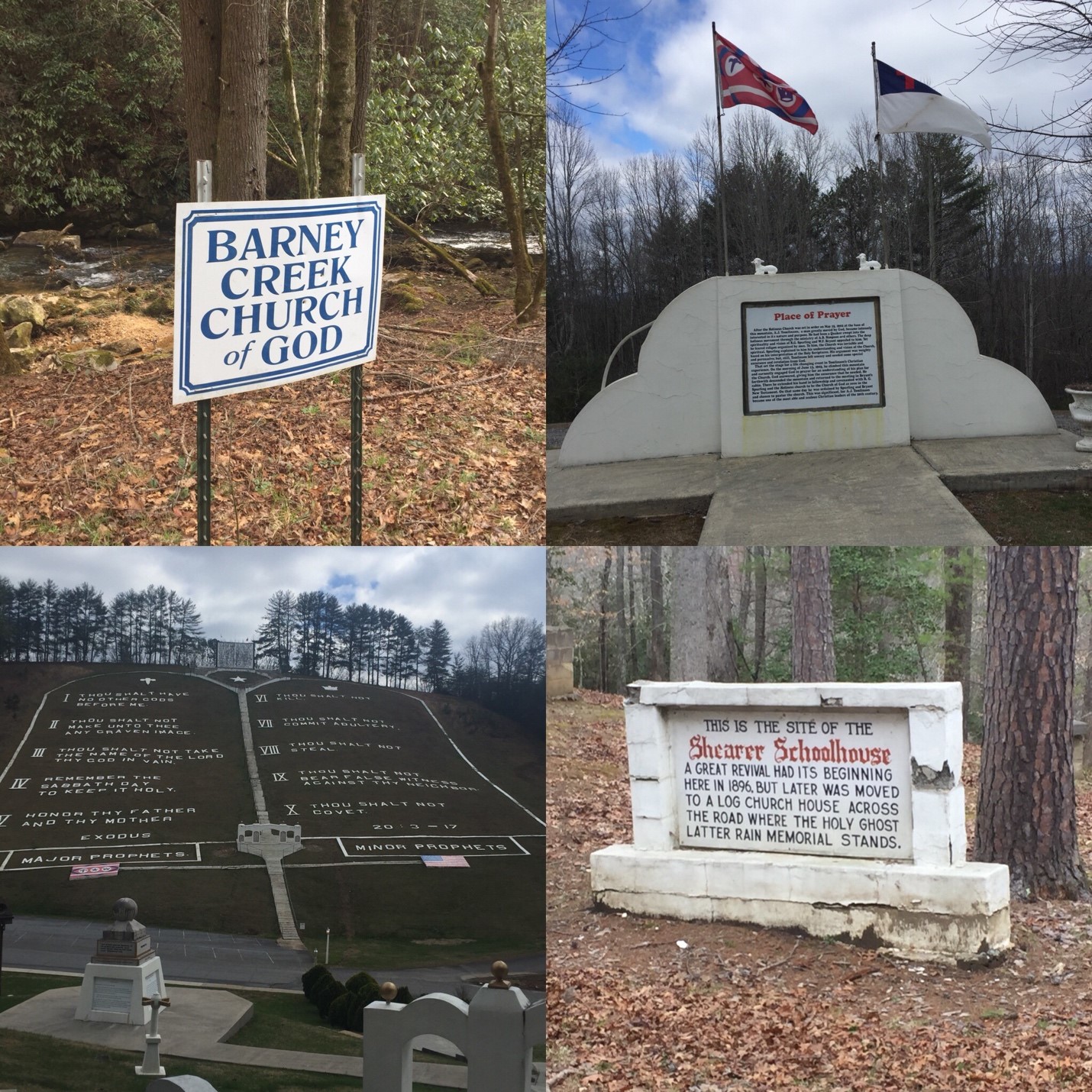 We traced the early history of the Church of God beginning with the organization of the Christian Union in 1886 at Barney Creek. A mill used to be present at the site and functioned to fund the ministry of R. G. Spurling. We then found ourselves at the site of the Shearer Schoolhouse where an early holiness revival contributed to the growth in 1896. Another site that is marked (though not at the original location even as it is near) is the log church site where worshippers experienced Spirit baptism and opponents eventually succeeded in burning the church to the ground. We also toured the Fields of the Wood Biblical Park (http://cogop.org/fow/) where the Holiness Church at Camp Creek was organized in the home of W.F. Bryant (1902) and where A.J. Tomlinson joined (1903). There we saw the world’s largest 10 Commandments and traveled the trail of markers dedicated to the doctrines and teachings of the Church of God of Prophecy. From that location we traveled to the house where the first General Assembly met (1906) and I posed for preaching (it seemed a fitting pose). To wrap up the tour we visited R.G. Spurling’s gravesite and then A.J. Tomlinson’s home in Cleveland. It was a welcome learning experience for myself and the students I brought along to discover Pentecostal stories outside of our own specific fellowship (Assemblies of God).

 On Thursday morning of the SPS conference, I presented a paper on “The Liberating Spirit of the Judges†as part of three presentations on the Historical Books. Lee Roy Martin (Pentecostal Theological Seminary) chaired the session, with Reed Carlson (Harvard University) presenting “Hannah at Pentecost: On Recognizing Spirit Phenomenon in Early Jewish Literature†that moved beyond the semantic approach that focuses upon the use of ruah in the OT. David Basher (Princeton Theological Seminary) offered a paper on “Saul, A Syncretist from the Beginning? An Analysis of the Distinction between Ruah YHWH and Ruah Elohim in 1 Samuel†seeking to move toward an ontological distinction between the two uses by means of furthering the research of John Ragsdale’s PhD on the distinctions.
The Thursday evening plenary session by Leslie Copeland-Tune (Director of Ecumenical Poverty Initiative), “Ain’t That Good News?: Advocating for Justice and Reclaiming the Narrative of America’s Poor,†provided a clear call to respond in prayer and action on behalf of the poor in our midst. It served as a reminder of the many ways our structures have and continue to maintain poverty.
On Friday morning, I attended two papers on Jeremiah (chaired by David Hymes of Northwest University): Willie Wessels (University of South Africa) “To Know Yahweh is to Care for the Vulnerable†and Jared Runck (Urshan College) “Where Shall We Stand? Jeremiah 40 and Readerly Perspective in the Book of Jeremiah.†Wessels regarded specific use of mishpat in Jeremiah as connecting justice with care for the vulnerable specifically and this flowing from the character of Yahweh revealed in Jeremiah. Runck proposed a theologically coherent reading of book of Jeremiah via his reading of Jeremiah 40 and challenged the tendency of Jeremiah scholars reading the book diachronically. Both papers essentially offered avenues for engaging prophetic literature as a way to meet Yahweh through experiencing the text/s.
 On Saturday morning, I was able to sit in for Jacqui Grey’s (Alphacrucis College) presentation on “Social Justice in First Isaiah: A Pentecostal Perspective.†She suggested ways in which Pentecostals, who have tended to disregard even the idea of a “First Isaiah†(chapters 1-39), might in fact benefit in Pentecostal ways from noting the movements of each part of Isaiah. She further pressed that response to social injustices in First Isaiah offer Pentecostals appropriate ways of conceiving how God is in the world in the midst of redemptive community.
The Saturday evening banquet was well attended. A number of awards were given away including one for William Kay’s George Jeffreys: Pentecostal Apostle and Revivalist (CPT, 2017). Several of the features of this year’s banquet included honoring the well-deserved lifetime achievement of Cheryl Bridges Johns (Pentecostal Theological Seminary). Chris Green (Pentecostal Theological Seminary) presented on “Seeing the Visible Word: Art and/as Theology†where he offered his spirited drawings and paintings as another imagining toward theological reflection rooted in response to the Spirit.
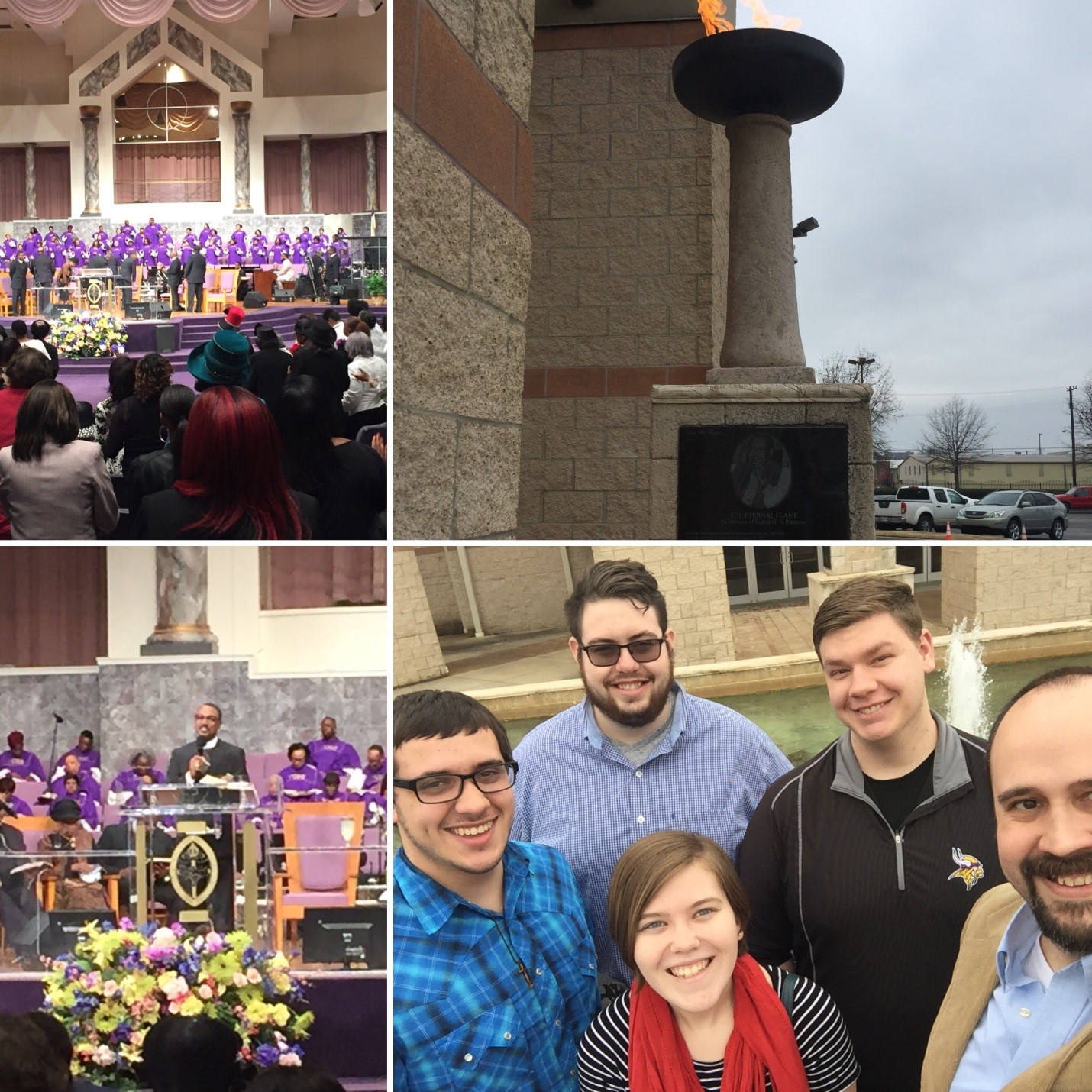
We ended our travels with stopping by the Temple of Deliverance Church of God in Christ in Memphis, TN, so that my students could have a further experience of diverse Pentecostal expressions of worship and community. Bishop Milton R. Hawkins preached a powerful message on 1 Kings 17 and the provisions of the Lord after the choir and worship team led in rousing choruses of praise.