

Anti-Semitism in the Church, by Kevin Williams

As we begin this topic on anti-Semitism in the church, the body of Christ, please understand that at times I may sound harsh. I am not harsh. I ask many questions for the purpose of making people think introspectively, to review their own actions and attitudes, and this can be a difficult task. I pray that the Holy Spirit, even now, is lifting a veil from your heart and opening you to this message of hope and redemption.
Ask any number of Christians today, “Are you anti-Semitic?” and you will receive a resounding “no!” in response. Many churches and denominations embrace Israel and its place in these end days. In an age when biblical prophecy comes to pass almost daily, it is difficult to ignore the role of Israel and the Jewish community in end time events. Most believers today will tell you that they love the Jews and are, for the most part, pro-Israel.
This is well and good. Truly, we can see that God has many things yet to accomplish through the Jewish people.
However, the Spirit of the Lord is moving on many Christians, prompting them to repent of the sin of anti-Semitism. With a confessed pro-Israeli doctrine, this leaves many believers mystified, scratching their heads wondering, “Okay Lord, how?”
The general modus operendi is to look at current events. What have we committed or omitted that would prompt the Holy Spirit to reveal such a word of knowledge? Many look for clues in their government’s role during the World War II era, and its blind eye toward the plight of Europe’s Jewry. The Holocaust was a tragedy that goes beyond any tongue’s ability to describe. We watch death camp films and wonder if this is from what God wants us to repent. Certainly, if believers turned their heads and looked the other way, there is culpability and repentance is in order.
I believe there is more to it than governmental actions during the reign of the Third Reich. The “church”—as secular as it may have been over the centuries—has a long history of persecuting God’s Chosen People. Hundreds of years and millions of Jewish lives have been squandered in the name of “Christ.”
That was then, and this is now. It is my opinion that God is calling us to examine our churches and congregations. Is anti-Semitism in the camp? At first glance it is easy to say, “no.” But I think that if we scratch below the surface a little, we’ll find that all we have been applying is a secular standard to the question. Do we believe in the extermination of Jews? No. Do we agree with the Nazi “final solution?” No. In the post holocaust years, do we acknowledge that the Jews should have a Jewish homeland? Yes. Do we acknowledge that the Jews have been unfairly persecuted over the centuries and that this practice must not be allowed to darken our doors again—even in the smallest degree? Yes.
If these are our only definition of anti-Semitism, then we agree wholeheartedly with the United Nations and the Anti-defamation League.
What Definition Does God Use?
Does the Bible use a secular standard to measure godly principles? It does not. Though a good beginning, we cannot limit our definition of anti-Semitism to the world’s standard. If we do, we can only hope to create a surface, feel-good penitence that might make people feel like they are doing something, but will it accomplish true repentance? Will it accomplish all that God is looking for?
It seems that if we wish to be true to the Spirit’s calling, to be obedient to the call of the Most High God “to repent of anti-Semitism,” then our desire will be to willingly place ourselves on the examination table. Exploratory surgery is unpleasant, but is often the only way to get at the heart of some cancers.
Before we lay down on the table, however, we might do well to try and figure out who stands to gain if the body of Messiah is anti-Semitic, even in what may seem like insignificant matters.
The answer is none other than the father of lies, Satan. We can count on him to attempt to thwart what God desires and oppose Scripture.
“The Lord GOD, who gathers the dispersed of Israel, declares, ‘Yet [others] I will gather to them, to those [already] gathered.'” [Is 56:8]
In this passage, we see that God has a place for remnant Israel, and that He also has a desire to graft-in the non-Jew as well.
Let not the foreigner who has joined himself to the LORD say, “The LORD will surely separate me from His people.” [Is 56:3]
Not only are these the words of God’s prophet, that non-Jews and Jews should be one before the Lord, they are also the words of the Messiah.
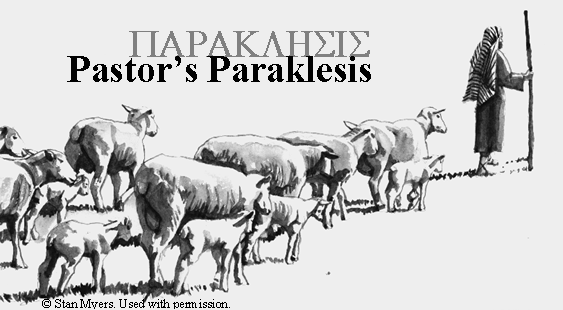
“And I have other sheep, which are not of this fold; I must bring them also, and they shall hear My voice; and they shall become one flock [with] one shepherd.” [John 10:16]
What we find here, is that God desires unity between the Jew and non-Jew. Not a simplistic, ecumenical unity for unity’s sake, but a “oneness” solidly based in Scripture and in Christ.
“For He Himself is our peace, who made both [groups into] one, and broke down the barrier of the dividing wall, by abolishing in His flesh the enmity, [which is] the Law of commandments [contained] in ordinances, that in Himself He might make the two into one new man, [thus] establishing peace, and might reconcile them both in one body to God through the cross, by it having put to death the enmity.” [Eph 2:14-16]
This Ephesians passage has been used to condemn the “Law of commandments” as something ungodly. This is a disservice to the Word. The “Law of commandments” spoken of here is the Mosaic ordinance against Jew and non-Jew mingling. Jewish men and women were forbidden to marry non-Jews. They were forbidden to eat their foods, to dress like them, to mimic their religious systems, and to worship their false gods. We learn in Ephesians 2 that the work of the Messiah has removed that separation between Jewish and non-Jewish believers, so that they might be reconciled into one body.
Lucifer, the enemy of light, realizes that as long as he can keep the Jewish community from their promised Messiah, as long as he can maintain this enmity, he has time to wreak havoc on this planet. As long as the two people groups are “two men,” walking in separation, serving God in separate ways, Satan’s rule is assured.
Conversely, as the “one new man” becomes a reality, it threatens Lucifer’s rule. We can rely on him, as stated earlier, to attempt to thwart God’s plans.
Does Satan work in obvious ways? At times. But more often than not, he is insipid and covert, sneaking in where he is not welcome.
“For our struggle is not against flesh and blood, but against the rulers, against the powers, against the world forces of this darkness, against the spiritual [forces] of wickedness in the heavenly [places.]” [Eph 6:12]
This brings us back to the examination table. Has Satan planted insipid and covert anti-Semitism in our congregations? If so, and the Spirit wants it out, we can open ourselves up to the great Healer, who is faithful. We can be honest with ourselves and realize that the author of lies may have stolen from us, and limited our ability to appreciate the awesome inheritance that is ours in Christ.
Some topics we will discuss are simple. So simple, you may ask, “Is that really that important?” But if the call to obedience is real, then we are wise to carefully consider any transgression. Other subjects may be eye opening and revelational. What might be helpful to remember are the words of Paul, the apostle to the Gentiles; “Do not be arrogant toward the branches; but if you are arrogant, [remember that] it is not you who supports the root, but the root [supports] you.” [Ro 11:18]
Much has been said about this “root,” and many theories bantered about as to Paul’s intent. It is not likely that we will achieve consensus in this article, but Paul is clear that the root supports the non-Jewish believer. Biblically, Israel is referred to an olive tree in Jeremiah 11:15-17, and Hosea 14:6, so the Scriptural precedent indicates that Paul may intend the reader to understand the tree to be the believing remnant of Israel. By personal experience and an ever-widening understanding of the Scriptures, this author agrees with Paul, that this root is our ancient biblical heritage— an inheritance with its origins in faithful Judaism.
Theologians discuss “progressive revelation,” and find the pages of the Bible replete with an ongoing, ever expanding and consistent manifestation of the character of God. Such biblical understanding is often crucial in effective evangelism and apologetics, drawing the plan of the Almighty out like a treasure map for the explorer to find.
By searching through the treasures awaiting us in our own biblical heritage, in this case the Fall Feasts of Leviticus 23, untold riches can be found. Some may have been taught that Rosh Hashanah, Yom Kippur, and Sukkot, are “Jewish” festivals and therefore “dead observance” for Christians.
If these feasts were strictly ethnic, such doctrines would be true and necessary to protect the flock from empty legalism. But in a strictly biblical context, the only context with which we should concern ourselves, and with the God-given heritage that is ours to claim, this across-the-board rejection of the feast days is both unfair and unscriptural. It denies believers of every denominational creed their own inheritance.
The LORD spoke again to Moses, saying, “Speak to the sons of Israel and say to them, ‘The LORD’S appointed times which you shall proclaim . . . [Lev 23:1, 2].”
God designates them the LORD’S appointed times. At no point does the Architect of our faith refer to them as the “Feast of Israel,” or the “Jewish High Holy days.” To do so takes them out of Scriptural context and improperly transfers them into an ethnic context. In our ignorance, this inappropriate ethnicity creates a sense of distance that makes us feel God’s declared times have no relevance to our modern Christian faith. This steals the treasures that God intended for Christians; it robs them of their inheritance, and hinders a more complete understanding of the Bible. It is likewise, anti-Semitic. To narrowly restrict them as “Jewish,” as separate from our biblical inheritance makes us guilty of building walls of enmity between Christians and Jews. For us it says, “God’s appointed times are dead.” To the Jewish community it says, “The God of Abraham, Isaac, and Jacob—the God of the Jews—is not good enough for Christians.”
The term, “the LORD’S appointed times,” carries relevance. It means He has something to say, something to teach. A study of the feasts of Leviticus 23 can reveal that God has much to unfold about Himself, and much to offer His children in any century.
The following is perhaps one of the most poignant examples of Christianity’s subtle, but real, anti-Semitism. Anytime we speak of the Holy Land and refer to it as “Palestine,” we practice anti-Semitism. Do we still call East Germany, East Germany? No. It is Germany. Do we not refer to it as the former Soviet Union? Is Texas still the independent Republic of Texas, or is it a state within the United States? Certainly the nomenclature of these countries has changed and gained world-wide acceptance, yet there is a persistence to refer to Israel as Palestine in Christian literature, on Sunday School maps, and from the pulpit. Ask yourself, “If I was Jewish, would this make you feel like a brother to the church, or an interloper?
The Body of Christ at large has adopted the phrase “spiritual Israel,” a term not found in the Bible, as her “tag.” Not that I disagree. I am one of the gentiles who by Paul’s definition, is Jewish: “But he is a Jew who is one inwardly; and circumcision is that which is of the heart, by the Spirit, not by the letter; and his praise is not from men, but from God.” [Rom 2:29]
Yet the underlying implication that God has chosen Spiritual Israel over Natural Israel, that He has rejected the children of Abraham, Isaac, and Jacob, is anti-Semitic. You may not interpret it that way, but again, if you were Jewish, how else could you interpret it?
I say then, God has not rejected His people, has He? May it never be! [Rom 11:1]
Calling ourselves “Spiritual Israel” may make us feel good and as though we are a part of something greater than ourselves, but it does not make the Jewish community feel good. It can infer that they are rejected by both God and the church and therefore, is anti-Semitic.
“But didn’t the Jews reject Jesus?” This too is an often coined phrase that stings in the ear of the Jewish community. When Jesus was walking the earth, certainly there were “some” that rejected Him. And we know that there were myriad thousands who believed (Acts 21:20). We watch the Hollywood depictions of Jesus before Pontius Pilate and get the idea that the entire nation of Israel shouted in favor of “Barabas.” This simply is not true. First of all, archeological fact proves that the area were this exhibition took place could hold no more than 400 people, hardly a national throng. Secondly, it was Passover. The moral people were at home observing the feast on this most auspicious Sabbath, they were not engaging in secular, Roman proceedings. Only the immoral and irreligious men were there before Pilate. Not exactly the kind of people I would want speaking for me or representing my national interests. How about you?
In a modern context, haven’t the Jews rejected Jesus? The majority of them have never had an opportunity to decide one way or the other, and this is the most cruel, ungodly, and irreverent form of anti-Semitism. To not give them the opportunity to decide whether the gospel is true or not is to withhold their own promised Savior and condemn them to Hell. Hitler may have sent 6 million to the gas chambers, and that was an atrocity, but when we hold back the knowledge of the Messiah from those to whom He was promised, haven’t we cursed the Chosen People to a fate worse than death? Isn’t that a biblical definition for anti-Semitism? Is it not alive in our churches?
“For I am not ashamed of the gospel, for it is the power of God unto salvation for all who believe, to the Jew first and also the Greek.” [Rom 1:16]
The Good News of Jesus Christ is, at its very core, the fulfillment of God’s promises to the Jewish people, both yesterday and today. We busy ourselves with the very good work of supporting missions to every corner of the globe, which is as it should be. But what about the nation that lives among us? What about the Jewish people?
“How then shall they call upon Him in whom they have not believed? And how shall they believe in Him whom they have not heard? And how shall they hear without a preacher?” [Rom 10:14]
Jewish evangelism is a delicate matter. Things we know and practice when ministering to pagans do not have the same affect. Jews are not pagans. We can’t convert them from something into something else. But we can, through the blood of the Lamb, help them become more of what God has already called them to be—the righteous remnant of Israel.
PR
To learn more about the redemptive pictures and messianic promises inherent in the biblical holidays of Leviticus 23, read these on-line study booklets by Kevin Williams (published by Our Daily Bread Ministries):
Fall Feasts Rosh Hoshanah, Yom Kippur, Tabernacles
Spring Feasts Passover, Unleavened Bread, First Fruits, and Pentecost

Originally published on the Pneuma Foundation (parent organization of PneumaReview.com) website. Later included in the Summer 2021 issue.









CW writes: "Great article in a Pentecostal Journal."
CW writes: “Great article in a Pentecostal Journal.”