Ising’s scholarship makes the ministries, German-language correspondences, and theological contributions of Johann Christoph Blumhardt accessible to the non-academic English reader. In regard to twenty-first century pastoral ministry, Blumhardt’s nineteenth century experiences become a welcome companion, because he demonstrated genuine pastoral concern for the mentally, physically, or spiritually ill people who come to him for relief. In like manner, Ising’s laborious attention for detail, his academic tenacity for accuracy, and his engaging storytelling skill makes Blumhardt’s biography come alive; it is a readable account. As a historian and biographer, I tip my hat to Ising for his ability to blend exhaustive (and exhausting—as evidenced in the footnotes) research without losing the attention of his uninitiated readers.
Anyone familiar with pastoral politics will nod knowingly when reading about the quagmire of political and ecclesial jealousy that Blumhardt waded through.
The biography wends its way through the chronology of Blumhardt’s entire life, bringing the reader to comprehend the scope of his family, education, pastoral ministry, and supernatural encounters of exorcism and healing. Ising explains the twists and turns of the state and church politics that both support and encumber the nineteenth century German minister. Likewise, the biography details Blumhardt’s pivotal exorcism experience and famed proclamation “Jesus is Victor” that propelled the spiritual awakening into an ever-widening community of influence (175). The reader is drawn into the narrative concerning the seemingly spontaneous events of this spiritual revival, which attracted first the people living in his local parish, then the neighboring communities, and eventually spread beyond the borders of his native Germany. Anyone who is knowledgeable of pastoral politics will nod their head in agreement when reading about the quagmire of political and ecclesial jealousy that Blumhardt waded through; his opponents resented his successful ministry. Thus, we can appreciate the apparent providential opportunity he had to transition from the confines of parish-based pastoral ministry, to the liberty of retreat-house pastoral ministry.
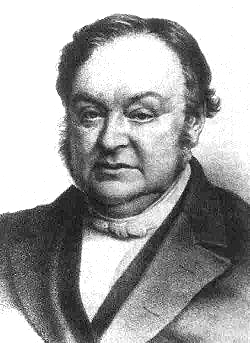
Johann Christoph Blumhardt (1805–1880)
Ising gently probes and massages the controversy of Blumhardt as theologian; he writes neither hagiography nor pejorative critique, leaving the reader to conclude what they will from the evenhanded evidence he has presented. For the pastoral reader, the book offers pragmatic experiences and anecdotes from Blumhardt’s familiarity with supernatural and spiritual encounters. For the sociologist, the book offers a people’s history of nineteenth century German culture. For any lover of history, the book opens and closes an intriguing look into a chapter of European history.
John R. Miller is an ordained minister with Elim Fellowship of Lima, NY and serves as Pastor of Education with Living Word Temple of Restoration, Rochester, NY. He has a degree from Elim Bible Institute, a B.Div. (Trinity Theological Seminary), C.P.E. (University of Rochester), M.Div. (Northeastern Seminary), and Ph.D. (Regent University). He teaches at Regent University and Elim Bible Institute & College.
Historian Jeff Oliver has written a three-volume series on how the gifts of the Spirit have continued all through Christian history. PneumaReview.com speaks with Jeff about his series and how we should expect God to do supernatural things through his church today. PneumaReview.com: Tell us some of your story. What Christian traditions influenced you growing…
Mrs. Emily Gardiner Neal (1910-1989) is now mostly forgotten despite being a major figure in the healing movement from 1956 when her first book came out, A Reporter Finds God Through Spiritual Healing.[1] Before her conversion she was one of the outstanding reporters of her era. As a Christian, her ministry impacted believers of all…
Carolyn Osiek and Margaret Y. MacDonald with Janet M. Tulloch, A Woman’s Place: House Churches in the Earliest Christianity (Minneapolis: Fortress, 2005), vi+ 345 pages, ISBN 9780800637774. Carolyn Osiek, Charles Fischer Catholic Professor of New Testament at Brite Divinity School of Texas Christian University, and Margaret Y. MacDonald, Professor of Religious Studies at St. Francis…
Part 1 of 2 Introduction In 1985 Dave Hunt, a lay cult watcher, published one of the most influential books of the 1980s, The Seduction of Christianity.1 In that work he lambasted much of the leadership of the charismatic renewal for “seducing” the American Christianity with ideas and practices derived from occult sources. He attacked…
David Malcolm Bennett, Edward Irving Reconsidered: The Man, His Controversies, and the Pentecostal Movement (Eugene, OR: Wipf & Stock, 2014), 344 pages. David Malcolm Bennett (author, biographer, researcher, and lecturer) has written a biographical sketch of Edward Irving, which is economically summarized in its title. As a researcher, he includes rich citations, footnotes, and bibliographical…
Blaine Allen, When People Throw Stones: A Leader’s Guide to Fielding Personal Criticism (Kregel, 2005), 176 pages, ISBN 978-0825420146. Blaine Allen’s book, When People Throw Stones, is important and necessary. The ugly truth is that Christian service has downsides. All too often, the chief downside is criticism. The book is organized in ten chapters;…
To provide the best experiences, we use technologies like cookies to store and/or access device information. Consenting to these technologies will allow us to process data such as browsing behavior or unique IDs on this site. Not consenting or withdrawing consent, may adversely affect certain features and functions.
Functional
Always active
The technical storage or access is strictly necessary for the legitimate purpose of enabling the use of a specific service explicitly requested by the subscriber or user, or for the sole purpose of carrying out the transmission of a communication over an electronic communications network.
Preferences
The technical storage or access is necessary for the legitimate purpose of storing preferences that are not requested by the subscriber or user.
Statistics
The technical storage or access that is used exclusively for statistical purposes.The technical storage or access that is used exclusively for anonymous statistical purposes. Without a subpoena, voluntary compliance on the part of your Internet Service Provider, or additional records from a third party, information stored or retrieved for this purpose alone cannot usually be used to identify you.
Marketing
The technical storage or access is required to create user profiles to send advertising, or to track the user on a website or across several websites for similar marketing purposes.



 Dieter Ising, Johann Christoph Blumhardt, Life and Work: A New Biography (Eugene, OR: Wipf and Stock, 2009), 491 pages, ISBN 9781606085394.