Difference Can Make Us Mo’ Betta

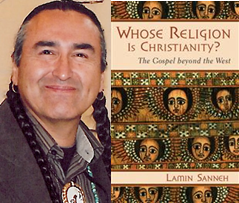
 I am reading a very insightful and helpful book titled Whose Religion is Christianity? The Gospel beyond the West (Grand Rapids: Eerdmans, 2003), by Lamin Sanneh, a Native of Gambia. Dr Sanneh is presently D. Willis James Professor of Missions and World Christianity at Yale Divinity School. I have chosen an excerpt that has been especially challenging and discomforting for me, and that I would like to share as some cranial fodder.
People often think religion creates closed minds that see difference in terms of intolerance and division. Yet difference can be enriching and mutually instructive, while religion can be reassuring and ironic at the same time. For example, you may sometimes do God’s will only by denying your own. Discernment is a fruit of obedience, and a gift of genuine solidarity. Choice is empty without it. Second, disagreement is not a barrier to dialogue. On the contrary, it is a test of the willingness to presume on each other’s goodwill and to covet the best for each other. To be charitable is to be deserving of charity oneself. Without difference dialogue would be moot. If you feel the need to conceal what you believe for fear of difference, then dialogue becomes just a show, and agreement an illusion. Indeed, agreement by concealment is intolerance by another name, if truth be told. An important issue in the literature on dialogue is thus often confused by the view that difference is threatening, fanatical, harmful, and negative while uniform agreement is sound, inclusive, and enlightened. If that were true, we would all be condemned to sameness, uniformity, and conformity. Yet even then we would not escape the threat, the intolerance, the feuding and the cursing that disagreement is supposed to cause. In light of intercommunal conflicts, intrafamily feuds, and the truculence that often arise in the same race, household, or national or faith community, we arrive at a pretty pass when we approach the world in defiance of difference, or in a misguided optimism about agreement. People often fight because they want the same thing, or make peace because they embrace difference (pages 5-6).
There is a ton of deep stuff in these two paragraphs to meditate on – like a collection of “The Very Best of Far Side Cartoons.” Like I have done, I encourage you to read it many times and allow the Holy Spirit to speak to you.
 In the Body of Christ we are radical diversities and immeasurable differences. We have major differences and too-numerous-too-count subtle and secondary differences. Because of them, we have all experienced being on one side or the other of intolerance and division.
I have seen these distinctives – like all differences – open the door for groups, organizations, and churches to become quite prideful – though very subtly – about their “house” or “ministry” distinctives. Admittedly, at one level, distinctiveness is a normative fact of life – snowflakes, fingerprints and all. However, unless we can authentically welcome “otherness” and allow difference to become mutually enriching and complimentary, these distinctives always become, at some level, the foofy fertilizer of condescension, arrogance, separatism, and a kind of spiritual elitism; especially when a degree of success is attributed to the group’s unique ways.
 That being said, we all have – or at least pretend to have – certain distinctives that identify the Father’s unique sense of mission, destiny, and calling behind what we are doing that shape our ministry values and activities. But, Jesus help us not think “our ways” are singularly the best way to accomplish the Father’s will among whom we minister to.
I find myself regularly challenged by other people’s visions. That is a problem for me because difference is meant to reflect back to me an aspect of the Father’s heart for the Kingdom that my vision is too narrow to see. Difference is meant to enlarge our ability to recognize the work of God in otherness; to reveal our need for the influences that other perspectives add to us. Without differing visions there can never be synergy and, the absence of synergy means we become culturally, socially and ethnically monotone.
We are constantly growing, maturing and consequently changing in our perceptions and conclusions. How do we avoid getting stuck in our conclusions? Or harder yet, when we have grown so accustomed to the perceived “normalcy” or “correctness” of our beliefs, how do we get unstuck when we realize what we believed is no longer as true and right as we once believed? How can we change without “losing face?” We must create paths to change for one another that are highlighted by honor, respect and the love of Christ.
 Modernity has made flexibility very difficult and openness to fundamental change a thing to be distrusted. Modernity is a “ringing in our ears” cautioning us against the slippery slope of compromise, relativism, liberalism, and loss of “absolutes.”
I am not advocating for an unqualified quagmire of religions beliefs, but stand committed to a historic and orthodox Biblical faith. I agree with the well researched perspective offered by Dr. Phillip Jenkins, in his book, The Next Christendom, who writes, “For the foreseeable future, though, the dominant current in emerging world Christianity is traditionalist, orthodox and supernatural.”
Humility, acknowledging our total incompleteness without others, and valuing difference as an expression of the Father are some of the keys. Pride will cause us to remain stuck, isolated, and at a great loss of the value that difference brings into our lives. Will we fall into the dangerous trap of thinking our beliefs are reflective of an “unadulterated” kind of doctrinal purity that must then be defended against the “cheap grace” or “syncretistic” movements trying to compromise the “true gospel” as we understand it?
In my ministry among First Nations people, we are difference-multiplied. We have the influence of the historical church traditions and denominations which are both empowering and subverting our indigenous labors; we are Baptist, Catholic, Methodist, Pentecostal, Charismatic, Mennonite, Episcopal, etc., Native believers. We are more than 800 tribes in the in US and Canada alone. We are traditional, urban, full-blood, mixed-blood, assimilated, holding on, enduring, growing, mother-tongue speakers, becoming stronger, contextual, old school, conservative, living on the reservation, powwow people, hassled, rejected, marginalized, forgotten and not giving up.
Add to our differences the fact that the dominant culture church has, without prejudice, allowed it’s issues and “distinctives” to flow down to our communities from their religious institutions to foster among our Native Christian leaders the same kind of competitiveness, territorialism, insecurity, woundedness, envy with others success and suspiciousness that we see so prevalent in the North American church. Because we have flesh, we possess the inescapable capacity and tendency toward all of these same human frailties.
 Whoever you are, unless we prevail upon the mercy of God through repentance, crying out for forgiveness, and seeking reconciliation with those whom we have broken fellowship with over our differences, then we stand in danger of simply becoming a microcosm of a fractured and highly “individualized” North American church. And I suspect my brothers and sisters in other lands face a similar challenge. This is not our legacy nor destiny in the Kingdom.
In conclusion, Sanneh writes, “… disagreement is not a barrier to dialogue. To be charitable is to be deserving of charity oneself. Without difference dialogue would be moot.”
I would like to invite ministry leaders to rekindle the dialogue of mutual respect, honor and appreciation in the midst of the vast and wonderful differences we all represent. Can we mend the broken relationships, seek reconciliation, and repair our former associations? Will we find the Father’s grace to begin a new chapter with a fresh commitment to walk in love, while acknowledging, affirming and valuing our differences; instead of arguing, fighting, separating and judging one another over them?
I am committed to the Biblical injunction to “strive to maintain the unity of the Spirit in the bond of peace.” May we hear what the Spirit of the Lord is saying today to the Church – the Body of Christ at large – and respond with practical gestures of honor, repentance, and respect.
PR
Editor’s Note: This guest editorial by Richard Twiss only comments on a small portion of Lamin Sanneh’s book, Whose Religion is Christianity? The Gospel beyond the West (Grand Rapids: Eerdmans, 2003). Read this award-winning book that reaches beyond perspectives generally held by Western Christians.
Publisher’s page:Â www.eerdmans.com/Products/2164/whose-religion-is-christianity.aspx