The Memphis Manifesto: Five Years Later

 On October 17-19, 1994 the leadership of the essentially all white Pentecostal Fellowship of the North America (PFNA) met in Memphis to confront its racial past and to meet with African American Pentecostals to establish an integrated fellowship. The result was a new organization known as the Pentecostal/Charismatic Churches of North America (PCCNA). As part of that process those present from the PFNA confessed that they had practiced bigotry and exclusiveness in their preference for a congregation and administration of the same color. Five years have passed since this historic event, and it is time to look at the results of the “Memphis miracle” and to take further steps and longer strides to meet the challenge presented there.
I have lived in Honolulu for the past 13 years where white people like me are called “haoles”, and are in the minority—some thirty percent of us who live here have European ancestors. I am on the pastoral staff of the largest church in the State. Our congregation of 10,000 looks like it should for our area, seventy percent of the attendees and the staff are people of color and the rest are white.

Image: Flowers Pentecostal Heritage Center
The Memphis Manifesto challenges all believers to take a look at their own attitudes and pre-judgments regarding race. In light of this, the first point I want to make is that white is also a color, and that everyone in my church therefore is a person of color. I know too that everyone in your church is a person of color, hence the problem we face is not one of color but one of preference. Preference is sin.
My friend Helen W. was a missionary in Liberia for many many years. She left the field in the sixties and came back to Fort Washington, PA to work in the home office of her sending agency. Helen had malaria and could not stay any longer. She went to Liberia as a young single woman and while there met and fell in love with a local man. Her sending agency would not let them marry—he was black, she was white; it would not be good, they said.
I lived near Helen back then. I lived in a white neighborhood and was appalled to learn that Helen spent all her free time in the black areas of Philadelphia. I admonished her, she could get hurt down there. Helen said, “Oh no.” She explained that she had lived for twenty years as the only white woman in the bush of Liberia, a country where white people played a leading role in government. In those twenty years, Helen had learned that you were far safer in the black community than with the white ones who governed and could not be trusted. Helen found crowds of white people frightening. Back in the sixties, I found black people frightening.
My second point is that fright is a feeling. It does not appear in Paul’s list of the deeds of the flesh or in his list of the fruits of the Spirit. Fright is one way we deal with the unknown, the unfamiliar and the unexpected. Scripture teaches us to fear God, not to fear each other but to love each other. We do the opposite. Doing the opposite to what Scripture urges is sin.
There are many voices today pressing all of us to be tolerant. We are assailed by this thought on a continuous basis. My wife and I were in New York City recently. We were there for fun and relaxation and we saw four Broadway shows. One night we stopped and listened to some sidewalk preachers who were interpreting the Bible to condemn the white and exalt the black. Their message was hardly tolerant, indeed they were filled with hate and not interested in any challenge or discussion of their rhetoric.
And so, point three, love is far different than tolerance. I have looked through all my concordances and Bible computer programs and no where do I find the word tolerance. Pollution is the sin of adding something that does not belong to the mix, thus rendering the mix worthless. Tolerance is to tolerate, not to love. One can tolerate with resentment, with envy and with hate. Tolerance is sin. No matter how many times we hear how good and necessary it is, tolerance is still sin.
Now how about the Memphis confession or manifesto? What difference has this historic meeting made in your life? You, the Pentecostal minister, scholar or congregant?

My personal journey has included spending more than twenty percent of my adult life in a community where I am a minority and where mixed marriages are common. My journey has included a Japanese son-in-law and a Hawaiian son-in-law. Last fall I became a father-in-law to an African American. Three wonderful men that I am privileged to know; and they call me Dad and I like that. Sure they have their faults but they are lovable, just like you and me.
In August 1999, USA Today had a front page feature of about 25 people that we all know as leaders in different fields of endeavor. The thing that linked the people was that they were all products of mixed parentage. As I read the article I wondered if the world would lead the church into the reality that God looks at our heart not our appearance. I sure hope that does not happen.
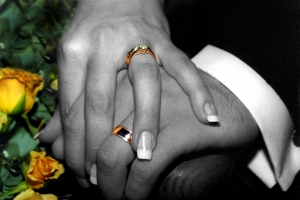
The Memphis Manifesto will remain nice words on paper until every believer can endorse the excellence of mixed marriage. Are you ready to do this? If you are not, I am afraid that division among the brethren will continue. And in my opinion, such division will delay the Lord’s return.