
An Unlikely Historian of Revival: Interview with Eugene Bach

Eugene Bach speaks with PneumaReview.com about the amazing things he has seen God doing in China, Iran, North Korea, and other difficult places. What can we learn about the causes of the greatest revival of our age? How can you learn more about these Jesus movements that few others seem to be talking about?
PneumaReview.com: You have written books about Christianity in China, North Korea, and Iran. How did you become interested in writing about the persecuted church?

Eugene Bach: Firstly, I am not an author. I have written books, but writing is not my gift. It is not something that I am good at. What I have written comes out of a sense of duty rather than a traditional interest. My background is in special operations in the US Military. As a former US Marine, I feel much more comfortable working with my hands, crawling in mud, and shooting weapons than sitting at a laptop writing, but as I have traveled around the world I realized that there are not many things that are written about certain areas of the world where Christians are persecuted.
If I desire to study the history of the western church in America and Europe, I will undoubtedly find a plethora of books that fill thousands of libraries from floor to ceiling. I will find endless discussions, websites, university courses, and computer programs to help me understand and learn more about the places, dates, and people involved in American and European revivals.
In contrast, the world is witnessing the world’s largest revival take place in China. What is being written about it? Who is recording it? What will the coming generations use to reference it?
The largest revival of any Muslim nation on earth is taking place in Iran. What is being written about it? There are so many pastors, missionaries, and evangelists that are doing amazing things and seeing tremendous church growth, but their stories are largely unknown to the rest of the world.
PneumaReview.com: The growth of the church in China has attracted worldwide attention. What are some of the key factors that have contributed to this tremendous growth?
Eugene Bach: I do not want to pretend that I know the perfect answer to this question. I am not an expert on the house church in China. After having lived in China for more than 17 years, I have learned that the term “China Expert” is an oxymoron.
I want to be extremely careful not to glorify persecution. I do not want to peddle a theology that profits from the pain of persecution, but I cannot deny the role that persecution has played in the growth of the church in China.

I do not wish for persecution for any believer. I am currently praying that God protect my dear friends in the underground church of China. I pray for the sake of their families. I pray for the sake of their children. I pray for their safety because I believe that my Lord loves them much more than I ever will and wants to keep them safe.
If I pray for God’s will instead of my own, could it be possible that His will would be hard for me to understand? Could it be that revival in China has not happened in spite of persecution, but because of it?
I am extremely reluctant to credit persecution as one of the primary factors of Chinese revival and radical church growth, but here I stand, having no other answer. I am painfully aware that this does not necessarily match up with much of the prosperity, ego-centric teaching that is prominent in many circles in the west, but the pure naked truth is this: Persecution has been the constant, inseparable companion of church growth in China.
 Pastor Zhang Rongliang is the most well-known underground house church pastor in China. His church is estimated by most experts to be at least 10 million believers. I spent two years with him helping to tell his story in the book, I Stand with Christ.
While in prison, during his most intense suffering and hoping for death, he wrote the following poem:
Suffering challenges so many people in the world.
Without suffering, how is it possible to taste the depths of the goodness of the Lord? After tasting, how can one be obsessed with worldly desires?
O Suffering, I used to flee from you. But today the Lord has commanded me to endure all that you have for me.
O Suffering, did the apostles not welcome you? Suffering invites the seekers to go along with him. He calls out to me and says, “Come and shake my hand.”
O Suffering, let me embrace you. It tastes good that I was with you in the Lord.
O Suffering, how many disciples have you fed? Without you, life has lost its struggle. I ask you to visit me. Let me taste only a bit of the sweetness that you give.
O Suffering, you make the moments with my Lord so much better. You are the oxygen of the saints. Without you, they would have stopped breathing. You are so close to me.
O Suffering, let us walk arm in arm together.
Xihua Prison, March 1978
PneumaReview.com: Most Christians in the West probably think that there is not much happening with Christianity in North Korea because of the government there. Is this an accurate picture of the situation?
Eugene Bach: North Korea is one of the hardest places that we are working today, but our time there is not without small victories. I would personally not use the word revival when referring to the church in North Korea, but we are seeing several signs that indicate that the church is far from dead.
Kim Jong Il tried to kill Christianity. He is dead, but Christ is alive in North Korea.
Kim Jong Un is the latest in a long list of enemies against the church, but he, like his father and his grandfather, has failed to kill the church.
 The demand for Bibles in North Korea exceeds our ability. The demand for teachers and pastor support in North Korea currently exceeds our ability.
I cannot put a numerical value to accurately describe the church inside of North Korea, but I can say that the church is growing. All of the North Korean Christians that I work with and serve today are new believers. They were born after the founding of the Communism in North Korea and came to Christ against overwhelming opposition.
North Korea is sandwiched between a nation with the world’s largest revival (China) and a nation with the world’s largest church (South Korea).
Crimson Crucible (second edition) is the only book that I know of that describes in detail the underground house church in North Korea. It is available on our website: www.BackToJerusalem.com
PneumaReview.com: Tell us a bit about what is happening with Christianity in Iran.
Eugene Bach: Iran is currently experiencing what we call ABI – Anything But Islam! The people are sick of Islam. They know that it is a lie and want to be free from its stronghold. They are desperately searching for truth.
Today Iran is thought of as an anti-Israel anti-Christian Islamic nation, but this is a lie that has ripped the people from their real heritage.
Iran is a land that God has been working in since the beginning. King Cyrus was called and used by God to bless the Jewish people. King Darius, his son, was also called and used to bless God’s people.
The first Christian missionaries to China were from Iran. Iran was one of the most successful missionary sending nations on earth during the days of the early church.
 Iranians can’t be blamed for being Muslim any more than slaves can be blamed for being born into slavery. They did not choose Islam. They were conquered by the sword and forced into the slavery of Islam.
Today, God is moving in powerful ways in dreams and super natural miracles in Iran.
In the last two years, we have delivered over 200,000 Bibles in Iran. That is only a drop in the bucket of what is needed. That should give an idea of the size of the current church in Iran.
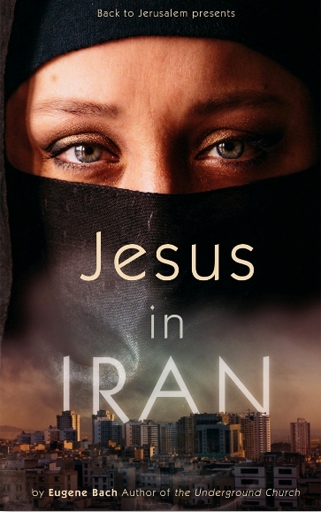
I have written in detail about the church in Iran in our book Jesus in Iran – available through our website.

PneumaReview.com: What has been the most challenging part of writing these books?
Eugene Bach: The most challenging part about writing these books has been writing these books. I have written all of my books on location. I write about Iran in Iran. I write about North Korea in North Korea.
For the sake of security, I often clean my computer and erase files from my hard drive so that they will not be discovered by the police. This has led to many occasions where I have accidentally erased entire files of finished chapters on my computer thinking that I have had a backup when I did not. You would think that I would learn my lesson and grow wiser. I have not. They say that wisdom comes with age, but in my case age came alone.
I have lost more than I have published.
PneumaReview.com: What has been the most rewarding part of writing them?
Eugene Bach: Seeing readers from around the world exposed to the lives and testimonies of the amazing heroes that I get the privilege to witness on a daily basis.
PneumaReview.com: In addition to prayer what are some of the greatest needs of the Christians in these lands of persecution?
Eugene Bach: Bibles.
PneumaReview.com: What lessons can believers in the West learn from their brothers and sisters in the Persecuted Church?
Eugene Bach: “Though you slay me, yet will I hope in Him.” – Job 13:15
Do we in the West have the kind of faith that loves so deeply that it goes against self-preservation?
PneumaReview.com: What writing projects are you currently working on?
Eugene Bach: I am currently working on two books and a series of children’s books for 2018.
 The children’s books are a follow up on our first release called Tales from Fufu’s Fores: The Courage to Obey. These are a collection of true stories of modern day missionary heroes that provide amazing role models for our children. Each book in the series tells a gripping story from the front lines of missions about God’s power and saving grace in places like China, Saudi Arabia, North Korea, Pakistan, and many more.
Chasing Revival is a road trip Bible study that is accompanied with a 9-part video. It is a journey around the world following the history of revival – from the moment the Great Commission was uttered on the Mount of Olives to present-day China.
Leaving Buddha is the true story of a Buddhist monk who was born, raised, and served in Dalai Lama’s home province. He was a faithful Buddhist monk for more than 20 years before he makes a dangerous journey over the Himalayan Mountains from Tibet to India and hears about Jesus for the first time.
Leaving Buddha is a story of transformation that turns a monk into a radical Christian evangelist who risks his life on a regular basis to travel into the most dangerous Tibetan villages to share about the love of Jesus Christ.
PR
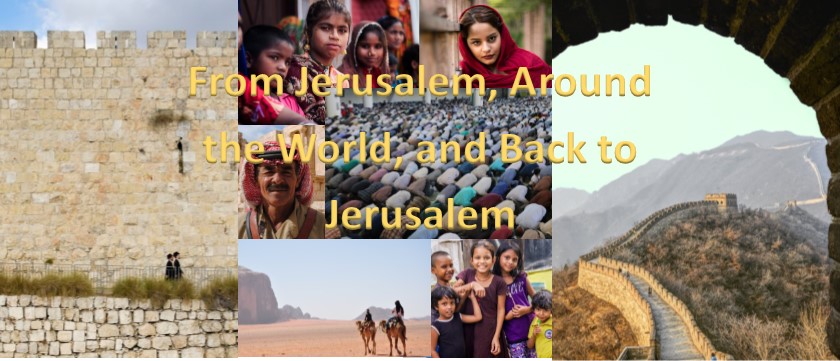 Read Eugene Bach’s interview with PneumaReview.com about the Back to Jerusalem movement: “From Jerusalem, Around the World, and Back to Jerusalem”
More from www.BackToJerusalem.com:
BTJ update from Egypt: https://www.youtube.com/watch?v=NwYFMH_9lLc