Charismatic Leaders Fellowship 2019
The Charismatic Leaders Fellowship (CLF) is the descendent of the Charismatic Concerns Committee (CCC). The CCC was an important group of charismatic and Pentecostal leaders formed in the 1970s to monitor, advise and correct the disparate currents and personalities of the Charismatic Renewal. For instance, the CCC was instrumental in correcting the “Florida Four” and their discipleship extremism before it spread widely within the Renewal. The CLF is not as influential today as the CCC was in the 1970s, but still remains and important group. In recent years Roman Catholic participation have been predominant, as was this year, but not to the exclusion of Pentecostal and Protestant charismatic concerns.
 The general theme this year was “Christian Unity,” but other topics were presented. This CLF meeting was one of the most important in years. Its presenters gave information about to new breakthroughs in Christian unity and charismatic growth. The most important item discussed, an impending radical turn of the Catholic Church towards a universal charismatic manifestation, will be discussed below.
The 2019 CLF met in Augusta, hosted by the Alleluia Community of that city. CLF personnel were hosted by members of the community at their homes. I found this aspect of the CLF meetings particularly pleasant, as I had the pleasure of meeting Christian families who were dedicated to living in a community covenant, as in Acts 2. (This would be a separate article by itself).
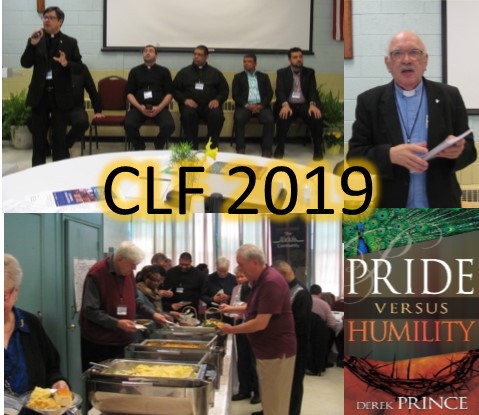
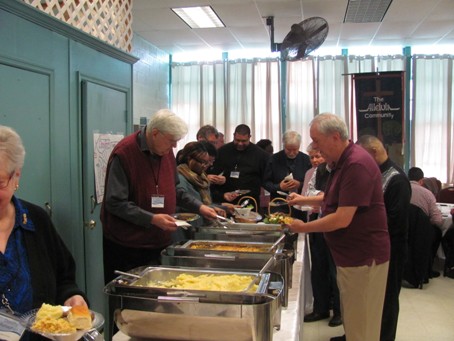
 The meeting began with a fellowship dinner on Monday night at the Alleluia Community School’s cafeteria, where all the meetings were held. The chow was especially good at this CLF, and one of the participants quipped that “People think we come here to learn about what is happening in the charismatic churches, but we really come for the food.”
The CLF Coordinator, Scott Kelso, led off with an exhortation to not forget the doctrine of the Second Coming and preach it regularly. This was followed by a presentation by Chuck Hornsby, an elder of the Alleluia community, on spiritual warfare. His talk was an appendix to the teachings from last year’s CLF and was an excellent one. He stressed several ways that Christian can come under demonic influence. These include not believing in the demonic realm, or having spiritual habits like unforgiveness and bitterness. Pride is a great entry, and Hornsby suggested an unusual remedy to this: purposely lose an argument or two you have with a Believer.
Session three was dedicated to highlighting books published the previous year by members of the CLF. A representative of Derek Prince Ministries brought a case of a new book by Derek Prince, Pride Versus Humility, which were given out free,[1] This was unexpected as Prince, who had often come to the CCC, has been dead for over a decade (he died in 2003). What happened was that Rev. Prince’s many radio talks, mission talks at CFO’s etc., are now being edited and brought out as new books. Pride Versus Humility was an example of this. Derek Prince really was one to the most outstanding teachers of the Charismatic Renewal, and these new works are excellent resources for adult Bible study groups or any form of Christian adult education.
 Fr. Timothy Cremeens, a priest of the Orthodox Church in America, and a regular at the CLF, presented his book, Marginalized Voices: A History o the Charismatic Movement in the Orthodox Church in North America.[2] The title tells it all. Unlike the Catholic Church whose bishops generally welcomed the Charismatic Renewal, Orthodox bishops stoutly rejected the movement, a tragic thing indeed. The negative story is important for Christians as a cautionary tale about spiritual opposition from areas that are not expected.
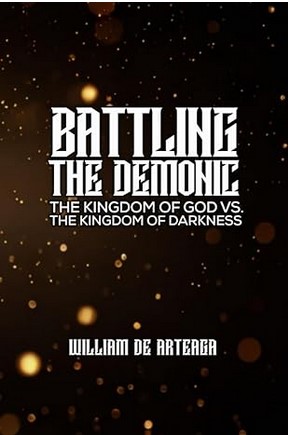
Rabbi (Messianic Jew) Kinzer presented his new work, Jerusalem Crucified, Jerusalem Risen.[3] Don Swenson, a trained sociologist and Alleluia Community member presented his work on the dynamics of the Alleluia Community, Alleluia!: The Return of the Prototype.[4] This is an important work for those interested in covenant communities. Yours truly was next and presented his work, The Public Prayer Station: Taking Healing to the Streets and Evangelizing the Nones.[5] I am grateful that my presentation was very well received.
The next session was presented by Peter Dripp, another elder of the Alleluia Community, who has specialized in studying ecumenism. He stressed how important unity and respect among Christians of all denominations is to fulfilling Jesus’ command for believers to be one. He noted that anger towards other Christians generally arises when we stay exclusively within our own denomination.
This was followed by a panel discussion dedicated to the progress and challenges of ecumenical unity. Various leaders gave their perspectives. Especially memorable was the presentation of a delegation of Roman Catholic priests from Brazil who reported that ecumenical cooperation between Evangelicals and Catholics is growing but still difficult in that Country. The history between the two has been one of sustained and sometimes violent opposition by the majority Catholics against the minority Evangelicals. This has greatly changed in recent years as Pentecostalism has grown in Brazil both among independent Pentecostal churches and inside the Catholic Church, where now a majority of practicing Catholics are charismatic. However, memories of persecution are still a drag on better relations.[6]
Mattei Calisi, deacon and coordinator for the Pope with Charismatic Catholics in Italy, where Protestant Catholic relations have been especially difficult, described that things are now moving to real dialogue and unity, but that much prayer and intentional relationship building is still needed. He affirmed that ultimately, it is the Holy Spirit who brings unity. Speakers indicated that real unity comes from Christians who are firm in their own denomination, yet loving and open to their brothers and sisters in other denominations.[7]
Session 5 was dedicated to the present situation in the Jewish Messianic movement, and especially to the respect and importance the dialogue between Messianic Jews and the Catholic Church has gained within the Catholic hierarchy in recent years. When the dialogue began, in the year 2000, it was considered of minor importance by the Roman Curia (governing body of the Catholic Church) but year by year it gained in prominence, shown by upgraded wording of the documents which the Catholic Church. Pope-talk uses certain key word to signify minor interest, interest, and great interest. The Messianic Jewish dialogue traversed all the degrees, and now has excellent standing.
Next up came a presentation on the “New Charismatic Churches.” By the Rev. R. Roberts from England, He studied these churches in reference to their dialogue with the Vatican. Catholic officials were puzzled by these new churches, such as the Vineyard, that were Pentecostal yet did not share traditional theology or ecclesiology with classical Pentecostal churches. Indeed, Roberts showed that these churches cared very little about structured hierarchies, and were more relational centered. But they seemed to be very effective in evangelization and enabling spiritual growth.
Session nine was dedicated to the forthcoming Towards Jerusalem Council II to meet in 2022. This gathering of worldwide Christian and Messianic Jewish leaders intends to put a new face on the first Council of Jerusalem (Acts 15) which allowed for the existence of the Gentile Church while the Jerusalem Church continued as a Jewish/Christian community observing the Mosaic Law. After a hundred years, the Gentile Church grew so rapidly that the Jewish/Christian community was considered strange and eventually cast out of the Church as heretics. Jerusalem II will invite the Messianic Jews who observe the Mosaic Law back into complete fellowship with the Gentile Churches.

The last session was given to the expression of ecumenical cooperation in local ministry. Speakers from a multi-denominational network of churches in Columbus, Ohio, talked about how they united to “take the city” for the Lord, describing how they work together. These churches, mostly charismatic and Pentecostal, pray together and evangelize together. They have selected a strategy of picking a single zip code in the Columbus area and focusing their prayers, ministry and evangelization efforts in that area. All activities are coordinated with the police and government officials who have been thrilled to see crime rates come down in the targeted zip code area. This is a model for every city in America.
In the same session, the former major of Augusta, Georgia, described how he began a monthly prayer breakfast for church and civic leaders in his city, and how the prayers, discussions, and fellowship brought the wonderful fruit of inter-racial harmony and less crime. Augusta, in fact, could have been a hot spot of racial divisions and confrontations, but it did not become so.
The most surprising and exciting of all the sessions was session eight. It was presented by Mattei Calisi and Johannas Fichtenbauer, both of whom are important leaders in the European Catholic Charismatic movement and have direct communications with the Pope. They described the formation of a new Papal initiative to gather together the Catholic charismatic groups. All such groups will be under CHARIS, a new agency that reports to the Pope. This was decreed several years ago, but is now going into high gear.[8] The official Vatican documents tell of greater efficiency, etc.
But behind the scene there is a more complex story. Pope Francis, when a pastor and Bishop in Argentina, observed Catholic charismatic and other charismatic groups and greatly admired their evangelical zeal and faith. When he became Pope he was disgusted with the rivalry and turf wars between different Catholic charismatic agencies, and was determined to stop that. Thus, CHARIS was created. What is astounding, exciting, and indeed revolutionary, is that the Pope intends to make the entire Catholic Church charismatic. He is pushing for “life in the Spirit’ programs in all dioceses and parishes and encouraging the broadening of the renewal in every way. WOW! If Pope Francis can pull it off, and of course there is resistance to this, it would be a monumental advance of Spirit-filled churches in the world. The sputtering American Catholic Renewal, which was strong in the 1970’s, would come to life again.
PR
Notes
[1]Derek Prince, Pride Versus Humility (New Kensington: Whitaker House, 2016).
[2]Timothy Cremeens, Marginalized Voices: A History of the Charismatic Movement in the Orthodox Church in North America, 1972-1993 (Eugene: Pickwick, 2018)
[3] Mark Kinzer, Jerusalem Crucified, Jerusalem Risen: The Resurrected Messiah, the Jewish People, and the Land of Promise (Eugene: Cascade Books, 2018).
[4] Don Swenson, Alleluia!: The Return of the Prototype (New Life Publishing: 2018).
[5] William De Arteaga, The Public Prayer Station: Taking Healing to the Streets and Evangelizing the Nones, (Lexington: Emeth Press, 2018). [Editor’s note: Read Catherine Miller’s review]
[6] Brazil’s Catholics oppressed and marginalized Evangelicals for much of the 20th Century, but were not as bad as the Colombians, where Evangelicals in rural areas are still harassed. Across the ocean, in Spain, when Franco’s troops regained territory from the Spanish Republic during the Spanish Civil War (1936-1937) they gathered up all communists, anarchists and socialists and shot them. They did the same to Protestants!
[7] This is demonstrated most dramatically in history of Northern Ireland. The fighting and atrocities (“the troubles”) were carried out by both Protestant and Catholic lukewarm believers who used their religion as an identity point. The push for peace and reconciliation came from dedicated Christians, especially charismatic Christians, from both sides.
[8]Dale Coulter, “Pentecostal Thoughts on Pope Francis,” First Things Posted 12/5/13. https://www.firstthings.com/blogs/firstthoughts/2013/12/pentecostal-thoughts-on-francis-and-the-gospel-of-joy