

Equipping to preach the Bible: an interview with Finny Philip
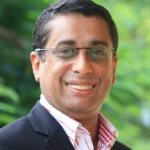
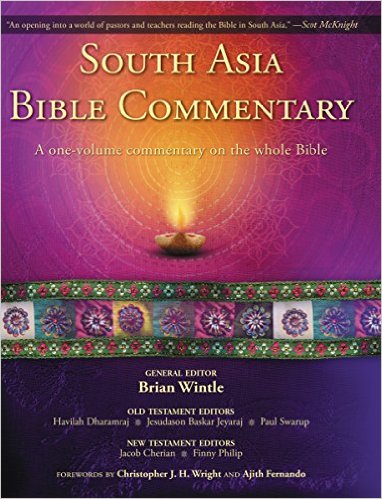
John Lathrop interviews Finny Philip about the new South Asia Bible Commentary.
John Lathrop: Please give us a brief history of the development of this commentary.
Finny Philip: The South Asia Bible Commentary (SABC) is a project of Langham Partnership International and partners. Langham is the organization founded by the late evangelical scholar, author and leader John Stott.
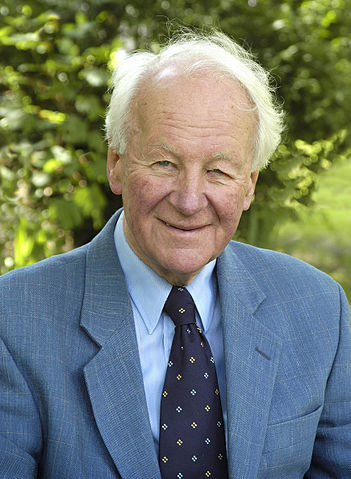
Image: Langham Partnership International / Wikimedia Commons.
The project started in 2008 when a few Langham scholars in India came together for fellowship in Kolkata. The project is led by Brian Wintle (New Testament scholar), three Old Testament theological editors (Drs. Paul Swarup, J.B. Jeyraj, Havilah Dharmraj) and two New Testament theological editors, Dr. Jacob Cherian and myself.
Who are the contributors to this volume and what countries are they from?
Finny Philip: The writers are all South Asian—scholars from India, Pakistan, Nepal, and Sri Lanka contributed to the volume. The commentaries have been written by over ninety scholars. This resource represents the first effort of its kind written by South Asians.
What denominations do the commentators come from?
Finny Philip: Pentecostals, Baptist, Methodist, Brethren, Church of North India, Church of South India, and the rest are evangelicals and charismatics. Of the 92 scholars who contributed to SABC, 18 are Pentecostals including the two New Testament editors.
What are some of the main theological concerns facing the church in South Asia at this time?
Finny Philip: There a lot of issues that the commentary deals with.
To speak to South Asians powerfully and with relevance, the commentary uses local metaphors and imagery and helps its users apply the Bible to the challenges in their culture. In addition to the commentary, more than 100 topics are explored from a biblical perspective, including:
Bribery & Corruption
Caste
Children At Risk
Christian Bhakti (devotion) in South Asia
Death and Life after Death
Human Trafficking
Jesus in South Asia/ South Asian responses to Christ
Karma and Fatalism
Living as the People of God in South Asia
Mission of God in South Asia
The Finality of Christ
The Holy Spirit in South Asian Spirituality
Violence against Women
Witchcraft and Demons
Yoga, Gurus and God men
Are there any particular features of this commentary that you would like to mention?
Finny Philip: Dr. Jacob Cherian gave an interview about this that I quote from. He is the Vice President of the Premiere Assemblies of God College in India, South Asia Bible College, and he is one of the New Testament theological editors for the SABC.
Need for Education
With little or no training available for many of these grass-root level workers, teaching that doesn’t line up with Scripture can spread easily. Despite a lack of pastoral resources, Cherian says there’s remarkably easy access to television evangelists, who sometimes preach biblically but many times do not. “Sometimes American evangelistic conglomerates seem to be looking for franchises in the majority world rather than genuine partners. Many seem to want a little outpost here, which further muddles the theological waters. There are also Indian television preachers mimicking Western preachers, who tend to spread a prosperity gospel. …
Addressing Cultural Challenges
Christians in India face unique challenges as they integrate a minority religion into the dominant Hindu culture. “There is a big need for biblically balanced teaching of identity issues. How should Christians present themselves? How should we present our faith? Most of the time, a particular group of Christians maintains their denominational culture. A Methodist church in India, for example, looks very much like a Methodist church in the U.S. Churches often sing Western worship songs that have been translated into the local language, but music is a large part of culture and varies across cultures. Many people feel that the way the gospel is being presented in India is too Western—that we should be Hindu culturally while being disciples of Christ.”
But it’s not easy deciding which elements are religious and which are merely cultural. Some Yeshu bhakta groups (Jesus devotees) prefer to hold a service that may resemble a Hindu religious service, using indigenous music forms and even some Sanskrit, rather than something that looks very much like a Western Christian service. “How do we present the gospel and not make Jesus look like he’s a white American? It’s a challenge that affects every area of gospel liturgy.”
The Relevancy of Scripture in an Indian Context
Most Western Bible study material is naturally geared toward Christians from a Western background. But Cherian is part of a growing group of scholars dedicated to providing resources for Christians in South Asian cultures. They have unique insight into the relevancy of Scripture in this context. “Proverbs are ancient wisdom. India also has traditions of proverbs. In Tamil Nadu, a state in southern India, there was a famous poet, and there are people who follow the teachings of that poet as a religion. So commentators or scholars in south India writing on the book of Proverbs must compare and interact with this poet.”
“There are many other passages or biblical themes that have a unique context in India. Millions of Indians go to sacred rivers to wash their sins away, so if you are writing something on baptism, you are going to address how Christian baptism differs from the religious bathing that millions of Hindus do, and how that would relate to them. We cannot let that topic go without saying something about the idea of purity and pollution in Old Testament texts. In the rural areas, some caste groups consider others impure. So discussions of purity and pollution can resonate with people differently.”
[From Jessi Strong, “The Gospel in a Diverse Place” Bible Study Magazine (Mar/Apr 2015).]
This volume will be available in the United States. Please give our readers some more information about this.
Finny Philip: Yes, it will be available from Zondervan to all of the major book distributors.
Publisher’s page: http://zondervanacademic.com/products/south-asia-bible-commentary
Preview the SABC: https://books.google.com/books?id=6PcQBwAAQBAJ








Gentlemen, thanks for the introduction to this work. What can you tell me about the commentators for Luke and Acts? Are they Pentecostal?
Gentlemen, thanks for the introduction to this work. What can you tell me about the commentators for Luke and Acts? Are they Pentecostal?
Great inspirational work!
It is truly a milestone in the Christian History of South Asia.
I have had the privilege of being theologically trained under the tutelage of Dr David Clarence for the Old Testament and Dr Jacob Cherian for the New Testament.
I owe a lot to these two great servants of God for laying a proper foundation in my theological narrative.
I strongly recommend this commentary to all who desire to understand the Bible for all its worth.
Rev Abraham Alfred, Bangalore
Great inspirational work!
It is truly a milestone in the Christian History of South Asia.
I have had the privilege of being theologically trained under the tutelage of Dr David Clarence for the Old Testament and Dr Jacob Cherian for the New Testament.
I owe a lot to these two great servants of God for laying a proper foundation in my theological narrative.
I strongly recommend this commentary to all who desire to understand the Bible for all its worth.
Rev Abraham Alfred, Bangalore