Loren Sandford: Yes, There’s More

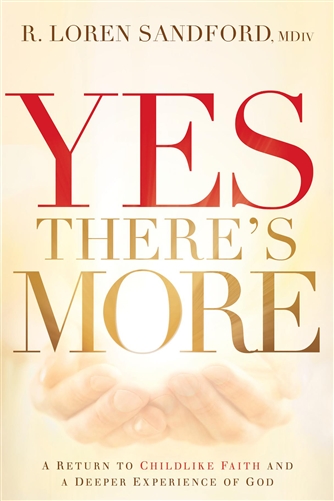
Available from booksellers on April 7, 2015.
 R. Loren Sandford, Yes, There’s More: A Return To Childlike Faith And A Deeper Experience of God (Lake Mary, FL: Charisma House, 2015), 240 pages. ISBN-10:1621369803 ISBN-13:978-1621369806
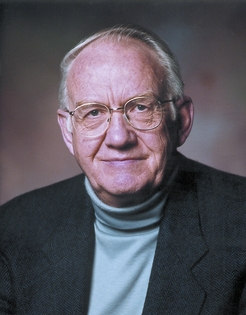
R. Loren Sandford is the senior pastor of New Song Church and Ministries located in Denver, Colorado. He has written other books, a few of which deal with the prophetic, these include: Purifying the Prophetic, Understanding Prophetic People, and, The Prophetic Church. In this current book he addresses a different subject: the disappointment that many Christians feel about their experience of God. Sandford writes about things that will not help lead us into a deeper experience of God and things that will.
The book has twelve chapters. In these chapters, Sandford covers a number of important topics. He writes about spiritual hunger, the reasons why people feel disappointment with their spiritual experience, the place of feelings in our faith, the importance of our spiritual identity in Christ, and worship. A major emphasis of the book is our relationship with one member of the Trinity who is often overlooked: God the Father. The author gives considerable space to writing about intimacy with the Father and having the Father’s heart, nature, and character (page 56).
Charismatic readers may be surprised at the teachings and practices that the author takes issue with. The following quote is informative in this regard. “I call them ‘spiritual technologies’ because they have been presented as methods and procedures to produce a desired result—if we could just say the right words or pray the right things or confess certain truths or address the right demons in the right ways, we could eliminate suffering and produce the happiness that we desire” (page 8). Later in the book he writes “Satisfaction for the hunger we feel cannot be found in methods, confessions, ritual prayers, impartations, or any other form of purely human effort” (page 116).
Sandford does not leave us without an answer to our spiritual quest. He advocates a return to pure childlike trust and devotion to God (chapter 2). This childlike humility he calls “innocence” (page 21). In this innocence we rest in a God who loves us. This really comes down to the matters of faith and obedience. There are, of course, challenges along the way. Two of them are feelings and delays; the author addresses both of them. He says that faith is not a feeling “The idea that feelings are truth and faith is a feeling is a massive deception perpetrated on us in recent decades to trap and imprison untold numbers of us in striving” (page 46). Faith is trust in God but it also involves action, responding in obedience to the call and command of God (page 43). Sandford says that there are two pillars that we need to have in our life in order to move forward, we need a revelation of who God is (pages 60-61) and a revelation of His ways (pages 61-64). Divine delays can also have a negative impact on believers. Those who feel that they are currently “on hold” may draw encouragement from the chapter titled “The Fruit of the Barren Womb.” In this chapter Sandford draws upon the experiences of Sarah, Rachel, Hannah, and Elizabeth to show that great blessings can come to, and through, those who endure long delays.
There is also a chapter devoted to the subject of worship. In this chapter Sandford writes about three kinds of worshipers: the spiritual self-pleasers, the “bored with it” worshipers, and those who worship in Spirit and in truth (pages 172-182). In the area of worship and other areas covered in the book the author urges us to move away from self-focus and be more God-focused. This is the way forward.
The author asks some hard questions, questions that will challenge and expose our hearts. For example, “Do I just want to be happy or do I want to be like Jesus? Do we want to prophesy for the Lord’s sake, or because prophesying will make us part of the supernatural experience?” (page 8). This book may challenge some of us but it can also comfort us. If we desire more of God in our experience we can have it. There is more for us! However, it will not found in the methods and fads that periodically make their way through the church, instead it will be found elsewhere. Pastor Sandford shows us the way forward and it is not complicated.
Reviewed by John P. Lathrop