
SPS at SBL 2017


Rick Wadholm Jr. gives a short review of the 2017 sessions of the Society for Pentecostal Studies during the annual meeting of the Society of Biblical Literature.
I was privileged to attend three of the Society for Pentecostal Studies sessions during the annual meeting of the Society of Biblical Literature in Boston, Massachusetts on November 18-20, 2017. The three sessions were excellent examples of ways that Pentecostal scholarship continues to advance Pentecostal concerns and to engage the wider scholarly community as such. The sessions were all engaging and well attended (with the rooms either filled to capacity or very nearly). The attendees were not only Pentecostal scholars, but also those who had interest in the paper presentations and themselves engaged (sometimes for a first time) with the Pentecostal/Renewalist scholars presenting. SPS provides a wonderful opportunity for Pentecostal scholars and scholars of Pentecostalism/s to participate in conversations within the academy and to further research in a multitude of avenues (as evidenced by the presentations laid out all too briefly below).

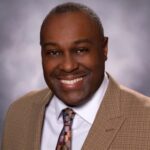
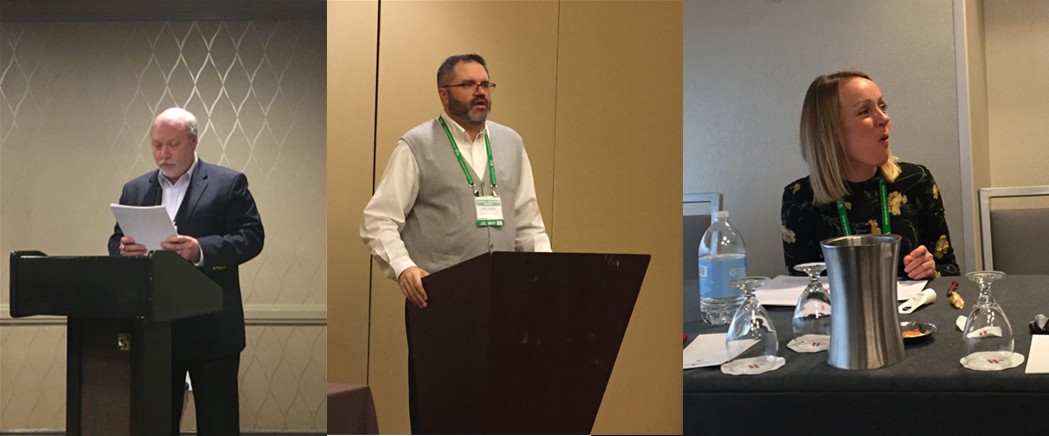
From left to right: Van Johnson; David Hymes; Meghan Musy.
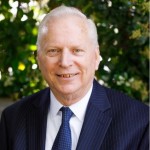
From left to right: Lee Roy Martin; Robby Waddell; Hannah Mather.

The second session (Sunday, November 19) I attended was entitled “A Conversation with Harvey Cox on Pentecostalism, Markets, Scripture, and the Future of Faith” (sadly Harvey Cox was unable to make it to SBL due to poor health). Robby Waddell led this lively session well as four panelists responded to various works of Cox. David Daniels offered a hopeful reading of Pentecostalism in light of Cox’s work (particularly Fire from Heaven). He spoke to ways in which the future remains bright for Pentecostals if we will heed to our founding vision of being a movement of the poor and marginal in society. Cheryl Bridges Johns followed with an engagement of Cox’s work on markets (specifically mentioning his The Market as God). Overall the sense of her assessment of where Pentecostals are at currently is not as positive. Rickie Moore then presented on the subject of Scripture with specific reference to Cox’s How to Read the Bible. His appraisal was critically welcoming as a positive contribution to a general readership on the Bible. Frank Macchia offered the final presentation on Cox’s The Future of Faith with a number of reflections on the ideas of orthodoxy within the historic streams of the Church. This was followed by a lively question and answer time wherein vigorous discussion centered around the ways in which Pentecostalism/s future is brighter or dimmer depending upon the various outlooks of contextualization in relation to the broader Church and world.

The third session (Monday, November 20) I attended was led by Melissa Archer on “Pentecostal Reflections on Text and Method in the New Testament.” Chris Green opened the session with “The Present Tense of Calvary: Trinity, Time, and Sacrament.” His paper was engaging as always offering a close reading of texts from Hebrews in Trinitarian theological perspective with the idea of ‘time’ as reorienting. (Not surprisingly) he offered some intersections with Churchly participation in the sacraments as participatorily demonstrating this Trinitarian conception of ‘time’. Hannah Mather followed with “Spirit Hermeneutics: Avenues for Further Research.” Following a survey of Pentecostal hermeneutics she offers that a more open form of hermeneutic that enters into the wider forays of ecumenical dialogue is an avenue that seems most fruitful for further engagement. Mark Cartledge concluded the session with his paper: “Anointed to Proclaim Good News to the Poor (Luke 4.14-30): Towards a Renewal Public Theology.” One area of particular interest that Cartledge raised was the ways in which the Good News (including healing) offers economic advantage to the poor as an underdeveloped notion in public theology.

PR