
The Primacy of Loving God: The Missing Ingredient in Discipleship

Most discipleship methods and books admonish believers to do things, but a growing love relationship with our God should be the primary goal of the Christian life.
Discipleship methods vary from church to church, denomination to denomination. I have been in a few of each. New believers are typically instructed to read the Bible, pray at least x number of minutes a day, go to church, tithe, attend small groups, and perform a litany of other activities. However, we would be hard-pressed to find classes or instructions on (for example) “The Necessity of Loving God First”, or “Steps to Divine Intimacy.”
Is it assumed that new believers have a built-in love for God that cannot be augmented in any way or that they do not need help in learning how to love God intimately, as Jesus put it, with all their hearts, souls, minds, and strength?
‘And you shall love the Lord your God with all your heart, with all your soul, with all your mind, and with all your strength.’ This is the first commandment (Mark 12:30).1
Maybe churches do not think that they need to teach believers the primacy of loving God in all of life. Maybe it is assumed believers already do or will. If this is the case, those churches need to change their discipleship methodology.
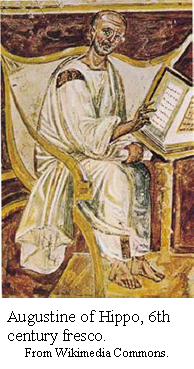 As we have seen in Mark 12:30, God’s priority is for His people to engage in a love relationship with Him, and from that mutual relationship, commandments and Christian duties are done naturally, from a heart consumed with love for God. Augustine is believed to have said, “Love God, then do as you please.” When we focus on loving the Lord foremost, all the other desires and motives we have will reflect a loving spirit garnered in those times of intimate communion with God.
Delight yourself also in the Lord, And He shall give you the desires of your heart.
Psalm 37:4
When we delight ourselves in God, He will fill our hearts with those desires He wants us to have. Then when those desires turn into actions, the actions will be done from a heart that not only has delighted itself in God first, but also continues to delight itself in Him even while those actions are being performed.
Many figures throughout church history emphasized the primacy of loving God. Below is a small sampling:
 Bernard of Clairvaux, d. 1153
“You want me to tell you why God is to be loved and how much. I answer, the reason for loving God is God Himself; and the measure of love due to Him is immeasurable love.”2
 Albertus Magnus, d. 1280
“I have had the idea of writing something for myself on and about the state of complete and full abstraction from everything and of cleaving freely, confidently, nakedly and firmly to God alone, so as to describe it fully (in so far as it is possible in this abode of exile and pilgrimage), especially since the goal of Christian perfection is the love by which we cleave to God.”3
Mechtild of Magdeburg, d. 1280
“Lord, you are my lover, the object of my desire.”4
Thomas Bradwardine, d. 1349
“My God, I love you above all else, and I desire to end my life with you. Always and in all things with my whole heart and strength I seek you. … Grant, therefore, most gracious God, that I may always love you for your own sake more than anything else, and seek you always in and everywhere in this present life, so that at the last I may find you and for ever hold fast to you in the life to come.”5
 Thomas à Kempis, d. 1471
“Blessed is he who appreciates what it is to love Jesus and who despises himself for the sake of Jesus. Give up all other love for His, since He wishes to be loved alone above all things … Love Him, then; keep Him as a friend … He wants your heart for Himself alone, to be enthroned therein as King in His own right….How foolish and vain if you desire anything but Him! … Life without Him is a relentless hell, but living with Him is a sweet paradise.”6
Francis De Sales, d. 1622
“Genuine, living devotion…is simply true love of God.”7
A.W. Tozer, d. 1963
“Orthodox Christianity has fallen to its present low estate from lack of spiritual desire. Among the many who profess the Christian faith scarcely one in a thousand reveals any passionate thirst for God.”8
“Yet for all God’s good will toward us He is unable to grant our heart’s desires till all our desires have been reduced to one.”9
“But it is wholly impossible to love the unknown. There must be some degree of experience before there can be any degree of love. Perhaps this accounts for the coldness toward God and Christ evidenced by the average Christian. How can we love a Being whom we have not heard nor felt nor experienced? We may work up some kind of reverence for the noble ideals the thought of God brings to our minds; we may feel a certain awe when we think of the high and holy One that inhabiteth eternity; but what we feel is hardly love. It is rather an appreciation of the sublime, a response of the heart to the mysterious and the grand. It is good and desirable, but it is not love.”10
“It is part of my belief that God wants to get us to a place where we would still be happy if we had only Him!”11
Unfortunately, we are seldom advised that a growing love relationship with our God should be the primary goal of the Christian life. This is a lamentable omission, for when we increasingly fall in love with God, we will become more mature believers, we will become equipped against sin, we will be better stewards, and our marriages will be enhanced. In other words, as we advance in our intimate love relationship with God, all areas of life are supernaturally benefited from our living in God’s loving presence.
— Bernard of Clairvaux
Tozer said, “The teaching of the Bible is that God is Himself the end for which man was created. … The first and greatest commandment is to love God with every power of our entire being. Where love like that exists there can be no place for a second object.”12 A growing love and passion for God will consume a believer much more than addictions, or sinful habits, or anything else of an insidious nature invading their life.
To start discipling believers into a passionate, loving relationship with God, we can show them that the Holy Spirit is the One Who enables believers to call out, “Abba, Father”, thereby helping us to love God as a child loves his or her “daddy.”
You received the Spirit of adoption by whom we cry out, “Abba, Father.” The Spirit Himself bears witness with our spirit that we are children of God (Romans 815b-16).
And because you are sons, God has sent forth the Spirit of His Son into your hearts, crying out, “Abba, Father!” (Galatians 4:6)
Scripture also tells us that “We love Him because He first loved us” (1 John 4:19). Tozer commented, “We pursue God because, and only because, He has first put an urge within us that spurs us to the pursuit.”13
Next, we can teach believers those activities that amplify one’s love for God and one’s desire to just be with God. Specifically, believers can be advised to:
Spend time with God, just to be with Him—not to ask for or obtain anything. Spend quiet time just soaking in His presence. Ask Him to come and fellowship. He’s not shy.
Read the Scriptures in a conversational way—perhaps asking the Lord, “what does this passage mean?”, or “why did You do such and such in this circumstance?” Then listen. He talks to His children.
Ask Him what to do at the church attended or how to show forth His love in the neighborhood. Then look for His leading.
Anything that leads a believer to love and seek God, with the primary goal of experiencing more of Him and nothing else, enhances a believer’s communion with the Father. This will facilitate the believer’s lifelong discipleship journey of loving God with all of one’s heart, soul, mind, and strength.
It is a journey of unfathomable beauty, joy, and victory.
You will show me the path of life;
In Your presence is fullness of joy;
At Your right hand are pleasures forevermore.
Psalm 16:11
PR
Notes
All Scriptures are from the NKJV.
1 See also Matthew 22:37 and Luke 10:27.
2 On Loving God, Chapter 1.
3 On Cleaving to God, http://www.ccel.org/ccel/albert/cleaving.html. Accessed 11/9/2005.
4 The Flowing Light of the Godhead.
5 Quoted in 2000 Years of Prayer, pg. 163.
6 The Imitation of Christ, Hendrickson Publishers, 2004. pgs. 41-42.
7 Introduction to the Devout Life, Doubleday, 1989, pg. 40.
8 The Root of the Righteous, pg. 56.
9 Born After Midnight, pg. 8.
10 The Root of the Righteous, pg. 142.
11 The Counselor, pg. 82.
12 Man: The Dwelling Place of God, pg 58.
13 The Pursuit of God, pg 11.