
The Second Blessing of Spirit Baptism: British Reformation Roots of the Pentecostal Tradition

 The belief that Christian conversion was followed by a “second blessing” experience originated with eighteenth century Anglican priest and founder of Methodism, John Wesley. As elaborated by Wesley and his associate, the English divine and apologist John Fletcher, this belief laid down much of the theological agenda for the nineteenth-century Holiness movement and the twentieth-century advent of Pentecostalism. Indeed, the reality of a further blessing of the fullness of the Christian life subsequent to conversion provided a theological context for the development of the Pentecostal “baptism in the Spirit.”

Wesley called attention to the inward, experiential dimension of faith. This emphasis was in part a reaction to the Calvinism that permeated the social and political life of the English world in the seventeenth century. Also undergirding the movement was the “living faith” Wesley imbibed from his encounter with German Pietism. Wesley’s contact with the Moravians, Pietists within eighteenth-century Lutheranism that drew from Catholic mysticism, gave him an awareness for the emotional dimension of faith. This led to his personal conversion, during which as he described, “I felt my heart strangely warmed.”[1] Wesley understood the Christian life as consisting of two separate experiences of grace—conversion (or justification), and Christian perfection (or sanctification). The first, justifying grace, covered over all the “actual sin” one had committed. Sanctifying grace, on the other hand, was given for the “residue” of sin that remained after one became a Christian—the inherited (original sin) from Adam.[2] According to Wesley, sanctifying grace occurred subsequent to the justifying grace of conversion. Wesley refers to the reality of this subsequent sanctifying experience as “Christian perfection,” “perfect love,” and “heart purity.”[3] While this experience is gradual and works itself out over the entirety of the Christian life, as Peter Althouse explains, there is also an instantaneous dimension of sanctification for Wesley. It is this latter “crisis” sense that undergirds the Holiness view of sanctification and the Pentecostal baptism in the Spirit.[4]
attest that I am born again;
come, and baptize me now with fire.
—Charles Wesley

The Holiness movement, including the Keswick Higher Life stream, is indebted to the theology of early Methodism. The Keswick movement began in England in the 1870’s through the work of Holiness leaders, notably the Quakers Robert P. and Hannah W. Smith. Robert and Hannah’s message gradually gained acceptance in the largely Calvinist-Reformed setting of seventeenth-century Britain. Keswick theology maintains with Wesleyan adherents a subsequent experience separate from the “new birth” (conversion); namely, the “fullness of the Spirit” or “higher Christian life” identified with baptism in the Spirit. The Keswick tradition defines Spirit baptism not primarily in terms of purification, but drawing from Fletcher, as empowerment for ministry; sanctification becomes a progressive experience transpiring over the course of one’s life. The Keswick movement appealed to Methodists and non-Methodists alike, opening the Holiness movement to Anglican, Presbyterian, Congregationalist, and Baptist traditions.[11]
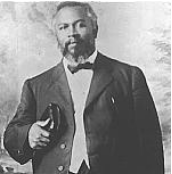
The soteriology of Pentecostal founder William Seymour also followed the Holiness trajectory crystalized by Wesley and Fletcher. Seymour identified sanctification with a subsequent work of grace beyond conversion that brought cleansing of the sin nature.[13] For Seymour, sanctification was necessary to receive the culminating blessing of Spirit baptism. Seymour considered Spirit baptism, not so much as a “third work of grace,” but as the gift of power to assist in the ministry of the gospel.[14] I close with the words of Charles Wesley, John’s brother, Methodist pioneer and author of some 6,000 hymns, who conveyed the significance of Spirit baptism for the ongoing life of faith in I Want the Spirit of Power Within:
I want the Spirit of power within,
of love, and of a healthful mind:
of power, to conquer inbred sin;
of love, to Thee and all mankind;
of health, that pain and death defies,
most vigorous when the body dies.
When shall I hear the inward voice
which only faithful souls can hear?
Pardon, and peace, and heavenly joys
attend the promised Comforter:
O come! and righteousness divine,
and Christ, and all with Christ, are mine.
Come, Holy Ghost, my heart inspire!
attest that I am born again;
come, and baptize me now with fire,
nor let Thy former gifts be vain:
I cannot rest in sins forgiven;
where is the earnest of my heaven?
Where the indubitable sea!
that ascertains the kingdom mine?
the powerful stamp I long to feel,
the signature of love divine:
O shed it in my heart abroad,
fullness of love, of heaven, of God.[15]
PR
Notes
[1] John Wesley, The Journal of the Rev. John Wesley A.M , edited by Nehemiah Curnock (London: Epworth, 1938), vol. 1, p. 476; see also Allan Anderson, An Introduction to Pentecostalism (New York: Cambridge University Press, 2004), p. 25; and David A. Womack and Francesco Toppi, Le radici del movimento Pentecostale (Rome, It.: ADI Media, 1989), pp. 98-101.
[2] John Wesley, The Works of John Wesley (Grand Rapids, MI: Zondervan, 1959); see also Vinson Synan, The Holiness-Pentecostal Tradition: Charismatic Movements in the Twentieth Century (Grand Rapids: Eerdmans, 1997), p. 6. Actual sin is also known as “sins of commission” (p. 6); and Tony Lane, A Concise History of Christian Thought, rev. ed. (Grand Rapids, MI: Baker Academic, 2006).
[3] Anderson, Introduction to Pentecostalism, pp. 25-26.
[4] Peter Althouse, “Wesleyan and Reformed Impulses in the Keswick and Pentecostal Movements,” Pneuma Review (June 20, 2014), /peter-althouse-wesleyan-and-reformed-impulses-in-the-keswick-and-pentecostal-movements.
[5] Vinson Synan, “The Pentecostal Century: An Overview,” in The Century of the Holy Spirit: 100 Years of Pentecostal and Charismatic Renewal, 1901-2001 (Nashville, TN: Thomas Nelson, 2001), p. 2.
[6] Kenneth Cain Kinghorn, The Heritage of American Methodism (Abington, 1999), p. 18.
[7] Donald W. Dayton, Theological Roots of Pentecostalism (Grand Rapids, MI: Hendrickson, 1987), pp. 48-50.
[8] John Fletcher, The Works of the Rev. John Fletcher (London: Printed for Thomas Allman), vol. 2, p. 538; see also Eddie L. Hyatt, 2000 Years of Charismatic Christianity: A Twenty-first Century Look at Church History from a Pentecostal/Charismatic Perspective (Lake Mary, FL: Charisma, 2002), pp. 105-107.
[9] “Letter of John Fletcher to Mary Bosanquet, March 7, 1778,” in Wesley’s Designated Successor: The Life, Letters, and Literary Labors of the Rev. John William Fletcher, ed. Luke Tyerman (London: Hodder and Stoughton, 1882), p. 411; see also Dayton, Theological Roots of Pentecostalism, pp. 48-51.
[10] Ibid., pp. 51-52.
[11] Anderson, Introduction to Pentecostalism, p. 28; see also J. C. Pollock, The Keswick Story—The Authorised History of the Keswick Convention (London: Hodder and Stoughton, 1964). The Anglican T. D. Harford–Battersby invited Robert and Hannah, as well as South African Reformed pastor Andrew Murray, among others, to his parish in Keswick for annual conventions.
[12] C. E. Jones, “Holiness Movement,” in the New International Dictionary of Pentecostal and Charismatic Movements, ed. Stanley M. Burgess (Grand Rapids, MI: Zondervan, 2003), p. 727.
[13] Vinson Synan and Charles R. Fox, William J. Seymour: Pioneer of the Azusa Street Revival (Alachua, FL: Bridge-Logos, 2012), pp. 63, and 66.
[14] Ibid., p. 67.
[15] Charles Wesley, “I Want the Spirit of Power Within,” Hymnary.org, https://hymnary.org/text/i_want_the_spirit_of_power_within.
Bibliography
Althouse, Peter. “Wesleyan and Reformed Impulses in the Keswick and Pentecostal Movements.” Pneuma Review (June 20, 2014). /peter-althouse-wesleyan-and-reformed-impulses-in-thekeswick-and-pentecostal-movements.
Anderson, Allan. An Introduction to Pentecostalism. New York: Cambridge Univeristy Press, 2004.
Dayton, Donald W. Theological Roots of Pentecostalism. Grand Rapids, MI: Hendrickson, 1987.
Fletcher, John. “Letter of John Fletcher to Mary Bosanquet, March 7, 1778.” In Wesley’s Designated Successor: The Life, Letters, and Literary Labors of the Rev. John William Fletcher, edited by Luke Tyerman, 411. London: Hodder and Stoughton, 1882.
Fletcher, John. The Works of the Rev. John Fletcher. Vol. 2. London: Printed for Thomas Allman.
Hyatt, Eddie L. 2000 Years of Charismatic Christianity: A Twenty-first Century Look at Church History from a Pentecostal/Charismatic Perspective. Lake Mary, FL: Charisma, 2002.
Jones, C. E. “Holiness Movement.” In the New International Dictionary of Pentecostal and Charismatic Movements, edited by Stanley M. Burgess, 726-729. Grand Rapids, MI: Zondervan, 2003.
Kinghorn, Kenneth Cain. The Heritage of American Methodism. Abington: 1999.
Lane, Tony. A Concise History of Christian Thought. Rev. ed. Grand Rapids, MI: Baker Academic, 2006.
Synan, Vinson. The Holiness-Pentecostal Tradition: Charismatic Movements in the Twentieth Century. Grand Rapids: Eerdmans, 1997.
Synan, Vinson. “The Pentecostal Century: An Overview.” In The Century of the Holy Spirit: 100 Years of Pentecostal and Charismatic Renewal, 1901-2001, edited by Vinson Synan, pp. 1-13. Nashville, TN: Thomas Nelson, 2001.
Synan, Vinson, and Charles R. Fox. William J. Seymour: Pioneer of the Azusa Street Revival. Alachua, FL: Bridge Logos, 2012.
Toppi, Francesco, and David A. Womack. Le radici del movimento Pentecostale (The Wellsprings of the Pentecostal Movement). Rome, It.: ADI Media, 1989.
Wesley, Charles. “I Want the Spirit of Power Within.” Hymnary.org, https://hymnary.org/text/i_want_the_spirit_of_power_within.
Wesley, John. The Journal of the Rev. John Wesley A.M, edited by Nehemiah Curnack. London: Epworth, 1938.