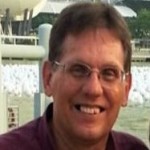
Total Surrender: Finding Messiah at an Italian Pentecostal Church, an interview with Michael Brown
Those who are familiar with the New Testament book of Acts, perhaps especially Pentecostal believers, know that people in various places in the first century world received the Baptism in the Holy Spirit with the physical sign of speaking in tongues. Both Jews (Acts 2) and Gentiles (Acts 10) had this experience. This pattern has been repeated numerous times throughout history. Many are aware of the outpouring of the Holy Spirit at Azusa Street. One significant move of God that is not as well known is the Lord’s work among the Italian people.
PneumaReview.com had the opportunity to speak with two scholars about this move of God, each of them giving an interview. The first of these interviews was with Dr. Paul Palma. He has written a significant book called Italian American Pentecostalism and the Struggle for Religious Identity, published in August 2019. In this book, he has written about the Italian Pentecostal Movement in the twentieth and twenty-first centuries. The second interview is with Dr. Michael Brown. It may be a surprise to some but an Italian Pentecostal Church played an important role in his spiritual journey. We trust that you will find these interviews informative and inspiring.
 Â
Â
PneumaReview.com: You were born into a Jewish family. How did you happen to go into an Italian Pentecostal Church?
Michael Brown: Because I was not a religious Jew, I got caught up in the whole counterculture revolution of the 1960s, playing drums in a rock band and becoming a heavy drug user. My two best friends and fellow bandmembers (and drug users) liked two girls whose uncle was an Italian Pentecostal pastor and whose dad had been praying for them for years.
When the girls started attending services there, my friends went with them, first just to hang out, then because the church fascinated them, both because it was Pentecostal and because the pastor was teaching about the end times. When my friends started to change, I went to the church in August 1971, to pull them out. I was sixteen at the time, and, as they say, the rest is history.
Â
PneumaReview.com: How were you received by the people there?
It made such an impression on me that I said to my friends, “Fine, if this is the direction you want to go, I won’t fight you over it.â€
Â
PneumaReview.com: Did the church play a part in you coming to Christ?
Then, when I came to faith in November-December, they put up with my foolish ways, they answered my questions, and they set an example of simple yet very serious devotion.
Â
PneumaReview.com: What was a typical service like?
Michael Brown: Normally, we would start the service standing and sing one hymn, then sit down and sing two more. We would have a time for testimonies and prayer requests, the offering would be taken, and we might go into spontaneous worship after that. Otherwise, after the offering, the pastor would preach, and then we would all spend time at the altar seeking the Lord.
On a typical week, there was Sunday school, Sunday service, Monday night prayer meeting, and then services Tuesday and Friday night. Once we bought a new building on Long Island, where most of our people lived (the first building was in Queens, New York), we added a Wednesday night service, then a Sunday night service.
I went to every service without fail, as did most of my friends and a solid core of the adults. We would do evangelism one or more times a week, plus have a monthly, 24-hour prayer chain, where we would sign up for two-hour slots.
This was not how it started for me, however. I didn’t attend Sunday morning for a number of weeks after I was born again. First, as a Jew, Sunday morning had no significance to me. Second, because I came to faith in a night service, that was what was normal for me. I remember being surprised the first Sunday morning I attended to find many people I had never seen before, probably about twice the number who attended the other services. (The prayer meeting had the smallest attendance, as is customary.)
Interestingly, for a season, once a month, we changed the Monday night prayer meeting to an Italian service, since we had a number of congregants who never learned English. Along with my friends, I attended the Italian services too, as crazy as it sounds today, not understanding a word of the sermon. But in our minds, if the building was open, we would be there.
Â
PneumaReview.com: Was there anyone in the church who took a particular interest in you or mentored you?
I am deeply indebted to these precious men, one of whom is with the Lord.
PneumaReview.com: Were you baptized in the Holy Spirit in this church?
Michael Brown: Yes, at a Monday night prayer meeting, January 24, 1972, without anyone praying for me.
Â
PneumaReview.com: What positive lessons did you learn at the Italian Pentecostal Church that have influenced how you live and serve others?
Michael Brown: Before I was saved, I gave myself totally to drugs and rock music. Totally. When I got saved, I was ready to give myself to the Lord the same way – once my head cleared and I started to get grounded. Thankfully, the church had a strong emphasis on prayer, on the Word, on outreach, and on experiencing the joy of the Lord in worship. And by the time I was saved for one year, I would spend six-seven hours alone with God every day: at least three hours in prayer (including one hour in tongues); two hours reading the Word; and one hour memorizing the Scriptures (I would memorize twenty verses a day, without fail, every day, and did this for about six months). These devotional habits laid the foundation for the rest of my life and ministry.
This has been a Godsend when ministering overseas, as it has happened many a time at that I had to preach upon arrival, sometimes traveling up to forty-five hours and thinking I had a day of rest, only to be brought to the meeting. The Lord’s grace has never failed me!
To be sure, there were aspects of the church that were not ideal, in particular a theological narrowness and a real skepticism of higher education. But without a doubt, for me, this church was just where God wanted me to start and lay deep foundations. To repeat: I am truly indebted to the saints who prayed me in and became my examples and friends.
And there’s one more thing: Quite providentially, in 1974, when I was saved for two-and-a-half years, a nineteen-year-old Jewish woman came to the service, herself a hardcore atheist whose mother had been married four times. That woman, then Nancy Gurian, came to faith not long after that, and she has been my wife since 1976. Who but God could have planned something like that?
PR
Further Reading
The Global Reach and Lasting Legacy of Italian Pentecostalism: An Interview with Paul Palma