New Wine 2017: The Irony of Experience

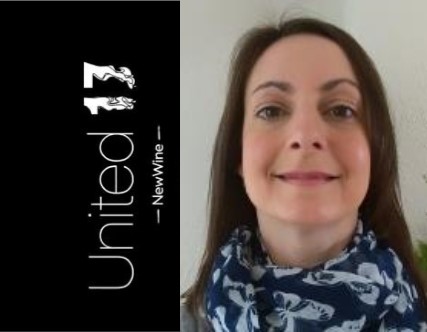
Rachel Marszalek is Vicar of All Saints Church in London, England. In this report from the New Wine United 2017 convention, she primarily shares insights and perspective about what is happening within the Anglican Church. For more about the New Wine movement and the United 2017 convention, see her other report, “Elephants Explored.”
 Whether we meet God in the silence or the stadium gathering; whether we speak in tongues or sing the liturgy, whether we raise our hands or lie prostrate on the floor, Anglicans share a heritage. Philip North, the Bishop of Burnley, wrote recently about this magnanimous Church of England of which New Wine is a part. He was fascinated by the anthropology and spirituality of its various constituencies taking time out from the mother-ship, to meet, usually in a field somewhere, with its own. Keswick is home for a week for the evangelical, Walsingham – the Anglo-Catholic and Somerset – the New Wine Charismatic. There is also Spring Harvest for the gently charismatic evangelical and Greenbelt for those, well, I am hard pushed to say, those who are deconstructing and reconfiguring faith in various ways.
At New Wine, Bishop Philip said ‘the gospel is a very jolly thing … there is a powerful sense of the immanence of God … proclamation … is relevant to the immediate needs and aspirations of the culture … the festival has a powerful energy focused on a passionate belief in the local church as the hope of the world, and a real sense that we can go back home to make a difference.'[1]
Since I last reviewed New Wine for PneumaReview.com, there has been a change of leadership. Paul and Becky Harcourt are at the helm and bringing with them a new charism. This charism is encouraging a movement of God into the ordinary. There is, these days, more of an emphasis on the fifty weeks than the two spent together in worship. Paul’s opening challenge to us was to take New Wine home. This is where God will make the real difference. During ministry time, the expectant crowds are also prepared to ‘not expect.’ In other words, there is more room for the God who might not show up in experiential ways despite our sung worship, prepared hearts and open hands; the God who is also mystery and catches us by surprise. Don’t worry if He is not so tangible right now, wait … God knows … God knows you. He has His timing.
There is more humility.
In some ways, there has had to be!
In the Church of England’s July General Synod a Private Member’s Motion[2] was put forward by a change advocate, to ban conversion therapy. Its author is one of a very wide contingent strategising for doctrinal change on marriage.
Conversion therapy was denounced, passionately, at July’s synod.
Expected.
What is interesting, is that an amendment to that motion, ironing out some of the subtleties for those of us who believe in ‘conversion’ and who have heard the testimonies of people with broken sexualities, heterosexual and homosexual, made new, was not really ‘heard.’ Sean Doherty encouraged the Synod to appreciate that ‘all sexuality is equally affected by the Fall’ asking the House of Bishops to ‘discourage inappropriate … practices, and to encourage good ones’ when it comes to prayer and pastoralia.[3]
Painful experiences and raw emotion won the day that General Synod and a new ‘something’ has featured ever since. I believe New Wine and other groups who are passionate about prayer, transformation and the power of the Holy Spirit are taking note. A good thing if it promotes care and humility but lamentable if an inhibitor to prayer and spontaneity. Our ‘experience’ as Christians, because now so powerful and emotive when it comes to sexuality, means that as Charismatics, those who know God in our everyday experience, also need to take care. Our experience of God must continue to be anchored in the scriptures and be weighed against the community’s understanding of God across the centuries.[4]
Bishop Richard Jackson explained at New Wine in his seminar on Synod, that it was “a theological train crash … of conflicting pain narratives.†The advocate[5] for a denouncement of conversion therapy had also reported to the Royal College of Psychiatrists that the church was addressing spiritual abuse. Good.
Anglicans flocking to summer gatherings contain many, then, who believe that the Holy Spirit is leading us into greater freedoms regarding our sexuality and it is within such a context that Prayer Ministry leaders must put parameters around prayer. Prayer ministry is now happening at New Wine against a backdrop where even greater care is needed. In many ways, the approach of waiting and simply repeating ‘Come Holy Spirit’ is surely then the one in which ministry can best take place. Safest. Let God be God, don’t get in the way too much. The Anglo-Catholics might sing Veni Sancte Spiritus, the Charismatics will continue to make bodily contact, a hand on a shoulder but less words, less risk and this, I am saddened to say to some extent, is the culture in which New Wine must now operate. I thought it important to note with you this addition to the atmosphere of a baby elephant in the room.
My personal testimony now follows. Readers who are interested in the Anglican back-drop might be less interested now. After all, I am not so naïve, that I fail to discern, that much of what follows is located in my experience. Oh, the irony!
At New Wine, this year, much was said about stepping out, speaking up and not hiding away. RT Kendall encouraged us to transition whilst we have the opportunity from foolish to wise attendants with the oil of the Spirit in plentiful supply. He addressed the gathering regarding tithing, powerfully and sensitively. He dwelt on the importance of becoming Word and Spirit communities, in equal weight.
Kate Coleman encouraged us to harness the inner David and his sling, and be prepared to meet the ideological giants of our day. Some of these are loose in the church: theo-logy without the ‘theo’ and ‘ologies’ of pain, experience, and my rights, dominating instead. Are some of us called to run into the debate rather than away? She asked us to join her in a symbolic action, to take scarves or handkerchiefs, if we had them, swing them round like slings (without stones, I hasten to add). I couldn’t but help think of the shots slung that General Synod. Oh the wounds we cause each other in this house of friends!
As I responded to a call to the front, for leaders who are being asked to step out, I went forward. I had been waiting all week. It was then felt to be a call particularly for women and I powerfully met with God in the power of His Spirit. I wondered what this would mean and before twenty-four hours had passed I was asked by the Church Times to write my own piece about the state of the Church in its movements since that Synod.
I returned home with one day before vacation abroad to complete the task.
And so I went public, I guess, about what I really believe: that the Church of England is not finished yet and there are reasons to hope. We are not to jump ship but pray for a commitment to our heritage; for our bishops to simply re-affirm what we are all about. It is possible to love and to flourish and to serve, to welcome and to include, to declare God’s covenant rainbow love and still believe and practice, as Christians, traditional marriage. I wrote my piece and I felt God’s peace despite anticipating the consequential protests and storms.
This General Synod was watershed for the water shed, the tears of human frustration spilt that we find ourselves all at such odds. Radical Christian inclusion seems to speak to me about our welcome through baptism but to others of something different altogether. And so for me, this year, New Wine was a confirmation of my call to move boldly (with humility) in a church which seems all at sea. I am a charismatic, evangelical, Anglican Christian with a teachable spirit, aware now that there are some ironies to making too much of my experience. Experience brings some issues, as I hope you can see.
Notes
2. https://www.churchofengland.org/media/4016045/item-12.pdf
3. What we are finding in the Church of England is that this emphasis is becoming clouded by people calling for fulfilment in their sexualities, particularly where these are not heterosexual. We are, as evangelicals, trying to articulate chastity in marriage and singleness and that other expressions of sexuality are challenged by God as not best for our flourishing. All this lies at the heart of our current debates on Issues in Human Sexuality.
4. The Church of England is listening more and more to people’s experiences almost as if subjective experiences are to be held uppermost and as more important than the Word of God. Evangelicals within the Church of England hope to be pastoral but also to continue to hear the challenge that is God’s Word. God doesn’t always have us feel comfortable, calls us to a cruciform life – my fulfilment can not be found in my self-actualisation or in only a therapeutic approach to my identity – my identity resides in what Christ declares to be true about my status.
5. https://www.theguardian.com/world/2017/jun/23/gay-activist-claims-spiritually-abused-church
Â