
Response to hard cessationist critic, by Craig Keener
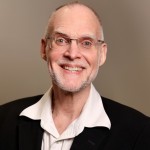
Craig S. Keener responds to a critic’s comment posted on his statement about the relationship between anti-supernaturalism and cessationism.
Excerpts from Miracles by Craig S. Keener
Are Pentecostals offering Strange Fire? (Panel Discussion)
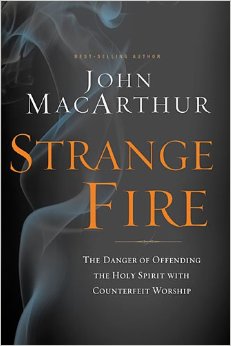
John MacArthur’s Strange Fire, reviewed by Craig S. Keener
R.T. Kendall’s Holy Fire reviewed by Craig S. Keener
Craig S. Keener on Anti-supernaturalism and Cessationism

I find here, as in the book to which I originally responded, some strange lumping together of all charismatics’ beliefs to the detriment of any particular charismatic. What prompted me to write the review to begin with was a prominent figure’s extreme claim that the vast majority of charismatics are not saved, the implication that Pentecostals are a cult, and the claim that charismatic scholars have contributed nothing to scholarship. Cessationist and charismatic Christians often work together for the furtherance of the gospel; certainly I work with both. But when someone levels charges so outrageously polemical, it merits a strong response.
I took the time away from my exegetical work, and cannot do again in the near future, as between teaching and research I am embarrassingly far behind even on answering emails. Nevertheless, I took time to respond to the charge raised in the critic’s post partly because of another polemical statement: “Unconvinced that Keener is qualified to respond biblically and objectively.†In case someone could not tell based on my commentaries, most of my average day is spent working on Scripture and its context (and most of the exegesis is not distinctively charismatic; in fact, neither is much of the Miracles book).
Misconstruals of the original post
I have never claimed that moderate cessationists deny miracles today; in fact I stated the opposite. I recognize that moderate cessationists deny particular kinds of gifts rather than that God continues to sovereignly work miracles where he wills. Someone who has honestly read what I said will recognize that I myself agree “that God sovereignly heals when and how He chooses to.â€
Furthermore, though I disagree with moderate cessationists about gifts, I agree with them that God sovereignly works miracles where he wills; we cannot generate or control them. One will also not find anywhere that I make the following claim that the post attributes to me: “does not follow how faith-healers can claim to work mass healings to the tune of thousands of people – which they themselves insist happens.†There are areas in the world where massive numbers of people are being healed, but this happens as often when they hear the gospel or see the Jesus Film as well as when they are specifically prayed for, and these massive cases for the sake of the gospel have to do with God sovereignly reaching a new area and not only with the agents that God sometimes chooses to use. I have explicitly affirmed God’s sovereignty in healing and criticized the prosperity teaching and its associated beliefs, so I am bewildered by the assumption that I doubt that miracles are God’s sovereign acts.
As for me allegedly claiming that miracles (in the dramatic sense) happen abundantly or regularly: if we are talking about happening somewhere in the world, yes, I believe they are happening abundantly or regularly. If we are talking about them happening regularly in one individual’s life: I have never claimed this. For example, I have only ever witnessed one person that I knew personally instantly healed of inability to walk. One member of my wife’s family was apparently raised after three hours of no breathing, but that was the only raising anyone in the entire family ever experienced, so obviously we are not claiming that it happens on a regular basis. I will stop recounting examples here, however, since it has been complained that I appeal to experience (even though here I appeal to experience only to explain that in my circles these events are rare; still, it is true that I dare not extrapolate from this experience to assume they are rare everywhere). They may happen most often on the cutting edge of groundbreaking evangelism, but not on a regular basis in everyone’s life—though I have no doubt that God is always working in our lives.
As for claims that charismatics in the media are often an embarrassment: certainly I agree. But painting all charismatics with the same brush is a logical fallacy of guilt by association, unless you have examined each case; the same practice can be used against any group. Political claims made by certain evangelicals have contributed to public hostility against all evangelicals, but branding the average evangelical pastor or church because of this is guilt by association. I’m ordained Baptist, and those of us who are Baptist can be embarrassed if anyone’s knowledge of Baptists is gained from media coverage of Westboro Baptist Church (“God hates†gays, etc.) Someone who gets their knowledge of charismatic life from prosperity teachers on TBN and not from charismatic or continuationist teachers such as Gordon Fee, Wayne Grudem, R. T. Kendall, John Piper, Sam Storms, Ben Witherington and others will likewise hold and probably propagate a biased view of charismatics and continuationists.
Experience
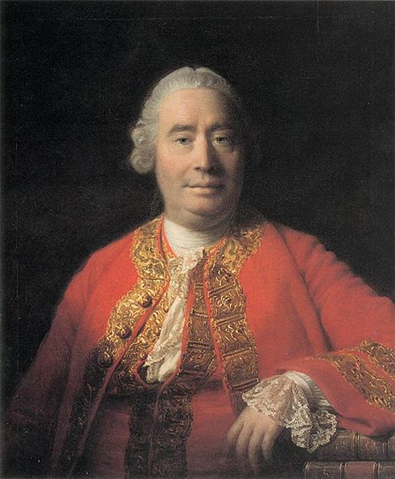
Image: Wikimedia Commons
In history, journalism, sociology and elsewhere, eyewitness reports are a form of evidence, although they must be evaluated. Some reports are unreliable and some remain uncertain, but there are many cases where reliable eyewitnesses with something to lose do report miracles, all around the world. Sometimes the eyewitnesses have been doctors or others qualified to confirm them. Hume in principle admitted such evidence, though in practice he would have regarded as unreliable any witness who claimed something contrary to his belief about “uniform human experience†against miracles. Interestingly, many hard cessationists value many aspects of the church fathers’ theology as late as Augustine, yet reject their eyewitness reports of miracles, and their reports from contemporary eyewitnesses of dramatic miracles such as raisings and cures of blindness.
Some dramatic miracles occur
Now on the next point, I may be reading into what the critic is saying (and we may differ in precisely how we differentiate the expressions “moderate cessationist†from “hard cessationistâ€). Giving examples of healings of cancer (which can go into remission) and colds without the presence of a miracle worker does not mean that the critic has claimed that God does not heal anything else or that he never heals when someone is praying for the person.
So I will here try to answer the possible objection, but I am attributing this objection to an imaginary critic rather than to the person who wrote, in case the person does not go this far. As for a hard cessationist argument that events like people being raised from the dead and nature miracles cannot be proven: you are right if you mean they can never be proven to the satisfaction of someone who denies them. Someone who denies their possibility can raise the bar of evidence so high that no one could ever answer it. The same is true for the attribution to God of any cure, medical or nonmedical.
 Would you believe in a raising if you witnessed it yourself? Or if your spouse or close friend witnessed it? Presumably not, since you dismiss arguments from extrabiblical experience. Thus you will not accept the large number of eyewitness claims for this from credible eyewitnesses, witnesses that I interviewed and many of whom I know. Yet in this respect you prove more skeptical than Hume, who in principle (though probably not much more than that) would have allowed for raisings and the like if there were credible witnesses who met his standards. Many of these eyewitnesses meet Hume’s stated standards (such as being people who have much to lose from lying), and yet you do not accept them. (I will not assume that you are simply unaware of them, since I would not think that you would deny the existence of such claims without first familiarizing yourself with some accounts I report in the book. I also am confident that you would not share the one basis on which Hume would have nevertheless readily rejected many of these witnesses, namely that many are nonwhite, a rejection that fit Hume’s pattern of overt racism elsewhere.)
Would you believe in a raising if a doctor attested it? Presumably not, since some doctors have done so, including one in the U.S. who testified that the patient was dead and unable to be resuscitated for forty minutes. You (again, I am speaking hypothetically here to an imaginary interlocutor, as Paul often did) would not accept this, because you do not accept as evidence the experience of anyone postbiblical (though of course on other issues, such as some journalistic reports or a family member saying where they moved your lamp, you would). Your reason, presumably, is because you believe the Bible does not allow for this. And that is where I would find your questioning most interesting.
If Scripture said, “This sort of miracles, i.e., those that are harder to explain naturalistically, will cease at such-and-such a time,†this sort of hard cessationist would have an argument from Scripture. But Scripture nowhere says this; raisings appear occasionally in the Old Testament and in the Book of Acts—certainly not on a regular basis, but neither with any indication that they cannot occur at other times.
What is even more striking is that Scripture not only does not talk about dramatic miracles ceasing; in fact it nowhere makes the distinction between cures (or, for that matter, gifts, but that is a different subject) that could possibly be explained naturalistically and those that could not. That distinction stems from the same kind of skepticism that (through the deists and finally Hume) led to antisupernaturalism. It is not antisupernaturalistic per se, but it does seem quite convenient that it can make common cause with skeptics in explaining away all miracle reports that do not readily allow natural explanations. The modern skeptical worldview is very good at this, and hard cessationists can keep public peace with that intellectually dominant worldview so long as the Bible may be excluded as a special case.
Now again, the specific critic’s question may simply be one about gifts. We may agree to disagree here as far as this post; I have addressed that question elsewhere and I do not make a divisive issue over that. But if we are defining “hard cessationist†the same way—no miracles that cannot be easily identified with the usual course of nature (e.g., no raisings or instant cures of blindness)—I do not see any methodological difference between this approach and that of the antisupernaturalist, except that the hard cessationist makes an exception for the Bible.
For good or ill, I have taken too much time away from exegetical work by now to mostly rehash what was already addressed in my first post or in the miracles book (the miracles book, again, is not addressing moderate cessationists, but rather antisupernaturalism). I must therefore leave further conversation to others, since time is in finite supply.
Postscript: definitions
My main concern in my original review was the dismissal of the Christian faith of “the vast majority†of charismatic believers. Regarding “hard cessationism,†the expression is used in different ways and there may well be some miscommunication because of definitions. I borrow the idea from an earlier period in history when cessationists largely believed that God works today only through providence, and when more dramatic and instantaneous healing provoked considerable debate. I got the impression from the book to which I originally responded that the author did not even believe that the Spirit ever offers internal guidance apart from reading Scripture. A good friend who attended that author’s school, however, assures me that that author is not in fact a hard cessationist, and does believe in miracles today. However, the friend did seem as bewildered as I regarding the author’s dismissal of so many believers’ faith.
Because the labels carry different meaning to different users, they are not as helpful as they should be. At the same time, they at least attempt to show the courtesy by recognizing that there are differences among a group that is too easily classified as monolithic. The negative part of my original review was prompted especially by the excessive generalization about charismatics. Like the evangelical movement of which the majority of Pentecostals and charismatics are a part, the “charismatic†label encompasses a diverse lot.
PR







this is an excellent response to our good friend John MacArthur, famous cessationalist, and circular reasoner.
As always, Dr. Keener is respectful and thorough.