Rick Richardson: Experiencing Healing Prayer

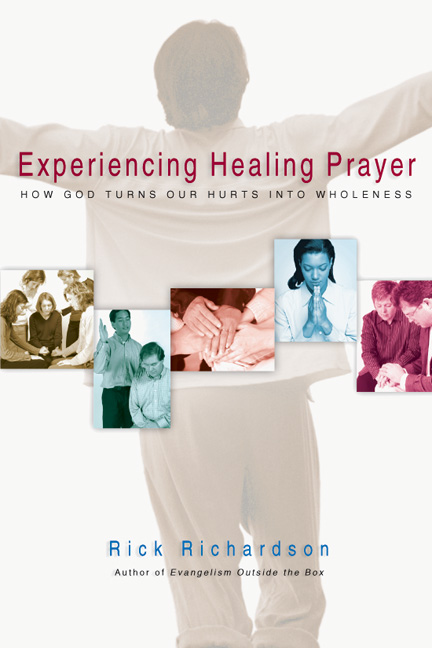
 Rick Richardson, Experiencing Healing Prayer: How God Turns Our Hurts into Wholeness (Downers Grove: InterVarsity Press, 2005), 249 pages, ISBN 0830832572.
Introduction
In his new book, Experiencing Healing Prayer, author Rick Richardson contends that true biblical healing is much more than the removal of physical pain or the alleviation of a physical disease. Instead, he argues, biblical healing is a journey in which the believer trusts in God for the healing of the whole person. Such healing may include deliverance from addictions, identity crises, negative imaginations, bitterness, social ills, and other problems that may be related to one’s soul or inner being.
According to Richardson, Jesus practiced a “whole-person†approach to healing (p. 27). He writes: “Healing is primarily about the transformation of the person into a truer and more whole follower, worshipper and lover of God†(p. 27). He further writes that healing is a process that affects people on different levels of their being. He asserts: “Healing is an inside-out deal. We are transformed from the core of who we are. As we experience and live out that transformation, we are healed on every level†(p. 30).
Richardson is associate director of evangelism for InterVarsity Christian Fellowship/USA. He is also an ordained priest with the Anglican Mission in America, and holds a Master of Divinity degree from Northern Baptist Seminary. He is coauthor with Brenda Salter McNeil of The Heart of Racial Justice.
His new book is a practical guide that explains “how God turns our hurts into wholeness.†In addition to offering tips and guidelines for those who need healing, it provides a model for those who wish to have a healing ministry. The book offers insight into the ministry of Christ and makes a strong argument for a ministry that brings healing to the whole person.
An overview
Richardson covers his topic in 17 chapters. Most of them conclude with discussion questions and a healing prayer. He includes a detailed Appendix section that highlights the need for healing in race relations. In the same section, he provides a model for a healing prayer ministry. He also offers advice for accountability.
Richardson opens his work with a discussion that illustrates the need for healing on many levels. He notes such issues as divorce, broken homes, sexual addictions, pornography and problems with gender identity, among others. He follows this discussion with a look at biblical healing. Interestingly enough, he begins the topic with a review of a television evangelist who promises miracles for money. Richardson uses this as a launching point to explain the nature of healing from a biblical perspective. He uses Christ and the Apostle Paul as examples to follow.
After explaining “how healing looks,†Richardson offers a “map for the journey†that includes six signposts. The “signposts†are practical tips for engaging in a healing ministry.
First, the believer is instructed to begin by practicing God’s presence and listening to His still small voice. Next, the believer is encouraged to replace diseased images and memories of God and human beings with healed and transformed images. Following this, the believer is asked to renounce unreal identities and embrace his or her real identity in Christ.
The believer is also told to get to the roots of pain and problems, and to use the physical and sacramental means God has given as channels of healing power. In other words, much can be gained through personal reflection on baptism and Communion.
The advice noted in the final signpost calls on the believer to reach out to others with compassion and prayer. This, suggests Richardson, may complete the healing process of one being healed.
Richardson follows the signposts instructions with advice for specific types of healing. The “healing prayer†method is not done in a quick, thoughtless manner. It actually questions and answers where the believer asks probing questions of the person seeking healing. The believer reflects on the answers and seeks God about the needs of the person. When the believer is sure about the needs and the way in which he or she must pray, the believer offers a prayer in faith. Richardson also encourages the use of tongues as a prayer language during the process.
He concludes his work with a list of “dangers and dead-ends on the healing journey,†in which he writes about pride and elitism. He also covers such issues as the need to feel needed, over-promising, the need to perform, misuse of power, the promise of quick fixes, and the lack of accountability in the healing ministry.
Analysis
Readers familiar with the works of Francis MacNutt and Dennis and Rita Bennett will see some similarities of their work in Experiencing Healing Prayer. This is especially true when one considers the overall style and gentle approach of Richardson’s work. Richardson, however, goes beyond the Bennetts and MacNutt by combining his approach with some of the teachings of John Wimber, author of Power Healing (San Francisco: Harper & Row, 1987). Richardson also acknowledges the influences of C.S. Lewis.
Richardson gives the reader a balanced approach to the healing ministry. It is an approach that shuns the quick fixes, sensationalism, and extremes. In addition to balance, Richardson offers a viable alternative to what may be called “traditional healing ministry practices.†Instead of focusing on the symptoms or the outward condition of an illness, he encourages the believer to identify and effectively deal with the possible roots of an illness.
Basing his ideas on sound biblical teaching, Richardson advocates a healing ministry that helps the whole person: spirit, soul and body. He notes the importance of physical healings, but he also underscores the need for inner healing which may exist in many areas such as pornography, gender identity and race relations. He supports his position with real-life examples, many of which are from his own experiences.
Conclusion
Richardson is a credible writer. He speaks with a voice of experience and authority. His book makes a convincing argument for an element of healing that is not commonly mentioned in sermons today. It should prove to be a great resource for pastors, counselors, evangelists, or anyone interested in being used of God to bring healing to the sick.
Reviewed by Roscoe Barnes III
Preview Experiencing Healing Prayer: books.google.com/books/about/Experiencing_Healing_Prayer.html?id=y-BAIWqbSW4C
Publisher’s page: www.ivpress.com/cgi-ivpress/book.pl/code=3257