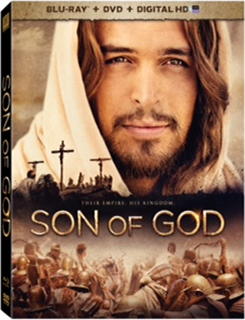
Son of God: Their Empire, His Kingdom, reviewed by John King

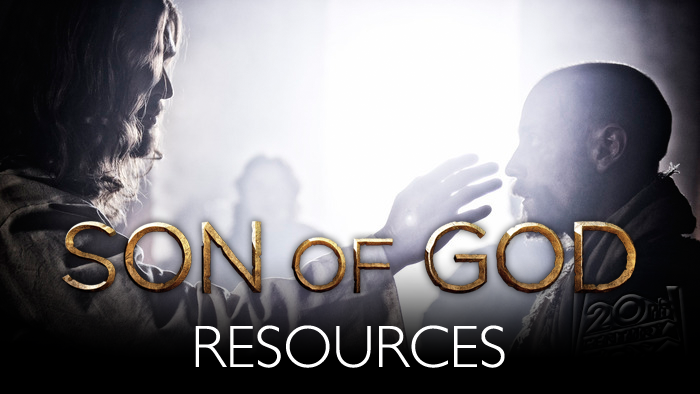
 Son of God: Their Empire, His Kingdom (20th Century Fox). Actors: Darwin Shaw, Sebastian Knapp, Paul Knops, and Darcie Lincoln. Directors: Christopher Spencer. Music by Hans Zimmer.
Son of God is a dramatization, taken from the memoirs of John the Apostle, played by Sebastian Knapp, that starts with the Savior’s brief ministry on His way to Calvary’s Cross and finishes with our Lord’s Resurrection and promised return.
Richard Bedser, one of its 4 writers, was also a writer for the History Channel’s 2011 documentary, Gettysburg—which should speak well of his talent and that of the team of writers, directors, actors and actresses and all who were chosen for this monumental endeavor.
The difficult task before them was to recreate the picture of betrayal and rejection that would lead to Jesus’ death. This biblical story line with the time constraint movies must honor, in 138 minutes, had to feature a selected few of Jesus’ many miracles and sayings. The first half of the movie then features Jesus crisscrossing the holy land under the observation of a Jewish religious leadership that represents a hostility growing more visceral with each word or act of mercy He shares.
Christopher Spencer, the director, correctly understood that the narrative to have any historical relevance needed more than the suspenseful music that now drapes the backdrop of every modern film. Spencer needed a story line that could integrate the miracles of Christ into a single culminating event—his crucifixion. As scholarship knows, one part of the story was inevitable in this regard: the resurrection of Lazarus. This alone would seal the Savior’s fate.
One Sadducee in the movie betrays the general attitude about Jesus among the religious leaders, “There is nothing unusual about Him aside from His ability to cause havoc!”
Jesus’ choice of a tax-collector, Matthew, is featured and appears to be the beginning of his troubles with the religious authorities of the day. Jesus’ notoriety as a potential problem takes off with children flocking about Him by the hundreds and disrupting a Pharisee holding Yeshiva under a tent. Jesus frees a woman taken in adultery and then pronounces an invalid forgiven before helping him to his feet, healed. He cleanses the temple court while crowds of would-be followers surround Him.
The movie does not follow the biblical text without a bit of drama added, a timeline rearranged, and a few details missing. Jesus does not shed tears at Lazarus’ grave, for example. Instead He enters the tomb and kisses His deceased friend on the head.
But I didn’t find this change of narrative offensive because the purpose behind the scene—behind the entire movie—was to help me live the inspiration behind a Divine idea that led to my own salvation. Also, it is safe to say that the words spoken by Jesus here are a reasonable translation of some of our Lord’s actual sayings.
Jesus, played by Diogo Morgado, speaks in soothing, yet arresting, tones that suggest the actor might have captured the spirit of our Savior’s words and not just the text. Even while cleansing the Temple, he seems more on the verge of tears that wanting to call an army of angels to obliterate the offenders.
The second half of the movie is taken up unraveling the details around the Easter weekend. The last supper is indeed a tearful goodbye. Peter cries. This alone is worth the movie.
In the Garden Peter slugs Judas Iscariot and starts a small riot leading to Malchus’ severed ear lobe.
The movie is PG-13 primarily because of the scenes depicting Jesus’ trial and death. The music ups the tension and suspense as if we didn’t know what’s coming. While Jesus is being whipped, you may cry along with the music and the crowd of unknown observers.
The sayings on the cross are well represented. Be prepared to cry a few more tears. I would not be surprised if a few viewers found salvation at this point.
If you are a bible scholar cut this movie some slack remembering that the writers and directors and producers needed to capture our interest, the spirit of the time, and the inspiration of the message until the final scene. I am reminded of a saying by Dorothy Sayer, the British mystery novelist, who as a devout Catholic felt obligated to speak up about Christian indifference to the Message of Calvary—the burden of this film. She observed that the message has grown boring for many. This movie hopes to correct this image.
In Creed or Chaos, page 8-9, Miss Sayer wrote:
The people who hanged Christ never, to do them justice, accused him of being a bore; on the contrary, they thought him too dynamic to be safe. …
So that is the outline of the official story—the talk of the time when God was the underdog and got beaten, when he submitted to the conditions he had laid down and became a man like the men he had made, and the men he had made broke him and killed him.
It [is] a grave mistake to present Christianity as something charming and popular with no offense in it. Seeing that Christ went about the world giving the most violent offense to all kinds of people, it would seem absurd to expect that the doctrine of His Person can be so presented as to offend nobody…
Pilate, at the movie’s end, responds to his wife’s remorse, saying, “He will be forgotten in a week!”
The movie concludes with the Resurrected Savior commissioning His followers and the song, “Mary Did You Know.”
This is a movie worth family time. This movie should engender considerable discussion among those who have a need to begin with an overview of Jesus’ mission and the purpose in His dying. The old adage still holds true, though: No movie should replace reading the book.
Reviewed by John H. King