
The Case for Anonymous Leadership

How should we lead the church?
In this Pneuma Review conversation, Dr. Woodrow Walton reveals the humility and anonymity of true servant leadership.
 Picture if you would a regatta where there are several vessels slicing across a river. Where is the leader of any one of those streamlined vessels? Is it the rower up front? Or, is it the man in the middle? Maybe, it is the man between the man in the middle and the man in front? You simply cannot tell yet it is progressing toward its destination: winning the race. There is no way to observe where the leadership is. There is anonymity.
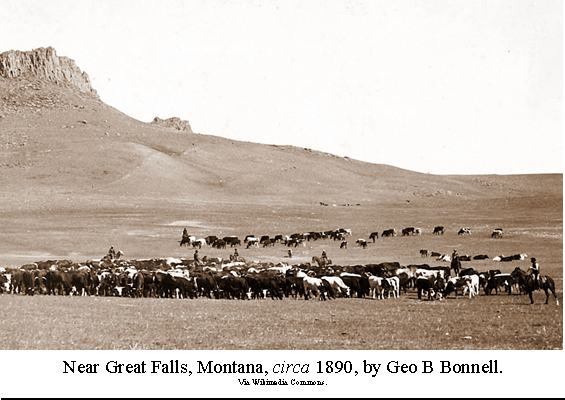
 Another illustration of anonymous leadership is that of moving a herd of cattle along the old cattle trails of the plains. There is a modern modification but more often chutes and trucks are used. A point man, swing men, and one or two behind the cattle are all important. The point man ahead of the cattle, all he does is give some guise of direction but there is a problem. Each cow, bull, heifer, steer, and calf would go off in every direction and not follow. This is where the right swing men and the left swing men are important. They are on either side of the herd and the herd, supposedly, moves together. You will also have stragglers made up of older head and young calves and this is where the men in the back work. Who is the leader? Actually, all are, as each have a designated function. There is an anonymous leadership.
In both cases there is leadership but there is no apparent leadership. You know there is leadership of some kind because there is obvious progression toward a desired goal. There is anonymous leadership as you cannot single out any particular person as leader. Who would think of the back rower in a canoe to be the person who steers it.
There is a principle here that is not often recognized. Leaders cannot be singled out from the community, or to use the words of Stanley Hauerwas, “Leadership cannot be abstracted from communities that make leadership possible.â€1
We may justly observe that Moses led the Israelites out of bondage; however, the writer of the letter to the Hebrews made a very interesting comment about Moses. “Now Moses was faithful in all God’s house as a servant …†(Heb. 3:5, ESV). The preposition “in†makes a critical point. Moses was not separated, or taken, out from among the people or community of Israel. The phrase “as a servant†is also critical. Moses is not over the people as in a superior position. God is over the people. The leader is the cloud or the fire by night. Those within the camp who criticized Moses for leading them into the wilderness were not upset with his leadership; they were upset because they wanted to be in the driver’s seat. As a consequence the earth opened on them.
In modern society, leadership is frequently equated with superiority or an authoritarian position. Since Howard E. Butt Jr.’s The Velvet Covered Brick first appeared in 1973, the concept of servant leadership has made the circuit of leadership seminars. The servant leader concept espoused today by Warren Bennis and other leadership “gurus†is far different from what Butt, and even the Bible, had to say.
Moses was a humble man whose servitude was to God. What God said, Moses did. In the illustration of the regatta, each oarsman knew his responsibility and fulfilled it with regard to winning the race. Devotion to God is paramount. If that is not there, the whole enterprise, whatever it may be, suffers.
One of the most influential books upon this writer is Oswald Chambers’ So Send I You which emphasized that service is first rendered to God before anything else is attempted. God is the sender, not people. Service to others is bondage of the worst kind as it scatters energy. Servitude to God conserves and energizes whatever is attempted. The oarsmen in the regatta do not look around to see what the others are doing or not doing. Their concentration is upon winning the race. Servanthood and service consists of what is rendered to God within an situation and within any enterprise. Herein lays good leadership.
 Moses’ leadership lay in his identification with his people. He was part of that people as a descendent himself of Abraham, Isaac, and Jacob. He was also totally given over to God’s direction. He conversed with the Lord. “Thus the Lord used to speak to Moses face to face, just as a man speaks to his friend†(Exodus 33:11). What transpires within this kind of relationship has a direct effect upon how we talk or converse with others and makes or breaks a team effort.
There are biblical roots going back to Old Testament times and within the ancient Israelite village. The life of the village lay within the combined wisdom of its elders. Nothing is ever said of a presiding elder. Together they decided and then acted together. They argued and contended with each other but in the end a common mind prevailed. No two snowflakes are alike but they can stick together and in that unity create a blanket of snow that can stall traffic. Where is the leader?
The description of the early Church in Acts of the Apostles shows this same character. We do not have a picture of any one declared leader. What is shown are the portraits of several outstanding personalities from Peter, Stephen, John, Philip, Paul, James, Barnabas and others. In Acts 11. Peter answers for himself before the whole Jerusalem and Judaean community of believers for the welcoming in of Cornelius’ household composed of Europeans and not Jews. When he told of the descent of the Holy Spirit upon that household, those who heard him “had no further objection and praised God†(Acts 11:18). They had differed at first then praised God together.
God-fearing gentiles and proselytes into Jewish life posed no further problem but gentiles turning to Jesus from off-the streets of Antioch who were neither God-fearers nor proselytes to the hope of Israel were something else. This is what happened when followers of Jesus from Cyrene and Cyprus and Paul from Tarsus proclaimed Christ Jesus to the populace of Antioch. There were questions raised which necessitated a gathering of the apostles and the elders to look into this matter. James said absolutely nothing at first. After the initial debate, Peter stood up and reminded all those present of the choice God made among them that through his own mouth “the Gentiles would hear the gospel and believe.†Peter continued. “God, who knows the heart, testified to them giving them the Holy Spirit, just as He also did to us†(Acts 15:8). Verse 12 describes the scene in a way often overlooked: “All the people kept silent … †They listened to all that Peter was saying. James, the presiding elder, kept silent. Verse 12 also tells us that when Peter ceased speaking, “they were listening to Barnabas and Paul as they were relating what signs and wonders God had done through them to the Gentiles.â€
Afterwards James addressed everyone, “Brethren, listen to me …†(Verse 13). He rehearsed the testimony that Peter had given and referred back to prophets beginning with Amos 9:12, Isaiah 63:19, Jeremiah 14:9, and Daniel 9:19). He renders a judgment “that we do not trouble those who are turning to God from among the Gentiles†(Acts 15:19). A “we†also appears in the next sentence about “we†writing a letter. Verse 22 makes a striking statement testifying to community leadership: “Then, the apostles and elders, with the whole church, decided ….â€
Who is the leader? James, Peter, Barnabas, or Paul? We are told that the final decision was made by whom? The final decision was made by the apostles and elders, with the whole church. Leadership is not, necessarily, decision-making though it may involve some degree of encouragement in that direction.
There is another illustration to be found in the ministry of Paul. In neither the Book of Acts of the Apostles nor the letters he wrote did Paul appoint leaders for any of the churches established in Pisidian Antioch, Lystra, Derbe, Philippi, Thessalonica, Berea, Corinth, and Ephesus. There are names mentioned in the letters but he never identified them as “leader.†What leadership there was emerged from within those communities of faith. It is also interesting to look again at First Corinthians 12:4-13:31 in this regard. Within this segment of the letter Paul compares the gifts and ministries of the one triune God within his one church with the human body. Neither leg nor arm, neither head nor toe, hand nor foot, can claim a paramount position. It is one body, all parts working together for one common purpose.
In Ephesians 4 Paul lists apostles, teachers, evangelists, pastors, and prophets, and goes on to say that these are given to the Church and are accountable to God and to the body. Again the community is stressed, not some individual appointed or selected as leader.
 Leadership, therefore, belongs to the whole community and not to a single person. One of the modern world’s biggest problems when it comes to leadership is that of tossing leadership to a single individual. Usually church boards look for a leader not from within itself but from without. The next big problem is like it, throwing all responsibilities upon the shoulder of that one hired individual. No regatta is ever won this way. The point-man is not solely responsible for leading the cattle to market. Similarly, a congregation’s ministry and world ministry cannot rest upon the leadership of a single individual who then is saddled with being all things to all people. It is no wonder that there are burn-outs in the ministry.
There is no lack of good counsel but there is very little ever said about team effort without interjecting something about a “team-inspirer†which loops one back to a single individual who can be singled out as “leader.†This writer particularly like the expressed philosophy of the Faith and Leadership website of Duke Divinity School. “Faith changes the nature of leadership. What distinguishes Christian leadership from other forms of leadership is its purpose—to cultivate thriving communities (italics mine) that bear witness to the reign of God.â€2 Leadership belongs to the community or group, not a single individual. Focus needs to be placed “on those less visible who protect our blind sides.â€3
What this means from a practical standpoint is the engaging of those within any group, whatever the community of faith, who excel at what they do best in ministry for the benefit of all who are engaged within the Christian world mission. This does not require any single one especially endowed individual. In his first letter to the church in Corinth, the apostle Paul wrote “I was with you in weakness and in fear and in much trembling†(I Cor. 2:3). Further on, he writes “What then is Apollos? And what is Paul? Servants through whom you believed, even as the Lord gave opportunity to each one. I planted, Apollos watered, but God was causing the growth†(I Cor. 3:5-6). Attaching one’s self to a leader who is up front destroys the leadership of the church which emerges out of the weakness and fears and trembling of those who have their hands to the oars of the ship called the church. The greatest strength of Christian leadership emerges from the weaknesses, not the strengths.
 There is the man in back of the herd bringing the stragglers and strays and slower movers closer to the others and adding to the success of the drive. Without his patience, they would get lost and separated from the herd and be victim to the predators of the world.
Taking this image just a little further; there is still another figure, one unseen but nonetheless real and important, the rancher himself who does not always make himself present but who is vitally concerned about what happens to what is his. He is careful as to who his drovers are and who is responsible for the safety of the entire endeavor. This is not just a manager but an owner. There is one who is the true Owner, who owns His Church. There is one Lord, and it is His Spirit that leads, steers, and directs and it is that Spirit working within all involved that provides the real leadership of anything undertaken for Him.
PR
Notes
1 Stanley Hauerwas, “What the Whole Church Can Do†Faith and Leadership (Vol. VIII, No.1, January 7, 2010). http://faithandleadership.com/multimedia/stanley-hauerwas-what-only-the-whole-church-can-do (Accessed, January 20, 2011).
2 Faith and Leadership website, http://faithandleadership.com/principles_practice/leadership-philosophy (Accessed, January 20, 2011).
3 L. Gregory Jones, “In praise of left tackles†Faith and Leadership (September 15, 2009). http://faithandleadership.com/content/praise-left-tackles (Accessed February 16, 2011)