The Importance of Baptism with the Holy Spirit
Vital Aspects of the Holy Spirit
The doctrine of the Holy Spirit has been present from the time of the primitive church and on into the 20th century. However, generally speaking, what has been lacking is His concrete influence in the same way that was evident in the early days of Pentecost, in the primitive churches, and among the proclaimers of the gospel at that time. That faith returned and started to grow among the holiness movements in the United States in the 19th century. It was faith in the fact that the Holy Spirit can presently fill the believer so that he/she speaks in new tongues, can prophesy, or become a channel for another of the spiritual gifts. That phenomenon of speaking in tongues began to increasingly appear throughout the world. The Pentecostal movement did not start in a vacuum. Its explosive spread in the 20th century was, however, a surprise.
I will now more intensely observe some central elements in the work of the Holy Spirit. These seem to have a pivotal role in the composition of the Pentecostal DNA.
The Importance of Baptism with the Holy Spirit
In our lives we strive for things that have significance. An athlete is ready to work hard in order to reach his/her ultimate fitness. A cook is ready to spend time in creating a unique taste experience. A musician repeatedly practices tone sequence until he/she is finally satisfied.
Jesus gave the promise of sending the Holy Spirit as the source of power for us. He did not say he would send power, but that He would send the Holy Spirit which would bestow power in us. The Holy Spirit is a person, one of the three persons of the Godhead. That fact provides the correct basis of our attitude toward Him. Power is impersonal. The Holy Spirit sees, feels, rejoices, mourns, comforts, defends, equips, serves, exhorts, upholds. It is important to us that He entrusts us with power. The Old Testament already gave a clear message regarding the Holy Spirit: “Not by might nor by power, but by my Spirit, says the Lord Almighty.†(Zech. 4:6)
“When the day of Pentecost came, they were all together in one place. Suddenly a sound like the blowing of a violent wind came from heaven and filled the whole house where they were sitting …All of them were filled with the Holy Spirit…†(Acts 2:1-4) Their waiting was rewarded. The followers of Jesus were always focused on seeing His kingdom established on earth. He had taught them to pray for the coming of God’s kingdom. The will of God would be realized in heaven as well as on earth. This right expectation needed a correction in emphasis. It was not for them to know exact timetables. (Acts 1:7) There was something more important. Jesus instructed them in this way: “But you will receive power when the Holy Spirit comes on you; and you will be my witnesses in Jerusalem, and in all Judea and Samaria, and to the ends of the earth.†(Acts 1:8)
Receiving power is connected to the infilling of the Holy Spirit. It has a special purpose. This power is not for bodybuilding nor for boasting about brawn. It is power for service. Jesus did not send His servants out with their own power. His intent was to equip them extraordinarily well for the task He was sending them to accomplish.
The promise of the Spirit to the disciples was fulfilled on the day of Pentecost. At the same it gave birth to the church. The apostles served the multitude of thousands by leading them to faith in Jesus and by baptizing them. The power given to them enabled this action. The power was there for a purpose, for spreading the gospel, for giving birth and providing care for the community of believers, and for the spreading of the kingdom of God.
On the day of Pentecost, Peter reminded his hearers of the promised infilling of the Holy Spirit for all believers. “The promise is for you and your children and for all who are far off – for all whom the Lord our God will call.†(Acts 2:39) Unfortunately, this emphasis and the desire for this privilege among the believers started to weaken in the churches during the following centuries. References to the work of the Holy Spirit can still be found long after the first outpouring of the Spirit, but the workings of the Holy Spirit were no longer a center of focus. Here and there people received charismatic experiences. In my home country, Finland, there were people in a few revival movements in the Lutheran church a few hundred years ago who had charismatic experiences such as speaking in tongues.3 The same kind of experiences took place in the history of many other countries.
The attitude of waiting for a filling with the Spirit is no longer at the forefront but remains in the background in many Pentecostal churches. The teaching about Spirit baptism and the steps toward receiving it have been forgotten or at least is very limited. The danger is that the meaning of the infilling of the Spirit is not understood or the experience of the infilling is not expected. The whole picture has somehow become distorted. To be filled has become a norm which is to be accomplished in order not to appear to be a lower level Pentecostal. This can lead to mental pressure and to a loss of the whole kernel of the matter. The baptism of the Holy Spirit is a gift, not a result of merit. Jesus taught that God loved His children and gave them good gifts including the Holy Spirit. “If you then, though you are evil, know how to give good gifts to your children, how much more will your Father in heaven give the Holy Spirit to those who ask him.†(Luke 11:13)
God is pleased to give the fullness of the Spirit. Therefore, it can be expected without stress or any pressure. It is a gift. What else can we do when receiving a gift than to be thankful? Gratefulness is the basic attitude in waiting for it.
The undisputed leader of the Swedish Pentecostal movement from its beginning and for a long time after was pastor Lewi Pethrus. To be filled with the Holy Spirit was so important to Pethrus that he travelled to Oslo to meet with Methodist pastor Thomas Barratt for three weeks. The latter had experienced Spirit baptism some time earlier in United States, and was now teaching it in Norway. During those weeks, however, Pethrus did not experience Spirit baptism. “But I received something almost as precious than the very experience,†he writes later. The key matter to him was to understand that it is received by faith, as Paul writes in his letter to the Galatians: “I would like to learn just one thing from you: Did you receive the Spirit by the works of the law, or by believing what you learned?†(Gal. 3:2)4
In the New Testament we find that some people had a special gift in leading people to experience being filled with the Holy Spirit. Peter and John were sent to Samaria where a revival occurred as a result of the work of Philip the evangelist. After they laid their hands on the new believers, they experienced the infilling of the Holy Spirit. People like them which have this special gift have been and are still in the churches. In Finland, we have had pastor Arthur Kukkula lead thousands of believers into Spirit baptism, among them the internationally known evangelist Reinhard Bonnke. It took place when Bonnke was still a young boy. Kukkula could not imagine this teenager becoming one of the most effective gospel preachers ever, leading more than 17 million people to Jesus.
I also experienced the infilling of the Holy Spirit as a young boy of 12 years in my home city of Lappeenranta in Finland. Pastor Arthur Kukkula was praying for me, and I still remember the moment when I received this blessing. Suddenly I felt like heaven was opened and a stream was flowing from there, touching my innermost being. I started speaking in tongues. It was very natural and spontaneous, something which I could not initiate myself.
Although God uses special people for leading others into the fullness of the Holy Spirit, it is important to remember that He is sovereign and acts as He likes. Many people have experienced the filling without any laying on of hands or special prayer. It is the Lord himself who pours out His Spirit, and people are only His servants, but not always needed. The Holy Spirit can fill a person in bed at night, or when he/she is driving the car, when jogging, preparing food, or when reading the Bible, etc. The most important factor is the openness or preparedness of the individual. Mary, the mother of Jesus had a very unique task. Through an angel she received an invitation to fulfill it. A special act of the Holy Spirit was involved in that experience. In receiving a promise, Mary’s attitude was a model for anyone who is waiting for the presence and leading of the Holy Spirit. “I am the Lord’s servant,†Mary answered. “May your word to me be fulfilled.†(Luke 1:38)
We are the Lord’s servants. As Peter taught on the day of Pentecost, the Lord has promised the gift of the Holy Spirit to every believer. Along with Mary let us say: “May your word to me be fulfilled!â€
How can we be sure we have been filled with the Holy Spirit? What are the signs of it according to the New Testament?
- “All of them were filled with the Holy Spirit and began to speak in other tongues as the Spirit enabled them.†(Acts 2:4)
- “The circumcised believers who had come with Peter were astonished that the gift of the Holy Spirit had been poured out even on Gentiles. For they heard them speaking in tongues and praising God.†(Acts 10:45-46)
- “When Paul placed his hands on them, the Holy Spirit came on them, and they spoke in tongues and prophesied.†(Acts 19:6)
In all of these contexts, speaking in tongues is mentioned as a consequence of the infilling with the Holy Spirit. In one case, prophesying also is mentioned. Even there, however, speaking in tongues is mentioned. This has been the foundational teaching of classical Pentecostalism regarding the evidence of being filled with the Holy Spirit. This is a major difference between the charismatic movement and classical Pentecostalism. Although there is some variance among Pentecostals in relationship to this sign, it is very clear, e.g. in the World Assemblies of God Fellowship (WAGF). This Pentecostal family includes about 68 million Pentecostals (2018).
The breakthrough of global Pentecostalism took place in Los Angeles in 1906. The infilling with the Holy Spirit accompanied with the sign of speaking in tongues had been experienced in Topeka, Kansas already in 1901. Agnes Ozman, a student in the Bible school there became a witness to the fact that Pentecostal experiences are not a phenomenon only of the first century.7 During the entire second half of the 19th century, in the American Holiness movement, there was typically an expectation of the baptism in the Holy Spirit. That was the ground from which the Pentecostal revival emerged.
The same was experienced also in my home country of Finland. In the beginning of the last century, Pietari Brofeldt described the expectancy in this way: “We all were surrendered before the face of God in order to receive the Holy Spirit who was promised to all who believe. We were so given up to this issue that we came together in the mornings and often returned by the last tram stopping in a coffee house for eating a porridge.†Brofeldt assumed that there were no more devoted waiters on the infilling of the Holy Spirit elsewhere. His observation was that the concentration was so much on waiting that thanking in faith was left to a lesser role.8 In any case, in the long run, people experienced the infilling of the Spirit which led to the breakthrough of the Pentecostal movement in Finland.
Although the outpouring of the Holy Spirit in Los Angeles was decisive for the spread of Pentecostalism more than one hundred years ago, Pentecostal experiences took place in various locations around the world. The revival in Wales and in the Ramabai Pandita’s girls’ home in India, and a strong spiritual movement in Korea, paved the way for the global Pentecostal movement and were the first heralds for it.9
Â
Questions to church leaders:
- When was the last time that you taught about the baptism of the Holy Spirit and the importance of the role of the Holy Spirit?
- When was the last time you prayed for the infilling of the Holy Spirit for those who are seeking for it?
PR
Â
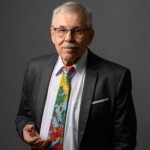
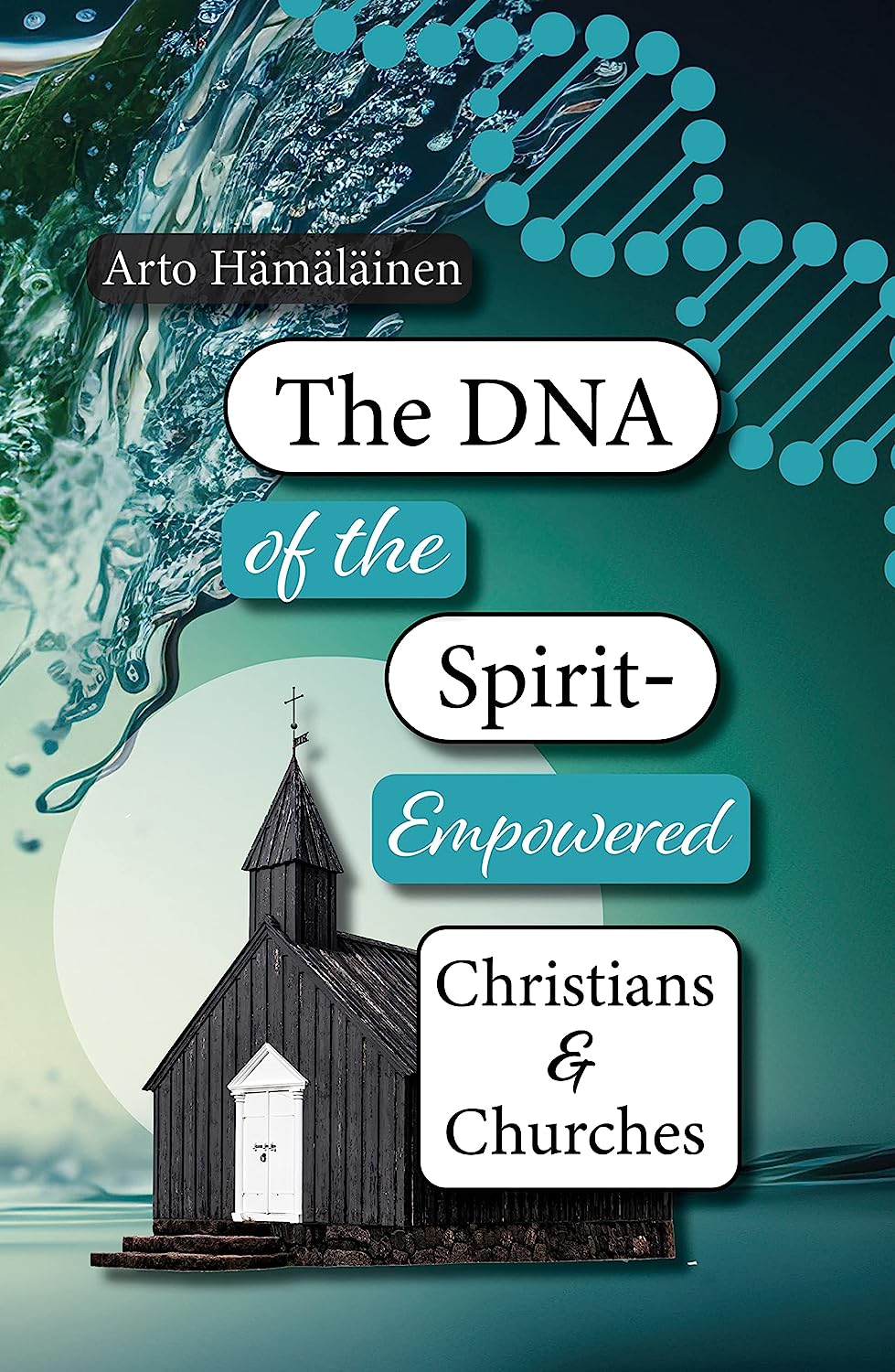
This chapter is an excerpt from Arto Hämäläinen’s book, The DNA of the Spirit-Empowered Christians and Churches. Used with permission.
Scripture quotations taken from the Holy Bible, New International Version®, NIV®. Copyright © 1973, 1978, 1984, 2011 by Biblica Inc.® Used by permission. All rights reserved worldwide.
The “NIV,†“New International Version,†“Biblica,†“International Bible Society,†and the Biblica Logo are trademarks registered in the United States Patent and Trademark Office by Biblica, Inc. Used with permission.
Notes
Please see Arto Hämäläinen’s book, The DNA of the Spirit-Empowered Christians and Churches for complete citations.
3 J. Ruohomäki, 273, Aikamedia, 2009.
4 Pethrus, 97.
5 Ibid., 101-103.
6 Miller, 2005, 332.
7 Synan, 2001, 1.
8 Brofeldt, 1932, 30.
9 Anderson, 2013, 25-36.
Bibliography
Ahonen Lauri 1989: “Lähetystyön kasvuun vaikuttaneet seikat,†toim. Arto Hämäläinen. Kaikkeen maailmaan: 1929-1989 – 60 vuotta hellun-taiseurakuntien lähetystyötä. RV-kirjat. Surely
Anderson Allan H. 2013: To the Ends of the Earth: Pentecostalism and Transformation of World Christianity. Oxford University Press.
Antturi Kai, Seppo Pehkonen, Jouko Rajala, Markku Vuorinen ja Esko Halme 2005: Yli rajojen – Media- ja kirjallisuusevankelioinnin vuodet Suomen helluntaiherätyksessä. Avainmedia.
van Beek and Larry Miller: Discrimination, Persecution, Martyrdom: Following Christ Together. Culture and Science Publ. 2018.
Bartleman Frank 1986: Azusa-katu 312: Nykyajan helluntaiherätyksen juuret. RV-Kirjat. 1980.
Beougher Timothy K., “Revival, Revivals,†eds. A. Scott Moreau, Harold Netland & Charles van Engen. Evangelical Dictionary of World Missions. Grand Rapids, Baker Books. 2000.
Black Hugh B. 1988: Reflections on the Gifts of the Spirit. New Dawn Books.
Bonino José Miguez 1999: “Changing Paradigms: A Response,†toim. Murray W. Dempster, Byron D. Klaus and Douglas Petersen. The Globalization of Pentecostalism – A Religion Made to Travel. Regnum.
Brofeldt Pietari 1932-1933 (näköispainos 2005): Helluntai-herätys Suomessa – Muistelmia 20 v. ajalta. Myllypaino.
Burgess Stanley M.& Eduard M. van der Maas 2002. International Dictionary of Pentecostal Charismatic Movements. Zondervan.
Cavaness Barbara 2012: “God Calling: Women in Pentecostal Missions,†toim. Grant McClung. Azusa Street and Beyond. Bridge-Logos.
Clendenin Daniel B. 1994: Eastern Orthodox Christianity. Baker Books.
Cox Harvey 2009: The Future of the Faith. Harper Collins Publishers.
Dempster Murray A., Byron D. Klaus, Douglas Petersen 1991: Called and Empowered – Global Mission in Pentecostal Perspective. Hendrickson Publishers.
Eerola Walter 1997: Burman rubiinien laakso. Havusalmen kirjapaino.
Eskola Timo (toim.) 2013: Iustitia 29 – Lähetys globalisoituvassa maail-massa. Suomen teologinen instituutti.
Fee Gordon 1991: Gospel and Spirit – Issues in New Testament Hermeneutics. Hendrickson Publishers.
Fructenbaum Arnold G. 1994: Israelology. Ariel Ministries.
Grizzle Trevor 2018: “The Hyper-Grace Gospel,†ed. Vinson Synan, The Truth about Grace. Charisma House.
Harjula Jukka 2004: “Puskatohtorista kumppanien voimauttajaksi,†toim. Ulla Silvast. Kehitys avusta kumppanuuteen. Aikamedia.
Helander Eila 1987: Naiset eivät vaienneet. Suomen kirkkohistoriallinen seura.
Hiebert Paul G. 1994: Anthropological Reflections on Missiological Issues. Baker Books.
Hiebert Paul G. 2008: Transforming Worldviews. Baker Academic.
Horton Stanley M. 1996: Mitä Raamattu sanoo Pyhästä Hengestä. Aika Oy.
Hämäläinen Arto (toim.) 1989: Kaikkeen maailmaan: 60 vuotta hellun-taiseurakuntien lähetystyötä. RV-Kirjat.
Hämäläinen Arto 2009: Päämääränä kasvu. Fida International ja Aika-media.
Hämäläinen Arto 2010: “Siunataan juutalaisia aaronilaisittain,†toim. Harri Kröger. Rakkaudesta Israelin Pyhään. Aikamedia.
Hämäläinen Arto 2013: Mynttilästä Myanmariin. Aikamedia.
Hämäläinen Arto 2017: “Uskonpuhdistus – lähetystyön vauhdittaja vai jarruttaja?†Toim. Leevi Launonen&Elina Rautio: Yksin uskosta – Yk-sin armosta. Aikamedia.
Hämäläinen Arto & Grant McClung 2012: Together in One Mission – Pentecostal Cooperation in World Evangelization. Pathway Press.
Johns Jackie David 1999: “Yielding to the Spirit: The Dynamics of a Pentecostal Model of Praxis,†toim. Murray W. Dempster, Byron D. Klaus and Douglas Petersen. The Globalization of Pentecostalism. Regnum.
Kangas Kirsi-Klaudia 2018: Afrikka valitsi minut: Pertti Söderlundin elämä. Aikamedia
Kivikangas Vilho ja Leevi Launonen 2014: Tohtori Hyvätahto. Aikame-dia.
Knitter Paul F. 1985: No Other Name? A Critical Survey of Christian Attitudes Toward the World Religions. Orbis Books.
Kokkonen Olavi 2003: Profetoimisen lahja. Aikamedia.
Korhonen Klaus 2001: Veljeyttä vai veljeilyä? Helsingin Saalem-seura-kunnan suhde ekumeniaan 1928-1998. Joensuun yliopiston läntisen teologian koulutusohjelman kirkkohistorian pro gradu –tutkielma.
Kraft Charles H. 1991: “A Third Wave Perspectiveâ€, toim. Dempster, Klaus, Petersen. Called and Empowered. Hendrickson Publishers.
Kuosmanen Juhani 1993: Raamatun opetuksia. RV-Kirjat.
Kärkkäinen Veli-Matti 2002: Pneumatology: The Holy Spirit in Ecumenical, International, and Contextual Perspective. Baker Academic.
Kärkkäinen Veli-Matti 2017: “Usko ja teot – vanhurskauttaminen ja pyhitys. Sittenkin samoilla linjoilla?†Toim. Leevi Launonen – Elina Rautio, Yksin uskosta – yksin armosta. Uskonpuhdistuksen merkitys nykyajalle. Aikamedia.
Kärnä Tapani 1989: “Miten lähetystyöhön koulutetaan,†toim. Arto Hämäläinen. Kaikkeen maailmaan: 1929-1989 – 60 vuotta helluntai-seurakuntien lähetystyötä.
Lovett L. 2002: “Positive Confession Theology,†toim. Stanley M. Burgess and Eduard M. van der Maas. International Dictionary of Pentecostal Charismatic Movements. Zondervan.
Luoto Valtter 2004; Pientä puhetta suuresta Jumalasta. Aikamedia.
Luoto Valtter 2006: Pyhien yhteys. Aikamedia. Ma Wonsuk 1999: “Biblical Studies in the Pentecostal Tradition: Yesterday, Today, and Tomorrow,†toim. Murray W. Dempster, Byron D. Klaus ja Douglas Petersen. Regnum.
Ma Wonsuk, William W. Menzies, Hyeon-sung Bae 2004: David Yonggi Cho: A Close Look at His Theology & Ministry. Asia Pacific Theological Seminary Press.
Mandryk Jason 2010: Operation World. Biblica Publishing.
McGee G.B. 2002: “Nicholas Bhengu,†toim. Stanley M. Burgess and Eduard M. van der Maas. International Dictionary of Pentecostal Charismatic Movements. Zondervan.
McClung Grant 2012: Azusa Street and Beyond. Bridge-Logos.
McClung Grant 2012: “The Next Charismata: Tomorrow’s Forecast,†toim. Grant McClung. Azusa Street and Beyond. Bridge-Logos.
McClung Grant 2012: “Truth on Fire: Pentecostals and Urgency Missiology,†toim. McClung. Azusa Street and Beyond. Bridge-Logos.
McClung Grant 2012: “Try to Get People Saved: ‘Azusa Street Missiology’,†toim. Grant McClung. Azusa Street and Beyond. Bridge-Logos.
Miller Donald E. and Tetsunao Yamamori 2007: Global Pentecostalism – The New Face of Christian Social Engagement. University of California Press. Mäkilä Petri 2010: Helluntailainen: Klassisen helluntailaisuuden teologinen ihmiskäsitys. Kuva ja sana.
Olson Roger E. 2016 (second ed.): The Mosaic of Christian Belief – Twenty Centuries of Unity and Diversity. IVP Academic.
Pethrus Lewi 1953: Medan du sjärnorna räknar. C.E. Fritzes bokförlags aktiebolag.
Petts David 2002: Body Builders: Gifts to Make God’s People Grow. Mattersey Hall.
Plüss Jean-Daniel 2015: Vom Geist Bewegt – Die Geschichte der Schweizerischen Pfingstmission. Schweizerische Pfingstmission.
Robeck Cecil M. Jr. 2006: Azusa Street – Mission & Revival. Nelson Reference and Electronic.
Ruohomäki Jouko 2009: Karismaattisuuden kutsu. Aikamedia.
Ruohomäki Samuel: Suomen helluntaiseurakuntien lähetystyö 1912- 2012. Aikamedia.
Saari Mauno 1983: Saarnaaja. WSOY
Satyavrata Ivan M. 1999: “Contextual Perspectives on Pentecostalism as a Global Culture: A South Asian View,†Murray W. Dempster, Byron D. Klaus and Douglas Petersen. The Globalization of Pentecostalism. Regnum.
Sawadogo Jean-Baptiste 2012: “Pentecostal Unity in Reaching West Africa: The Burkina Missionary Movement,†toim. Arto Hämäläinen and Grant McClung. Together in One Mission. Pathway Press.
Selkomaa Marko 2012: Askeleet yliluonnolliseen. Aikamedia.
Sherrill John L. 1969: He puhuvat uusilla kielillä. Ristin Voitto. Synan Vinson 2001: The Century of the Holy Spirit. Thomas Nelson Publishers.
Synan Vinson 2012: “Memphis 1994: Miracle and Mandate – A History of the Pentecostal/Charismatic Churches of North America (PCCNA),†toim. Arto Hämäläinen & Grant McClung: Together in One Mission. Pathway Press.
Synan Vinson (toim.) 2018: The Truth about Grace. Charisma House.
Tennent Timothy 2002: Christianity at the Religious Roundtable – Evangelicalism in Conversation with Hinduism, Buddhism, and Islam. Baker Academic.
Tuikka Inkeri. “Mersu-herätys levisi yli puolue- ja luokkarajojenâ€. RV 9/2019.
Turaki Yusufu 2000: “Evangelical Missiology from Africa: Strengths and Weaknesses,†toim. William D. Taylor. Global Missiology for the 21st Century. Baker Academic.
Ulonska Reinhold 1985: Yhteiseksi hyödyksi: Pyhän Hengen lahjat ja niiden käyttö. RV-Kirjat.
Warner W.E. 2002: “Smith Wigglesworth,†toim. Stanley M. Burgess and Eduard M. van der Maas. International Dictionary of Pentecostal Charismatic Movements. Zondervan.
Wessler Gerhard 1991: Der Stellvertreter Dein Helfer. Missionsverlag Gottlob Ling.
Wigglesworth Smith 1946: Kasvava usko. Ristin Voitto.
Viksten Mauri 1984: Ahdistuksesta avaralle. RV-Kirjat.
Viksten Mauri 2006: Armo. Aikamedia.
Wilson Everett A. 1997: Strategy of the Spirit. Regnum.
Wood George O. 2012: “The World Assemblies of God: Uniting to Finish the Task,†eds. Arto Hämäläinen & Grant McClung. Together in One Missions. Pathway Press.
York John V. 2000: Missions in the Age of the Spirit. Gospel Publishing House.