
The Making of the Christian Global Mission, Part 1: Jan Hus and the Moravians

Christian historian Woodrow Walton investigates the origins of the modern movements that inspired Christians to go and share the mission and message of Jesus throughout the world.
The Making of the Christian Global Mission
Part 1: Jan Hus and the Moravians
It may seem odd to associate the making of the Christian global mission to the trans-oceanic voyages of the maritime ventures of the merchant ships of Spain, Portugal, The Netherlands, England, and the Baltic countries of Europe in the 16th and 17th centuries. Yet it is not without reason when one considers what was happening in the world at that time. A trans-oceanic trade network was opened between East and West, North and South. The ports of entry receptive to the merchant marine also became the harbors who welcomed the newcomers who were tradesmen, many of whom were Christians.

Image: Wikimedia Commons
It would be easy to think of Western European Christians going overseas to the Americas or to the East Asian landmass without considering what was happening to Christians in central and eastern Europe, places where Christianity was more Orthodox than Catholic or Protestant. We seldom consider the reverberations of the Protestant Reformation upon those areas. We focus primarily upon Luther, Calvin, Zwingli, Menno Simons, and William Tyndale who reshaped the Christian landscape of western Europe and the British Isles. We forget that it was a Christian priest in Moravia, now known as the Czech Republic, known as Jan Hus (also spelled John Huss), who lit the fire of the Reformation. Before the Lutherans, there were the makings of the Moravian Christians who in later years had a significant impact upon John Wesley. Another seldom considered contribution to the Christian world mission came out of Russia and the Russian Orthodox Church. Among the Orthodox Churches, the Russian Orthodox were probably the most mission oriented, spreading Christianity across the Asian steppes and beyond the Ural Mountains. This became more so in the late 1600s as a result of Patriarch Nikon’s move to modernize the Liturgy of Worship which caused the first major split.
Those who split referred to themselves as the “Old Believers,†and it was they who spearheaded a mission clear across the top of Asia to Siberia and to the coast of the Bering Sea. That is a story in and of itself, and it becomes part of a larger story played out through the 18th and 19th centuries when Slavic Christians started spreading out beyond their initial homelands.
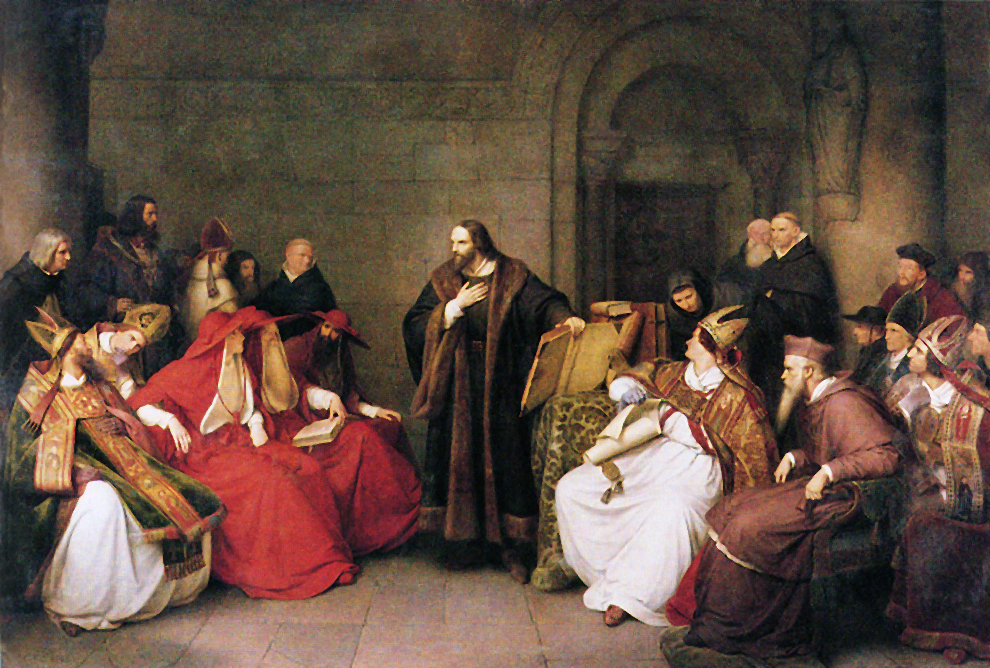
Image: Wikimedia Commons

Image: Wikimedia Commons
The Old Believers were not the only ones who spread the Christian Gospel by means of migration. There were also the believers who split from the Catholic Church under the influence of the preaching of Jan Hus in Prague. Martin Luther would later consider himself a follower of Hus. These believers referred to themselves as the Unitas Fratum (Unity of the Brethren). At the time of both Hus and at the time of Luther, what is now known as the Czech Republic was known as Moravia. Many were converted under the preaching of Jan Hus and then organized themselves in 1457 in the village of Kumald, 100 miles east of Prague, in eastern Bohemia (also known as Moravia, still later Czechoslovakia, now the modern Czech Republic). After Hus was martyred in 1415, a large number of his followers left Moravia and escaped toward Dresden in Germany. Others fled toward Poland and into eastern Bohemia (now Slovakia) and the fringes of Moravia.

According to Gregory the Patriarch, who is credited with organizing the Unity of the Brethren, what made a Christian was not adherence to a set doctrine but adherence to the example of Jesus, living their lives accordingly. By 1467, the Unity of the Brethren came to be distinguished as the Moravian Church with three orders of ministry: deacon, presbyter, and bishop. By 1517, as the result of the spread into Poland and further into Slovakia, and north toward Dresden and Berlin, the Unity of the Brethren had over 200,000 adherents with over 400 parishes. By the time of The Thirty Years’ War of 1618-1648, persecutions against the Brethren broke out. Many of the Protestant believers from Bohemia, Lutheran, Moravian, and Reformed, suffered after being severely defeated in a Battle of White Mountain in 1620. The major leader of the Unitas Fratum, was Bishop John Amos Comenius (1592-1648). Here was a man who became world famous in his lifetime, especially for his progressive views of education. In matter of fact, he was considered by the New England clergy to be the first President of the newly founded Harvard University which he decided not to accept but to remain in Europe.
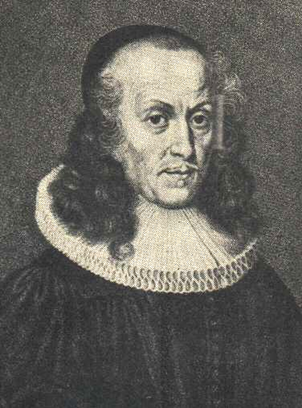
The fellowship of the Unitas Fratum which settled around Dresden in the German state of Saxony in the early 1700s found an answer to their prayers in the person of Count Nicholas Ludwig von Zinzendorf, a Lutheran pietist after the order of Philipp Jakob Spener, considered the initiator of Lutheran Pietism. This was a natural match-up with the Moravian practice of Christian life. Moravian families fleeing persecution in Bohemia and Moravia found refuge on Zinzendorf’s estate in 1722 and built the community of Herrnhut. This new community not only became a haven for many more Moravian refugees but also the launching pad for the first actual global missionary enterprise.
How this came about was an occasion in Zinzendorf’s life prior to his moving to Dresden. In 1731, when Zinzendorf was in Denmark, he met several Eskimos who had been converted by the Lutheran missionary Hans Egede. This was a spark which set Zinzendorf “afire†in spreading the gospel globally. This desire stayed with him for the rest of his life. The Herrnhut community was filled with the same zeal. The next year their first missionaries left by boat for the Caribbean. They settled in several of the islands of the West Indies and part of South America. Between 1732 and 1735 Moravian Christians settled themselves in Africa, India, and North America. The 1735 venture into North America was an epochal one to say the least. In the first instance they were the founders of two communities in Pennsylvania, Bethlehem and Nazareth, with the blessings of William Penn, who also encouraged the settlement of Mennonites within that colony.

Image: The Books of Kells by way of Wikimedia Commons.
The Moravians settled also in the English colony of North Carolina and founded the town of Salem, now known as Winston-Salem, and started a school now known as Salem College. Also in 1735, the Moravians were part of General Oglethorpe philanthropic venture in Georgia of getting men and women out of English prisons and giving them a second chance. They made the attempt to establish Savannah, Georgia, as a site for rehabilitation, but that hope did not fully succeed. Nevertheless, there was an unforeseen side effect. On board the ship was a young Anglican minister and his brother, Charles, who were impressed with the calm demeanor of the Moravian believers in the midst of a storm that panicking the sailors. He was amazed at these believers. Back in London, in the Aldersgate section, he attended Fetter Lane Chapel which was a Moravian community. He was to later write of that experience that there “his heart was strangely warmed.†The correspondent was John Wesley who was to later preach throughout the English colonies of what was to become the United States of America. His brother, Charles Wesley was less a preacher but more of a hymn writer. These two English men were the forerunners of the revivals that spread across the American frontier and Atlantic seaboard and to whom the Methodist Church look back to as its formation. To the Moravians belong the first vision of a Christian global mission. To the Wesleys belong the initiation of American revivalism along with George Whitefield of England and Jonathan Edwards of New England.

In retrospect the Zinzendorf vision and the dispersion of the Moravians from eastern and northern Europe and into the northern Atlantic and the southern and elsewhere constituted the first deliberate global expansion of the gospel which was planned and done. It was expedited beforehand by the merchant marine who preceded them and opened the oceans to long distance travel and the bays into the avenues of entrance to the interiors for settlers and travelers. The Moravians were not the first missionaries with an evangelistic endeavor but they were the first to have a distinctive goal in mind with witness and evangelism and having a planted community of believers. They were also the ones who brought to the shores of North America two men who had an agenda for revival and agenda—John and Charles Wesley.
PR
Further Reading:
“Tongues and Other Miraculous Gifts in the Second Through Nineteenth Centuries, Part 5: The 18th and 19th Centuries†by Richard Riss
 “The Holy Spirit Never Left the Church†by Charles Carrin
 “Historical Development of Wesley’s Doctrine of the Spirit†by Winfield Bevins
 “Herrnhut: A Caribbean Shrine You Need to Know†by Charles Carrin