
The Medieval Church Conundrum: How the Gospel was Preserved and Spread from the Frontiers

When the Empire made the Church into one of its institutions, how could the radical good news about Jesus the Christ continue to break out and change lives? Part of The Gospel in History series.

Image: Tobias Helfrich / Wikimedia Commons
Conundrum is a strange adjective, yet it is appropriate when one considers the state of the Christian message from AD 385/400 to 1452. The Edict of Milan (AD 313) ended the persecution of Christians and brought an era of peace for the Church. A tenuous relationship between the Christians and the ruling empire emerged. From AD 350 until 378, the year of the Battle of Adrianople, an increasing flood of invaders from Eurasia and from north of the Danube poured into the Mediterranean world. Some of the newer peoples integrated with existing populations and served in both the Roman and Byzantine armies. Some did not.
Increasingly, the Roman system destabilized and the only stability that existed was furnished by the diocesan system of the Christian Church. By the time of Augustine, the Bishop of Hippo, Germanic peoples had crossed both the Danube and a frozen Rhine river. Those who crossed the Danube went southward into the Balkans and eastern Italy. Those crossing the Rhine swept westward into Gaul, the Iberian peninsula, and south into northwestern Italy all the way to Rome. Vandals and Alans crossed over the straits of Gibraltar into Northern Africa and moved westward to capture Carthage. The unsettled conditions, in large part, prompted Augustine to compose his masterful Civitate Dei (The City of God).
Further muddying the waters of Christianity was the rise of Islam from the teachings of Mohammed in the seventh century. Islam armies swarmed out of the Arabian deserts, invading Persia to the northeast, Syria to the north, Byzantine areas northwest, and west across North Africa from the Sinai to what is now Morocco, and north into southern Spain. The armies devastated churches and massacred whole populations. The massacres prompted Christian leaders in Europe to strike back against the invaders who were sweeping into the Iberian peninsula and thrusting northward into the land of the Franks. This defensive movement, since known as the Crusades, had the purpose of driving the marauding Islamic forces out of southern France, out of the western Mediterranean, and out of the Holy Land. Among the supporters was Bernard of Clairvaux, an eminent Christian monastic scholar. It was a long, drawn out effort that lasted from the eighth century into the eleventh and twelfth centuries. The Crusades were, by no means, an offensive action as some scholars have interpreted them from John Julian Norwich to the present. Only recently, under the pains-taking scholarship of Rodney Stark, have the Crusades come to be seen as a defensive reaction.
 Here’s the conundrum or riddle to be solved. What happened to the spread of the Gospel of Jesus the Christ during the unsettled conditions of both western Europe and eastern Europe? New political entities were being forged and there was confusion over the center of the Christian world. In the western Mediterranean, Rome was pre-eminent and in the eastern Mediterranean, Constantinople was dominant. In the southern Mediterranean, Alexandria in Egypt was a prominent Christian center as was Hippo in Libya. The answer is as simple as it is complex. Christian refugees from Africa carried the gospel to the frontiers, far to the northwest, beginning in 387 with those who fled toward Ireland, the Iberian peninsula, and Brittany. Refugees, fleeing from unrest in eastern Europe and Syria, pushed toward the Kurdistan mountains, Persia, Central Asia, southeastward along the Euphrates to the Persian Gulf and into the Indian subcontinent and into China. The missionary journey of Alopen from Nisibis on into China is a documented story as is also the flight of the Coptic Christians into the Ethiopian mountains and into the Sudan. The Gospel was preserved and spread from the Frontiers. From Ireland, Europe was re-evangelized. From Edessa , Armenia, Georgia, and the monastic school of Nisibis, just south of the Caspian Sea, the Gospel went north, northeast, south , and eastward along the ancient Silk Road.
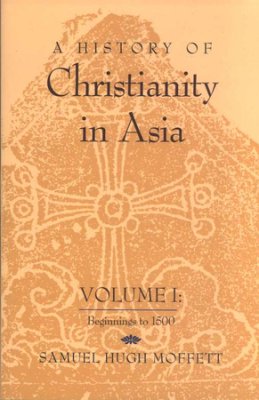
 For research purposes no two better treatments have been done than Thomas Cahill who wrote How the Irish Saved Civilization (Doubleday, 1995) and William H. Marnell’s Light from the West: The Irish Mission and the Emergence of Modern Europe (Seabury Press, 1978). Still another excellent source is Richard Fletcher, The Barbarian Conversion: From Paganism to Christianity (Henry Holt and Co., 1998). It would also be advantageous to consult Samuel Hugh Moffett’s two volume work A History of Christianity in Asia (Orbis Books, Vol. 1, 1996; Vol. 2, 2005).
 The spread of the gospel back into Europe from the frontiers during the Medieval period makes for excellent reading. The thrust eastward into central and southern Asia out of Constantinople, Alexandria, Damascus, Edessa, and Nisibis is equally worth investigation. Just as fascinating, and little known to most western Christians, is that the initial sparks for the expansion into northwest Europe flew out of northwest Africa when Vandals invaded that area. The Christians, for the most part, went across the Straits of Gibraltar, and then northward. Other Christians from Libya and Egypt went east northeast to Antioch in Syria, Edessa in Cappadocia and north toward Armenia. They took the trade routes to Persia and beyond to central and southern Asia, eventually reaching China during Alopen’s time by the middle 700s.
What is often superficially regarded is the complex relationship between the Church and the civil authorities. Constantine’s conversion and his eventual interest in the internal affairs of the Church created tension between the civil authority and the church. Strong Christian leaders like John of Antioch, better known as John Chrysostom (the Golden Mouth), challenged and criticized the authorities in no uncertain terms. He and others like him were exiled. In exile, however, their voices of protest and criticism could not be hushed. This was the prevailing state of affairs. The result was that the Patriarch of Constantinople made sure that the evangelists of the Gospel be sent out away from the reach of the civil authorities. Men and women took the Gospel to the Slavic lands and further north and east into the Caucasus mountains into Armenia, Georgia, Persia and elsewhere. Some of these on-fire evangelists came out of Alexandria in Egypt. Gregory Thaumaturgus came out of Alexandria. History credits him with the conversion of the Armenians.

Image: Wikimedia Common
In the West, the problem became one of the church being stronger than the civil authority as it was increasingly weakened trying to withstand the invading Goths, Alans, Lombards, and Vandals. The authorities did not try to exile the Christian leaders and Ambrose was able to chastise Theodosius for an unwarranted war and get away with it. Ambrose was also the man who baptized a young convert named Augustine who quickly became an ardent believer in Jesus and a more than able apologist for the faith.
While Caesaropapism dogged the church in the East, Triumphalism (Church over State) became the problem in the Western Mediterranean. It was both a blessing and a curse for the Church in the West.
One of the boons came in the person of Pope Leo the Great, who in AD 452, traveled to Mantua to meet the Hunnic leader Attila and dissuade him from attacking Rome. He succeeded. A few years later, Leo met Gaiseric the Vandal leader at the gate of Rome. While the city was spared, Gaeseric made waste of the countryside. The bane of the church in the west was triumphalism—the church over the State. Charlemagne was crowned by the Pope.
Another problem was the idea of a primacy of an overall “bishop†over the church in these troubled times. This was debated within the western Mediterranean Christian world and certainly questioned within the Eastern Mediterranean Churches, and especially by the Greek patriarch, John IV in Constantinople, in AD 588. The main figure in the West was Gregory the Great. When John IV, better known as John the Faster (Jejunator) attached the term “ecumenical†to the title “patriarch,†Gregory (in AD 593) criticized John for assuming to be the head of the whole Christian community. John, in return, criticized Gregory for taking the title “papa†or “pope†as though he alone was the head of the whole Christian body. This was the beginning of the split which did not fully come until 1053. There were overtures to ward off such divisiveness before then as there had to be co-operation between the western church and the west, given the Barbarian invasions and then the invasions of the Arabs under the banner of Islam between AD 632 and 1050.
It was not an altogether negative jolt for the Christian Church. There were positive features on the part of Gregory and John IV, and their quarrel over primacy. Gregory could be considered the actual first pope. His use of the Greek word “catholic†to describe the western churches did not carry the meaning of a catholic institutional structure but the use of a common universal language – Latin – throughout Western Europe. From him a conical hierarchy developed having a wide conciliar base at the bottom and a smaller conical or conciliar circle toward the top. Similarly it was Gregory who commissioned the first missionaries into England proper, led by a priest since known as Augustine of Canterbury. From John IV, the eastern churches retained the concept of a complete council of bishops in each country the gospel entered. Also each country had its own individual Christian identity while retaining a single faith among themselves. John IV and his successors also encouraged the indigenous languages, as Armenian, Georgian, Slovakian, Bulgarian. Hence, eastern Europe and Asia had the scriptures translated into their individual and identifiable languages. A much later Patriarch sent forth two famous missionaries into the Slavic lands, Cyril and Methodius, who in their mission invented the Cyrillic alphabet which is common to Czechs, Slovaks, Estonians, Russian, Latvian, Estonian, Lithuanian. This promoted the translation of the Bible into the various language groups.
This is, in part, what makes the Middle Ages a riddle, or conundrum. Added to the riddle is that of the Crusades. It has only been recently, with the work of Rodney Stark into the nature of the Islamic advance, that the Crusades have been noticed by many as a defensive move, not an offensive one. Access to records indicate massacres of whole towns and populations by Islamic armies as they moved out of Arabia into Persia, Egypt, Palestine, Libya, Mauritania, Morocco, on one side and on the other into northwest India, Sogdiana, Afghanistan, far western China, and into Sri Lanka, and Malaya.
 Western Europe’s response was to allow no further incursions west or east. No greater epic was ever written in the West than “The Song of Roland†which recounted in verse, the French resistance which prevented the Islamic advance into France from Spain. It was not until about 1492, when under the leadership of El Cid, the leaders of the two northern provinces of Navarre and Aragon, the Spanish were able to drive the Moslem presence in southern Spain out of the Iberian peninsula. Several European countries combined together to drive the Islamic armies out Palestine and to save Jerusalem.
This is the conundrum, the riddle, the puzzle. The other side of the issue is that the atrocities of the Islamic armies drove Christians further south into the vast continent of Africa with Christians taking their faith in Christ into the Ethiopian highlands and south into the Sudan, and westward into the hinterlands of Algeria, Libya, and the mountainous country of Morocco. For most of us, this is an untold story. Out of tragedy came renewal and the spread of the gospel. Out of divisions, such as the schism between the Orthodox East and the Roman Catholic West, came renewal from out of the far frontiers.

Image: Wikimedia Commons
This is still an incomplete picture. In this period of time, the monasteries of the western church, through the Benedictine and other regular clerical orders (those under a rule [regula]), became hostels for travelers, universities, and scriptoriums (where the Bible was preserved and translated and copied). The monasteries of the eastern churches were centers of prayer, and under Basil the Great’s leadership, hospitals for the ill and infirmed. Basil established the first hospital. In Ireland, the Book of Kells was composed, an illuminated masterpiece of the four Gospels of Matthew, Mark, Luke and John. It was accomplished within the late 8th century. The monastery at Cluny in France became a center of Christian renewal. This was also a period of new preaching orders as the Dominicans under Dominic and the Franciscans under Francis of Assisi. For all the turmoil of the age, it was not a dark age as some writers have described it. It was productive in many areas and spurred new advances of the gospel into the further north, east, and south, and mostly from the frontiers of both east and west. It was also a time of reform and renewal. It was not a static time at all. The upheaval created by invasions, civic intrigues, and ecclesiastical problems created a situation that encouraged the rise of strong new forms of evangelism and also the voices of certain strong Christian individuals.
One of the new forms of evangelism that came into existence arose near the middle of the Medieval period was the use of literature. Cassiodorus, around AD 536, in his Institutiones, wrote “What happy application, what praiseworthy industry, to preach to men by means of the hand, to untie the tongue by means of the fingers, to bring quiet salvation to mortals, and to fight the devil’s insidious wiles with pen and ink!†In the same paragraph he went on to say “For every word of the Lord written by the scribe is a wound inflicted on Satan. And so, though seated in one spot, the scribe traverses diverse lands through the dissemination of what he has written.â€

Image: Matthias Mahr / Wikimedia Commons
Eleven years later (AD 547), in his Christian Topography, Cosmas Indico-Pluestes (Book III, 54; and Book XI, 1:13), related that “Even in the Island of Tapro-bane (modern Sri Lanka) in inner India, where also the Indian sea is, there is a church of Christians, clergy and believers. I do not know whether there are Christians even beyond Taprobane. The same is true in the place called Male, where the pepper grows. …â€
At the time of the Vandal incursions into North Africa (close to AD 420), Augustine of Hippo, perhaps the greatest Christian apologist since Jesus, Paul, Justin, Tertullian, and Clement in Alexandria, and still acknowledged today by the Christian churches of East, West, North and South, wrote Civitate Dei (The City of God). Augustine’s massive work stated that the Christian is citizen of God’s kingdom, not man’s. The Christian belongs to a supra-order of life, living within the civic realm of man but with citizenship under God. It reminds one of Paul’s letter to the Philippians where he writes of God’s colony in man’s world.
Other men of importance are John of Damascus and Thomas Aquinas. John of Damascus, the last of the Church Fathers, lived in the eighth century and wrote during the time of the Islamic takeover of western Asia. He was famous for his Exposition of the Faith and the hymn “The Day of Resurrection.†Thomas Aquinas, writing during the end of the Middle Ages, relied upon John Damascene when he wrote his Summa Theologica and Contra Gentiles.
Evidence of the expansion of the good news in the medieval age is by no means limited to this survey. This writer could go on and on, but there is only so much space to make the point that many writers do not take seriously the positive inroads of the gospel during the Middle Ages, whether in evangelism or in other manifestations of the Christian way. The negative is much more often what captures the attention of revisionist scholars. Sometimes, the times of turmoil are the times of greatest expansion for the Gospel of Jesus the Christ.
PR
More Christian History from Woodrow Walton
Part of The Gospel in History series.
 The Ghost Of Alexander Severus: Third Century Religious Pluralism as a Foretaste of Postmodernity
Has Christianity ever found itself in a world full of competing religions and cultures? What can we learn from how those followers of Jesus acted in their times? Should we hope for the same kinds of outcomes?
 A Time of Weakness, A Time of Strength: AD 315-450
Constantine’s Edict of Milan brought an end to the persecution of Christians, but that did not mean the Church was granted favor throughout the Roman Empire. What are the lessons for us today?
Further Reading
Thomas F. Madden, “The Real History of the Crusades: A series of holy wars against Islam led by power-mad popes and fought by religious fanatics? Think again” Christianity Today Online (May 6, 2005).