
The Mouse Under the Elephant in Strange Fire

Are Pentecostals offering Strange Fire? (Panel Discussion)
Rob Wilkerson responds to the article, “The Elephant in the Strange Fire†by Cameron Buettel, published on November 3, 2014 on John MacArthur’s Grace to You ministry website.
 Frankly, I’m a nobody in the kingdom. I’ve never published any books, though I’d certainly like to one day. I’ve never led a church larger than a few hundred people. And I’ve never had any sphere of influence larger than the people directly under my leadership before. So when the folks at PneumaReview.com asked me to respond to an article published this past Monday, by Grace to You employee, Cameron Buettel, I felt like a mouse beneath Cameron’s elephant.
I’ve never seen an elephant respond to a mouse. But it could be either messy or humorous. Hopefully in my case Cameron’s elephant will simply be still, be informed, and be educated just a little when it comes to a biblical charismatic theology. When Cameron penned a follow-up challenge to charismatics who stood in line of John MacArthur’s Strange Fire conference, held a little over a year ago, he confessed two things to his readers. First, he has a charismatic background and grew up in mainline Pentecostalism. Second, he consumed an unhealthy amount of videos and writings from influential charismatic leaders.
To the second acknowledgement I’d simply agree with Cameron. Yeah, it’s unhealthy to watch really too much of anything on TBN or YouTube, assuming I am able to reasonably deduce who it was that he watched and read. And I may be totally off on that. Who knows? But here’s what I feel like I do know with some measure of confidence. The guys who seem to make enough money to spend it on television broadcasting in order to turn around and ask for more money make me angry, frustrated, and irritated that people who probably want to follow Jesus are being duped into following a charlatan.
But here’s the stickler. Just because they can afford to put their wares on the air doesn’t mean they are the poster children for the charismatic movement. It just means they are the poster children for the charismaniac movement. There’s a big difference. Biblical charismatics know that. And refusal on the part of cessationists to admit that there is a difference continues to be part of the dishonesty that creates a divide between us. I am charismatic. But I am not charismaniac.
To the first acknowledgment I’d respond that everyone will find little to much that is or was wrong with the denomination they grew up in. I grew up Southern Baptist. There is much to be praised there, like the fight for inerrancy. But there is much that is wrong there, from my personal viewpoint. And here’s the rub I felt in Cameron’s article. He writes from what seems to be a reactionary perspective rather than a responsive one. The answer to the bad charismatic and pentecostal theology he personally experienced is not zero charismatic and pentecostal theology. Ditching the whole thing, Cameron asserts a bullet-pointed list of what he perceives to be a standard, predictable, step-by-step, “codified playbook of sorts†for “self-defense.â€
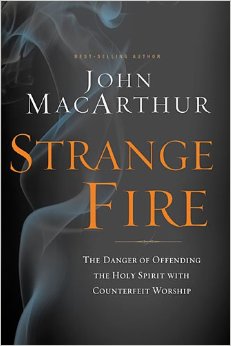
What’s ironic is that he does not consider that John’s books – Strange Fire and Charismatic Chaos – are considered to be the very same thing! John builds a straw-man out of the biblical charismatic and then burns it in effigy against the unbiblical charismaniac. He’s a dear brother and friend, make no mistake. But there just doesn’t seem to be honest acknowledgement that when compared to other biblical charismatic scholars, preachers, pastors, teachers, etc., what he is attempting to argue against is the very same thing that biblical charismatic leaders are arguing against. Honestly, Strange Fire hit me like Dave Hunt’s book, What Love is This?, hit them (and myself). I read and listened and watched thinking to myself, “I know what they are saying is true about charismaniacs. But they don’t represent me! And they don’t represent, for example, the 900+ churches worldwide of the Newfrontiers movement, formerly led by the likes of Terry Virgo! And that’s just for starters!†Perhaps I could take a moment and respond to the playbook.
- “Dogged insistence that the gifts of prophesy, tongues, and healing continue to the present day.†They do. I just witnessed and experienced it this morning. I watched demons being cast out of a person, with quiet, unassuming, unostentatious authority given by Jesus Christ. The one ministering deliverance gave a word of knowledge and/or a word of wisdom about a situation he could have known nothing about. And it was right in alignment with Paul’s command in 1 Thessalonians 5 about giving thanks and receiving the situation as the will of God. And I spoke in tongues earlier this morning, too. The Bible teaches that if I speak in tongues I am speaking to God. Just because Cameron doesn’t believe these things doesn’t make them true.
- “Vague anecdotal evidence in support of the continuation of those gifts.†My experience is not necessarily vague or anecdotal. I know the Strange Fire crew don’t like to build anything on experience. But it is Say otherwise to the blind man in John 9 and see what happens. Experience is, in fact, pretty powerful evidence. In my sphere of interaction, people are coming into a fuller understanding of what it means to be a follower of Jesus, a son of the Father, and a home where the Holy Spirit dwells. Their fruit and experience are evidence. What really counts is what the Bible says, though. Cameron and I agree on that much. But here’s where we disagree: there’s no indication exegetically or theologically that God would stop doing the same thing today that He did initially to launch the New Covenant, which we are still in. And there’s no indication that God intended the New Testament, for that matter, to even serve as an authoritative encyclopedia on all of the spiritual gifts and miraculous things God would ever do among His church. Instead, the New Testament simply provides a safe and secure trajectory for the kinds of things God has done and will continue to do today.
- “Unshakable confidence that the worst charismatic abusers and charlatans represent only the renegade fringe of the movement, and that they wield limited influence among mainstream charismatics.†What’s strange is that Cameron has unshakable confidence that these abusers and charlatans do represent the movement. But I’d bet that neither he nor I actually know enough of them to be so confident on that point. Besides, it’s biblically not my problem. See my next response below.
- “Staunch refusal to name, criticize, or publically disavow those abusers and offenders at the supposed fringe of the movement.†Jesus, Peter, Paul, Jude, and John. What do they all have in common? They publicly disavowed, named, and criticized abusers and offenders within their sphere of ministry. John MacArthur’s idea that the charismatics should police their own movement is frankly an unbiblical practice. I don’t have any authority, influence, or platform to rebuke anyone who is not under my leadership. And those who think they do have a problem with control. It’s honestly an appalling display of pride and arrogance to believe that you have the authority to speak to people who are not even under your care. Why would they listen to you in the first place? I can’t understand why this biblical practice keeps being overlooked and overstepped in the name of some strange, internal, impulsive “need†to protect the gospel. It’s God’s gospel. He’s a big God. He can protect it from weirdos. And He does just that through biblical leaders who lead and influence their people biblically.
- “Dire warnings that rejecting anyone who claims to speak on behalf of the Holy Spirit or wield His power is tantamount to rejecting the Spirit Himself.†That’s pretty arrogant, I’d say. I’ve never heard anyone say that before, and I listen to a few prominent, biblical charismatic teachers. That sounds like abuse of the sheep to me. It most definitely happens, to be sure. But there are also cessationist pastors who act with as much arrogance. I’ve never heard John MacArthur policing them, and I’ve listened to hundreds and hundreds of hours of his preaching. Perhaps I missed it somewhere.
- “Total disinterest in discussing or debating any doctrinal or ecclesiological issues other than continuationism versus cessationism.†I’m not disinterested in that stuff, necessarily. But let’s face it. My doctrinal and ecclesiological issues that Cameron wants to debate and discuss are built on my continuationism. I believe the Holy Spirit is at work today in the very same ways that He was in the New Testament. And I believe that sound doctrine must account for and include that truth. And I believe that the local church ought to seek to be a complete New Testament church. His representation of a playbook seems to indicate that his mind is made up. So is mine. So we can either use precious time to discuss and debate, and perhaps some good will come of it. Or we can both get to work ministering the gospel to the lost and bringing them into the fullness of their identity in Christ, and equip them to do the work of ministry.
- “Confident assertions about the explosive growth of the charismatic church worldwide, and blithe acceptance that everyone who claims to be a charismatic is an authentic believer.†Once again, there’s a tone here which seems to belie that Cameron, and the Strange Fire crowd, believe that they have some sort of authority to rebut the authenticity of a charismatic’s conversion. Absolutely stunning. The Scriptures we both read could not be any clearer that the angels will handle the tares when Jesus returns. Again, I have no authority or influence over believers who are not under my sphere of authority or influence.
Now I turn my attention to Cameron’s bullet-pointed “raft of questions and issues that need to be addressed.†But of course, I can’t address them all in this response. First and foremost, that’s because I don’t think they need to be addressed in the public way that Cameron believes. I believe that no man lives to himself, no man dies to himself, and whether we live or die we are the Lord’s. In other words, each of us will stand before the judgment seat of Christ to give an account of what each of us has done. Each of us—personally—not corporately. Cameron and I both will give an account for what each of us, individually and personally, have done. Any questions and issues that need to be addressed should be addressed by each believer, like the Bereans did, and do not necessarily have to be addressed in some public forum.
- “Is there any statistical evidence that proves the so-called ‘lunatic fringe’ of the charismatic world is not actually the mainstream of the movement? Compelling statistics were produced at Strange Fire that indicated the prevalence of prosperity theology in mainstream charismatic churches. Can those numbers be contradicted, or is it time to reconsider who is truly on the fringe?†Man, I just have no idea, honestly. John MacArthur presented “compelling statistics†which were obviously based on zero interaction with biblical charismatics and the movements and groups they represent. So I’d have to say those statistics are kind of like a prisoner of war: if you torture them long enough they’ll tell you anything you want to hear.
- “What is the responsibility of charismatic leaders to police their own movement beyond the walls of their individual churches? Who will be willing unequivocally to call out heretics and charlatans? And why are so many charismatics comfortable with false teachers serving as the face of their movement?†Again, there’s only as much responsibility as their sphere of leadership and influence extend or allow. I have no business calling out the heretics and charlatans of people I’ve never even met, nor that the people I lead even pay attention to. Preaching at my people about other people I don’t know or that they don’t even pay attention to is a waste of their time, and more importantly an unfaithful attending to the exposition of the Word for their sake.
- “What constitutes the true, biblical gospel? And what deviations from it qualify as apostasy and heresy? In particular, how do you make sense of the rise of charismatic expressions in the Catholic Church? Is it possible to receive the baptism of the Holy Spirit while continuing to reject the biblical gospel?†Paul was pretty clear on what the true, biblical gospel was. It’s in 1 Corinthians 15:3-4. It’s that simple. He said in Romans 10:9-10 that if you confess that truth with your mouth and believe in your heart that God raised Jesus from the dead, then you’re a true follower of Jesus, even if you happen to find yourself in a Catholic church at the time. If you deviate from that, then you are not a believer. Therefore, it is impossible to receive the baptism of the Holy Spirit if you reject the very biblical gospel that He was sent to affirm and promote. Again, I am only the steward and custodian of the gospel for those that God has put under my leadership or influence. I am not a broker of that truth. And the Strange Fire crowd really makes me feel that they believe they are.
- “Is Oneness Pentecostalism heresy? Or is perverting the doctrine of the Trinity not really such a big deal after all?†Yes and no, respectively. Oneness stuff is heretical, and the doctrine of the Trinity is a big deal after all. All biblical charismatics know that. Some charismaniacs do not know that. Yet. So we love them and lead them into truth, where we have authority and influence over them.
- “How are manufactured experiences—like seeding air conditioning vents with gold flakes and promoting man-made prophecies—helpful or encouraging for true spiritual growth? Why should the proliferation of phonies give anyone confidence that the real thing even exists?†The first question is obviously rhetorical. If you fake a work of God then you are a fake. No question about that. But regarding the second question, I ask in response whether the proliferation of hyper-Calvinists give anyone confidence that real Calvinists exists? I’d ask whether the proliferation of terrible preaching gives anyone confidence that expository preaching exists? I’d ask whether the proliferation of inept, local church leadership gives anyone confidence that biblical leadership really does exist? Here’s the bottom line that cessationism has a hard time accepting: the abuse of a good thing neither means there is no good thing in existence, nor that we deny ourselves the experience of truly good things.
- “Is the prosperity gospel biblical? If not, doesn’t it fall under the curse of Galatians 1:8–9?†No. It is a cursed gospel. And biblical charismatics believe that, and some charismaniacs probably do, too.
- “When it comes to Scripture’s instructions and prohibitions for life in the church—for example, Paul’s clear teaching about female pastors, or his admonition for only one person at a time to speak in tongues—how seriously do we need to take those things today? Again, are these matters worth dividing over?†I don’t believe that the Bible endorses female pastors. But some biblical charismatics do. So what does that mean? That they don’t believe in the true, biblical gospel? Ouch. That’s quite a judgmental leap. The Bible is just as clear on the spiritual gifts as it is on female pastors. Yet oddly enough, the Strange Fire crowd rejects both, and lumps them all in the same pile. I’d ask Cameron in return, “If Paul commands us to earnestly pursue spiritual gifts, especially that we may prophesy, how seriously do you need to take those things today?†And if Jesus loves women who may, in my opinion, be sincerely wrong about their view of leadership, does that mean they are not followers of Jesus? It could simply mean that they are mistaken. And if so, we treat them as sisters in Christ, with respect and honor and dignity. And we pray for the success of their ministry and that people would be brought into the kingdom and experience God’s love.
- “Does the gift of tongues as practiced in charismatic churches today bear any resemblance to the supernatural events on the Day of Pentecost, or any other expression of the gift of tongues found in the book of Acts? If not, why is the dramatic difference acceptable for continuationists?†How could anyone know that for sure? That’s an odd question for humans separated 2,000 years from the event without any hope of a time machine. The difference is only dramatic for cessationists since they seem to communicate about it as if they had actually been there. Seriously, how can anyone even know what that must have been like? Cessationists try to do so exclusively through exegesis. But the Pharisees did that too when it came to the Messiah, and look what happened. They did not allow their experience to inform their theology. In truth, both camps see through a mirror dimly. One day we will see Jesus face to face. Until then, “let us not become boastful, challenging one another…†(Gal. 5:26).
- “If today’s prophets are not held to the biblical standard of one-hundred percent accuracy, what standard is there for people who make false prophecies? Or is modern prophecy nothing more than a crapshoot?†The 100% accuracy standard is right out of the codified playbook from cessationists. When I applied the exegetical and hermeneutical skills I learned from John MacArthur’s seminary on the passages supposedly supporting this conclusion, I found that the passages don’t really say that at all. I wrote an attempt at outlining this for the layman in my article “Gospel-Driven Prophecy: Understanding the Differences Between Old and New Testament Prophets and Prophecy.†It is disappointing to biblical charismatics that cessationists continue to misuse and distort the supposed OT supporting passages to sweep away all NT prophecy in the church today. The Bible does not maintain any sort of standard for prophets. Not in the Old Testament nor the New. And especially not under the New Covenant, for that matter. I also attempted to provide some clarity and structure to the layman on thinking through NT prophecy today, and the necessity to be grounded in the Scriptures, in my article, “Perspecuity and Prophecy.†Perhaps Cameron and the Strange Fire crowd will find some things there which may be helpful in clarifying what I and other biblical charismatics would perceive to be a more solid basis on which to build and practice NT prophecy today.
- “Finally, in the immediate aftermath of Strange Fire, Phil Johnson made an appearance on Dr. Michael Brown’s radio program. Phil issued Brown a challenge—which Brown accepted—to produce any audio of Mike Bickle or someone of similar influence in the charismatic movement making a clear presentation of the gospel. We’re still waiting for that audio.†I’ve never met Mike Bickle. I’ve listened to him a few times. For me personally, he’s hard to follow. But that’s just me. Instead, let me offer someone of similar influence in the charismatic movement making a clear presentation of the gospel: Kris Vallotton, pastor with Bill Johnson, at Bethel Church in Redding. Though this message is a part of Kris’ “Prophets and Prophecy†series, the message deals exclusively with the gospel: “Prophets & Prophecy, Part 3.” I’d say for a church as influential (and as attacked) as Bethel Church, Cameron, Phil, and the Strange Fire crew would have a hard time finding much to disagree with here as Kris explains the New Covenant, communion, forgiveness, atonement, and justification. I found it deeply encouraging, simple, and biblical. But I’m sure they’ll have a heyday with his homiletic skills, and join Kris’ own self-deprecation about his preaching skills.
Cameron closed his article with this comment: “We want to see someone—anyone—from the charismatic side take up those important issues.†I guess I’m an “anyone†even though I’m a nobody on the big-picture, theological radar, necessarily. I’d ask readers of Cameron’s article to prayerfully consider my responses above. My preference is for the Strange Fire crew to consider and hold fast to the hard saying in 1 Thessalonians 4:11: “…make it your ambition to lead a quiet life and attend to your own business and work with your hands, just as we commanded you…†In so doing, the only house to sweep and clean is the one we each lead.
Rob Wilkerson
November 6, 2014









After leaving a comment on Cameron’s blog post, here is his reply: http://www.gty.org/Blog/B141103/the-elephant-in-the-strange-fire#94.
On the Pentecostal Theology Worldwide Facebook group, B.R. wrote: “I almost fell out of my chair when I read [Cameron Buettel’s post], ‘In fact, most of the responses to Strange Fire have amounted to little more than reviving certain authors’ greatest hits in defense of the continuation of the apostolic gifts.’ As if Strange Fire wasn’t just a rehash of MacArthur’s previous books.”
My response to Cameron is posted here: http://www.gty.org/Blog/B141103/the-elephant-in-the-strange-fire#99