
The Power of the Cross and Healing in a Pastor’s Ministry

Introduction
As a Christian youth, the first book I read from cover-to-cover was David Wilkerson’s The Cross and the Switchblade. For my senior paper in college, I wrote about “The Wisdom of the Cross in 1 Corinthians 1:18.†Throughout my life, the theme of the cross of Jesus has appeared in my life and academic studies. My preaching and pastoral ministry became guided by the overarching theme of the cross of Jesus. I believe without the cross, the New Testament contains implausible words with little power. In my research as a pastor-scholar, I have recognized that the central motif of Paul’s message centers on the cross of Christ crucified (1 Cor. 2:2). In his first letter to the Corinthians, the apostle commenced the correspondence with “the message about the cross†and “power of God†(1 Cor. 1:18, NRSV). This article will consider the power of the cross in a pastor’s ministry with regard to healing. My thesis underscored the need for a robust theology of the cross with the issue of healing. The key thought of this paper is not a new idea for healing is as old as the New Testament. Both the theology and practicality of the cross in healing will be investigated. Salvation overcomes sin through the power of the cross. The apostle’s eschatological doctrine of the cross contains a theology of salvation; subsequently, the preaching of the cross sets the release of the power of God for healing in the church. Therefore, the cross of Christ reveals God’s eternal plan for all people, and that power undergirds his sovereign purposes. As a pastor of a congregation, I believe a firm understanding of the cross remains essential for ministry, especially in the area of healing.

Â
Relationship between the cross and healing
As the gospels prominently document, healing was a primary feature of Christ’s ministry. Francis MacNutt wrote, “just as the early church kept a lively practice of the baptism in the Spirit, they also carried on Jesus’ healing and deliverance ministries. For the next three hundred years Christians were proud of their healing mission and enthusiastically prayed for the sick and cast out demons.â€[1] For centuries, this belief was a misplaced essential of Christ’s teaching and the importance of Jesus’ resurrection was missing. MacNutt continued, “by the year 800-more or less-a desire for baptism with the Holy Spirit had disappeared…an expectant belief in healing the sick was also dying out. The two are intimately connected: If the power behind the healing prayer is not there, or is diminished, then fewer people will be healed. Healing becomes rare and unusual.â€[2] The same remains true in our post-modern societies that healing needed required a recovery to its biblical foundation. The renewal movements of the twentieth century brought a release into the church for this conviction. Healing is once again a part of the established churches, yet, the modern day Pentecostal/Charismatic movements would do well to balance their views of healing with the suffering of Christ found in the cross. Indeed, as one observes certain abuses with healing in today’s church, a corrective methodology needs to draw a dynamic union between the cross and healing.
Â
The practicality between the cross and healing
As a pastor, chaplain, and professor for twenty-eight years, I preach with confidence about the power of God to heal. Because salvation and healing are in the cross (Matt. 8:17), I believe prayer for healing remains appropriate for pastoral ministry. However, the results of healing prayer must be tempered by a healthy theology of the cross. Charles Farah expressed concern between the balance of healing and modern-day emphases on faith. Because of disregard within certain Christian circles with the teaching on healing, he believed a correction with classic theology was necessary. In his perceptive book From the Pinnacle of the Temple, he presented a common storyline with prayer for healing. He writes:
Major premise: Healing is in the Atonement.
Minor premise: Faith is the key to healing.
Conclusion: Therefore, those who are prayed for in faith will be healed.
Right? Not always. It just is not that simple. There is always an X factor in healing, an unknown quantity that God does not chose to reveal. Healing is a divine mystery and humility is our best approach to unraveling the answers.[3]
Farah’s scenario has become a common theme that causes many sincere Christians to fall into doubt and cynicism.
theology always lives within the realm of mystery. No theologian can escape the mysterious ways of God, the capricious ways of the Spirit. Theology is a peculiar science because, when it is most true to itself, it prostrates itself in humility, prayer and adoration. True theology is a theology of prayer, and in the presence of a living God one adores; he never wholly understands.[5]
Thus, sound theology remains vital for practical faith and healing.
We read in the scriptures that Paul left Trophimus sick (2 Tim. 4:20), and Epaphroditus almost died (Philippians 2:26-27). Did Paul lack faith with his thorn in the flesh (2 Cor. 12:7-9)? Dan McConnell asserts in his critique, A Different Gospel, concerning the hyper word of faith theology, “one cannot help but wonder how Paul’s bodily illness would have been received today among [some Christians].â€[6] A balanced theology of the cross with divine healing would revive trust in solving many problems in these specific situations. It may be that the statement of Paul leaving Trophimus sick at Miletus intended to keep the church from extremes. To add, in the light of the apostle’s teaching on holy communion, sin, and sickness (1 Cor. 11), John Thomas writes, “Paul not only believed God could use illness as discipline for believers who sinned (as in 1 Cor. 11:30), but he could also use it as a means to accomplish his will through the preaching of the gospel.â€[7] To such mysteries Paul had one answer, “now I know only in part; then I will know fully, even as I have been fully known†(1 Cor. 13:12). Most notably, those texts concerning the cross reveal the full counsel of God on this topic.
Nevertheless, the power of God in the life of the pastor is indispensable for an anointed ministry. We must remember God always heals, whether instantly, gradually or in the resurrection but God always heals! Joseph Fitzmyer testifies,
the gospel or the message of the cross is the power of God, because in that message the crucified Jesus is proclaimed as the one who brings God’s power to deliver human beings from the evil of sin and moral destruction.[8]
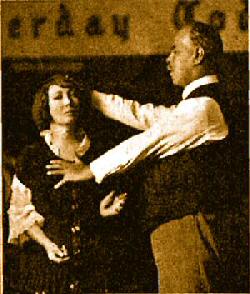
 I recall traveling to one of the hospitals in Pittsburgh to pray for a man who was the husband of a member from our church, but he did not attend. He was in his 40’s, suffered a heart attack, and was not a believer in the Lord. As we prayed from him, he mentioned that he felt someone touching his chest. I know that I did not physically touch him in that area of his body but he went through the surgery and miraculously recovered. He started attending our church, is a member of the board, and doing considerable work for the congregation. That is what healing is about, effecting new life in people. When Jesus traveled to the home of Peter and met his mother-in-law he reached toward to her as she remained sick with fever. The scriptures say in Matthew 8:15, “he touched her hand and the fever left her, and she got up and began to wait on him.†God wants to move your life forward so that you return to giving one hundred percent to the people you care about in your life, family, and church. When she received her healing, Matthew writes that she waited on Jesus. The Authorized Version expresses it, “she arose, and ministered unto them,†or as the Message Bible states, “no sooner was she up on her feet than she was fixing dinner for him.†She could not serve others when she had a fever. Now the fever disappeared and she can abundantly bless her son-in-law. Healing is about involving you in life. Healing involves reentering yourself into life. Paul wrote, in Phil. 3:10 “I want to know Christ and the power of his resurrection and the sharing of his sufferings by becoming like him in his death.†The power of God is the only answer overcoming sin, evil and Satan in our modern society. The cross was more than a philosophical idea; it was God’s intervention into human history. As humans suffer in this lifetime, Christ came and suffered on their behalf; not to take away pain, but to provide salvation. On a surface reading, Christ’s suffering on the cross was hardly explainable. In our wisdom his actions appeared impractical and unrealistic (1 Cor. 1:18). Yet, Christ’s suffering became not only our atonement but also was the eschatological realization of hope in life.
The cross recognized the value in suffering. Some Christians have taught that faithful followers should always be physically healed if they pray hard enough. They have proclaimed, “if you had enough faith you would be healed.” Proponents of the “prosperity gospel” claimed that authentically turning one’s life to Jesus immediately resulted in abundant health and financial blessings. The idea remains that believers should never be poor or experience sickness. Paul surrendered his life to Jesus, and although the Lord restored his vision, the apostle nevertheless had a number of years of pain (2 Cor. 10-13). Yet, it was not for lack of faith (2 Cor. 12:7-9) on his part. In addition, the thief on the cross beside Jesus received freedom from eternal punishment. Jesus pronounced, “today you will be with me in paradise” (Luke 23:43, NIV); however, the offender still experienced much suffering after he surrendered his life. He hung on the cross for a several hours after the soldiers broke his legs. The sovereign Lord could have rescinded him from the cross and removed his suffering the moment he submitted, yet this comeback never occurred.
Again Paul articulated, “to keep me from becoming conceited because of these surpassingly great revelations, there was given me a thorn in my flesh, a messenger of Satan, to torment me. Three times, I pleaded with the Lord to take it away from me. But he said to me, ‘My grace is sufficient for you, for my power is made perfect in weakness.’†(2 Cor. 12:7, NIV). Paul also uttered, “be … patient in affliction, faithful in prayer” (Rom 12:12, NIV). Obviously, the apostle experienced both suffering and resurrection in his ministry and life. The power of the cross accepts meaning in both suffering and healing.
Historically, Christians were not afraid of the cross; rather they loved the cross. In fact, Paul penned, “if we are distressed, it is for your comfort and salvation; if we are comforted, it is for your comfort, which produces in you patient endurance of the same sufferings we suffer†(2 Cor. 1:6, NIV). The cross taught that one can be inflicted with suffering, yet have tremendous faith and rejoice because of the complete dependency on God that it has facilitated. It was not a sign of feeble confidence. Actually, it required faith to face suffering with dignity. Yet, the cross recognized that miraculous healings occurred from Christ’s sufferings. The cross reminded us that a true miracle of healing was a conversion of the heart.
The cross was central to all Christian teaching including healing. Without an understanding of its implications in the life of a believer, one cannot truly “deny himself and take up his cross daily and follow me [Christ]†(Luke 9:23, NIV). John Stott wrote, “the Cross is the pivot as well as the centre of New Testament thought. It is the exclusive mark of the Christian faith, the symbol of Christianity and its cynosure.â€[10] God’s wisdom focuses on the cross and therefore, all teaching about healing must come in subjection to the cross and its meaning for Christian living. Ultimately, God demonstrates his transformational power for healing in the cross as God’s touch still has its ancient power.
In my congregation I pastor, Trinity United Christian Church, near Pittsburgh PA, Holy Communion is the highpoint of the cross in worship. The Christian Church (Disciples of Christ) remains one of the few Protestant denominations that celebrate communion every week. Our Episcopal and Catholic friends call it the Eucharist which comes from a Greek word that means thanksgiving; thus, the Great Thanksgiving. Communion is a vertical relationship with the congregation, a love toward the brothers and sisters. Yet, it is a horizontal reality with God. Place both together and you have the cross.
I believe the Holy Communion has through faith, great healing power for the soul and body. The book of 1 Corinthians 11 states that some of the Corinthians were accepting the cup and bread unworthily. They ate and drank, missing its meaning. Their sicknesses were not healed and some people died before their time. They were not grasping the meaning of his body and their relationship with one another. They were separated from the healing the Lord offered in the Holy Communion.
We receive the Holy Communion, believing the Lord’s presence to heal. We love to take it often for many reasons, not the least of which it is a sacrament, a point of contact, to release our faith to God and forgive the brethren. Communion is the Lord’ table and his work on the cross sets the table. He welcomes all who desire to know him deeply and share in his life to heal. It is the cross and the blood of Christ cleansing us from all sin (1 John 1:9). That notion is the meaning and reality of the words this is my body and blood, in relation to the power of the cross.
In conclusion, the cross continues as the centerpiece for power in healing. Nineteenth century minister R.A. Torrey called for a revival of healing in the church. He concisely identifies the problem in his inspirational classic The Power of Prayer,
Beyond a doubt, one of the great secrets of the unsatisfactoriness and superficiality and   unreality and temporary character of many of our modern, so-called revivals is that much dependence is put upon man’s machinery and so little upon God’s power.[11]
A renewal of the power of God and teaching on the cross can reestablish the sovereign work of healing today. As a pastor, I pray for a new measure of the Holy Spirit to empower God’s church. Then, as Torrey expresses, “according to God’s own will and purpose, His power shapes and fashions history.â€[12] Most crucial to our concerns, the wisdom that Paul discovered in the cross (1 Cor. 1:18), and a humble acknowledgement of the work of the cross can transmit the power of God to heal in our generation.
PR
Notes
[1] Francis MacNutt, The Nearly Perfect Crime: How the Church Almost Killed the Ministry of Healing (Grand Rapids: Chosen Books, 2005), 82.
[2] MacNutt, 96.
[3] Charles Farah. From the Pinnacle of the Temple (Plainfield NJ: Logos, 1979), 76.
[4] Dietrich Bonhoeffer. The Cost of Discipleship (New York: Collier Books, 1937), 45.
[5] Farah, 135.
[6] D.R. McConnell. A Different Gospel, A Historical and Biblical Analysis of the Modern Faith Movement (Peabody MA: Hendrickson, 1988), 163-164.
[7] John Christopher Thomas. The Devil, Disease and Deliverance (New York: Sheffield Academic Press, 1998), 61.
[8] Joseph A. Fitzmyer. First Corinthians The Anchor Bible. Vol. 32. (New Haven: Yale, 2008),
[9] Farah, 48.
[10] John Stott. The Cross of Christ. (Downers Grove, IL: Intervarsity Press, 1986), 41-42.
[11] R.A. Torrey. The Power of Prayer (Grand Rapids: Zondervan, 1971), 190.
[12] Ibid.
Â
Bibliography
Farah, Charles. From the Pinnacle of the Temple. Plainfield, NJ: Logos, 1979.
Fee, Gordon. God’s Empowering Presence: The Holy Spirit in the Letters of Paul. Peabody, Mass.: Hendrickson, 1994.
Fitzmyer, Joseph A. First Corinthians. The Anchor Bible. Vol. 32. New Haven: Yale, 2008.
MacNutt, Francis. The Nearly Perfect Crime: How the Church Almost Killed the Ministry of Healing. Grand Rapids: Chosen Books, 2005.
McConnell, D. R. Another Gospel, A Historical and Biblical Analysis of the Modern Faith Movement Peabody, MA: Hendrickson, 1988.
Stott, John. The Cross of Christ. Downers Grove, IL: Intervarsity Press, 1986.
Thomas, John Christopher. The Devil, Disease and Deliverance. New York: Sheffield Academic Press, 1998.
Torrey, R.A. The Power of Prayer. Grand Rapids: Zondervan, 1971.
This article first appeared in Leaven: A Journal of Christian Ministry 23:3 (2016), published by Pepperdine University. Used with permission.