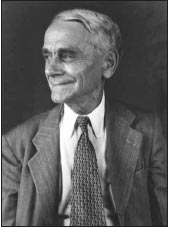

Timothy Walsh: To Meet and Satisfy a Very Hungry People

 Timothy B. Walsh, To Meet and Satisfy a Very Hungry People: The Origins and Fortunes of English Pentecostalism, 1907 – 1925 (Milton Keynes, UK: Paternoster, 2012), 264 pages.
Timothy B. Walsh, Professor of Pentecostal and Evangelical History at Regents Theological College of West Malvern, UK, contributes another volume to the Studies in Evangelical History and Thought series. It is a thorough research thesis, written for an academic audience, which is much easier to follow when the chapter conclusions are read first. Equally, Walsh expects that his readers have an ability to catch subtle nuances of academic Latin and German terms and phrases. As the subtitle implies, it covers two decades of Pentecostal history, focusing most of its research on Alexander Boddy and his ministry in Sunderland, Smith Wigglesworth and his ministry in Bradford, William Oliver Hutchinson and his ministry in Bournemouth, and Pastor Inchcomb and his ministry in Croydon. The research is divided into three primary sections: the emergence of the Pentecostal ideals, their development, and their structures. It concludes with summation, “this study has been an endeavour to distinguish between fact and fiction, certainly between hagiographical wirings or episodic chronicles penned for personal edification and the bolstering of collective morale, and such primary source materials as can form the basis of recognizable historical investigation†(239).
In the first section, Walsh echoes the theme of Grant Wacker, who notices that Pentecostals tended to have an “extravagant assessment of their own importance†(25). Herein Walsh investigates the hagiographic habit and reports of ministry successes, written by those who were too close to the subjects to be reasonably objective in their telling of ministry events and successes. After providing multiple examples and evidences, Walsh concludes that the successes and spread of the Pentecostal message was largely responsible through the “face-to-face recruitment along lines of pre-existing social relationship†(84) rather than only on mystical, revivalistic, or special spiritual basis—alone. In several instances, he refers to the “sacred meteor†or “suddenly from heaven†phrases, or similar terms used in early Pentecostal historical narratives, in a nearly pejorative sense, providing a critique of those who have overemphasized supernatural nature of the Pentecostal movement.
The second section focuses on the ideological developments and the acknowledgement that the Pentecostal movement became a “third force in Christendom†(86). After working through examples and evidences from the lives of leaders like Smith Wigglesworth and the Jefferys brothers, Walsh concludes, “Initiation is, by definition, of primary significance… as a fundamental building block†for the Pentecostal movement (174). The key elements of initiation include a baptism in the Spirit experience, dynamic worship, pre-millennial eschatology, and dynamic and gifted leadership.
The third section explores the structures of the Pentecostal movement, noticing the principle factors that influenced the separatist dynamic of many Pentecostal bodies. Walsh chronicles the transition from an ecumenical beginning to a separatist tendency in just a few decades. As in the above sections, he examines the contribution of key leaders, followed by an examination of significant ministries located in places such as Sunderland, Bradford, Bournemouth, and Croydon, whereby he demonstrates the subtle shifts towards separatism. Walsh’s research mirrors that of Hollenweger, who noticed the tendency of pre-denominational Pentecostalism as an “ecumenical revival movement whose leaders remained in their churches†(229). In this regard, he presents evidence to support his thesis, from each geographical location mentioned above.
Overall, Walsh has provided ample evidence to support the claim of his thesis and documentation of the Pentecostal movement in the UK. Nevertheless, it is written in such an academic style that the non-academic reader will undoubtedly have a very difficult time comprehending the points he is proving. The work he has done is impressive, but unfortunately it will be enjoyed by very few.
Reviewed by John Miller
Preview To Meet and Satisfy a Very Hungry People: Â https://books.google.com/books?id=LuuTBAAAQBAJ
Publisher’s page:Â http://www.authenticmedia.co.uk/search/product/seht-to-meet-and-satisfy-a-very-hungry/9781842275764.jhtml