D. A. Carson: The Intolerance of Tolerance

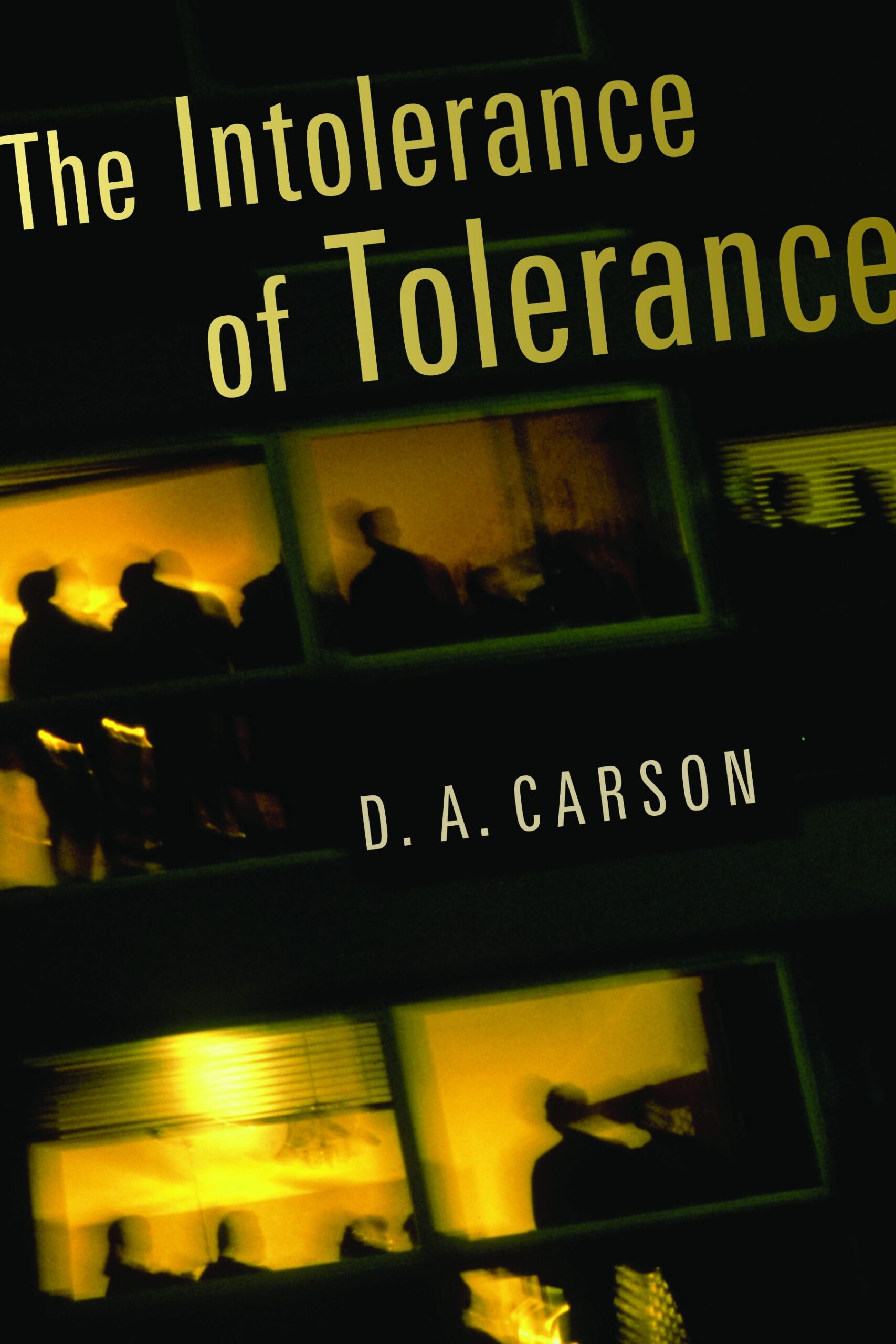
 D. A. Carson, The Intolerance of Tolerance (Eerdmans, 2012), 196 pages, ISBN 9780802831705.
Although a relatively short book of 176 pages, D.A Carson’s The Intolerance of Tolerance delivers a powerful punch to the jaw of what he describes as the “new tolerance.†Carson, who is a research professor of New Testament at Trinity Evangelical Divinity School, has long offered deep and insightful commentary on contemporary culture through such works as The Gagging of God and Christ and Culture Revisited. The Intolerance of Tolerance does not disappoint in terms of what his readers have come to expect.
One of the central premises of Carson’s argument is the difference between what he terms the old tolerance and the new tolerance. A subtle difference between how tolerance used to be defined and is now defined has crept into modern day culture. In a nutshell, the old tolerance was defined as “accepting the existence of different views†and today the new tolerance is defined as the “acceptance of different viewsâ€(p 3). Spot the difference? The first definition acknowledges that different views and opinions exist and that people have the right to express and hold these beliefs. This stance also presupposes the right to disagree with these views. However, this definition does not affirm that all beliefs, views and opinions are equally valid or true. The new tolerance, however, does precisely this by asserting that all views and beliefs are equally valid. Carson articulates the point when he writes, “The new tolerance suggests that actually accepting another’s position means believing that position to be true, or at least as true as your own. We move from allowing the free expression of contrary opinions to the acceptance of all opinions; we leap from permitting the articulation of beliefs and claims with which we do not agree to asserting that all beliefs and claims are equally valid. Thus we slide from the old tolerance to the new†(p 3-4).

After laying out his basic thesis, Carson begins by presenting miscellaneous examples of the new tolerance at work over the last decade. He draws on examples ranging from the business and medical worlds to the domains of education, the media and homosexuality. What emerges is a disturbing picture of a new form of tolerance that will tolerate anything except that which it deems to be intolerant. And thus a new form of intolerance is born. This irony, however, seems to be lost on many. Carson continues in his next chapter with a historical survey on the topic of tolerance. These “jottings†as Carson labels them, are designed to highlight some of the best thinking on the subject. Throughout this chapter, I found myself constantly underlining memorable quotes and insights.
Carson finishes out the chapter by observing that the new tolerance “has become a supreme virtue, if not the supreme virtue, of much of the Western world and beyond†(p 76). Within this ascertainment, Carson makes an important point: This new form of tolerance is a problem particularly inherent to the Western world and one that smugly dismisses the claims of other cultures. Carson elaborates, “The West, not least with its fiscal and digital power, is perceived by many to be culture-destroying, superficial, self-righteous, parading superiority because of its ‘tolerance,’ while that very tolerance destroys everything that disagrees with it†(p 77).
As the book continues, the teeth of Carson’s argument begin to protrude. What develops is an adept dismantling of the new tolerance’s supposed objectivity and impartiality. Instead, what the author demonstrates is that the supposedly tolerant are just as intolerant as the ones they criticize. By highlighting this hypocrisy, Carson is alluding to a deeper issue: The new tolerance has an agenda and a value system it is trying to impose on society. Not surprisingly this agenda is revealed to be secularism posing as a heroic, neutral voice of reason ready to rescue people from their religious malaise.
The essence of The Intolerance of Tolerance is an argument for the existence of absolute truth. For Christians, this absolute truth is defined through God incarnate, Jesus Christ. As a result there is an underlying call to preach and live the Gospel and thereby show the world what truth authentically looks like. Carson ends with ten suggestions or words of advice for staying the course in an increasingly secular environment. Among these suggestions are exposing the condescending arrogance of the new tolerance, challenging the supposed neutrality of secularism, evangelizing and being prepared to suffer. This last point Carson prefaces with a warning that oppression in Western countries towards Christianity will not necessarily come in a “sudden massive decree†but rather subtly and incrementally in the name of preserving tolerance (p 175). One only has to read the daily news to realize that these are indeed prophetic words that are coming true before our very eyes.
This is an important book that, rather than becoming obsolete as society “progressesâ€, becomes more relevant as history unfolds. Perhaps Carson’s last word of advice is the most important: Delight in and trust God (p176). As we live in uncertain times marked by religious and political unrest, these five words remind the reader that ultimately trusting and delighting in God keeps one grounded in tolerance, undiluted.
Reviewed by Daniel Snape
Publisher’s page: http://www.eerdmans.com/Products/3170/the-intolerance-of-tolerance.aspx