Healing and the History of Redemption: An Interview with J. D. King

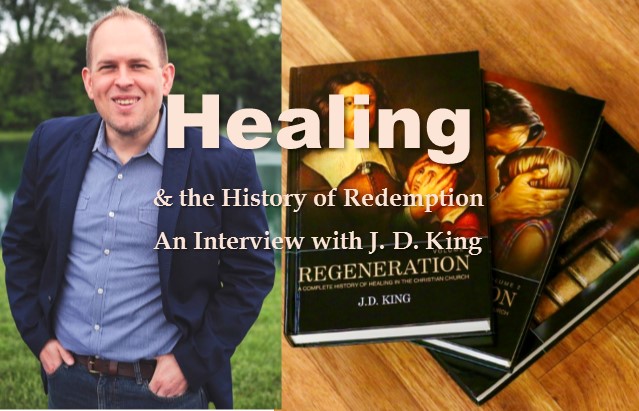
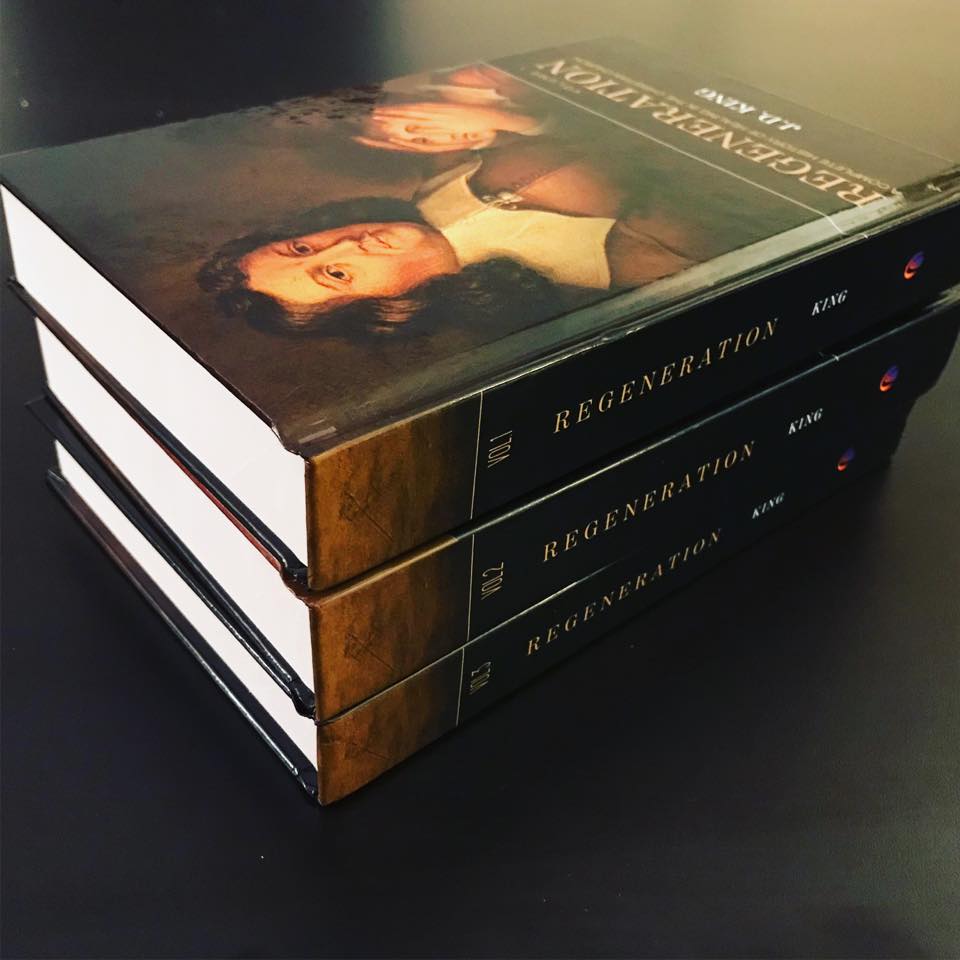
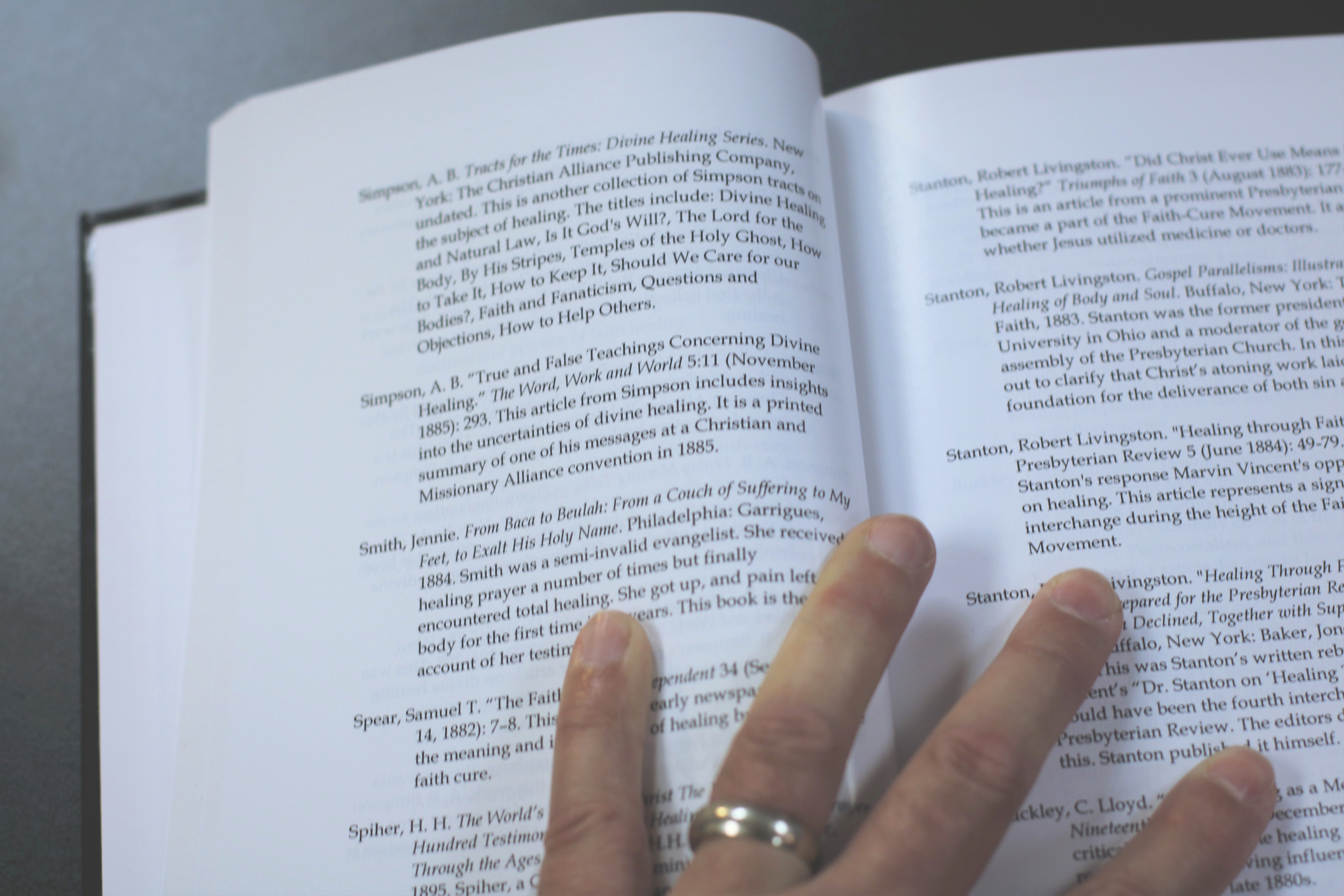
Pastor J. D. King speaks with PneumaReview.com about the history of divine healing he has written, the three-volume Regeneration: A Complete History of Healing in the Christian Church.
PneumaReview.com: Please tell our readers why you chose the name Regeneration for your book on healing.
J. D. King: I understand that some will accept this title and others will not. Through my studies, I have found that healing is deeply rooted in the gospel. The transformative work of Jesus is not just psychological, emotional, or spiritual—it is also physical. I know that it is controversial to make this assertion, but healing is truly part and parcel of the gospel.
While Craig Keener is by no means making the same argument, his monumental work, Miracles: The Credibility of the New Testament Accounts, highlights the viability of healing in Christianity. Jon Mark Ruthven, in his recent work, What’s Wrong With Protestant Theology, argues that healing and the works of the Spirit are what signify the reality of the “new covenant†(Isaiah 59:19-21).  Missionary-evangelist, Randy Clark, has demonstrated healing’s significance in his vast Latin American crusades (as well as his recent interchanges with scholars at United Theological Seminary).[1]
Healing has been a primary vehicle for church growth. R. J. S. Barrett-Lennard argued that “miraculous cures generally played a significant part in [Ante-Nicene] evangelism.â€[8] Similarly, W. N. C. Frend claimed that healing had “an important place in the Christianization of the Greco-Roman world.â€[9] He suggests that “miraculous cures … were among the best documented reasons for conversion.â€[10]
However, healing was not just a catalyst for evangelism in the Ante-Nicene era; it is also driving church growth in the twenty-first century. Candy Gunther Brown declared,
“In the Latin American, Asian, and African countries where Pentecostal growth is occurring most rapidly, as many as 80–90 percent of first-generation Christians attribute their conversions primarily to having received divine healing for themselves or a family member.â€[11]
I chose this controversial title to drive home an essential truth. Healing is a vital dimension of the regenerative work of Jesus. It is more significant than many have been willing to acknowledge.
PneumaReview.com: The subtitle of the book says that it is a history of healing in the Christian church. Does it include the theology of healing as well?
J. D. King: It is impossible to wrestle with the story of healing in church history without engaging underlying doctrinal formations. Although Regeneration is not explicitly addressing doctrine, a theological subtext remains implicit. I discuss the thaumaturgical, sacramental, reliquarial, pneumatological, and psychological healing modalities. Obviously, each of these approaches has theological constructs that must be addressed. Although history is the primary focus, theology has a prominent place in the narrative. Identity, function, and worldview are impossible to disentangle.
PneumaReview.com: Based on your research would you say divine healing has always been present in some measure in the history and ministry of the Christian church?
J. D. King: Healing is evident, on varying levels, throughout church history. Obviously, some movements (i.e., Reformed and Fundamentalist traditions) have been more resistant. Nevertheless, healing also manifests among cynics. Early Puritans, like Richard Baxter, interceded for the infirmed in their congregations. Charles Spurgeon, R. A. Torrey, and Francis Schaeffer also actively prayed for the sick. There is a long Baptist tradition of praying in homes of diseased congregants—drawing on the admonition of James 5:13-15.
Over the last fifty years, the Roman Catholic tradition has reinstituted the sacrament of healing. The Anglican Communion has also been praying for the infirmed for a least a century. Healing is also being appropriated in mainline churches under the auspices of psychotherapy, ancient liturgical forms, and holistic human development. While there is much to be questioned, many of these practices intersect with faith-based recuperation.
What is even more vital is that throughout the non-industrialized world healing is driving church growth. Although some would contest this, I have found that physical deliverance through the name of Jesus may be what truly unifies the diverse strands of Christendom.
PneumaReview.com: Is there any one period of church history in which healing was more evident than in other time periods?
J. D. King: Years ago, I came into this project believing that the ministry of healing had been lost in the fourth century and was providentially restored centuries later. However, as I examined relevant sources, my viewpoint changed. It is true that the method of appropriation has varied over the years. Yet, it would be an error to assert that the ministry of healing has ever waned.
I know that many are uncomfortable with the idea that healing could be transmitted through relics during the middle ages, but there is evidence of this practice’s efficacy. Obviously, extremes emerged. Nevertheless, many medieval Christians expressed faith in Jesus by closely identifying with virtuous men and women. Sincere faith opens the door to amazing realities.

In some periods of history, healing expressions are more prominent than others. There is often a direct relationship with physical deliverance and times of revival. During seasons of awakening, healing becomes more noticeable.
With all of that said, it seems that healing was the most evident in the Ante-Nicene (AD 30-325) and present era (1901-2017). In many ways, present-day modalities are similar to what was being practiced in the early centuries of the church. Both epochs are primarily thaumaturgical in orientation.
PneumaReview.com: In the course of your studies for this book was there one individual who particularly impressed you?
J. D. King: When discussing healing in church history, it seems that recent figures have cast an immense shadow. Individuals like John Alexander Dowie, Smith Wigglesworth, Oral Roberts, Kathryn Kuhlman, and John Wimber often come to mind. Yet, these figures are not the ones who captured my gaze.
As I developed this work, I became intrigued by the kingdom theology of Johann Christoph Blumhardt of Germany. His understanding of the wondrous victory of Jesus has many affinities with the Third Wave Movement.
Charles Cullis, a man who founded an important healing home in Boston, Massachusetts in the 1870s, also gripped my attention. Cullis went on to inspire A.B. Simpson, A. J. Gordon, and a number of other leaders. His moderating wisdom and ability to affirm healing’s efficacy has lessons for contemporary proponents.
Both Cullis and Blumhardt left an indelible legacy that deserves further analysis. Both men contributed to the Pentecostal ethos in ways that have rarely been examined.
PneumaReview.com: Do you think Regeneration will embolden Christians to place more of an emphasis on the ministry of healing today?
J. D. King: Admittedly, my dream would be for this work to help spark a healing resurgence. I am convinced that this ministry could be the greatest catalyst for evangelism in North America and Europe. Nations where people actively pray for the sick are seeing exponential church growth.[12] Yet, wherever healing is held in suspicion, there is a growing sense of stagnation. [13] I am not sure whether this study will be able to accomplish this goal, but I hope that it could be the foundation for something more. Perhaps it will invite key influencers to take a fresh look at the ministry of healing.
PneumaReview.com: What do you hope the lasting impact of this book will be?
J. D. King: William De Arteaga recently told me that this book series could be the most significant work on healing in a generation. That is undoubtedly an overstatement. I am excited about what dialogue it might spark but have no pretense about it being anything more than that. One colleague recently told me, “Not enough has been written about healing.†I told him that I agreed and planned to do something about it. If my work spurs more gifted minds to examine this topic, I have succeeded beyond my wildest dreams.
PR
Read and interact with excerpts from Regeneration:
- It Was Healing That Propelled The Early Christians
- Early Christians Were Healed While Taking Communion
- How Oral Roberts Operated In The Ministry Of Healing
- John Wimber And The Ministry Of Healing
- Rudolf Bultmann And The Demythologization Of Christianity
- Jack Coe’s Fierce Approach To Healing
Further Reading:
- Read the review by John Miller: Dieter Ising, Johann Christoph Blumhardt, Life and Work: A New Biography
- “Supernatural Physical Manifestations in the Evangelical and Holiness Revival Movements†by Paul King
- “Puritanism: A Legacy Disdained by Historians and Sullied with the Devil’s Victory in Salem†by William De Arteaga
- “John Alexander Dowie†by Derek Vreeland
- “Pietists as Pentecostal Forerunners†by Eric Swensson
- Read the review by Tony Richie: Keith Warrington, Healing & Suffering: Biblical and Pastoral Reflections
- Read reflections by the late Richard Twiss on Whose Religion is Christianity? The Gospel beyond the West, by Lamin Sanneh. “Difference Can Make Us Mo’ Bettaâ€
- Read William De Arteaga’s review of Jon Mark Ruthven, What’s Wrong With Protestant Theology
- Excerpts from Miracles: The Credibility of the New Testament Accounts, by Craig S. Keener as appearing in Pneuma Review Fall 2013
- “Miracles as Reality†An Interview with Craig S. Keener on the Miraculous and his book, Miracles: The Credibility of the New Testament Accounts.
Notes
[1] In a private conversation, Randy Clark told me that several professors have encountered the ministry of healing and have changed their outlook about Charismatic practice. The once liberal seminary now has an openness to gifts of the Holy Spirit.
[2] John Laurence von Mosheim declared, “the conversions of the barbarous nations to Christianity must be ascribed principally to the prodigies and miracles that were wrought.†John Laurence von Mosheim, Institutes of Ecclesiastical History, Ancient and Modern, Volume 1 (New York: Robert Cater & Brothers 1801), 358. The Ostrogoths, Visigoths, and Vandals were introduced “to a religion impregnated with miracles and saintly wonders.†Ronald C. Finucane, Miracles and Pilgrims: Popular Beliefs in Medieval England (New York: St. Martin’s Press, 1977, 1995), 20.
[3] Abbot Aelfric of Eynsham (955–1010) talked about a place of pilgrimage that “was hung round with crutches, and with the stools of cripples who had been healed, from one end to the other on either wall, and not even so could they put half of them up.†Aelfric, Lives of Saints, Volume 2, ed. Walter Skeat (London: N. Trübner & Company, 1881), 431–434.
[4] Luther reached out to Friedrich Myconius (1490–1546) who had become ill with tuberculosis. He wrote, “I command thee in the name of God to live because I still have need of thee in the work of reforming the church… The Lord will never let me hear that thou art dead but will permit thee to survive me. For this I am praying, this is my will, and may my will be done because I seek only to glorify the name of God.†Shortly thereafter Myconius was healed. Martin Luther quoted in John MacArthur, Ephesians New Testament Commentary (Chicago: Moody Press, 1986), 103.
[5] Due, in part, to Luther’s prayers, Phillip Melanchthon quickly recovered from this illness. He would later write, “I was recalled from death to life by divine power.’ Martin Luther quoted in Bengt R. Hoffman, Luther and The Mystics. (Minneapolis: Augsburg Publishing House, 1976), 196. Philipp Melanchthon believed that the healing ministry “remained in the church also later, [than the apostles] and it is certain that many are still healed by the prayers of the church.†Cited in Pavel Hejzlar, “John Calvin and the Cessation of Miraculous Healing,†Communio Viatorium 49:1 (2007), 45.
[6] Frederick Dale Brunner, A Theology of the Holy Spirit: The Pentecostal Experience and the New Testament Witness (Grand Rapids, Michigan: Eerdmans, 1970), 141.
[7] Keith Warrington, “Acts and the Healing Narratives: Why?†Journal of Pentecostal Theology 14 (2006), 189.
[8] R. J. S. Barrett-Lennard, Christian Healing After the New Testament: Some Approaches to Illness in the Second, Third, and Fourth Centuries (Lanham, Maryland: University Press of America, 1994), 159.
[9] W. H. C. Frend, “The Place of Miracles in the Conversion of the Ancient World to Christianity,†in Signs, Wonders, Miracles: Representations of Divine Power in the Life of the Church, eds. Kate Cooper and Jeremy Gregory (Rochester: Boydell and Brewer, 2005), 18. Sadly, we do not have exhaustive records. Ronald Kydd states, “The spread of Christianity into Egypt or along the southern coast of the Mediterranean Sea cannot be traced. It appears full blown in these places toward the end of the second century.†Ronald Kydd, Healing Through the Centuries (Peabody, Massachusetts: Hendrickson, 1998), 20–21.
[10] W. N. C. Frend, The Rise of Christianity (Philadelphia: Fortress Press, 1984), 565.
[11] Candy Gunther Brown, Global Pentecostal and Charismatic Healing (New York: Oxford University Press, 2011), 3.
[12] Craig Keener writes, “In many countries, healing is the main reason for . . . Christian growth rates. As of about ten years ago, it was estimated that perhaps half of all conversions to Christianity were because of experiences with healing.†Craig Keener, professor of New Testament at Asbury Theological Seminary, quoted in Larry Sparks and Troy Anderson, “The Healing Miracles Preacher,†Charisma 40:8 (March 2015), 22.
[13] According to researcher Lamin Sanneh, around 4,300 people per day are leaving the church in North America and Europe. See Lamin Sanneh, Whose Religion is Christianity? The Gospel Beyond the West (Grand Rapids: Eerdmans, 2003), 15. Expanding on those findings, Elizabeth Isichei shockingly places the number closer to 7,500. Elizabeth Isichei, A History of Christianity in Africa: From Antiquity to the Present (Grand Rapids: Eerdmans, 1995), 1.