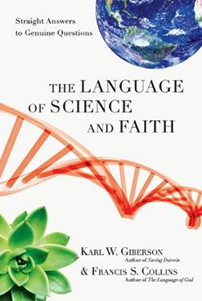
Karl W. Giberson and Francis S. Collins, The Language of Science and Faith

 Karl W. Giberson and Francis S. Collins, The Language of Science and Faith: Straight Answers to Genuine Questions (Downers Grove: InterVarsity Press, 2011), 250 pages, ISBN 9780830838295.
The “conflict†between science and faith within North American evangelicalism continues to rage, unfortunately. This book will no doubt further fan the flames, even if it is intended to shed some light on these matters, largely because it sets out a position defending “theistic evolution†as compatible with evangelical commitments, and detractors of this view are resolutely resistant and aggressively opposed to it. My hunch is that readers of The Pneuma Review who have already made up their minds that evolution is anti-Christian will not find much of value here, and they might even be upset that the editors of this periodical have agreed to review this book. My hope, though, is that those who are genuinely looking to understand the issues will give this very accessible book a fair read. I do not necessarily agree with all of what is in here, but I do think that books like this do raise the literacy of the broader public, and we certainly need more, rather than less, literacy. Pentecostal pastors and church leaders who are concerned about their students and the next generation of pentecostal faith in our thoroughly scientific world need to be equipped to help their church members navigate these waters.
Francis Collins is the world-renowned geneticist who spearheaded the human genome project and Karl Giberson teaches physics at Eastern Nazarene University in Quincy, Massachusetts. Both have written other books on science and faith that have been well received by the wider public. Most important for our purposes is that few, I think, can doubt their evangelical commitments. Yet they are probably among a minority of evangelicals who publicly advocate embracing the consensus of mainstream science, including the neo-Darwinian synthesis, as being consistent with a robust Christian faith. Collins founded The BioLogos Forum (http://biologos.org) in large part to provide a vision for how Christians can not only be at peace with but also support the contemporary scientific enterprise.
Of course, since much of the book emerged from the FAQs on the BioLogos website, the treatments are short, perhaps in some cases, a bit too short for some readers who may be ready for more. Further, I can imagine that some readers will wonder what all the fuss is about within the evangelical world. In many cases, the volume compares and contrast the BioLogos model with alternative positions held by evangelicals, including young earth creationism, old earth creationism, and intelligent design. Those looking for a sort of “four views†point-and-counterpoint will need to keep waiting.
Reviewed by Amos Yong
Preview The Language of Science and Faith: books.google.com/books?id=QxLKbwUY7zYC