Gordon Smith: Institutional Intelligence

 Gordon T. Smith, Institutional Intelligence: How to Build an Effective Organization (Downers Grove: IVP Academic, 2017), 225 pages, ISBN 9780830844852.
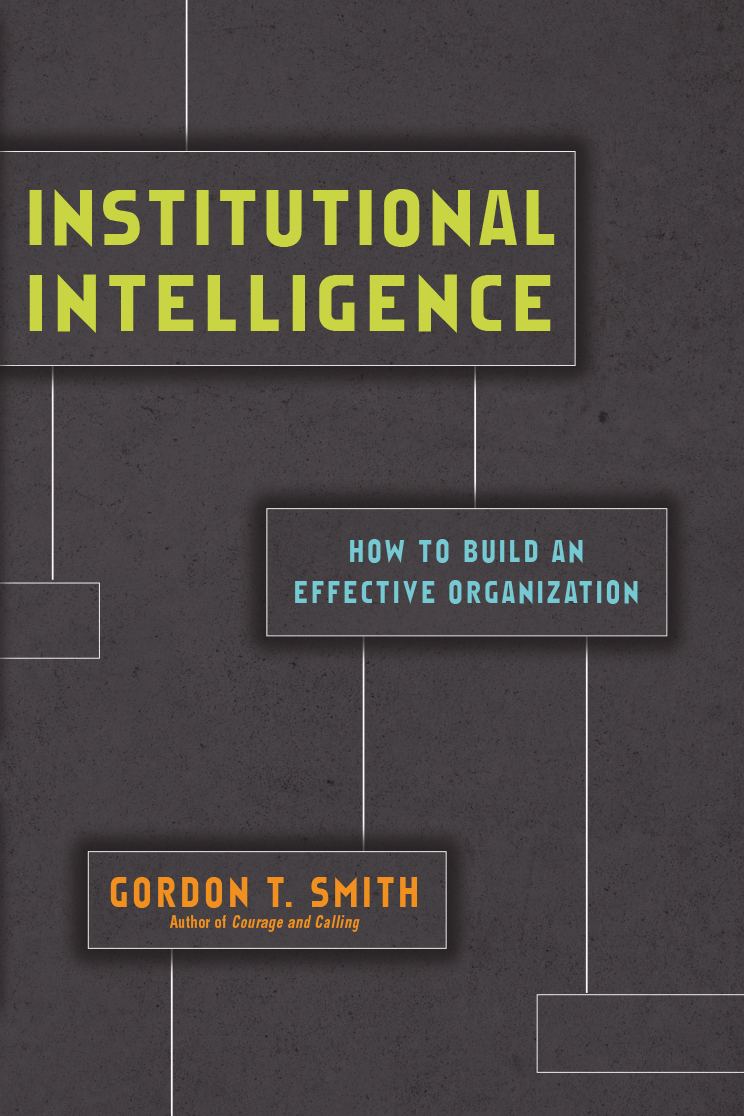
With a cover made to look like an organizational chart (indeed, the author believes in hierarchy), and the catchy, contemporary title, a potential reader might assume the content is similar to the business leadership manuals that have been popular over the past thirty years. In fact, the reader wouldn’t be far off. The focus of the book is primarily focused on non-profit organizations and how to lead them. Institutions, Smith iterates repeatedly, matter and they are “essential to human flourishing.†For an organisation to be effective, members must have institutional intelligence: “the wisdom of working effectively within an organization with others … by understanding how institutions work, how they can be effective, and how all people in the organization can contribute to the whole system.†This book is relevant not only for church planters—just starting new institutions—but also for seasoned pastors and other non-profit leaders who want more synergy between the institution’s mission and its operations.
The book contains ten chapters, a conclusion, and three appendices. Chapter one introduces seven “distinctive†features of an effective organization. These features include mission clarity, appropriate governance, quality of personnel, a vibrant culture, financial resilience, appropriate ‘built space’, and strategic alliances. Indeed, these seven characteristics comprise the remaining chapters of the book.
Good governance is another distinctive feature of an effective organization. In chapters three and four, Smith posits that institutions must ask themselves questions about decision-making and implementation. Effective organizations not only make good decisions, but they have the capacity to implement those decisions. Leaders should have a clear understanding of how to use power responsibly and to whom they are accountable. Smith specifies three “entities†of an effective organization: executive, board, and practitioners. Each entity needs to know what it is responsible to achieve. As a learning organization, effective institutions get the wisdom and knowledge they need to make good decisions and ensure they can carry them out.
Finances and premises comprise the content of chapters eight and nine. Smith argues that leaders at every level in the organization need an understanding of the relationship between finances and mission, as well as each person’s role in pursuing sustainability. Members need clarity on the organization’s financial position and its main revenue stream. Additionally, institutions generally have multiple sources of revenue. Members need to know what those are. Moreover, institutional intelligence requires an understanding of the space that houses the organization and how that space functions. The actual building that houses the institution is an important element to the organization’s effective functioning and the well-being of its members. Smith urges organizations to ask whether the space appropriately reflects the organization’s identity, purpose, and community, and if not, how the space can be adapted to fit.
The conclusion identifies barriers to organizational effectiveness, and Smith stresses how important it is to orient new members to the mission, governance, and the other characteristics of the institution so that everyone can work together to maintain the organization’s identity, fulfil its purpose, and achieve the mission. Three appendices address the responsibilities of the board, institutions as places of well-being, and recommended readings on the individual topics covered in the book.
Reviewed by Michelle Vondey
Publisher’s page: https://www.ivpress.com/institutional-intelligence
Preview: https://books.google.com/books/about/Institutional_Intelligence.html?id=FvMtDwAAQBAJ