
A Pentecostal Appropriation of the Wesleyan Quadrilateral

Having only been in existence for a little over one hundred years, Pentecostalism is still in its adolescence as a movement.1 As a result, biblical and theological scholarship has only belatedly begun to develop in Pentecostalism.2 More recently the movement has undergone several phases in which it has become less skeptical and more open to Pentecostal scholarship and education.3 Pentecostal scholarship is still in its adolescence; therefore it is hard to find a clearly articulated theological method in the writings of Pentecostal theologians. This makes the need for developing Pentecostal theological method all the more important. It is important for Pentecostals to reexamine the theological method of John Wesley, not to merely imitate what he has done, but to utilize his sources for developing a method that is contemporary, ecumenical, and Pentecostal.4
This study will utilize the so-called Wesleyan Quadrilateral as a model for further theological dialogue between Wesleyan and Pentecostal traditions by demonstrating that there is a unique pneumatology in Wesley’s theological method. This article will examine the historiography of the Wesleyan Quadrilateral, analyze the role of the Holy Spirit in each of the four areas (scripture, reason, tradition, experience), and then offer a Pentecostal appropriation of the Wesleyan Quadrilateral.
Wesleyan Quadrilateral

Particularly important for this study is John Wesley’s pneumatology. His doctrine of the Holy Spirit was not just a category in his theology, but is intricately connected to his overall theology. Throughout the sermons, hymns, journals, and the Explanatory Note Upon the New Testament one can see an emphasis on the person and work of the Spirit.5
Pneumatology develops a sort of theme throughout the corpus and provides a ground-tone in Wesley’s version of the ordo salutis.6
Pneumatology in Wesleyan studies is still being developed, especially in regard to the Wesleyan Quadrilateral. Therefore, this study proposes to demonstrate that there is a distinct pneumatology in John Wesley’s theological method. A rediscovery of Wesley’s doctrine of the Holy Spirit can build a bridge between Wesleyan and Pentecostal movements as well as make a distinct contribution in the contemporary ecumenical movement.7
Scripture, tradition, reason, and experience are ways in which God continues to tell His story to man.8 Through them He speaks to us and lets us know that we are not alone, but that He is with us. The Holy Spirit is the initiator of this ethereal conversation between God and man.9 The Quadrilateral is a theological method that John Wesley used in order to understand the work and Word of God. The primary way this took place was through the role of the Holy Spirit. Therefore, we must have the Spirit’s in our search for a more “Scriptural Christianity.”10
The term “Wesleyan quadrilateral” does not appear in the writings of John Wesley. It is a term that Albert C. Outler chose to describe the theological method of John Wesley. In fact, Outler regretted having coined it, because it had been so widely misconstrued.11 Nonetheless, it remains to be a helpful aid for understanding the context of Wesleyan thought. We can see in Wesley a distinctive theological method, with Scripture as its pre-eminent norm but interfaced with tradition, reason, and Christian experience as dynamic and interactive aids in the interpretation of the Word of God in Scripture.12
John Wesley offered no creed or catechism for his people to follow. In fact, he did not articulate an explicit theological method because he was more concerned with practical relevance and applicable theology.13 He has been called a practical theologian because he wanted every ordinary woman and man to be able to understand the Scriptures. This does not mean that Wesley was not a theologian because he did not write a systematic theology. On the contrary, Wesley’s refusal to provide the Methodist with a confession for subscription was the conviction of a man who knew his own mind on every vexed question of Christian doctrine, but who had decided that the reduction of doctrine to any particular form of words was to misunderstand the very nature of doctrinal statements.14 Some argue that Wesley was indeed a systematic theologian whose sermons, essays, journals, prefaces, and letters contain every major point of a systematic theology.15
Wesley’s distinctiveness rests not in a systematic theology, but in a theological method.16 His uniqueness of thought is evident in the way he was able to use his theological method to get his people to theologize for themselves. The effect of this was to make every Methodist man and woman his/her own theologian not be giving them an actual paradigm for their theologizing, but hoping that they would adopt his way of reflection as their own.17 Therefore, his genius was not in writing a catechism or systematic theology, but in allowing his people to “think and let think”18 in a way that was consistent with the written Word of God and doctrinal authority.
Having briefly discussed the purpose and nature of John Wesley’s theological method, we will now examine each of the four areas of the Wesleyan quadrilateral: Scripture, tradition, reason, and experience. Each one is uniquely important and vital to the Christian faith because there is a need today for an approach to theology that has the capability to dynamically fuse the four historical sources of Wesley’s theological method together in order to bring them into contemporary dialogue with traditions. Thus, our examination will be Wesleyan, Pentecostal, and ecumenical. As we look at each area individually, the role of the Holy Spirit will be further examined.
Scripture
In the Quadrilateral, the Scriptures stand first while “Christian Antiquity”, reason, and Christian experience are used as interpretive means for understanding the Scripture. The latter three provide lenses by which we can properly interpret and understand the written word of God. The Scriptures assist the believer on his/her journey of faith as they press on toward perfection. There is a dynamic interplay in which tradition, reason, and experience work to shine light on Scripture. They have a unique reciprocal interrelationship with one another, while Scripture remains preeminent. Although never a substitute for Scripture; tradition, reason, and experience are complementary to its interpretation.
John Wesley primarily appealed to the Holy Scriptures for all doctrinal authority. He believed the “written word of God to be the only and sufficient rule both of Christian faith and practice”.19 Both Reformation and Anglican heritage taught sola Scriptura, which no doubt influenced Wesley’s love for the Bible. His passion for Scripture can be best described in his own words, “O give me that book! At any price, give me the book of God! I have it: Here is knowledge enough for me. Let me be homo unius libri“.20 Wesley did not mean that other books were of no value to the Christian life, for he was an avid reader who often read on horseback and even compiled a Christian Library for his people to read.21 Once John Wesley’s view of the Bible is taken into proper perspective one can begin to understand his theological methodology.
Wesley firmly believed that the Holy Spirit inspired all the Scriptures. He took this a step further in saying “The Spirit of God not only once inspired those who wrote it, but continually inspires, supernaturally assists, those who read it with earnest prayer.”22 Wesley believed that God continually speaks and inspires the reader of the Bible through the inner working of the Spirit. This is a dual inspiration, in which the Holy Spirit inspired the ancient writers of the Scriptures and inspires the contemporary reader that they may comprehend the word of God. There is a need today for the ongoing presence of the Holy Spirit in our theology and theological method. Without the assistance of the Holy Spirit, our hermeneutics will be in vain.
Tradition
John Wesley had a profound appreciation and reverence for Christian tradition. He used church tradition in his complex theological method because he felt it would direct him to the strongest evidence of Christian doctrine.23 When examining the Wesleyan synthesis, we can find several major traditions at work. According to Kenneth J. Collins, the traditions that had the greatest influence on Wesley were Anglicanism, Moravianism, and the Eastern Fathers.24 It was Wesley’s Anglican heritage more than any other that pointed him to the study of patristics.25 There were also many cultural and religious tributaries, which formed John Wesley’s eclectic use of tradition.26
Wesley saw the Methodism as being a part of a long line of Church tradition, which reflected a genuine Christianity. Donald A.D. Thorsen points out that Wesley traced the Methodist genealogy back to the “Old religion.”27 Wesley describes Methodism as “the old religion, the religion of the Bible, the religion of the primitive Church, the religion of the Church of England.”28 For Wesley, Methodism was a part of an unbroken chain of true religion, religion of the heart, which was “no other than love, the love of God and of all mankind.”29 Within the context of the Universal Church, a new tradition began with John Wesley; a specific history which grew from English origins to spread across the British world and then around the globe.30 It is the tradition of “Methodism” as John Wesley intended it, that all Wesleyan-holiness churches can trace their theological heritage.
The Holy Spirit played a unique role in John Wesley’s understanding of Church tradition. Wesley’s idea of dual inspiration can give us deeper understanding of this truth. The Holy Spirit first inspired the Scriptures, and then He inspired the interpreters of the Scriptures. For John Wesley the early Fathers were “the most authentic commentators on Scripture” because they were “nearest to the fountain, and eminently endued with that Spirit by whom all Scripture was written.”31 Their authenticity as interpreters of Scripture was because they had been endued with the Spirit. John Wesley deeply believed that being filled with the Spirit was the mark of “Scriptural Christianity.”32
In his lengthy letter to the Conyers Middleton, John Wesley argued that the miraculous gifts of the Spirit among the early Church Fathers were the attestation of their ministry and interpretation of Scripture. Wesley believed that the ancient church had a “standing power” to perform miracles which accompanied, and attested the truth of their proclamation of the gospel.33 He felt that the miraculous gifts of the Holy Spirit had primarily continued until the Second century. He had associated the decline of the gifts of the Spirit with the age of Constantine where “the empire became Christian.”34 He felt that the church had become corrupted by the wealth and immorality of the Roman Empire.
John Wesley desired to see a revival of “true” Christianity, which would have included both the ordinary fruits and the extraordinary gifts of the Holy Spirit. Although John Wesley believed that the gifts of the Spirit had waned after the time of Constantine, he never believed that they had completely ceased. In fact, Wesley gradually believed that the gifts of the Spirit had been intended to remain in the Church throughout the ages.35 Randy Maddox says, “Since Wesley believed that his Methodist movement was recovering the holiness of the Early Church, it seems reasonable to suggest that he was open to renewed manifestation of even the extraordinary gifts among his followers.”36 Therefore, Wesley looked to the Holy Spirit in church tradition for hermeneutics and attestation.
Reason
Wesley spent a considerable amount of time trying to explicate the relationship between reason and religion.37 He attempted to find a middle way between extremists who valued one over the other. For Wesley, “reason is much the same with understanding. It means a faculty of the human soul; that faculty which exerts itself in three ways;—by simple apprehension, by judgment, and by discourse.”38 (Maddox offers three modern terms: perception, comparison, and inference).39
To the question “What can reason do in religion?” Wesley answered, “It can do exceedingly much, both with regard to the foundation of it, and the superstructure.” Wesley offered three benefits of reason, which Thomas C. Oden summarizes as physical, religious, and moral reflections.41 To the consideration of what reason cannot do, Wesley again offers three things: “First, reason cannot produce faith. Secondly, reason alone cannot produce hope in any child of man: I mean scriptural hope. Thirdly, reason, however cultivated and improved, cannot produce the love of God.”42 Wesley made a clear distinction between what reason could and could not do. He valued reason greatly, however he realized that without God it was useless speculation
Throughout the course of his life, John Wesley attempted to reconcile the role of reason and religion. This led him to a religious epistemology, in which he viewed intuition as a “spiritual sensorium.”43 Intuition or deductive reasoning alone cannot lead a person to the revelation of God; the Holy Spirit must be present and actively working in the believer first preveniently, and then ontologically. In “The Case of Reason Considered” John Wesley asks, “Is it not reason (assisted by the Holy Ghost) which enables us to understand what the Holy Scriptures declare concerning the being and attributes of God?” and then he states, “It is by this we understand (his Spirit opening and enlightening the eyes of our understanding).”44
Wesley explicitly states that the Holy Spirit must assist our reasoning if we are to understand the things of God. Elsewhere, Wesley declared, “you cannot reason concerning spiritual things, if you have no spiritual sight; because all your ideas received by your outward senses are of a different kind;”45 Wesley continues, “This cannot be till the Almighty come into your succour, and give you that faith you have hitherto despised. Then upborne, as it were, on eagles’ wings, you shall soar away into the regions of eternity; and your enlightened reason shall explore even “the deep things of God;” God himself “revealing them to you by his Spirit.”46 For Wesley, spiritual sight is only possible when the Holy Spirit opens and enlightens our “spiritual sensorium.”
Experience
The restoration of religious experience to the Christian faith is perhaps John Wesley’s most significant theological contribution. Scripture, reason, and tradition were common theological methods that were used by Roman Catholics and Anglicans in Wesley’s day. What this trilateral method lacked was a spiritual confirmation, or an assurance of salvation within the heart, mind, and soul of the believer. John Wesley saw the need for a re-appropriation of Christian experience; once it was recovered it soon became one of the distinctive marks of Methodism. He said of experience that, “a great evangelical truth has been recovered, which had been for many years well- nigh lost and forgotten.”47 Experience was a jewel that Wesley placed back into the crown of Christianity.
Christian experience is a personal, first hand encounter with the living God who gives us the “witness of the Spirit.” John Wesley described this in the following way: “The testimony of the Spirit is an inward impression of the soul, whereby the Spirit of God directly witnesses to my spirit, that I am a child of God.”48 The inward “impression” on the soul does not refer to feelings per se, but a complex synergism, which involves both feelings and intuition. Mildred Bangs Wynkoop said that experience means that the whole man/woman is caught up in the involvement of saving faith.49 Experience first involves God through His saving acts and then the person who receives and perceives the reality of this action through all of the human faculties.50
John Wesley believed that the Holy Spirit was the primary agent involved in Christian experience. The Spirit is the Divine initiative who awakens, assures, purifies, and guides the believer in the ordo salutis. In “A Letter to a Roman Catholic,” He writes:
I believe the infinite and eternal Spirit of God, equal with the Father and the Son, to be not only perfectly holy in himself but the immediate cause of all holiness in us; enlightening our understandings, rectifying our wills and affections, renewing our natures, uniting our persons to Christ, assuring us of the adoption of sons, leading us in our actions; purifying and sanctifying our souls and bodies, to a full and eternal enjoyment of God.51
The Spirit itself bears witness with our spirit, that we are children of God. (Romans 8:16) Wesley used this Scripture to give an explication of the work that the Spirit does in his children. The Spirit who inspired the Scriptures continuously works to confirm the experiential truths found within its texts. In fact, Wesley believed that the witness of the Spirit confirmed what the Scriptures taught concerning experience. He said, “What the Scripture promises, I enjoy. Come and see what Christianity has done here; and acknowledge it is of God.”52
Experience can be verified inwardly and outwardly. The immediate result of this testimony is the fruit of the Spirit. Wesley said without the fruit of the Spirit the testimony of the Spirit couldn’t continue.53 Both the witness and fruit of the Spirit spring forth from an experiential relationship with Jesus Christ. The Holy Spirit is the one who initiates a Divine encounter where man can experience God. Thomas C. Oden notes, “the Wesleyan teaching of the work of the Spirit focuses on how God the Spirit acts in drawing us toward full responsiveness to the grace manifested in the Son.”54 The Spirit’s initiative in the complex divine/human interaction is to give the witness and fruit of the Spirit to believers so that we may know that we are children of God.
Pentecostal Appropriation of the Wesleyan Quadrilateral
The significance of rediscovering Wesley’s emphasis on the Holy Spirit can bridge gaps between Wesleyan and Pentecostal movements. Pentecostals in particular, inherited Wesley’s distinctive experiential and pneumatological approach to doing theology.55 Like concentric circles, each area of the quadrilateral is interconnected and builds upon the foundation of the Word and the Spirit. With this in mind, I would like to offer a Pentecostal appropriation of the Wesleyan Quadrilateral that examines the way that Pentecostals have integrated each of the four areas of religious authority.
Scripture
From the beginning, Pentecostals have always emphasized the importance of Scripture.56 In fact, both Wesleyans and Pentecostals place a strong emphasis on the centrality of the Scriptures for Christian life and praxis.57 Pentecostals hold in tension the unique relationship between the Holy Spirit and the living Word of God. Some Christian groups today have mistakenly placed too much of an emphasis on either one at the expense of the other. A proper integration is needed to remain faithful to triune God.
The dialectical balance of Spirit-Word expresses a central feature of Pentecostal theology.58 It is central because the Holy Spirit inspired the authors of the Scriptures and continues to inspire and speak to both women and men who read the Bible and are led by the Spirit. Prayer is the medium that brings individuals into contact with the Spirit who inspired the original texts. To hear what the Spirit of the Lord is saying through the Word a person must encounter the Living God through prayer. The Word is the Word that God spoke, speaks, and will speak in the midst of all men.59 The confluence of Spirit and Word is consistent with both Wesleyans and Pentecostals.
Reason
With Wesley Pentecostals affirm that the reason must be assisted by the Holy Spirit in order to help us understand the things of God.60 We must not be afraid to involve reason with religion, because our theology can and should be a spiritual encounter with the living God. This has wonderful implications for those who are involved in Pentecostal scholarship. We are not just studying about God, but we are seeking to know Him personally through a spiritual approach to theology where the Holy Spirit fuses reason and experience through prayer.
Religious reason is “faith seeking understanding” with the ongoing presence of the Holy Spirit as the Divine Guide. Pentecostal scholarship should be an integrative approach to academia that involves head and heart. Steven Land says, “The theological task demands the ongoing integration of beliefs, affections, and actions lest the spirituality and theology fragment into intellectualism, sentimentalism and activism respectively.”61 Pentecostal theology points us away from traditional scholastic ways of doing theology (which tends to limit the Holy Spirit to the written Word) and moves us toward a spiritual theology.
Experience
Experience in the Pentecostal tradition can be summed up in the teaching of the Five-fold Gospel or the Full Gospel, which was normative at the inception of the movement.62 The Full Gospel was experientially and relationally understood as an extension of ones salvific relationship with the Triune God.63 The five experiential doctrines are: 1. Justification by faith. 2. Sanctification by faith as a second definite work of grace. 3. Healing of the body as provided for all in the atonement. 4. The premillenial return of Christ. 5. The baptism in the Holy Ghost evidenced by speaking in tongues. The experiential doctrines of the Full Gospel represent the heart of Pentecostal experience.
There is a need to pass on the Pentecostal faith and experience to the next generation. Wesley gives a sober warning for both Wesleyans and Pentecostals:
I am not afraid that the people called Methodists should ever cease to exist either in Europe or America. But I am afraid, lest they should only exist as a dead sect, having the form of religion without the power. And this undoubtedly will be the case, unless they hold fast, both to the doctrine, spirit, and discipline with which they first set out.64
Simon Chan also warns that without effective traditioning Pentecostals cannot ensure that what they have experienced will be faithfully handed down to the next generation.65 The experiential doctrines of the Five-fold Gospel; Jesus as Savior, Sanctifier, Healer, and Spirit baptizer must be taught in order to continue to perpetuate the Pentecostal experience in North America and around the world.
Tradition
Pentecostals should be free to explore and appreciate the various Christian traditions. Whether we realize it or not Pentecostalism is the direct result of many contributing tributaries, which have helped form and inform us as a movement. We should be open to the freedom of the Spirit and respect His work in Church tradition. The Eastern Orthodox Church believes that Tradition is the witness of the Spirit.66 Whether it is Catholic, Methodist, Episcopal, or Pentecostal, each tradition should not be separated from the work of the Spirit. With this in mind, Christians should practice fellowship across the traditions, because the Holy Spirit has been with all God’s people in all traditions in all centuries.67 Thus tradition can and should inform our theology past, present, and future.
As Pentecostals we need to be aware that our roots are much deeper than the hills of North Carolina or a mission in Los Angeles. We are a part of a larger tradition, which includes our Wesleyan brothers and sisters. Wesley can help us better understand our own heritage and place within the Body of Christ. No one Christian group has a perfect system of doing theology. We can and should learn from one another. Yes, Arminians can even learn from the Calvinists. The evangelical community needs both George Whitfield and John Wesley to achieve the beauty of balance.68 With this in mind, Wesley becomes a good dialogue partner for embarking on a pilgrimage in theological method because he was not afraid to look to the larger Christian family for help along the journey.
In conclusion, there is much that we can learn from one another.69 Both Wesleyans and Pentecostals can benefit from revisiting the Wesleyan quadrilateral. Pentecostals can become a more holistic tradition by developing a distinctive version of the Wesleyan quadrilateral.70 We will also better understand our own heritage and place within the overall Body of Christ. Wesleyans can benefit from reexamining the quadrilateral through new lenses, which focus on the role of the Holy Spirit in theological method. Revisiting the Wesleyan quadrilateral will help each tradition appreciate the uniqueness that they can offer one another as well as create a unified vision to spread scriptural Christianity over the land and around the world.
PR
Originally published on the Pneuma Foundation (parent organization of PneumaReview.com) website. Later included in the Fall 2023 issue.
Notes
1. Cheryl Bridges Johns, “The Adolescence of Pentecostalism: In Search of a Legitimate Sectarian Identity.” PNEUMA: The Journal of the Society of Pentecostal Studies. 17, (Spring, 1995).
2. Donald N. Bowdle, “Informed Pentecostalism: An Alternative Paradigm.” The Spirit and the Mind. (Lanham, MD: University Press of America, 2000). p. 14.
3. Rick D. Moore, John Christopher Thomas, and Steven J. Land offer three distinct phases of Pentecostal scholarship. “First there came a generation of Pentecostal scholars who completed graduate theological programs in an environment which did not encourage nor even perceive the viability of interaction between Pentecostal faith and critical theological scholarship. A second generation of Pentecostal scholars found opportunity for the first time to bring their Pentecostalism to bear upon their graduate research, but only in the area of descriptive historical study or social scientific analysis of the Pentecostal movement. Now Pentecostalism is witnessing the rise of a third generation of theological scholarship, in which the distinctive of Pentecostal faith are informing critical theological research across the entire range of theological sub disciplines.” “Editorial,” Journal of Pentecostal Theology. 1, (1992). p. 4.
4. Donald Thorsen discusses the ecumenical nature of the Wesleyan quadrilateral in The Wesleyan Quadrilateral: Scripture, Reason, Tradition, and Experience as a Model of Evangelical Theology. (Nappanee, IN: Francis Asbury Press, 1990).
5. For work on John Wesley’s pneumatology see Albert C. Outler, “A Focus on the Holy Spirit: Spirit and Spirituality in John Wesley.” Quarterly Review (1988). See also Randy L. Maddox, who says, “that Wesley placed the Spirit at the center of the Christian life.” Responsible Grace p. 119; Lycurgus M. Starkey, Jr., The Work of the Holy Spirit: A Study in Wesleyan Theology (New York: Abington, 1962); Timothy L. Smith, The Holy Spirit in Hymns of Wesley, WTJ, 16: 2, (1981); and A. Skevington Wood, “John Wesley, Theologian of the Spirit,” Theological Renewal 6 (1977); and the most recent work by Laurence W. Wood, The Meaning of Pentecost in Early Methodism: Rediscovering John Fletcher as Wesley’s Vindicator and Designated Successor. (Scarecrow Press, 2003).
6. Albert C. Outler, “A Focus on the Holy Spirit: Spirit and Spirituality in John Wesley.” Quarterly Review (1988).
7. Starkey, Lycurgus, M. The Work of the Holy Spirit: A Study in Wesleyan Theology. (Nashville: Abingdon Press, 1962). p. 140. For further discussion on the ecumenical significance of pneumatology see also the works of the following contemporary theologians: Clark Pinnock, Jurgen Moltmann, and Wolfhart Pannenberg. Veli-Matti Karkkainen has demonstrated that pneumatology is a major category in the Roman Catholic-Pentecostal dialogue of recent years. (Pneumatology: The Holy Spirit in Ecumenical, International, and Contextual Perspective; Ad Ultimum terrae: Evangelization, Proselytism and Common Witness in the Roman Catholic Pentecostal Dialogue (1990-1997); An Introduction to Ecclesiology: Ecumenical, Historical & Global Perspectives).
8. Michael Lodahl, The Story of God: Wesleyan Theology and Biblical Narrative. (Kansas City, Missouri: Beacon Hill Press, 1994). p. 13-48.
9. Works 6:65-77. “The New Birth.”
10. See Works, 5:188. “The Means of Grace.” and 5:37 “Scriptural Christianity.”
11. Albert C. Outler, “The Wesleyan Quadrilateral – In John Wesley.” Wesleyan Theological Journal 20:1 (Spring, 1985). See also Wesley and the Quadrilateral: Renewing the Conversation for the most recent and much-needed commentary on the Quadrilateral, written by several important contemporary Wesleyan scholars in order to offer a balanced perspective of the Wesleyan Quadrilateral.
12. Ibid. p. 9.
13. Donald A.D. Thorsen, The Wesleyan Quadrilateral: Scripture, Tradition, Reason, and Experience as a Model of Evangelical Theology. (Grand Rapids, Michigan: Zondervan Publishing House, 1990), p. 16.
14. Outler, Wesleyan Quadrilateral, p. 2.
15. See Thomas C. Oden, John Wesley’s Scriptural Christianity: A Plain Exposition of His Teaching on Christian Doctrine. (Grand Rapids, Michigan: Zondervan Publishing House, 1994), p. 20.; Also see Randy L. Maddox, “Responsible Grace: The Systematic Nature of Wesley’s Theology Reconsidered,” Wesleyan Theological Journal 19:2. (1984).
16. Thorsen, p. 17.
17. Outler, Wesleyan Quadrilateral, p. 4.
18. Works, 8:340. “The Character of a Methodist.”
19. Works, 8:340. “The Character of a Methodist.”
20. Works, 5:3. “Preface.”
21. Works, 14:220. “Abridgments of Various Works.”
22. Explanatory Notes Upon the New Testament, 2 Timothy 3:16.
23. Works, 10:79. “Letter to the Rev. Dr. Middleton.”
24. Kenneth J. Collins, “John Wesley’s Critical Appropriation of Tradition in His Practical Theology.” Wesleyan Theological Journal 35:2 (200). p. 69-90.
25. Ibid, p. 75.
26. Ted A. Campbell, John Wesley and Christian Antiquity: Religious Vision and Cultural Change. (Nashville, TN: Kingswood Books, 1991).
27. Thorsen, p. 152.
28. Works, 7:423. “At the Foundation of City-Road Chapel.”
29. Ibid, 7:423.
30. Thomas A. Langford, Practical Divinity: Theology in the Wesleyan Tradition. (Nashville, TN: Abingdon Press, 1989), p. 12.
31. Works, 10:485. “Address to the Clergy.”
32. Works, 5:38. “Scriptural Christianity.”
33. Campbell, Christianity Antiquity, p. 83.
34. Works, 10:1. “Letter to Rev. Dr. Middleton.”
35. Maddox, Responsible Grace: John Wesley’s Practical Theology. p. 135.
36. Ibid, p. 135.
37. Ibid, 6:351-60. “The Case of Reason Considered.”
38. Ibid, 6:353.
39. Maddox, Responsible Grace: John Wesley’s Practical Theology. p. 40.
40. Works, 6:354. “The Case of Reason Considered.”
41. Oden, p. 75.
42. Works, 6:355-58.
43. Outler, Wesleyan Quadrilateral. p. 127.
44. Works, 6:354.
45. Works, 8:13-14. “An Earnest Appeal to Men of Reason and Religion.”
46. Ibid, 8:14.
47. Works, 5:124. “The Witness of the Spirit.”
48. Works, 5:124. “The Witness of the Spirit.”
49. Mildred Bangs Wynkoop, A Theology of Love: The Dynamic of Wesleyanism. (Kansas City, Missouri: Beacon Hill Press), p. 350.
50. Theodore H. Runyon, “The Importance of Experience for Faith.” Randy L. Maddox ed. Aldersgate Reconsidered. p. 93-107.
51. Works, “A Letter to a Roman Catholic.”
52. Works, 10:79. “Letter to Rev. Dr. Middleton.”
53. Ibid, 5:125.
54. Oden, p. 226
55. There are a number of books and articles that have discussed the theological connection between the Wesleyan-Holiness movement and Pentecostalism. Winfield H. Bevins, Rediscovering John Wesley. (Cleveland, TN: Pathway Press, 2004); D. William Faupel, The Everlasting Gospel: The Significance of Eschatology in the Development of Pentecostal Thought. (Sheffield, England: Sheffield Academic Press, 1996); Steve J. Land, Pentecostal Spirituality: A Passion for the Kingdom. (Sheffield, England: Sheffield Academic Press, 1997); Donald Dayton, Theological Roots of Pentecostalism. (New Jersey: Hendrickson Publishers, 1897); Vinson Synan, The Holiness Pentecostal Tradition: Charismatic Movements in the Twentieth Century. (Grand Rapids, Michigan: Wm. B. Eerdmans Publishing Co., 1997); and a recent work by Laurence W. Wood, The Meaning of Pentecost in Early Methodism: Rediscovering John Fletcher as Wesley’s Vindicator and Designated Successor. (Scarecrow Press, 2003). Even non-Wesleyan Pentecostal scholars acknowledge the Wesleyan influence upon the early development of the Pentecostal movement. See Edith L. Blumhofer, “Purity and Preparation”, in S.M. Burgess (ed.), Reaching Beyond: Chapters in the History of Perfectionism (Peabody, MA: Hendrickson, 1986), p. 275 and W.M. Menzies, “The Non-Wesleyan Origins of the Pentecostal Movement.” In V. Synan (ed.), Aspects of Pentecostal Charismatic Origins (Plainfield, NJ: Logos, 1975), p. 97.
56. See John Christopher Thomas, Ministry & Theology: Studies for the Church and Its Leaders. (Cleveland, TN: Pathway Press, 1996). Also see Grant Wacker, Heaven Below Early Pentecostals and American Culture. (Cambridge, MA: Harvard University Press, 2001). p. 70.
57. Works, 8:340. “The Character of a Methodist.” See various Pentecostal statements of faith. R.G. Spurling, The Lost Link. (Turtletown, TN: 1920), p. 45; and Minutes of Annual Assembly of the Churches of East Tennessee, North Georgia, and Western North Carolina. (Camp Creek, 1906).
58. Steven J. Land, Pentecostal Spirituality. p. 39.
59. Karl Barth, Evangelical Theology. p. 18.
60. Works, 6:354.
61. Land, Pentecostal Spirituality. p. 41.
62. The Full Gospel has its roots in the 19th century Holiness Movement. See Donald Dayton, Theological Roots of Pentecostalism and D. William Faupel, The Everlasting Gospel for summaries and discussions of the five-fold gospel.
63. Kenneth J. Archer. “Pentecostal Story as the Hermeneutical Filter.” A Paper Presented at the 30th Annual Meeting of the Society for Pentecostal Studies.
64. Works, 13:258.
65. Simon Chan, Pentecostal Theology and the Christian Spiritual Tradition. (Sheffield, England: Sheffield Academic Press, 2000). p. 20.
66. Timothy Ware, The Orthodox Church. (London, England: Penguin Books, 1963), p. 195-207.
67. Jim Packer, taken from lecture given at Wheaton College on “The Bible in America.”
68. Olson, Roger E., “Don’t Hate me because I’m Armenian.” Christianity Today. (Sept 6, 1999).
69. Cheryl Bridges Johns. “Partners in Scandal: Wesleyan and Pentecostal Scholarship.” Wesleyan Theological Journal 34:1. (1999).
70. Steven Land suggests, “Pentecostals would be advised to construct their own distinctive rendition of the Wesleyan quadrilateral (Scripture, reason, tradition, and experience).” Pentecostal Spirituality: A Passion for the Kingdom. (Sheffield, England: Sheffield Academic Press, 1997). p. 220.
This paper was originally presented at the 34th Annual Meeting of the Society for Pentecostal Studies. Used with permission of the author.






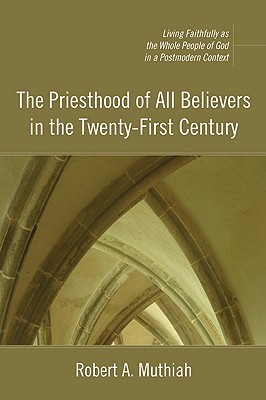

Traditionally, we have assigned our faith paradigm to the Wesleyan Quadrilateral. But Pentecostal faith is much simpler and straight forward. The Pentecostal experience simplified the way we see our faith, being less in our own reach and persecution of reality, and more in God’s control; less me-centered and more God-centered. Although it originates from Wesley’s renewal theology of sanctification, Pentecostals are not methodistic as Wesleyanism tends to be. With this in mind, I wrote Pentecostal Primitivism as a proposal for a 21st century reclaiming of the original model of Pentecostal faith, which could be described in the simplified triangular formula of power, prayer and praxis. (Excerpt from “Why I Decided to Publish Pentecostal Primitivism?” http://cupandcross.com/why-i-decided-to-publish-pentecostal-primitivism/)
I recently completed a course on the Theology of John Wesley, and I was struck by the strong pneumatic emphasis in the sermons of Wesley. As a charismatic Methodist, I found Bevins’s article to be fascinating and helpful for understanding the rich possibility of dialogue with my Pentecostal brothers and sisters. Firstly, a A Pentecostal appropriation of the Wesleyan Quadrilateral offers a corrective on the over-restorationist tendencies in some spheres of Pentecostalism. While Acts remains the hermeneutical entry point for theological reflection, what is now needed is deeper ecumenical engagement. The Holy Spirit has been working throughout all of church history; thus, Pentecostals, as well as charismatics, could benefit from dialogue with Christians across the various Christian streams. Eastern Orthodoxy could be of great significance here due to the innate pneumatic tendencies amongst its theologians. Secondly, a Pentecostal appropriation of the Wesleyan Quadrilateral could help in connecting the dots between the fruits of the Spirit and the gifts of the Spirit. As Bevins wisely demonstrates, Wesley uniquely prized experience in his hermeneutics; experience was understood to be rooted in the working of the Holy Spirit. A great disservice occurred when Pentecostalism became a separate movement from the Holiness movement, and Wesley may help in bringing back the connections between the two.
There are also some interesting issues ot be found in some of those who came alongside or just after Wesley. From his home area, the life and ministry of George Shadford is very interesting to Pentecostals both in England and in Virginia. Interesting that when there was a Methodist revival in Misterton, close to Wesley’s home town of Epworth, the phrase ‘signs and wonders’ was used to describe what happened. Charismatic Methodists were not that unusual, even though many of them seem to have branched off into the Primitives…..