
Becoming a Disciple, with John Hiigel

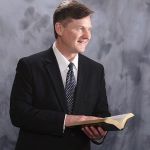
Every church leader wants to see the people they serve grow in their walk with Jesus, and it is obvious that is why John Hiigel wrote Partnering with the King: Study the Gospel of Matthew and Become a Disciple of Jesus. Join PneumaReview.com for a conversation with Professor Hiigel whose calling is to foster academic excellence and develop mature Christians.
PneumaReview.com: In what ways would you see Pentecostal/charismatic church leaders using your book?
John Hiigel: This book will serve any leader who is working to nurture effective disciples for Jesus. Partnering with the King is a set of thirty-one pastoral and devotional readings through the Gospel of Matthew, focusing on Jesus’ call to live with him as his disciples. By way of format, the text of Matthew is printed right in the book, portion by portion, followed by my explanations.

Partnering with the King can serve church and parachurch ministries in several ways. First, it is a book you can give to newcomers to faith. Beyond helping individual readers, it is well suited for person-to-person discipling or for discipleship training programs in the church or on the college campus. I have students who will attest that it can be helpful even for those who are still exploring whether to start the journey with Jesus. The book is by no means just for beginners, however. There is plenty of meat for veterans to Christian life, who find it to be a source of vision and spiritual stimulus.
This book on discipleship also works with groups. I have included right in the book a set of discussion and reflection questions for each of the 31 readings. That’s the right number of sessions for a group to meet weekly from fall to spring. Or for groups who want to work through it more rapidly and intensively, you could pick up the accompanying DVD that provides six-minute video introductions and discussion questions for seven meetings in a six-week period. Either group format (slower or more intensive) could work for a church’s spiritual growth groups, a leadership or mission group, an adult Sunday school class, or a college student ministry. It could also be a resource for summer discipleship and service training programs.
PneumaReview.com: As a professor of Biblical studies, what message would you like to convey to the Pentecostal/charismatic movement?

By and large, you who are brothers and sisters in the charismatic movement are his best practitioners in this counter-cultural endeavor of coming together and serving and cultivating spiritual power. You have led the way, so that Jesus’ images of salt and light and yeast leavening dough describe well what you aim to be and do in our world.
Something that stood out to me as I studied Matthew was Jesus’ frequent return to the theme of humility. Humility turns out to be neither an impediment to operating in power nor a contradiction to having vision and passion to do great things with God. Rather, it is the essential character quality that Jesus nurtures in the leaders he is building. One of Jesus’ most instructive comments is when he, to whom the Father has committed all things, speaks of himself as “humble in heart” (11:27, 29).
PneumaReview.com: The Gospel of Matthew is a story with elements of a biography. How did you come to see it as a guidebook for discipleship?
Hiigel: Some excellent Bible commentators tipped me off. I was intrigued that Robert Gundry calls Matthew’s Gospel a “handbook” for the church. Richard Hays calls it “training for the kingdom of heaven.” R. T. France says, “Matthew’s Gospel is about Jesus – but the story is told … with an eye to those who wish to follow Jesus, and whose life as Christians … he wishes to mould to the pattern established by his life and teaching.”
PneumaReview.com: What surprised you as you studied Matthew to write this book?
Hiigel: One of the biggest surprises was how essential the genealogy turns out to be at the beginning. It is so easy to skip over it, but it emphasizes something essential from the very start: Jesus the King has come to fulfill the destiny of a people, a family – a family with a mission to the world. Jesus has come to restore his people, scattered and dispirited by exile, by gathering them to himself. And he comes to fulfill global promises that God made to Abraham and to King David: “All nations will be blessed through you” (Genesis 12:3; Psalm 72:17). Matthew additionally points to this global reach by including some Gentile women in the genealogy.
So the genealogy succinctly portrays the full scope of God’s salvation and identifies Jesus as the pinnacle of God’s long redemptive project. Fundamental to the good news is that we who follow Jesus, living as his extended family, have a part in that redemptive project. We’re in this together. We need him, and we need each other. In coming to Jesus, we come into his family, locally and globally, with all its glory and all its diversity. We belong. It is wonderful to have a part in something so big and important.
PneumaReview.com: How does this book contribute to widening people’s vision of God’s salvation beyond assurance of an afterlife?
Hiigel: Too often, especially in America, the message of Jesus is narrowed down to saying “you’ll be OK after you die,” and salvation is presented as no more than “you’ll be let in rather than shut out in the end.” Surely those are valuable benefits of coming to Jesus. But presenting the gospel to address only our personal afterlife makes it to be all about us instead of all about Jesus. Moreover, such a message often leaves the way we actually live now untouched and leaves a hurting world unhealed.
Our calling to be disciples is a summons into that salvific work, and whereas all the power for it comes from Jesus, we have a vital part to play. It means that our lives here and now matter profoundly. As disciples, we learn to live with Jesus and for him, and we daily taste the benefits of his salvation and convey them to others.
PneumaReview.com: A key idea in Matthew’s Gospel is the kingdom of heaven. What is the book’s conception of the kingdom?
Hiigel: Let me answer with a short excerpt from Partnering with the King:
“The kingdom of heaven is God’s effective kingship. (It is not a place, but a reign. The other Gospels call it the ‘kingdom of God,’ without using the word heaven at all.) In fulfillment of his promises to Israel, God’s reign has become dynamically present – it has “come near.” Through Jesus, God is intervening to enact his will on earth. His will is done as Jesus encounters human misery in each new circumstance and overcomes it. Jesus comes with authority and liberating power to challenge whatever is sick (leprosy, paralysis) and dark (demonic violence, habitual sin) and deadly (a storm at sea, a girl’s death) and to bring restoration and blessing in its place. Through him, God’s healing and his righteous authority are penetrating into every arena of human life.
“As an essential part of Jesus’ mission to establish God’s reign, he has called the fishermen and the tax collector – and us – to be his disciples. Our missional Messiah is forming a missional people who are devoted to God’s will being done in the world. We obey his call to “follow me,” opening our hearts to his deep healing and making ourselves fully available to serve at his side in his transforming work.
“We do still await something further, something worth anticipating with great yearning, a glorious final success of God’s saving work, celebrated through the image of a great feast (8:11). For now, we live and serve in grateful submission to God’s authority. Our eventual participation in the renewed world when Jesus returns in glory (19:28; 25:21) will be a brilliant new phase of enjoying his kingship.”
PneumaReview.com: What is the role of the church in discipleship?
Hiigel: The church is essential. Jesus has no conception of discipleship lived in isolation from others who love him. He values individuals, but he fortifies us by joining us together. The church is family, so it is the setting for nurture. Within the family, we cultivate the habit of entrusting everything to Jesus, strengthening each other by prayer, training, and mutual care. This equips us for our service beyond the family, out into the world, where our mission is ultimately to draw people into the family.
PneumaReview.com: How would you hope a new Christian would respond to this book?
Hiigel: I hope that my book will help new disciples to enter fully into the new life with Jesus – to join and embrace his family of followers, receive his deep healing, learn from him daily as his apprentices, and partner with him in his transformative mission in the world.
PR