Leading a Church in the Twenty-first Century: An International Perspective

How Shall We Lead the Church?
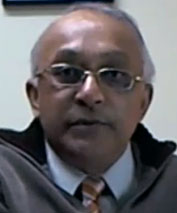
In this Pneuma Review conversation, preacher and international instructor Aldwin Ragoonath asks, what is hindering church growth in North America? How can we can lead towards growth in the church in the Twenty-first century?

Where I am Coming From

I was born into a nominal Hindu home that progressed to a nominal Christian in Trinidad and Tobago, West Indies. I became a committed Christian at age 15 and received some of my theological training in Trinidad where I pastored for a few years. Later, I pastored for more than 20 years in Canada. I earned a Doctor of Ministry in homiletics and a Doctor of Theology in Pentecostal preaching. My book, Preach the Word: a Pentecostal Approach (Canada: Agape Teaching Ministry, 2004) has been printed in several languages and is being used around the world.1 In the last thirteen years I have facilitated Pentecostal preaching seminars and courses in Pentecostal preaching all over the globe to more than 4,000 pastors, mainly in the 10/40 window—among the highest populations of non-Christians in the world.
Problems within the Western Church
David Mains, founder of the national Christian Canadian TV program 100 Huntley Street, did a survey of 100 cities in Canada trying to find out what are some of the problems hindering church growth. He discovered that the major problem in the church is apathy. People don’t care about the church and its ministry.2 This can also be said of America.
Selfishness, in all its manifestations, is the second problem. When a proposal is presented to a pastor or lay person, the usual response is, “What’s in it for me?” Historians in the future will refer to this generation as the “I” generation. People are preoccupied with “I.”
People in the church and outside the church are not only concerned about “I” but are very materialistic, overly concerned with money and possessions. Success is measured by how many things i.e. houses, money and cars one possesses. And everything else is sacrificed at this altar of “me, myself and I” including: family, relationships, friends, and commitment to God.
One of the first questions the western church asks of a growing church is what “method” is the pastor using? It is my observation that God uses people in a particular geographical and social situation to bring that community to faith in Christ. If you are able to identify the method one uses it still cannot re-duplicate what God is doing in another geographical location. God uses people anointed by the Spirit to do His work, not methods. The method is the man. The church and society is constantly changing. For example large city-wide healing and evangelistic crusades are not working therefore there is a greater need to depend on the Holy Spirit to offer this ministry to local congregations. In my limited pastoral experience, more people got saved and healed through pastoral ministry than through city wide crusades. The day for church crusades and revival meetings has passed: People don’t respond to these types of meetings.
For a while the church was hoping that the church growth movement led by Fuller Theological Seminary and many other seminaries would produce church growth as it promised, but it failed to deliver.4 Like most pastors, I read just about everything on the subject and attended many seminars, but the most it did for me was to affirm that I was doing the right thing and that was seeking the Lord through prayer and fasting.
When I was doing research for my Doctor of Theology on Pentecostal preaching, I spoke to several homileticians. One told me we have better prepared sermons, greater oratory skills but the anointing of the Spirit is missing. We should see results in the lives of our audiences produced by the ministry of the Holy Spirit.5 Today when someone preaches there are fewer conversions, few healings, and less deliverances.
Leading the Church in the Twenty-first Century
Prayer and fasting was the distinguishing mark of the Pentecostal church; that is no more the case.6 The Pentecostal movement was born in prayer and fasting. At Azusa Street, there were all night prayer meetings, all day prayer meetings and twenty four hour prayer meetings. As the movement grew, Tuesdays and Fridays were set apart for praying and fasting—but over time, prayer and fasting declined. Today prayer and fasting may take place one day per week (for part of the day).7
We have substituted prayer and fasting for programs, praise and worship, education, expensive church buildings, TV programs. But none of these have produced church growth. Only a small percentage of churches are growing; church growth is now mainly transfer growth.
One of the many things I have observed from the third world is that a growing church is a praying and fasting church. When the church in the third world wants to plant churches in any particular area they don’t read a book on church growth but they go to the Lord in prayer and ask the Holy Spirit for directions, and He always directs the church. I have seen this first hand many times and I have heard stories from Superintendents.8
Jesus has taught us that certain things do not happen until we fast and pray. In Matthew 4:1-11, Jesus defeated the devil in the context of fasting and prayer. “[T]his kind cannot be driven out by anything but prayer and fasting” (Mark 9:29). When Paul wanted direction from the Lord for ministry he went to the Lord in fasting and prayer, Acts 9:1-19.
If we are going to return to the fire that once burned in our souls, I believe we need to return to daily devotions of nothing less than one hour; one day per week in fasting and prayer, and at least twice a year we need to set apart a few days where we seek the Lord for direction for ministry and empowerment.
We who claim to be Spirit-filled and Spirit-led should be able to hear the voice of the Spirit when He speaks. It might be an impression, a burden, a need but it always has to do with soul winning and building-up the body of Christ. When that happens we need to obey the Spirit and do what He says. Will we read the Spirit wrong? Yes, sometimes we will. But as we walk with the Lord we will learn to read the Spirit right.
We should emphasize preaching or evangelism outside the church. Having a church building is no reason to disobey the Lord’s command to go into the world and preach the gospel, Matthew 28:19-20.
Evangelism calls for a conscious act, it does not happen without prayer and planning.
Evangelism calls for money and time set aside to work. Too many churches are spending money on the maintenance of church programs and little or no money on evangelism.
Evangelism calls for commitment from the pastor and the congregation.
Evangelism calls for looking for opportunities to evangelize.
It might be a worthwhile exercise to get together a group of people and discuss this suggestion: how can we communicate the gospel outside the church building?
How can we move our people to action?
Emphasize loving Christians and non-Christians alike, this is the example Jesus gave us. “For God so loved the world…” (John 3:16). “Beloved, let us love one another, for love is from God; and anyone who loves is born of God, for God is love. The one does not love does not know, for God is love.” (1 John 4:7,8 NASB). The heart of Christianity is love, and when love does not exist in the church it become cold and careless. During a recent trip overseas a pastor reminded me that they win non-Christians one person at a time by showing genuine love for them.10
Ask for permission to share the gospel when the right time comes and the Holy Spirit will guide you on how to share the gospel. When trust is established, non-Christians usually ask questions about our faith.
Want to see God do something new? Think outside the box—let the Holy Spirit work creatively in and through your life. I think we have underestimated the Holy Spirit to work creatively in daily ministry. Every sermon we preach is a creative work of the Holy Spirit. At creation the Holy Spirit was one of the persons of the trinity who helped create the world. “Let us make man in our image” (Genesis 1: 26). “But the Helper, the Holy Spirit, whom the Father will send in my name, he will teach you all things and bring to your remembrance all that I have said to you” (John 14:26, ESV). As in the weekly sermon, we need to allow the Holy Spirit to work through our lives in creative ways to do ministry. The point I am trying to make is that ministry is a creative process and God leads people differently and we need to stop following successful pastors and trust the Holy Spirit to lead us in our context.
Pastoral care is imperative to develop a community. If the average size of a church in North America is 75 then the average pastor can be available to meet the needs of the people. People will always remember the pastor and the church during times of grief, sorrow and sickness, so don’t miss a good opportunity. In cities people are disconnected and need someone to provide support and assurance in the good times and the difficult times. The apostles remind us to: “Pay careful attention to yourselves and to all the flock, in which the Holy Spirit has made you overseers, to care for the church of God, which he obtained with his own blood” (Acts 20:28 NIV).
PR
Endnotes
1 This book is translated into Spanish, Chinese and Indonesian. Read a review of the book at: /aldwin-ragoonath-preach-the-word
2 David Mains, 100 Huntley Street TV Program, Ontario also see Reese Currie, http://www.compassdistributors.ca/topics/apathy.htm [Not available as of April 26, 2014].
3 This is my personal observation. This lack of openness can be said of most Christian denominations.
4 Bob De Deeway, “Faulty Premises of the Church Growth Movement: Rick Warren, Robert Schuller, Donald McGavran, and C. Peter Wagner Mislead the Church.” Published by Twin City Fellowship, Critical Issues Commentary, P.O. Box 26127, St. Louis Park, MN 55426, available from http://cicministry.org/commentary/issue89.htm#top; Internet; accessed 20 December 2010.
5 Aldwin Ragoonath interviewed Jessy Moon, professor of homiletics, Central Bible College, Springfield, MO, 1999.
6 Aldwin Ragoonath, “Pentecostal Preaching in North America,” Th.D. diss., (University of South Africa, Pretoria, South Africa, 2001.)
7 Bishop Ithiel C. Clemmons, Bishop C H Masson and Roots of the Church of God in Christ (Bakersfield, CA: Pneuma Life Publishing, 1996).
8 In conversation with Rev. I Kaithau, General Superintendent of the Assemblies of God, Indonesia (2008) and Rev. D. Mohan the general superintendent of the Assemblies of God in India (2009).
9 David Wilkerson, Times Square Church, Located at 51st Street & Broadway, Manhattan in New York City, www.tscpulpitseries.org/tsc.html. Editor’s note: David Wilkerson was killed in a car accident on April 27, 2011.
10 Aldwin Ragoonath interviewed Lesley Matthew the general treasurer, from New Delhi, India Church of God, in November 2010.
11 Sunday schools began as schools for the poor. They were created in England around the year 1780. The schools provided rudimentary instruction to working people on their free day. By the 1790’s there were several of these schools in the United States. For the next three decades, Sunday schools were part of an informal network of free schools operated by various religious and philanthropic groups to provide rudimentary education to children of the poor. Depending on their sponsorship and frequency of meeting, these schools placed more or less emphasis on religious and moral instruction. Schools run by the New York Free School Society, for example, combined daily academic instruction with Sunday attendance at Sunday schools. In October 1811, Presbyterian missionary Robert May opened an evening Sunday school in Philadelphia in which, unlike previous free schools, he taught religious doctrine solely and without remuneration. Schools resembling May’s became increasingly common during the decade 1810-1820 as young, newly converted Protestants turned Sunday teaching as a means of expressing their newfound convictions. By 1820, there were several hundred Sunday schools in the United States. All emphasized religious instruction over reading and writing, although most taught the later subjects as a means of inculcating the former. Many Sunday school organizers, in fact, began lobbying for extension of a system of free daily schools so that they would be free to teach religion alone on Sundays. [Robert May Sunday School Minutebook, 1811-1812, Presbyterian Historical Society.] http://www.thewordsofeternallife.com/sunday_school.html [Not longer available as of April 26, 2014].
12 Paul was the greatest preacher among the apostles but he was not the greatest orator.
13 Ragoonath, “Pentecostal Preaching in North America,” p. 52. I see in Luke 4: 16-20 teaching that preaching has two parts; 50% sermon and 50% signs, wonders and miracles. That is why I encourage a special service to prayer for people who sick and needy.
14 Jay Adams professor of homiletics, made this observation during one of his lectures in the Doctors of Ministry program at Westminster Theological Seminary, Escondido, California in 1998.