
Del Tarr: The Foolishness of God

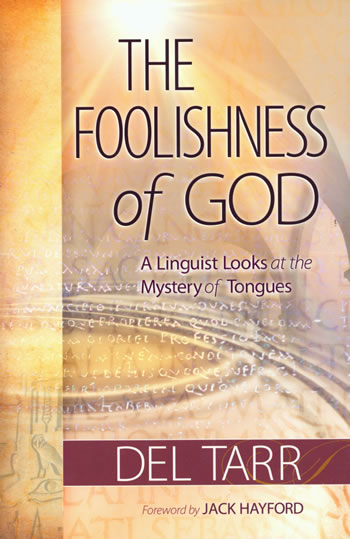 Del Tarr, The Foolishness of God: A Linguist Looks at the Mystery of Tongues (Springfield, MO: The Access Group, 2010), xvii +447 pages, ISBN 9780984447008.
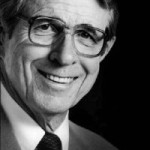
Del Tarr, Professor Emeritus and past President of the Assemblies of God Theological Seminary, who holds a PhD in Communications from the University of Minnesota, applies scientific linguistic and theological insights in a breakthrough analysis of the phenomenon of glossolalia.
Tarr writes amidst a mixed tradition of academic responses to tongues speaking. On the one hand, there are several earlier attempts to interpret the meaning of glossolalia in the New Testament and today from a Pentecostal perspective, such as Carl Brumback, ‘What Meaneth This?’ (1947), Wade Horton (ed.), The Glossolalia Phenomenon (1966), Ralph Harris, Spoken by the Spirit: Documented Accounts of ‘Other Tongues’ from Arabic to Zulu (cases of “xenolalia”—unlearned foreign languages, 1972), G. Williams and E. Waldvogel, “A History of Speaking in Tongues and Related Gifts” in The Charismatic Movement (1975), Russell Spittler, “Glossolalia,” in Dictionary of Pentecostal and Charismatic Movements (1992), and several more recent studies by Frank Macchia, for example, “Sighs Too Deep for Words: Toward a Theology of Glossolalia,” Journal of Pentecostal Theology 1 (1992), 47-73 up to Baptized in the Spirit: A Global Pentecostal Theology (Zondervan, 2006).
Non-Pentecostal evangelicals have been less positive about glossolalia, since their more substantial critiques are shaped by traditional Protestant cessationism precipitated by the growth of Pentecostalism and the early charismatic movement. These include Grant Wacker, “Travail of a Broken Family: Radical Evangelical Responses to the Emergence of Pentecostalism in America, 1906-16,” in Pentecostal Currents in American Protestantism (1999), A. Hoekema, Tongues and Spirit Baptism: A Biblical and Theological Evaluation (1966), R. Gromacki, The Modern Tongues Movement (1967), and F. D. Bruner’s expansive and insightful A Theology of the Holy Spirit: The Pentecostal Experience and the New Testament Witness (1970). Others include psychological, linguistic and sociological assessments of the phenomenon, such as J. Kildahl, The Psychology of Speaking in Tongues (1972), Wm. Samarin, Tongues of Men and Angels: The Religious Language of Pentecostalism (1972), and E. G. Hinson, “The Significance of Glossolalia in the History of Christianity” in Speaking in Tongues, Let’s Talk about It. Edited by Watson E. Mills (1973). A useful literature survey appears in Kay and Francis, “Personality, Mental Health and Glossolalia,” Pneuma 17:2 (Fall 1995).
In the era of the early charismatic renewal (1960s), Morton Kelsey’s classic, Tongues Speaking: An Experiment in Spiritual Experience (1964) was written from outside the Evangelical and Pentecostal debate in which the value on Christian doctrine competed with claims to religious experience (including tongues). To Kelsey, religious experience was also a valued—even beneficial—component in human existence, following similar studies by William James, Carl Jung, and Abraham Maslow, for whom Enlightenment rationalism seemed reductionistic. In this vein, Bruner’s traditional Reformed critique of Pentecostal “experience” met a substantial response in James Dunn’s Jesus and the Spirit: A Study of the Religious and Charismatic Experience of Jesus and the First Christians as Reflected in the New Testament (1975). The somewhat cool reception Dunn’s excellent work received from his academic audience reflected a complaint by Hendrikus Berkhof about the “water tight” partition between charismatic experience and academic theology: “Although Pentecostalism is a great deal more than a ‘tongues movement,’ it is the first movement to focus attention on this gift as being of crucial importance for understanding the nature of the divine-human encounter” (p.30).
Accordingly, as the Pentecostal/charismatic movement has expanded and gone more mainstream, the negativity has softened somewhat. For example, Harvey Cox, Fire from Heaven: The Rise of Pentecostal Spirituality and the Reshaping of Religion in the Twenty-First Century (1995). The definitive, though now somewhat dated reference tool is Watson Mills, Speaking in Tongues: A Bibliographic Guide to Glossolalia (1987).
To many, speaking in tongues is the ultimate foolishness. It is often shown to fall outside of normal human linguistic patterns—merely “learned behavior.” It requires relinquishing control of our most guarded ability—to gain status with clever and articulate speech. Moreover, it is assumed that it is chiefly snake handlers, TV evangelists, and the economically and socially dispossessed that are those who speak in tongues.
With all this against it, “why did God choose a sign related to human speech/communication that would be so ridiculed, maligned, resisted and rejected” (p 31)—the “least of the gifts” to express the New Covenant of the Spirit—the goal of God’s redemptive purpose?
Pentecost, the celebration of the gift of the covenant at Sinai where the direct voice of God was rejected in favor of a document (Ex 20:18; Heb 12:25; 2 Cor 3), now celebrates the goal of both the scriptures and Jesus’ mission: to “baptize with the Holy Spirit” of the New Covenant when he “pours out that which you see and hear,” the ideal covenant now internalized in Spirit utterance.
At this point Tarr could have helpfully added that the very climax—the action point—of arguably the most important message in all of Christianity is the Pentecost sermon. It describes the fulfillment of salvation history, the New Covenant, and it is characterized by Spirit-speech. This was laid out in Isaiah 59:21, “This is my covenant with them: the Spirit that I place upon you [Isa 61:1-2], and the words I place in your mouth, will not depart from your mouth [“He still speaks today,” see Heb 12:25], nor from the mouths of your children, nor from the mouths of your children’s children, forever.” The “words” in “the mouths” of Isaiah’s prophecy, of course, is partly fulfilled in the Pentecostal phenomenon going on around Peter and his audience as he speaks: “this promise is for you, and for your children and for those who are afar off: anyone whom the Lord your God shall call.” Paul later paraphrases Isa 59:21 in Rom 11:29. “The gifts [charismata] and calling of God are not withdrawn.” So the gift of Spirit-utterance, glossolalia, in this instance, is for everyone forever.
So while it’s clear that God sent this characteristic gift, the central question remains: why tongues? Tarr offers the intriguing thesis that the biblical reason that God gave glossolalia as a “sign gift” of the Spirit is that, in line with the way He characteristically revealed himself in Christ, “glossolalia is irrational by design” [italics his]. Other apologies for tongue speaking, he notes, have focused on “reasoned discourse and logical systems, hoping to make this misunderstood phenomenon acceptable.” Tarr insists such a defense short-circuits God’s own strategy: “any attempt to make God look less foolish is aimless” (p. 6). He notes that God characteristically reveals himself by “what is foolish [“intellectually ugly” (p.253)] in the world to shame the wise…. He chose the lowly things of the world and the despised things … so that no man might boast before Him” (1Cor 1:27-29).
Tarr, then, argues that it is precisely because tongues speech is so bizarre and foolish (Acts 2:13), so easily dismissed by the “cultured despisers of religion,” that the tongues phenomenon perfectly expresses God’s characteristic feature of revelation to humanity. Against the human seduction toward human knowledge to control our choices, as in the temptations of the first and Second Adam, God’s revelation in tongues speech requires a radical shift from the gleaming fortress of our own intellectual arrogance to a filthy stable, to see a powerless baby born to a so-called “virgin” from a backwater town—a birth that quite plausibly could be explained by the nearby Roman army garrison rampant with sexual predators (p. 260).
To truly see Jesus, Tarr argues, required getting past toxic small-town gossip and disdain, yet this is the biblical and foolish way God revealed Himself to the world—and even more foolishly, to end up being executed as a cursed criminal, “despised and rejected of men”—the paradox of a dead Lamb on the throne of the universe (Rev 7:17).
The Old Covenant was expressed as a written document. Tarr argues that while the written format has the advantage of being more or less permanent, unchanging and reliable, it nonetheless is inferior to the New Covenant, which is God’s word written directly into one’s heart. God’s New Covenant emphasizes the superiority of “orality,” direct, personal revelation, over a text even written in stone (143-46). Despite this biblical shift from our scribal focus on a written text (the Old Covenant), Tarr argues that orality, God’s direct communication to our heart or through charismata of utterance is the essence of the Christian experience (chapter 4: Communications Theory and Glossolalia). Instead, Christians, especially in the West, have reduced much of their encounter with God to interaction with texts—a regression to the practice of the scribes and the academics. “It is precisely this textualism of evangelical theology which undermines the Pentecostal experience of continuing revelation” (153). To clarify Tarr’s position: this “continuing revelation” does not imply an expanding canon of scripture any more than experiencing the required revelation of Jesus at conversion (Mt 16:17) implies an additional Jesus. Continuing revelation (e.g., tongues, prophecy, words of knowledge, healing) applies and actualizes the message of scripture (which demands the process of continuing revelation), but does not change it, in much the same way that new US laws apply and actualize the principles of the Constitution—a process that the Constitution itself anticipates.
Tarr’s extensive experience in non-literate areas of Africa taught him the power of the spoken word and how this power is viewed in ways quite similar to those of scripture. A spoken word has power in its effects, whether a blessing or a curse. The “elder or chief has ‘mouth’… ‘Mouth’ means authority/power that refers to the power of his oral speech—not written language” because these men were non-literate (153). The very term, “mouth,” conveys authority, strength or power, especially as it “names” a child or empowers the seed with life for sowing. A dull knife has “no mouth.” Accordingly, “since the word has all power, everything one says is binding. There is no ‘harmless’ or casual word” (154). Hence, Tarr notes that these Africans understand Jesus at a different level than Westerners when he says, “By your words you will be acquitted, and by your words you will be condemned.” In this “word” culture, then, tongues-speaking could quickly be construed biblically: this is God himself bestowing authority, intimacy, a powerful new “name,” identity via “words” in the “mouth”. Since the biblical era was characterized more by orality (and its personal, intimate quality) than by text-based memory and manipulation of ideas, it is not so difficult in Tarr’s West African culture to understand the significance of the Pentecost experience as the fulfillment of the New Covenant being expressed as “words” in the “mouth” (Acts 2:39; Isa 59:21).
The “oral” immediate “word” of God revealed by the Spirit and spoken directly into our hearts, and out again from our mouth, has the great advantage of expressing God’s very presence in our bodies, addressing, at the most appropriate moment, the exact needs of our soul. “Speaking in the Spirit” “builds up” the speaker, while our mind is “unfruitful” even as our spirit (or Spirit) is praying mysteries (1Cor 14:4,14; Rom 8:26). Against earlier academics who tended to pathologize glossolalia, recent, more rigorous investigations have confirmed the restorative, healing power of tongues speaking . So Tarr insists that despite the growth of Pentecostalism (tongue speakers) in the last 100 years to perhaps the largest active group in Christendom, “my desire is less to defend tongues than to show how this humbling experience can open the door to empowerment.” Dr. Del Tarr, the linguist/theologian, has offered an original, biblical, profound, and convincing explanation for “the mystery of tongues”: God’s “foolish” revelation to mankind.
Throughout much of Foolishness of God, however, I found myself squirming with frustration: Why not develop the climax of the Pentecost sermon, the fulfillment of the New Covenant citing Isa 59:21, with its constant repetition of the “words” in the “mouth,” delivered by Peter in the midst of glossolalia all around him? In this connection, why no discussion of 2 Cor 3—a perfect support to explain the normative transition from the written covenant to the oral covenant, communicated directly into the heart? Similarly, the central point of Hebrews: the primacy of Word (orality) “upholding the universe by his word of power “—is also presented as the climactic warning to “not refuse the One who is speaking” (12:25) when “today you hear God’s voice” (3:7,15; 4:7). In his treatment of tongues as obnoxious, there is no explanation of why Paul forbade its use in public meetings that included the “uninitiated or unbelievers” (1 Cor 14:21-23) in reference to Isa 28:11 (listed in the index, but not cited as indicated) as a sign designed to harden the disbeliever in unbelief. There is so much here to support the book’s thesis. To be fair, however, he did not claim to develop a centrally biblical case, but to explain tongues speaking from a communications perspective.
Del Tarr’s work offers a substantial bibliography (pp. 419-33) that reflects his engagement with a broad range of scholarship. His significant contribution, however, derives from his expertise as a linguist, practically applied as a highly successful missionary in West Africa, his background in communications theory and his insight that tongues speech represents, yes, a stumbling stone, but in that stigma, tongues represents another example of God’s power revealed in a “foolish” weakness—the pattern of the cross itself. The Foolishness of God deserves a prominent place in the nascent but growing and increasingly rigorous field of Pentecostal/charismatic theology and as a reference to balance our rationalistic, textualized religious education.
Reviewed by Jon Ruthven