
The theology and influence of Karl Barth: an interview with Terry Cross

 Karl Barth was an influential Swiss Reformed theologian that lived from 1886 to 1968. Featured on postage stamps and the cover of Time (April 20, 1962), today we would call him a rock star among theologians. A strong critic of those Christians who supported the Nazis, Barth is best known for his involvement in the neo-orthodoxy movement and writing Church Dogmatics. PneumaReview.com speaks with Terry Cross about why Barth remains so influential and what church leaders should glean from his prolific writings.
PneumaReview.com: You have been working with the theology of Karl Barth for many years. What has drawn your long-term interest?
Terry Cross: I began reading Barth seriously in 1980 while working on the MDiv thesis. I was comparing Karl Barth and the evangelical theologian, Carl Henry, on their views of revelation. Henry was quite adamant about some of Barth’s errors in relation to the Word of God—as were a number of evangelical scholars. However, when I actually read Barth himself, I realized that the caricatures made of him by many evangelicals did not hold water. Barth actually said in numerous places the direct opposite of what Henry thought he said. I began to wonder, ‘If Henry can read this incorrectly, what else has been written by Barth that deserves closer attention?’ That started my journey through the 13 volumes of the Church Dogmatics. It also fueled the flame to learn German well enough to read Barth in the original language he wrote. Over and over I have discovered that rather simplistic thumbnail sketches of Barth’s ideas on any one theological position have missed the complexity and nuance of Barth’s own words. In addition, as a Pentecostal theologian I became fascinated with some of Barth’s ideas as related to Pietism and, by extension, to Pentecostal thought. For example, in Church Dogmatics I/1, Barth expounds his idea that the Word of God has a threefold form—Jesus Christ (Word in flesh); Scripture (Word in writing); and Preaching/proclamation (Word of God in preaching/teaching). Barth has a rather “occasionalist” view of what occurs. The Scripture, for example, becomes the Word of God but may not be the Word of God (in some fundamentalist sense) because such equation of God’s Word in revelation with written Scripture can make the Bible into a “holy” book that has almost magical qualities instead of a record that becomes God’s Word when God’s Spirit enlivens it to our hearts. Indeed, Barth is the only theologian I know who has a pentecostal-like theology of preaching: our human words are taken up by God’s Spirit and are made clear and powerful as it becomes the Word of God to individual believers in the community of faith. In many ways, this seemed reminiscent to me of the high respect for preaching that Pentecostals have whereby a “word” from the Lord becomes clear and really rings true when the Spirit drives it home in our hearts.
PR: Some argue that Barth was the most important Protestant Theologian of the Twentieth Century. Do you agree?

Terry Cross: Yes, I do. While others have had long-lasting impact from the 20th century (e.g., Tillich, Bultmann, Reinhold Niebuhr, Juergen Moltmann), Barth’s herculean shift of the balance of the weight off of the old Protestant liberalism of his professors (like Harnack and Herrmann) that signaled the immanence of God in human lives and onto a view of the transcendence of God in which God is entirely other than humans. The old liberal school had proposed that Jesus taught a valuable morality that we should follow, but was not divine. For them, God’s Spirit was to be equated with the human spirit—the human personality. Faith, then, was some psychological commitment that connected on a deep emotional level with God. Into this situation that seemed to glorify humans, Barth became frustrated with the easy manner in which his German professors rushed to support Kaiser Wilhelm going to war in 1914. Barth was a pastor in a small village in Switzerland at the time (Safenwil) and gave himself totally into the socialism of the day, working as the “red pastor” in assisting laborers to form unions and more equitable wages. By 1915, his excitement for socialism began to run dry and his theological source for preaching was no longer effective. Into this setting in 1915, Barth and his close friend (a nearby pastor named Thurneysen) began to study Scripture again, but this time not through the lens of historical criticism or psychological critique of the authors. They studied the book of Romans, all the while Barth wrote his thoughts about each verse in a notebook. In a later lecture, he described this encounter with Scripture as a “new world of the Bible.” What was this? He tried to listen to and read Scripture as if God himself were speaking to him today from this long-ago text. The result was a vivid freshness of his preaching and interpretation. Some called this a “pneumatic exegesis” because of the emphasis on the Spirit but also because of his sense that the Spirit operates with the text and with the hearer. The freshness of letting God be transcendent and speak to the Church through the Scriptures today was so powerful that one theologian described his commentary on Romans as a “bomb on the playground of theologians.” Instead of starting theology from the human dimension and attempting to build one’s way up to the divine (a la Schleiermacher), Barth began theology from the divine dimension and asked what God was saying to us through his revelation. While some folks during the decade of the 1920s called Barth’s theology “dialectical,” Barth himself preferred to speak of it as “a theology of the Word of God.” Almost singlehandedly Barth turned the theological trajectory away from the old Protestant liberal school of thought to a new, fresh way of viewing God that tended to sound more like the Protestant Reformers of the 1500s. To be even more precise, some felt they saw in Barth a simple rehashing of old Protestant Scholastic Orthodoxy of the 1600s and 1700s. For this alone, he could be considered an important theologian of the 20th century, but add to that the depth of his understanding of the connections between Christology and various doctrines as well as his dogged determination to keep Christ as the center of the revelation of the triune God and we have someone who is not only innovative and interesting, but paradigm-setting for the future of the theological task.
PR: Barth is famous for putting Christ in the center of his theology. Please tell us how radical this idea was for him and how radical it should be for all Christians.

Image: Pete unseth / Wikimedia Commons.
So, Barth has developed a theological methodology based on the revelation in Jesus Christ. What do I mean by this? Barth writes his theology with an intentional doggedness to return everything to Christ, especially in the task of writing theology for the sake of helping the Church. I find such relentless focus on Christ (as the one in whom dwelt the fullness of the Godhead in bodily form) to be refreshing and challenging. It is refreshing because it makes such practical sense to write about God through the lens that God has chosen to reveal himself to us. It is challenging because this is difficult to do with every single doctrine and maintain such clarity and perseverance to this task, as did Barth.
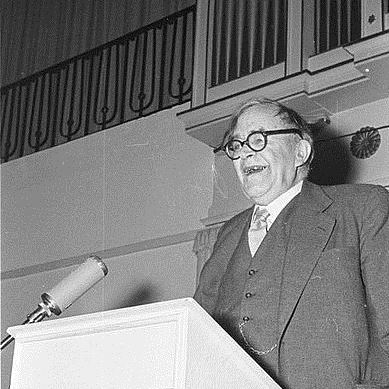
Image: Hans Lachmann / Wikimedia Commons / German Federal Archives.
Not only is this a model for doing theology but I believe it is a faithful model for understanding the heart of God more. As believers who grow into being disciples of Christ, we need desperately this very practical, Christ-the-Center model for our everyday lives as well as for our thinking.
PR: There is a deep suspicion, particularly among conservative Evangelicals and classic Pentecostals, that Karl Barth was a liberal theologian. Is this a valid suspicion?
Terry Cross: First, let me suggest that the phrase “liberal theologian” is not helpful. In some circles, I would be considered liberal because as a Pentecostal I encourage ecumenical dialogue with other churches and denominations. So the term does not help us understand someone and their theology but tends to disenfranchise them. What I mean by this is that it allows us to label them and then never read them!
Third, let me suggest that this “deep suspicion” came from two major theological sources that influenced the thinking of Evangelicals and even Pentecostals at the time: Carl F. H. Henry and Cornelius Van Til. Both Henry and Van Til were the premiere theologians for the Evangelical movement in the 1950s; both were quite well read and had some knowledge of Barth, even in German. However, as was the case with many Evangelical scholars at the time, they were not open to having anything drive a wedge between their propositional theological statements and the authority of the Bible. Henry was trained early on as a journalist and so had a writing style that was both heady but understandable. His work against Barth [and here I would even include his magnum opus, God, Revelation, and Authority (6 vols)] was substantial. Indeed, for my own M.Div. thesis at an evangelical seminary (Ashland, OH), I took on Henry’s charge that Barth was a purveyor of personal revelation but not propositional revelation—Jesus Christ revealed to humans, not the inerrancy of Scripture and the authority derived from the written word in propositional statements. I believed Henry wholeheartedly—until I started reading Barth. I saw in Henry’s critique only broad strokes of generalizations where Barth was actually doing something much more nuanced than Henry could grasp; I saw in Henry’s characterization too little of the actual emphasis Barth placed on the written Word of God and the authority it possessed on its own. Was Barth correct on everything related to the Word of God? Probably not. But he certainly wasn’t the straw man that Henry had created. And so started my quest to understand Barth better—well enough to critique him and yet well enough to admire him. When it comes to Van Til’s critique of Barth, it is similar in tone and character to Henry’s but different in specifics. Van Til wants to engage the fundamental philosophical errors that he thinks he sees in Barth’s writings. His conclusion is that Barthianism is not even Christian! So I think it was the easy characterization of Barth as liberal and the cutting apart of his theology with an axe instead of with surgical scalpels that left us in a position of running from Barth—and a bunch of others as well (like Tillich, Bultmann, even Bonhoeffer before he was canonized an evangelical saint by Erix Metaxas).
PR: What is neo-orthodoxy, what did Barth have to do with this school of thought, and why should it matter?
PR: As a Pentecostal, do you find Barth’s understanding of the Spirit to be helpful or troubling?
Terry Cross: Let me respond in several ways. First, some Barth scholars have missed the boat here because they have not seen the Spirit in the writing or work of the Church Dogmatics. Not only do I see the Spirit burning forth on almost every page of the Dogmatics, I see the Spirit in his numerous letters from 1915 to the end of his life, in his “Conversations” from 1957-1968 that cover three volumes in German, in his preaching, especially in his years as a pastor in Safenwil (1912-1921). The occasional writings or shorter treatises are also replete with references to the Spirit as well as clear connections between Christ and the Spirit.
Second, there is undoubtedly some “training” that one must undergo in order to see what is referred to in Barth’s theology as the work of the Spirit. While people say that Barth never got to the doctrine of the Spirit since that was his large fifth volume that was left unwritten, the Spirit in Barth’s writing is much more evident in the language of “activity” or in German, Wirkung or wirken. Just take the role of the Spirit in relation to Scripture—both its original writing by the “witnesses” to God’s revelation in Christ and the current way the Spirit allows the preached word to become the actual Word of God to them so that they believe in faith and acknowledge that Jesus Christ is Lord (this is most clearly in Dogmatics I/1 and I/2). As a Pentecostal reading these first two part volumes of Barth’s Dogmatics, I was overwhelmed by the clarity of expression and understanding of the power that the Spirit had in salvation, in the attestation of Scripture’s authority, and especially in the way that faith would rise up in humans in response to the Spirit’s depiction of Christ to them. As a Pentecostal, I had a new appreciation for the Spirit’s work to re-present Christ to us today. For my own theology, this has become one of the pillars of my understanding about the Spirit: the Spirit’s role in creating faith and causing people to believe the unbelievable Gospel of our Lord is to re-present to us Jesus the Christ in a spiritual yet very real sense. However, one may not read without reflection on these passages or one might come to a conclusion that since there is not a very large volume devoted just to the Spirit then Barth deemphasized the Spirit in his theology.
Third, one cannot read Dogmatics I/1 and I/2 and all of IV without seeing the word “miracle” rise to the surface of these thousands of pages. Grace is a miracle; belief is a miracle; salvation is a purely miraculous event. For Barth, it is the Spirit of God who encounters humans here and now in our present with the Living, Risen Lord who is seated in the heavenlies. It is the Spirit who clears the way for the realm of eternity to touch the realm of this earth—for a miracle to occur. And here Barth seems to be using the only term he has left to describe it: miracle.
Finally, in working through the doctrine of reconciliation (or salvation) in Dogmatics IV/1, 2, 3, and 4 (fragment), Barth encounters the Spirit everywhere in the Christian’s own life before God. It is the Spirit who fans the flame of faith so that the believer can and must experience faith that Jesus Christ lived and died for them in human history but also that this life and death transformed reality so that we are no longer left in our trespasses and sins but are translated from dark to light, from death to life—in the here and now! And it is the work of the Spirit to bring us that reality in this present realm.
Does Barth have a view of speaking in tongues or phenomenal display of spiritual gifts that might be coordinated somehow with Pentecostals? I do not think so. I do not wish to make Barth out into a Pentecostal—he wasn’t one. However, he did know Pentecostals and Evangelicals. Indeed about a year before he died he had a conversation with some Mennonites in Switzerland that was recorded. They asked him his thoughts on the Pentecostals. His response was very Gamaliel-like. He said that he wasn’t all that much in favor of emotionalism for the sake of emotionalism, but that he liked the life that such people seemed to bring to the church. And who knows but what God has planned for Pentecostals to come about at this time to revive the church. We should leave open at least this possibility!
PR: What should church leaders learn from Barth?
Terry Cross: Church leaders could and should learn that Scripture must be our guide for doctrine and practice. One example will suffice. As a Reformed pastor and theologian, Barth followed the line of the Reformation from John Calvin. Most of the major Reformers continued with infant baptism and the Reformed movement continues with it to this day (as do Lutherans and followers of Zwingli). So Barth taught infant baptism and practiced it in his church. However, in the 1940s he began reconsidering this teaching. His son, Markus, was doing a doctoral dissertation that questioned whether infant baptism could be supported as a sacrament in the New Testament. This influenced his father greatly. However, Barth’s own theology was headed toward a need for the miraculous act of grace in a person’s life to have a human response. He felt baptism was that human response, not a magical ticket into the kingdom or even the church. In countries where infant baptism essentially was the same as being a citizen of that nation, Barth believed Christianity was experiencing in Europe the deadening effects of infants who were baptized but not connected with Christ or discipleship. Therefore, to great personal and professional criticism, Barth writes in Dogmatics IV/4 (fragment) that infant baptism should be discontinued and proposes a theological way to go forward.
If church leaders would earnestly search the Scriptures and not simply practice traditions or teach doctrines that came from some cultural context, I think there would be a wonderful move of revival in the land.
PR: Where should English readers get started if they want to read Barth?
Terry Cross: Allow me to suggest two possibilities:
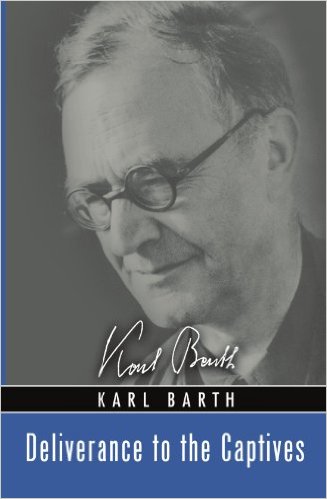
- Barth sermons, especially Deliverance to the Captives—his prison sermons from the 1950s.
- Barth’s Conversations. Currently, these are only in German in Barth’s collected works. They are called Gespräche (Conversations) and are in 3 volumes: 1957-1962; 1963; and 1964-1968. A group of translators (of which I am happy to say I have been a part) at the Center for Barth Studies has worked on translating these volumes into English since 2008. I must say that one gets the best of Barth’s thinking in these volumes, but in the language of a conversation—either with other theologians in large groups or with media figures who interview him. The first of these volumes (1957-1962) is almost entirely done and at the copy editor for final proofing. It should be available, perhaps within a year.
Of course, hearty souls could always jump into to the Church Dogmatics I/1… but that is not for the faint of heart!




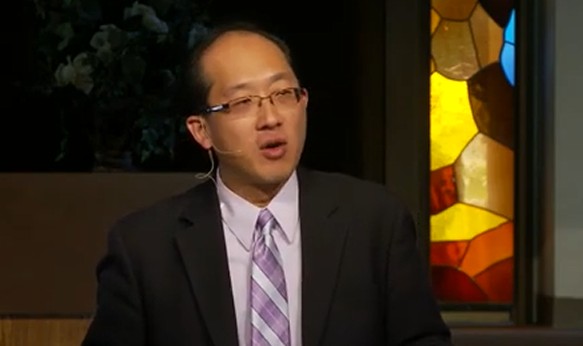




Cross on Barth’s thoughts about Pentecostalism “wasn’t all that much in favor of emotionalism for the sake of emotionalism, but that he liked the life that such people seemed to bring to the church.”