Called to Suffering, Partakers of Joy: An Interview with Ajith Fernando

Does the church need a doctrine of suffering?
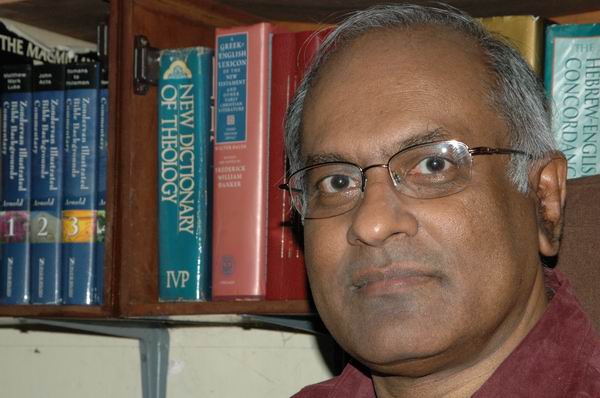
The Pneuma Review had an opportunity to speak with Ajith Fernando, the national director of Youth For Christ in Sri Lanka, about his recent book The Call to Joy and Pain. This book has received the 2008 Book Award from Christianity Today in the church and pastoral leadership category. We believe that you will likewise recognize the biblically-centered wisdom of Brother Fernando as he talks with us about the paradox of God’s provision and the call to endure hardship for the sake of Jesus and his story.


Read the review by Thomas Doyle and Rebecca Skaggs
Pneuma Review: Please tell us a little about yourself and why you wrote The Call to Joy and Pain.
Ajith Fernando: I live in a country that has faced great tragedy for the past 25 years or so. We have an ongoing war that has claimed at least 70,000 lives, a revolution that claimed thousands more young people, and then the tsunami which took about 40,000 lives. Many, many people have left Sri Lanka, especially because of the welfare of their children. But my wife and I have been convinced that we are called to live and die here. We had to develop reasons for why we are staying on, especially reasons that made it good for our children to stay. This made me think a lot about how Christians respond to suffering.
But even more significantly, I came to the conclusion some years ago that joy is one of the most important features of Christianity. Coming as the second fruit of the Spirit it meant that the Bible teaches that holy people are happy people. My wife and I were convinced that, amidst all the suffering in Sri Lanka, the most valuable heritage we can give our two children was a home filled with the joy of the Lord to which they can come after facing the rigors of life in a hostile world.
Yet I know so many unhappy Christians. These are good people who have sought to obey God while others compromised and disobeyed. But they seem to suffer from a deep disappointment with the way life has treated them. I have grappled with this a lot and still grapple with it—pleading with God to help me to introduce these people to the joy of the Lord which is our strength amidst suffering.
These experiences and struggles convinced me that I must write this book. Because the truths in the Bible do not apply only to countries like Sri Lanka but all over the world, even in relatively peaceful and affluent countries. Yet soon in my study, I made the amazing discovery that the Bible almost never talks about suffering without talking about the rewards of it. And I also found that often the reward the Bible speaks of is joy. Therefore I decided I will not write on suffering without also writing about the joy which accompanies it and makes it bearable.
Pneuma Review: You say that the church has a blind spot about suffering. Why do we need a theology of suffering?
What if we knew that this cross is going to reap something wonderful, and that God has not abandoned us, and that the most valuable things in our life are still intact? Then we would realize that the suffering is not a big deal. History shows us that some of the most glorious blessings of God were preceded by suffering which opened the door to the blessing. This is most vividly shown in the death of Christ where the greatest tragedy in history became the greatest triumph. No wonder the first Christians meditated on how God’s sovereignty was expressed through the death of Christ when they faced the first serious opposition to Christianity (Acts 4:27-28).
Pneuma Review: What would you say to a church leader that believes that it is not God’s will for Christians to suffer?
Pneuma Review: If true happiness is a life well-lived, how does understanding the place of joy and pain help us to live better lives?
Ajith Fernando: Joy is one of the great incentives to holiness. It is such a wonderful treasure that we will not allow anything to take it away. We know that unholiness drives away joy, so joy becomes a motive for us to pursue holiness.
Pneuma Review: In The Call to Joy and Pain, you spend a good deal of time talking about servanthood and discipleship. Why include meditations on this subject in a book about suffering and joy?
Pneuma Review: What encouragement can you give to the church leader that is struggling with the paradox of God’s promise to provide for every need and yet is experiencing hardship and pain all around?
Ajith Fernando: I suppose the first thing I would say is: “Don’t give up. Cling to the Word. God promises that he will turn it to good—just cling to that even in the darkest night. It will turn out for good—God is a god who keeps his promises!”
PR
More resources:
Ajith Fernando is featured in “God of Joy, God of Pain” a Day of Discovery DVD, available from RBC Ministries at www.dod.org.
Read the review: Ajith Fernando, The Call to Joy and Pain: Embracing Suffering in Your Ministry (Wheaton: Crossway, 2007).