
Biblical Imagery: The Metaphorical Symbols of the Holy Spirit

Christian theology should always be concerned to speak about God on the basis of God’s self-communication in Christ Jesus and the Holy Spirit. God comes to us in Christ Jesus through the power and personal presence of the Holy Spirit. God exists in differentiated personhood. Thus relationality is an essential attribute of God’s very being—a loving relational community. God is Father, Son and Holy Spirit. Thus, God is Spirit and has a Spirit.
 This essay will examine some of the more prominent biblical imagery associated with the incorporeal and invisible Holy Spirit. The biblical imagery employed is to be understood from a metaphorical symbolic perspective. These metaphorical symbols are not simple flat literal empirical descriptions of the Spirit but are powerful metaphorical symbols, which open up the mysterious and hidden work of the Spirit to us. From this perspective, these symbols help us apprehend and experience the invisible and ontological otherness of God
The biblical images of the Holy Spirit are tangible means that convey the character and activity of the Holy Spirit to us. These images enable us to experientially know the personal presence and power of the invisible and incorporeal Living God. These scriptural symbols testify to the ways in which the people of God have experienced the Holy Spirit throughout history. The invisible Spirit communicates to us by means of our human senses. We hear and feel the Spirit of God, just as they did! God then condescends to us through human avenues so that we can experience God. The symbols provide us with analogies so that we can understand the working of God. This is a redemptive knowledge of God. It is God who reveals Himself to us.
The biblical symbols enable us to relationally and experientially understand the mysterious work of the Spirit. The metaphorical symbols convey the presence of the Spirit in such a way as those who encounter the symbol experience the reality of the Spirit. The Lord has chosen these particular symbols as a way for us to experientially recognize the presence of God in our lives.
Scripture, then, provides us with an authoritative narrative to validate our experiences. If our experience does not line up with Scripture then we need to prayerfully reconsider the authenticity of our experience. The Spirit who breathed upon the writers of the Bible is still breathing upon the people of God. We should expect God to encounter us and even more so as we the people of God long for God’s Spirit to be poured out afresh upon us!
During the Christmas season we celebrate the coming of Emmanuel, God with us. We celebrate the incarnation and birth of the Messiah, Jesus Christ who is the Savior of the world (John 4). Jesus is the Savior and our Savior. In the mysterious moment of Jesus conception in the womb of Mary, God the Son took upon himself human nature. This was a work of the Holy Spirit (Luke 1). The Son of God became human in order to reveal God to us and redeem us back to God. Jesus mediates the presence of God because he is God. The incarnation, ministry, death and resurrection are central revelatory activities of God to us. We see the Father as we gaze into the eyes of Jesus. In turn we see the Son in the eyes of the Father. We receive the promises of God because of the work of Jesus, who is God in the flesh. Jesus saves, sanctifies, heals, delivers, and Spirit baptizes us as we await his soon coming return. We know the joy of salvation through the ministry of the Son and the Holy Spirit. Salvation is a personal relationship with God who is Father, Son and Holy Spirit. Often overlooked is the important ministry of God the Holy Spirit.
We will begin our biblical investigation of the images of the Holy Spirit with the Gospels. These symbols are also prominent throughout the Bible. The following biblical symbols of the Holy Spirit are connected to the ministry of Jesus. We begin here because Jesus promised that the Holy Spirit would continue to work through the ministry of the church. Thus, the church continues the ministry of Jesus through the presence of the Holy Spirit.
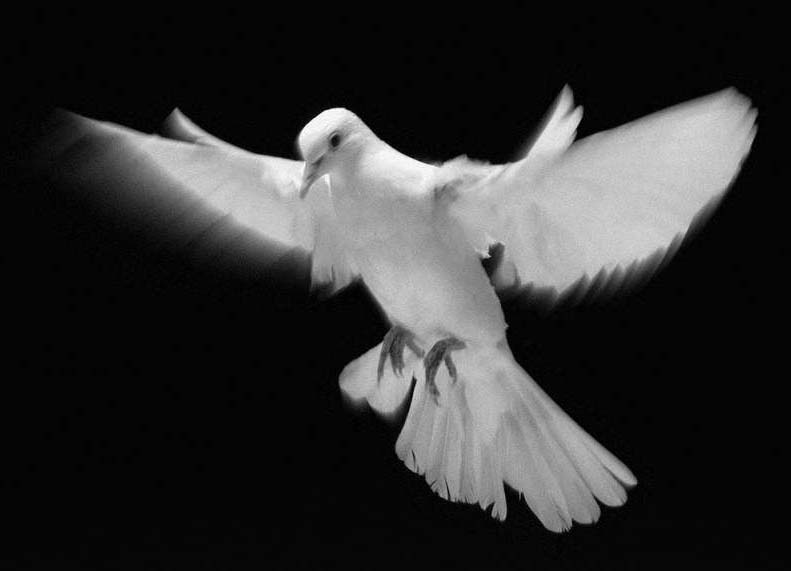
In the Gospel of Mark we read, “Jesus was coming up out of the water, he saw heaven being torn open and the Spirit descending on him like a dove” (Mark 1:10, see also Matthew 3:16, Luke 3:21 and John 1:32). This is the first visible ‘appearance’ of the Holy Spirit in Mark’s Gospel. John the Baptist stated that the descending of the Holy Spirit uponJesus was the sign that Jesus was the promised Messiah, the Son of God. Subsequent to yet inseparable from his water baptism, Jesus experienced his Spirit baptism. John also said that Jesus would baptize his followers with the Holy Spirit (see John 1:32-34). Why? Because the Spirit not only descended upon Jesus but also remained upon Jesus. The Holy Spirit was without measure upon Jesus. As a result, Jesus is the one who baptizes us in the Holy Spirit.
The imagery of the dove also reminds us of the Genesis creation narrative. Genesis 1:2 states that “the earth was formless and empty, darkness was over the surface of the deep, and the Spirit of God was hovering over the waters.” The hovering of the Spirit of God over the waters suggests that the Holy Spirit was also participating in the creation and formation of the universe. The dove symbolizes the dawning of the redemption of fallen creation through the ministry of Jesus. Jesus’ messianic ministry brings the inauguration of a new age. The kingdom of God has broken into the world and God is redeeming his creation, especially human beings.
John the Baptist stated that he baptizes with water only, but the Messiah will baptize his followers with the Holy Spirit and fire (Matthew 3:11 and Luke 3:16). For God’s people, fire signifies the purging and protecting presence of the Spirit. No doubt, fire is a reference of the transforming energy of the Holy Spirit to bring judgment and redemption. God is redeeming and reforming his people and desires a holy people filled with the Holy Spirit. For the ungodly, fire symbolizes God’s judgment. “Now listen, you rich people, weep and wail because of the misery that is coming upon you. Your wealth has rotted, and moths have eaten your clothes. Your gold and silver are corroded. Their corrosion will testify against you and eat your flesh like fire. You have hoarded wealth in the last days” (James 5:1-3). In the Old Testament we frequently read of fire being associated with the manifested wrath of God. Even the New Testament affirms this frightful imagery of eschatological judgment, especially in regards to the final destination of the Devil and the ungodly. They are cast into the eternal lake of fire. On the one hand fire symbolizes painful judgment, yet on the other hand, fire also symbolizes God’s redemptive presence. With this in mind, fire represents the transforming energy of the Holy Spirit actions.

The association of the Spirit of God with fire runs throughout the Bible. Fire is the most common symbol of the Holy Spirit found in Scripture, and it is a regular characteristic of theophanies in the Bible. Fire is an appropriate sign of God’s presence.
 Often in the OT we read that God manifests his presence in the form of a cloud. The cloud appears with Moses on Mount Sinai, at the tent of meeting, during Israel’s wandering in the wilderness, and with Solomon’s dedication of the temple. The cloud is the Shekinah glory of God.
The cloud imagery symbolizes both the immanence of God (God is presently working everywhere) and the transcendence of God. God is wholly other. That is, God is not of this world. God is separate from and distinct from all of creation. There is none or nothing like our God. The cloud obscures our vision of God; God is transcendent. Yet it simultaneously illuminates our vision of God. God is present; God is in our midst (immanence). The cloud symbolizes the living, saving presence of God, while simultaneously veiling the transcendence of God’s glory.
In the New Testament, The Holy Spirit is symbolized as a cloud, especially in relationship to Jesus. The Holy Spirit, like a cloud, “will overshadow” Mary and she will conceive and give birth to the Messiah, the Son of God (Luke 1:35). On the mountain, Jesus was transfigured before Peter, James and John. While on the mountain, a cloud came and enveloped them. Peter, James and John were terrified as they entered the cloud. Then from the cloud came a voice saying, “This is my Son, whom I love; with him I am well pleased. Listen to him!” After Jesus death and resurrection, he ascended up to heaven by a cloud (Acts 1:9). The imagery of the cloud is even used in reference to Jesus return, “they will see the Son of Man coming in a cloud with power and great glory” (Luke 21:7).
We too should experience the presence of the Holy Spirit like a cloud. Early Pentecostals testified to the heavy and mysterious presence of God during the worship services. They referred to this as the Shekinah Glory of God. During these special times of worship God performed signs and wonders through his people. Cries of repentance were heard as people were getting right with God, for God had illuminated their sins. Tears of compassionate longing streamed down the faces of those longing for more of God, more of God’s presence and power. The tears only added to the already mystifying experience of God veiling God-self. Like Moses, we too realize that to see God is to die. However, God’s glory is manifested and we fall down before him, weeping and laughing, for the Spirit of Christ has come among us.
The presence of God becomes heavy at times, almost smothering like a cloud. The presence of the Spirit brings revelation, guidance and transformation. God desires to be among his people. The special cloud-like experiences affirm that God is present among the people but also that God’s presence is otherworldly. For Jesus is coming again, upon the clouds of glory.
Jesus says that he drives out demons by “the finger of God.” This is a sign that the Kingdom of God has come (Luke 11:20). Jesus’ reference to biblical imagery of the finger of God conveys the notion of God’s power and authority. The phrase “finger of God” is used in Scripture to indicate God’s authority (Exodus 31:18); God’s powerful signature (Exodus 8:19); God’s personal involvement with his creation (Psalm 8:3); and the Spirit’s ability to reveal the presence and purpose of God. The Holy Spirit is the finger of God which signifies the manifested power of God to reveal, to create, to judge and to govern. God’s powerful ability to fulfill his purpose for all of creation is signified through the imagery of the finger of God.
We should expect to experience God’s personal touch upon our lives. The Spirit does reveal the will of God to us. The Spirit, as symbolized as the finger of God, emphasizes God’s authoritative claim upon our life and his creation. The Spirit is intimately involved in our lives. “For you created my inmost being; you knit me together in my mother’s womb. I praise you because I am fearfully and wonderfully made; your works are wonderful, I know that full well” (Psalm 139:13-14).
— Ezekiel 47:9
 Ezekiel saw a vision of the future temple of God where the water of life was flowing like a river. John also saw the vision of the river of life. “Then the angel showed me the river of the water of life, as clear as crystal, flowing from the throne of God and of the Lamb down the middle of the great street of the city. On each side of the river stood the tree of life, bearing twelve crops of fruit, yielding its fruit every month. And the leaves of the tree are for the healing of the nations. No longer will there be any curse. The throne of God and of the Lamb will be in the city, and his servants will serve him” (Revelation 22:1-3). With the new heaven and new earth comes the fulfillment of the biblical prophecy concerning the restoration of creation. The new city fills the earth and the Spirit is the source of the new life. For, “Where the river flows everything will live” (Ezekiel 47:9).
Water imagery is often found in the lyrics of our songs. We sing about the early and latter rain, about moving deeper into the river, about the showers of God raining down upon us. Pentecostal identity has been shaped by the water imagery of the early and latter rain (Joel 2:23), and this water imagery continues to spill out in our contemporary songs of praise. The early and latter rain was understood to be the great outpouring of the Holy Spirit. “‘In the last days, God says, I will pour out my Spirit on all people. Your sons and daughters will prophesy, your young men will see visions, your old men will dream dreams. Even on my servants, both men and women, I will pour out my Spirit in those days, and they will prophesy” (Acts 2:17-18).
We should expect to experience the pouring out of the Holy Spirit upon our lives. We find life and refreshment in the Spirit of God. I pray that the Lord would send the latter rains, because we are living in the last days. How we need a fresh outpouring of the Holy Spirit to soften our hearts. We need the rain to water the seed of life implanted by the Word so that the fruit of the Spirit would grow. We must allow the living water to overflow out of our lives in order to share it with others. This will only happen when we are drenched in the Spirit—we need the baptism in the Holy Spirit.
In conclusion, the images addressed come out of the Gospels and are used throughout the Sacred Scriptures. There are other important symbolic images of the Holy Spirit found in Scripture. The symbols of the Holy Spirit provide us with experiential knowledge of the character and conduct of God. They speak of God’s power, purpose and presence. They also engage our imagination and encourage us to anticipate and discern the purpose of God for our lives. We should expect to have experiences of God like those narrated in the Scripture. The biblical symbols offer us ways in which to validate the authenticity of our encounters with the living Spirit of God. Come Holy Spirit, and bring new life into our churches, to our families, and to all of God’s creation!
PR
Special recognition goes to Leah Pannell for her close reading and comments on this essay.
Selected Bibliography
Arrington, French L. Encountering the Holy Spirit: Paths of Christian Growth and Service (Cleveland, Tennessee: Pathway Press, 2003).
Horton, Stanley M. What The Bible Says About The Holy Spirit (Springfield Missouri: Gospel Publishing House, 2005).
Kärkkäinen, Veli-Matti. Pneumatology: The Holy Spirit in Ecumenical, International, and Contextual Perspectives (Grand Rapids, Michigan: Baker Academic, 2002).
Pinnock, Clark H. Flame of Love: A Theology of the Holy Spirit (Downers Grove, Illinois: InterVarsity Press, 1996).
Ryken, Leland, James C. Wilhoit, Tremper Longman III (gen. eds.). Dictionary of Biblical Imagery: An Encyclopedic Exploration of Images, Symbols, Motifs, Metaphors, Figures of Speech and Literary patterns of the Bible (Downers Grove, Illinois: InterVarsity Press, 1998).
Shults, F. LeRon and Andrea Hollingsworth. The Holy Spirit (Grand Rapids, Michigan: Wm. B. Eerdmans Publishing Company, 2008).







EE writes: “Great Pentecost Sunday sermon starter material: biblically and intellectually sound. Thank you, Dr. Archer.”