Discovering the Reality of God in Word and Spirit: an interview with R. T. Kendall


Dr. R. T. Kendall has been preaching for over sixty years. He has also personally experienced the power of the Holy Spirit. For twenty-five years he served as the pastor of Westminster Chapel in London. He is the author of many books and now ministers internationally. He is a strong advocate for bringing together in the church the exposition of the Word and the power of the Spirit.
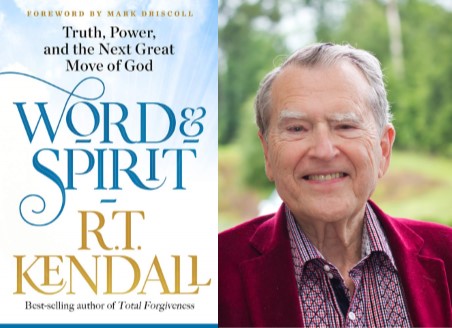
An updated version of his book, Word and Spirit: Truth, Power, and the Next Great Move of God was released in October 2019.
PneumaReview.com: In Word & Spirit you have written about a great divorce in the church. Please tell our readers what you mean by that.
R. T. Kendall: I call it a silent divorce because nobody knows precisely when it occurred nor has it been officially announced – except that I have been saying it for nearly thirty years. That said, it is obvious that the evangelical wing of the church has been divided into two emphases – those who stress the Word – sound doctrine, historical Protestant theology and expository preaching, and those whose emphasis has been the gifts of the Spirit, signs and wonders and the need to be as the church was in the book of Acts. Both are exactly right. But it seems that nearly wherever I go in the world it is either one or the other. In the book of Acts they had both. But to find a church where both are truly carried out is exceedingly rare.
PneumaReview.com: What are some of the key factors that have contributed to this divorce?
R. T. Kendall: I don’t know for sure, but possibly because those who have assumed that signs and wonders ceased way back in the early church have espoused cessationism and have turned it into a dogma. If you believe in the gifts of the Spirit you are not very welcome in some churches. They are suspicious of those who uphold the possibility of signs and wonders today. I will say that this is not everywhere. In England the Charismatic Movement is mainstream; in America it is often regarded as the lunatic fringe. Cessationism has helped polarize these two movements. There should not be a divide, but there is. The word churches think they believe in the Holy Spirit because they are Trinitarian. The truth is, they believe in God the Father, God the Son and God the Holy Bible. Many are fearful of the Holy Spirit. At the same time many (thankfully not all) have little or no deep theology. For example, a robust view of the sovereignty of God is largely absent.
PneumaReview.com: You have said that there is a lot of biblical illiteracy in the church, even among Evangelical and Charismatic Christians. What are some of the main reasons for this?
PneumaReview.com: Please point out a few practical steps church leaders can take in order to address this deficiency?
PneumaReview.com: Why do some Charismatics not place much value on Bible study?
 PneumaReview.com: What counsel would you give to a Charismatic who does not engage in serious Bible study?
R. T. Kendall: I would urge him or her to begin now to have a Bible reading plan that takes them through the Bible in a year. If they cannot find a church that does not emphasize this, find a Bible study on line that is sound, solid, scriptural and Spirit honoring.
PneumaReview.com: The gifts and power of the Spirit are mentioned in the Bible yet some Evangelicals are not open to them. Why is that?
R. T. Kendall: The fear of man is a snare. The teaching of cessationsism (the notion that the gifts of the Spirit ceased in the early church) is a comfortable and convenient way to avoid teaching them, not to mention seeking them. Earnestly desire the greater gifts, said Paul. But am I to believe that does not apply to me? Whatever is a new Christian to think when he or she has been converted and told to read the Bible – and then to learn that a great part of it is irrelevant today? Take a scissors and cut out what is not relevant today and you have a Bible in shreds. Jesus Christ is the same yesterday, today and forever; so too is the Holy Spirit the same yesterday and today and forever!
 PneumaReview.com: What would you say to a non-Charismatic in order to lead them toward embracing the contemporary charismatic work of the Spirit?
R. T. Kendall: Pray without all your heart to have a close relationship with the Holy Spirit. Then see what happens! Many have done this and came into the gifts of the Spirit not expecting this! It comes down to one thing: how close do you want to be to God? I myself came into these truths not seeking for the gifts but seeking more of God! And the consequence of this was discovering how real God is and how willing He is to be real to you.
PneumaReview.com: Are there things that can be done to help Word people and Spirit people stop talking past one another?
PneumaReview.com: What will be the fruit of a revival in which the Word and Spirit emphases come together equally?
PR