
Randy Clark: Stories of Divine Healing, reviewed by J. D. King


Rescuing Our Pentecostal Heritage
Randy Clark, Stories of Divine Healing: Supernatural Testimonies that Ignite Faith for Your Healing (NMG/Destiny Image, 2018), 288 pages.
While attending the Society For Pentecostal Studies meeting in Cleveland, Tennessee in early 2018, I had a troubling conversation about the viability of divine healing. A young academic told me he accepted the possibility of marvelous works but insisted that the occurrences were rare. He reiterated, “I have never witnessed a miraculous work nor am I acquainted with anyone who has.” He suggested that recent healing claims were mostly outlandish.
His statements dumbfounded me. This man carried Pentecostal credentials but sounded like a skeptic from a European university. Though rooted in the Spirit-filled tradition, he was suspicious of any display of the supernatural.
As incredulity flowed from his mouth, it reminded me of the assertions of David Hume. Centuries ago, this philosopher argued that miracles are chiefly observed among the pagans. “If a civilized people has ever given admission to any of them that people will be found to have received them from ignorant and barbarous ancestors.”[1]
Many are questioning what used to be widely accepted. Whether Spirit-filled or not,[4] miracles have “aroused unease of intellectual conflict for Christians formed by the enlightenment of the West.”[5]
Credible Accounts
Fortunately, publications are being released that document healing and miraculous encounters. Most of these works were not written with the scholarly community in mind, but they offer a credible analysis of the extraordinary works of God.
Stories of Divine Healing
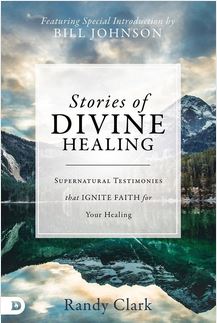 One notable example is the latest release from Randy Clark,[8] Stories of Divine Healing: Supernatural Testimonies that Ignite Faith for Your Healing. Clark, a gifted missionary-evangelist, culled compelling testimonies from his healing schools and international travels.
Although Clark’s collection is not made up of detailed case studies, the reports are cogently organized around “every physical part of the human body.”[9] The compilation references healings in the circulatory, digestive, endocrine, immune, integumentary, muscular, nervous, reproductive, respiratory, skeletal, and urinary systems.
The scope of the testimonies varies throughout this 288-page work. Most of the narratives originate from mission team members who traveled with Clark—physicians, pastors, blue-collar workers, and students. Clark acknowledges, “Some testimonies sound rather simple and straightforward while others confront us with the reality that God indeed does perform creative miracles.”[10]
We have “no tools to measure God, nor can we assess the authenticity of miraculous healings.”[11] Some analysts will find the testimonies in Clark’s book more credible than others. Regardless of one’s position, stories like this deserve consideration.
Again, I must reiterate that it is advantageous for the academic community to peruse this collection of testimonies. Consider the questions and practical implications that come up when one reads the following account:
I saw a small cluster of guys pointing to their friend, who tentatively raised his hand. I went to check things out and saw a man with part of his back missing on the left side. I couldn’t tell if it was actually missing or deformed. On the left side just about at his waistline, there was this big indentation, which was so pronounced that I could put my hand partway into it. We were meeting in a soccer field at night, and there was very little light. I could barely see his back, only feel it. He was small, perhaps one hundred twenty pounds, but the muscles in his back were as hard as a rock, as if he might be a laborer. I called someone else on the team to come over. We prayed for a healing and a creative miracle as we weren’t sure which we needed. Very soon, his back began “moving,” but not as if he was flexing his muscles. Although the man showed virtually no emotional reaction, which is very common among the Makua people, all three of us who were praying were sure that his back was “filling in.” The place where the indentation had been felt much more normal. We knew we had just witnessed a wondrous miracle, and we were pretty excited. [12]
Clark, along with other twenty-first century renewalists, believes that healing testimonies spark exploration and discovery. Astounding stories encourage people to press into the mystery and wonder of God. Clark reminds us, “Every testimony brings fresh revelation of Jehovah-Rapha—the Lord who heals you.“[13]
Reminded of Our Heritage
Leave it to a former Baptist[14] to remind us what it means to live a Spirit-filled life. We are in a crisis when Pentecostals are more like David Hume than William Seymour.[15] Randy Clark’s Stories of Divine Healing might be precisely what this movement needs. The stories provide a necessary corrective for academics entangled in textual and philosophical matters. In many ways, Clark’s marvelous book brings us back to where Pentecostalism was a century ago.
We must never forget that healing is what enabled Spirit-filled believers to first gain a foothold in the world.[16] God forbid if we are becoming like the denominations our forefathers felt compelled to leave.
Inexplicable healing stories are one of the fascinating ways that God is re-centering twenty-first century Pentecostalism.
Reviewed by J.D. King
Publisher’s page: https://www.norimediagroup.com/products/stories-of-divine-healing-supernatural-testimonies-that-ignite-faith-for-your-healing
Notes
[1] David Hume, Of Miracles (La Salle, Illinois: Open Court Classic, 1985), 37. This influential work was originally published in 1748.
[2] Margaret Poloma. “Charisma and Structure in the Assemblies of God: Revisiting Odea’s Five Dilemmas,” in Church Identity and Change: Theology and Denominational Structures in Unsettled Times, edited by David A. Roozen and James R. Nieman (Grand Rapids: Eerdmans, 2005), 62.
[3] Keith Warrington, “The Teaching and Praxis Concerning Supernatural Healing of British Pentecostals, of John Wimber and Kenneth Hagin in the Light of an Analysis of the Healing Ministry of Jesus as Recorded in the Gospels”(master’s thesis, King’s College, 1999), 69.
[4] Bill Johnson, of Bethel Church in Redding, California, was ordained with the Assemblies of God until 2006. He writes, “My background emphasizes the power aspect of the gospel. Even though I saw very little of it growing up as it pertains to miracles of healing, it was still there in our theology.” Bill Johnson, The Power That Changes the World: Creating Eternal Impact in the Here and Now (Bloomington, Minnesota: Baker Publishing, 2015), 215.
[5] Diarmaid MacCulloch, Christianity: The First Three Thousand Years (New York: Viking, 2009), 90. D. A. Carson writes, “The West is so rationalistic, so enslaved by the prevailing scientism, that it leaves no place for the power of God. We have tended to restrict God to the other-worldly and leave normal life to the domain of science, to the power of natural processes with their tight circles of cause and effect. This bias needs to be broken down.” D.A. Carson, “The Purpose of Signs and Wonders in the New Testament,” in Power Religion: The Selling Out of the Evangelical Church?, ed. Michael Scott Horton (Chicago: Moody, 1992), 114.
[6] Cathy Gunther Brown, Testing Prayer: Science and Healing (Cambridge, Massachusetts: Harvard University Press, 2012). Also see Cathy Gunther Brown, editor, Global Pentecostal and Charismatic Healing (New York: Oxford University Press, 2011).
[7] Craig S. Keener, Miracles: The Credibility of the New Testament Accounts, 2 Volumes (Grand Rapids, Michigan: Baker Academic, 2011). Also see Nancy Hardesty, The Faith Cure: Divine Healing in the Holiness and Pentecostal Movements (Peabody, Massachusetts: Hendrickson Publishers, 2003). Amanda Porterfield, Healing in the History of Christianity (New York: Oxford University Press, 2005) [Editor’s note: Read the review by Roscoe Barnes III]. Heather D. Curtis, Faith in the Great Physician: Suffering and Divine Healing in American Culture 1860-1900 (Baltimore: John Hopkins University, 2007). James W. Opp, Lord for the Body: Religion, Medicine, and Protestant Faith Healing in Canada, 1880-1930 (Montreal: McGill-Queens University Press, 2005). Kimberly Ervin Alexander, Pentecostal Healing: Models In Theology and Practice (Dorset, United Kingdom: Deo Publishing, 2006). Joseph W. Williams, Spirit Cure: A History of Pentecostal Healing (New York: Oxford University Press, 2013). James Robinson, Divine Healing: The Formative Years, 1830-1890: Theological Roots in the Transatlantic World (Eugene, Oregon: Pickwick Publications, 2011). James Robinson, Divine Healing: The Holiness Pentecostal Transition Years, 1890-1906 (Eugene, Oregon: Pickwick Publications, 2013). James Robinson, Divine Healing: The Years of Expansion, 1906-1930 – Theological Variation in The Transatlantic World (Eugene, Oregon: Pickwick Publications, 2014). Jan-Olav Henriksen, Karl Olav Sandnes, Jesus as Healer: A Gospel for the Body (Grand Rapids, Michigan: William B. Eerdmans Publishing Company, 2016), and J.D. King, Regeneration: A Complete History of Healing in the Christian Church, 3 volumes (Lees Summit, MO: Christos 64081).
[8] Randy Clark (1952 – ) was a former Baptist pastor and leader in the Vineyard Movement. He sparked the controversial Toronto Blessing in 1994. Clark ultimately started Global Awakening, a missions organization that trains people to operate in the gifts of the Spirit.
[9] Randy Clark, Stories of Divine Healing: Supernatural Testimonies that Ignite Faith for Your Healing (Shippensburg, Pennsylvania: Destiny Image, 2018), 8.
[10]. Ibid.
[11]. Kenneth I. Pargamem, “The Meaning of Spiritual Transformation,’’ in Spiritual Transformation and Healing: Anthropological, Theological, Neuroscientific, and Clinical Perspectives, ed. Joan Koss-Chioino and Phillip Hefner (Lanham, Maryland: Rowman Altamira, 2006), 14. “Humanity consists of more than mere fluids, tissue, and bone. So, aspects of health and well-being are outside the diagnostic tools of biomedicine. No matter how much one insists on the scientific method, spiritual realities can never be fully dissected.” J.D. King, Regeneration: A Complete History of Healing in the Christian Church (Lee’s Summit, MO: Christos, 2017), 8-9.
[12] Randy Clark, Stories of Divine Healing: Supernatural Testimonies that Ignite Faith for Your Healing (Shippensburg, Pennsylvania: Destiny Image, 2018), 141.
[13] Ibid.
[14] Randy Clark was originally an American Baptist pastor. John Wimber actually refers to his church in Power Evangelism (San Francisco: Harper Collins, 1986).
[15] William Seymour once declared, “Sickness and disease are destroyed through the precious atonement of Jesus. O how we ought to honor the stripes of Jesus, for ‘with his stripes we are healed’ … Not only is the atonement for the sanctification of our souls, but also for the sanctification of our bodies from inherited disease … We who are the messengers of this precious atonement ought to preach all of it: justification, sanctification, healing, the baptism with the Holy Spirit, and signs following.” William Seymour, Apostolic Faith 1:1 (September 1906), 2.
[16] For many years, there was “an emphasis on healing in many Pentecostal circles, which makes it almost a second Pentecostal distinctive.” Frederick Dale Brunner, A Theology of the Holy Spirit: The Pentecostal Experience and the New Testament Witness (Grand Rapids, Michigan: Eerdmans, 1970), 141.