
Evangelicalism is in Such a Sad State that we have to Add Caveats to Talk about Miracles

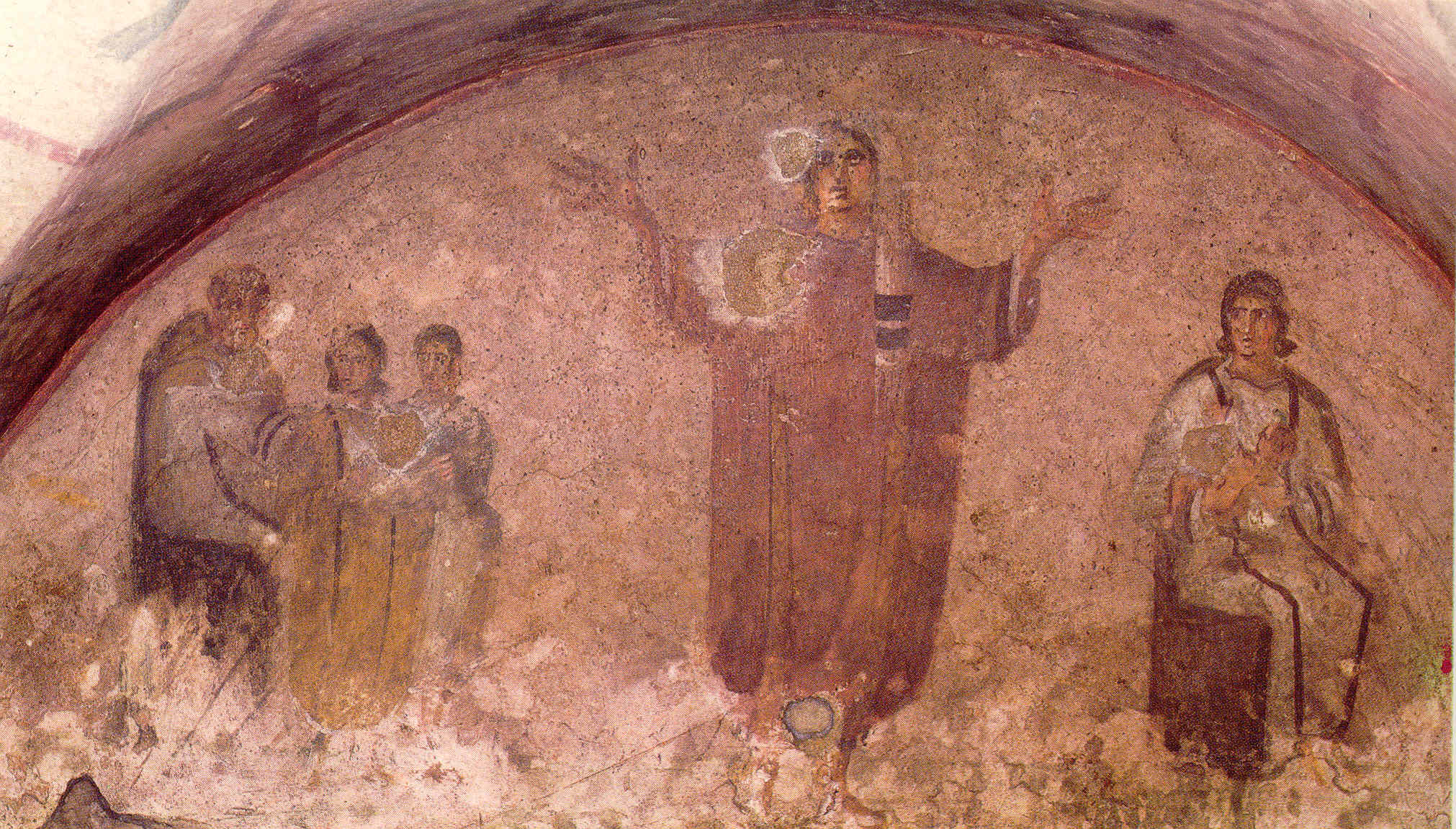 Evangelicals cannot make up their mind about miracles. They typically affirm the “supernatural in theory but deny it in practice.”[1] Although charismata’s scriptural precedent is acknowledged, many are persuaded that it “is not the essence of religion.”[2]
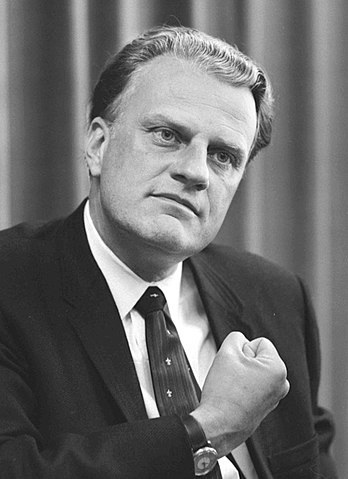
Billy Graham, Evangelicalism’s chief architect, declared, “As we approach the end of the age … I believe we will see a dramatic recurrence of signs and wonders which will demonstrate the power of God to a skeptical world.”[3] Nevertheless, “there is also a need for a word of caution: There are many frauds and charlatans … one must have spiritual discernment.”[4]
I find Graham and like-minded Evangelicals paradoxical.[5] This conundrum shows up in Christianity Today, the movement’s flagship periodical. While conciliatory,[6] this magazine reiterates that spiritual gifts are outside the norm.
An example is demonstrated in Andrew Wilson’s recent article, “Whatever Happened to Gifts of Language, Prophecy, and Healing? Let’s Ask The Early Church Fathers,” Christianity Today” (April 20, 2018).
Wilson contends that in Evangelicalism, historicity should be valued alongside orthodoxy. He asserts that a truncated theology is often a result of beginning “history in the wrong place.” When Evangelicals take “a longer view… tracing our roots back to the early church fathers,” it leads us to “surprises … Angels and demons … or, more surprisingly, miraculous gifts.”
 Drawing from a sampling of Church Fathers,[7] Wilson contends that healing, prophecy, and exorcism were evident five centuries across a vast geographical span. He selectively argues for the charismata.
Yet, in Wilson’s essay, telltale Evangelical caveats emerge. Reluctant to advance beyond the fifth century,[8] he suggests that there is “general agreement” that “languages, prophecy, and healing disappeared early in the church’s history.”[9] Sadly, Wilson insinuates that miraculous gifts can be an “excuse for speculation, self-indulgence, sectarianism, and silliness.”
Evangelicals love to flirt with continuationism but often disavow it as soon as their Reformed ethos gets upended. Tragically, most will side with Wilson, proposing that the charismata are “relatively unusual” (and the unusual cannot be normative).
In every era since Pentecost, God has been actively moving with His marvelous gifts. Rather than being mired in the doubts of modernity, Bible-believing Christians should steadfastly embrace the age of the Spirit. It is time to own the miraculous without caveats.
PR
Notes
[1]. Douglas Jacobsen, Thinking in the Spirit: Theologies of the Early Pentecostal Movement (Bloomington: Indiana University Press, 2003), 356.
[2]. Leonard Sweet, Health and Medicine in the Evangelical Tradition: “Not by Might nor Power” (Valley Forge, Pennsylvania: Trinity Press International, 1994), 151, 158.
[3]. Billy Graham, The Holy Spirit: Activating God’s Power in Your Life (Waco, Texas: Word Publishing, 1978), 166-167.
[4]. Ibid., 215.
[5]. Robert Bruce Mullin, Miracles and the Modern Religious Imagination (New Haven, Connecticut: Yale University Press, 1997), 83.
[6] A number of articles in Christianity Today conveyed a measure of openness to Spiritual gifts. Some include: Rodney Clapp, “Faith Healing: A Look at What’s Happening,” Christianity Today (December 16, 1983): 12-17. This is a cautious, but open, article on faith healing. Tim Stafford, “Testing The Wine from John Wimber’s Vineyard: California’s Latest Boom Church: Signs and Wonders Movement,” Christianity Today 11 (August 8, 1986): 17-22. Stafford objectively analyzes John Wimber and the Vineyard Movement. Various. “The Holy Spirit: God at Work,” Christianity Today 34:5 (March 19, 1990): 27-35. This is an extended interview with Charles Ryrie, J.I. Packer, Stuart Briscoe, Russell Spittler, and John Wimber on their understanding of healing and the gifts of the Spirit. Timothy Smith, “The Spirit’s Gifts: Then and Now,” Christianity Today 34:5 (March 19, 1990): 25-26. Smith, a history professor at John Hopkins University, explores gifts of the Spirit through the five-hundred-year span of the Protestant tradition. Tim Stafford, “Miracles in Mozambique: How Mama Heidi Reaches the Abandoned,” Christianity Today 56:5 (May 2012): 18-26. This was a feature article on Heidi and Roland Baker and their signs and wonders ministry in Mozambique, Africa. Andrew Wilson, “God Always Heals: Good News for Our Bodies – In This Life and The Next,” Christianity Today 58:9 (November 2014): 34. This article affirms the value of healing; suggesting that even if healing doesn’t occur at this time, it will be ultimately realized in the resurrection. Martyn Wendell Jones, “Kingdom Come In California?,” Christianity Today (May 2016): 30-37. Jones, the Presbyterian grandson of Martyn Lloyd-Jones, wrote a detailed reflection on the signs and wonders ministry at Bethel Church in Redding, California [Editor’s note: Read Larry Russi’s review].
[7] Wilson draws from Justin Martyr, Irenaeus of Lyon, Tertullian of Carthage, Basil the Great, Cyril of Jerusalem, and Augustine of Hippo.
[8] Perhaps Wilson is unwilling to extend his historical range because he is cognizant of an ethos that “troubled many of our Reformation ancestors.” Not going further helps him avoid a prophetic modality that sounds “like the Roman Catholic view of the papacy.” Also, notions of divine healing could avoid being “associated with practices like venerating the relics of saints.” Nevertheless, it is difficult to selectively drink from the well of Ante-Nicene Christianity and ignore everything else.
[9] It would be wrong to assert that there is now general agreement about the cessation of the Charismata. Viable works arguing for continuationism include: Jon Mark Ruthven, On the Cessation of the Charismata: The Protestant Polemic on Post-biblical Miracles (Tulsa: Spirit & Word Press, 2012) [Editor’s note: Read the review by William De Arteaga]. Craig Keener, Miracles: The Credibility of the New Testament Accounts (Grand Rapids: Baker, 2011) [Editor’s note: PneumaReview.com coverage of Miracles includes a review, an interview, extensive excerpts, and other features]. Stanley M. Burgess, The Holy Spirit: Ancient Christian Traditions (Peabody, Massachusetts: Hendrickson Publishing, 1984). Stanley M. Burgess, The Holy Spirit: Eastern Christian Traditions (Peabody, Massachusetts: Hendrickson Publishing, 1989). Stanley M. Burgess, The Holy Spirit: Medieval Roman Catholic and Reformation Traditions (Peabody, Massachusetts: Hendrickson Publishing, 1997). Jeff Oliver, Pentecost To The Present: Book One: Early Prophetic and Spiritual Gifts Movements (Newberry, Florida: Bridge-Logos Publishers, 2017). I also address this subject is my three-volume work. J.D. King, Regeneration: A Complete History of Healing in the Christian Church (Lees Summit: Christos, 2017).