Gordon Lynch: Remembering Child Migration

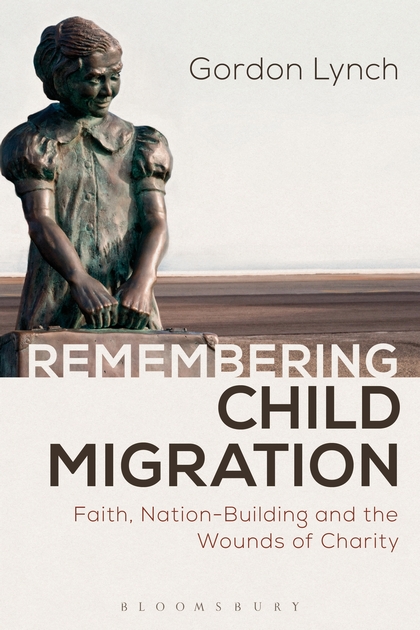
 Gordon Lynch, Remembering Child Migration: Faith, Nation-Building and the Wounds of Charity (New York: Bloomsbury Academic, 2016), 175 pages + index, ISBN 9781472591128.
Gordon Lynch is Michael Ramsey Professor of Modern Theology at the University of Kent. His current research concerns a detailed study of post-war British child migration schemes to Australia, which is an extension of this recent volume. The book consists of the rigorous facts, histories, methods, and rationales of children re-location programs that grew “significantly in the United Kingdom and the United States, where more than 300,000 children were re-located away from birth parents and home communities between 1851 and 1970.” These schemes, influenced and strengthened by the moral sentiments of their time, were perceived as a means to grant children “better future and making them better people,” in order to save them from poverty, parental ill-condition, or family breakdown. It is important to note that, to obtain the tickets for the “orphan trains,” the majority of these children had to experience disconnection from their birth parents, family members, and their root community. Christianity played a crucial part in advancing these schemes: the society was dependent on the moral inspiration of the churches and charities and, in many cases, the participating institutions minimized the hidden problematic aspects in order to promote humanitarian piety and moral certainty. What is more, “child migration was presented as an excellent opportunity for relocating children to new environments in which their faith could be nurtured and protected.” Lynch, throughout the book, lays out the findings of his research and constantly reminds the readers to see the “shadow-side of this humanitarian ethos” so that we do not repeat “their failing in different ways today.” In brief, in the process of remembering child migration, one should always acknowledge the gap between the “obligation of the giver” and the “rights of the receiver”—the disparity that can only be mended with the “sensitivity to the experiences of those believed to be its beneficiaries.”
The Bible reminds us, “Religion that is pure and undefiled before God, the Father, is this: to care for orphans and widows in their distress, and to keep oneself unstained by the world” (James 1:27 New Revised International Version). How are we to assess the religious schemes that separated families and created orphans systematically? Do we have the courage to bring to light the defiled and stained side of our humanitarian schemes? How should our churches and charities engage with the moral cultures of our society? This volume provides the framework in responding to these questions.
Reviewed by Yoon Ki Kim
Publisher’s page: https://www.bloomsbury.com/uk/remembering-child-migration-9781472591173/