
Evangelist of Pentecostalism: The Rufus Moseley Story
Church historian William De Arteaga introduces an important but often forgotten figure that God used to prepare many for the Charismatic Renewal.
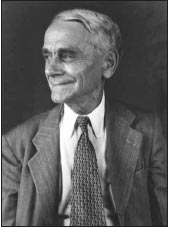
If there was no Rufus Moseley, there might not have been a Charismatic Renewal. Born in 1870 and died in 1954, J. Rufus Moseley was one of the most important, but largely forgotten evangelists for Pentecostalism. Without his ministry and influence, perhaps the Charismatic Renewal would not have occurred, or at least not in the 1960s-1970s.
Moseley brought Pentecost to the mainline churches indirectly, but decisively, by his work through several para-church organizations. Birthed in the 1930s, these organizations formed in reaction to the stultifying anti-supernaturalism and cessationism of mainline Protestantism. During the 1920s and 1930s, theological liberalism was at its height. The shift was so strong, so unrelenting that many Christians were even doubting the effectiveness of prayer.[1] That was the natural outcome of living and being taught in cessationist churches where no one saw a miraculous healing or supernatural event because no one prayed in faith for those things.
During this era of spiritual drought, four para-church organizations were paramount in upholding the Biblical understanding of prayer, the veracity of the Bible, and the present manifestations of the miraculous and healing prayer. They were, the Christian Ashram Movement of Eli Stanley Jones (1884–1973), Dr. Albert Day’s Disciplined Order of Christ (Methodist), the Rev. John Gaynor Bank’s Order of St. Luke (originally Episcopalian), and especially, the Camps Furthest Out (CFO), an interdenominational group founded by Professor Glenn Clark.[2]
Moseley added a Pentecostal dimension to these groups. His Pentecostalism was not based primarily on a study of classical Pentecostal writings that came out of the Azusa Street Revival, but on his own dramatic experience with the resurrected and glorified Jesus in 1910. It was a “mystical” encounter. Some Evangelicals are suspicious of the word, but all it means is a direct and intimately personal spiritual experience.[3] Moseley’s experience was very similar to that of the great 19th Century evangelist Charles Finney – it was a sudden, unexpected immersion and union with the Risen Lord. After Moseley’s encounter with Jesus he manifested the gifts and fruits of the Spirit to an unusual degree. He lived a life of anointed teaching, sacrificial love and generosity that impressed all who met him.
A life of preparation
J. Rufus Moseley was born on August 29, 1870 into a devoutly Christian farming family in the mountain town of Elkin, North Carolina. His father, a veteran of the Civil War, had a reputation for absolute integrity and kindness in all his dealings. Rufus recounted:
When he offered for sale, or in trade, a horse or a mule, he first told its faults to the full. When he took a load of watermelons to sell, he sought to have the larger ones at the bottom instead of the top.[4]
 Rufus was a good student, but his family could not afford to send him to secondary school, so he read his way through the secondary school curriculum. Through great sacrifice by his parents, Rufus was able to attend the first year of college – he missed a scholarship for that first year because his hand writing was terrible. Thereafter, his own brilliance allowed him to gain one scholarship after another. At Peabody College, he fell in love with the idealist philosophers. In philosophy, “idealist” means that one believes mind is superior to matter, not as in popular language, where “idealist” has a moral connotation. Moseley recalled, “Plato so gripped me that I completely forgot my body. For the first time in my life I was lost in pure intellectual delight.”[5]
But at Peabody he also became a born-again believer. In his second year, a visiting evangelist from Texas came to preach at a nearby church.
When the evangelist made the altar call it seemed that I stood in jeopardy if I did not respond. Some of my college teachers and many of my student friends were present. Their presence made it all the more difficult to take on the cross by acknowledging my need to yield to the Spirit and follow Jesus.[6]
The following night he returned and went to the altar again, this time for a prayer of total dedication to the Lord.
After graduating from Peabody, Moseley went on to graduate studies at the University of Chicago, Heidelberg in Germany, and finally to Harvard University. At Harvard he studied under William James while the renowned philosopher-psychologist was preparing the Varieties of Religious Experience. As with Glenn Clark, Professor James introduced Moseley to New Thought and Christian Science (both forms of radical idealism). In 1894, after his formal studies, he accepted a teaching position at Mercer College, a Baptist institution in Macon, Georgia. There he became a much beloved teacher.
But as he read the literature of Christian Science and New Thought his beliefs about spiritual healing came into conflict with the solidly cessationist Baptist doctrine at Mercer. As I have pointed out elsewhere, although Christian Science and New Thought had serious heretical elements, in their theology of healing they were much closer to the truth than “orthodox” denominations.[7]
All this came to a crisis of conscience. Moseley felt, just as his father who could not hide the smaller watermelons, that he could not hide his attraction to Christian Science from his Baptist brethren. He felt especially drawn to it because it was the first form of Christianity he had seen that offered demonstration for its doctrine in the form of real healings, and because it was an idealist based system[8]. He felt he had to resign. In a talk he gave years later Moseley recounted:
One of the most difficult ordeals that I ever faced was to go before the Board of Trustees of a Southern Baptist college [Mercer] and let them know that I was a big enough fool, in their estimation, to feel there might be something in Christian Science, and to resign my position and go see if there was. For I felt I can’t afford to bring this thing into the college until I know about it and I can’t know about it unless I find out (that is, enter into the movement and experiment with it). And if there is a ray of hope here (in Christian Science), what is conventional success in comparison with finding out the truth.[9]
Moseley resigned from Mercer, and formally joined Christian Science. He quickly learned its affirmation/denial method of healing in which health and goodness were affirmed over illness.[10] With this he was healed of a digestive disorder that had tormented him for years. He continued in the Christian Science movement as one of its “practioners” and as an apologist for the movement. His articles appeared frequently in the Christian Science Journal and Christian Science Sentinel from 1901 to 1909. He articulated a philosopher’s understanding of Christian Science, but also adhered to biblical fact and narrative. He was attempting to bring Christian Science into Biblical accountability.
But by 1908, he was uneasy about the cult that arose around Mary Baker Eddy and, prompted of the Holy Spirit, resigned from Christian Science. Moseley continued his healing prayers among Christian Scientists and independent Christian churches, including the newer Pentecostal congregations, where he learned about the gifts of the Holy Spirit.
The year after he cut all ties to Christian Science he felt the presence of the Holy Spirit increasing in his life. By then there were several Pentecostal churches in Macon. Visiting one, he was told by its minister, “‘You will have to become more orthodox before God will baptize you [in the Spirit].’” [Moseley] replied, “‘The promise is not to the orthodox, but those who hunger and thirst and ask.’”[12]
In March of 1910, Moseley was seeking for the baptism of the Spirit with single mindedness. One night, alone in a house he was staying, he was awakened early in the morning by the Lord. This began a profound experience of Jesus in his ascended glory. His experience with Christ resembled that of the famous 19th Century revivalist, Charles Finney, had with Jesus at the beginning of his Christian life.[13] Moseley recalls:
I became aware of a glorious Presence standing immediately before me in the tangible form of a man, imparting the sense of barely concealed powers and immense sanctity. He made Himself known as Jesus and infused Himself within me. … I fell upon my face at His feet, as one dead and yet more alive than I dreamed it possible ever to be. I knew at once that He was in me and I in Him, and the Father was in Him and He in the Father.[14]
This experience was so profound, and resulting in such unalloyed joy and exuberance, that his family committed him to the local mental hospital to have him checked out. It took him a week to convince the staff he was not crazy – or at least not dangerous. He began manifesting the gifts of the Holy Spirit, including a much strengthened ability to witness to others, healing and proclaiming the Gospel. He knew of tongues, but resisted that gift for eight months.

Moseley became teacher and spiritual director to many, including Tommy Tyson, the most effective charismatic evangelist of the Methodist Church. Most importantly, he was constant and itinerant witness to the power of the Holy Spirit. He preached at churches large and small, all over North America and beyond. Moseley particularly influenced the para-church organizations we mentioned above, but especially the CFO. He and Professor Clark became close friends, and Moseley regularly spoke at CFO camps and traveled with Prof. Clark on his trips to Europe and around the globe. Mosley was known at the CFOs for his rumpled suits, and wonderful talks and ministry. Prof. Clark called Moseley’s Perfect Everything “the greatest book on the Holy Spirit ever written.”[15] Wherever Moseley witnessed or taught, some in his audience received the gifts of the Spirit. Many others were prepared for the idea of a personal Pentecostal experience, and when the charismatic renewal began in the 1960s, were able to accept it.
Significantly, one of Prof. Clark’s last completed works was entitled The Holy Spirit.[16] The story of its writing reveals much about the CFO in the 1950s. At the time, due largely to Rufus Moseley’s influence, many members were praying in tongues before and after their sessions. This distressed Star Daily, one of the pillars of the CFO, who did not understand the phenomenon, and he threatened to quit the CFO unless it stopped. On the other hand, Frank Laubach, the world-renowned missionary, teacher of prayer, and frequent CFO speaker, recognized tongues as a legitimate expression of the Holy Spirit and encouraged their practice.[17] Clark, always the diplomat, mediated the problem. He soothed Daily by promising to write on the gifts and to explain their rightful use to CFO members.[18]
Influenced by Rufus Moseley, Clark’s The Holy Spirit contained much that was based on Clark’s own experience, and revealed his command of the classics of Christian spirituality. He shared with the reader that he received the gift of tongues decades back, before beginning his classic work on prayer, The Soul’s Sincere Desire. Examining the gifts of the Holy Spirit as defined in 1 Cor. 12 (the focus of Pentecostal theology), he also considered the gifts enumerated in Rm. 12: 6-8 as equally important.
Two aspects of Clark’s theology placed him closer to the traditional Catholic understanding of the gifts than to that of more modern Spirit-filled Christians. First, he believed that the gifts are received by the believer only after much seeking after God. Second, like much of Catholic mystical theology, Clark stressed subordinating the gifts of the Spirit to the fruits of the Spirit. Clark believed that using the gifts draws spiritual energy from the fruits much like an old fashioned steam boat slows down after it blows its huge whistle, its steam wasted.[19]
From the perspective of Pentecostal/charismatic theology we can see that Professor Clark was mistaken on both of these assumptions. The fruits of the Spirit are indeed more important than the gifts, but they do not compete. Indeed, the gifts empower the workings of the fruits of the Spirit. In spite of this, the most significant thing is that Clark’s The Holy Spirit allowed for the continued manifestations of the gifts, including tongues within the CFO, bridging classical Christian spirituality and the newer, more accurate, Pentecostal-charismatic understanding of the gifts.
The Spirit-filled speakers and members of the CFOs in the 1950s trained the leadership of the 1960s Charismatic Renewal.[20] Thus Moseley may be considered a pivotal figure of the Charismatic renewal although he passed away a few years before it broke out.
The growing literature on Rufus Moseley
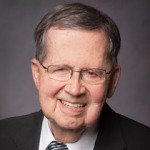
Back in the 1980s, when I researched Glenn Clark, the CFO and Rufus Moseley’s role in its Pentecostal transformation, there were no biographies, neither articles nor books on Moseley. In fact, I learned of Moseley’s prominent role in preparing the Charismatic Renewal from interviewing the Rev. Tommy Tyson, a Methodist evangelists and frequent CFO speaker. The Rev. Tyson was a close associate and disciple of Moseley for over three decades. At that point, no biography of Moseley had been published, and the memory his important role in the formation of the Charismatic Renewal was fading. Thankfully, right after I published an article on the CFO in PNEUMA, the academic journal of Pentecostalism, Dr. Wayne McLain published a fine biography of Moseley, A Resurrection Encounter: The Rufus Moseley Story.[21] Wayne, a close friend of the Rev. Tyson, met Moseley in 1945 and was deeply impacted by him, and from that time frequently traveled with both Tyson and Moseley to CFO camps and other engagements until Moseley’s death in 1954.
Several years before publishing his Resurrection Encounter, in 1993, McLain had published an anthology of Moseley’s articles and talks. Mosley himself wrote only two books and a few pamphlets, but He spent decades as columnist to the Macon Telegraph so there was much material to glean through. Dr. McLain passed away in 2007 before he could publish further material on Moseley.

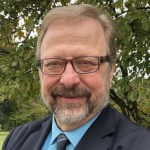
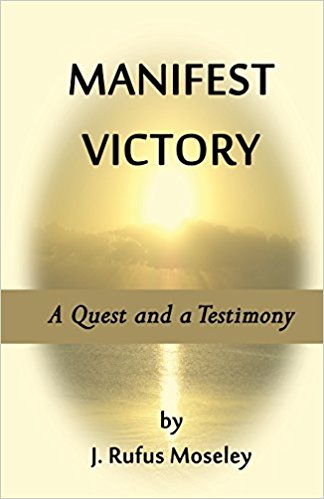
Thankfully, another Christian scholar has stepped to the fore as a Moseley publicist, Dr. Gregory Camp. Dr. Camp earned a Doctorate in American history with a specialty in Native American studies from the University of New Mexico at Albuquerque. He is now retired and dedicates his time to Moseley research. In his academic career, he taught at both Lee University (Church of God) and The University of Mary (Catholic). Camp first read Moseley’s autobiography, Manifest Victory, in 1974. In 2013, he was reintroduced to the book and was ushered into a deeper walk with the Lord. He determined to share what he had received from Moseley’s wisdom and spirituality with others.
 Dr. Camp moved to Macon, Moseley’s home town, where he could access the old Macon newspapers and tract down persons who personally remembered Moseley and could share their stories (a quickly falling number). The fruit of that labor has been his splendid work, Ineffable Union With Christ: Living in the Kingdom.[22] It was not a matter of merely copying the article and putting together an anthology. Moseley dictated his articles, making for highly informal writing, so Camp had to edit the articles for clearer reading. (Like St. Paul, Moseley’s original articles had long, run-on sentences.) Ineffable Union is an anthology of Moseley’s articles from the period 1927- 1937. Camp promises to do further editions covering Moseley’s work until his death in 1954. In effect, within the next few years, most of Moseley’s writing should be accessible.
What is still needed is an anthology of the Moseley article from various Christian Science journals from the earlier period in his life when he attempted to bring the Christian Science movement into biblical orthodoxy. He gave up that attempt and resigned from the Christian Science in 1910, just after his mystical experience with Jesus. But his articles from that period are interesting, and really not as unorthodox as many Evangelical readers might assume. Rather, he was trying to fit a consistent idealist perspective with the biblical text. I read Moseley’s Christian Science articles in preparation of my recent book on Agnes Sanford, but did not have time to do a careful analysis.[23]
Lastly, let me again strongly commend Dr. Camp’s book. Besides being an excellent selection of Moseley’s articles it contains a succinct biography of Moseley. I am looking forward to his promised follow up volume, Vital Union With Christ which is soon going to press.
PR
Notes
Portions of this article incorporate material published by the author in Agnes Sanford and Her Companions and his blog article, “Rufus Moseley (1870-1954): The Unheralded Evangelist of Pentecostalism.”
[1] On this see issue, see the debate in the Atlantic Monthly (August 1924) between Glenn Clark and the Rev. Kirsopp Lake, a well-respected liberal theologian of the era. Cited in my work, Agnes Sanford and Her Companions: The Assault on Cessationism and the Coming of the Charismatic Renewal (Eugene: Wipf and Stock, 2015) 141-144.
[2] Examined in detail in De Arteaga, Agnes Sanford, chapter 14.
[3] Yes, some mystical experiences can be from the Evil One and deeply destructive and deceptive. Thus, discernment is needed to evaluate the experiences.
[4] J. Rufus Moseley, Manifest Victory (New York: Harper & Brothers, 1941) 22.
[7] See my discussion of this in Agnes Sanford, chapter 9.
[8] This is by no means heretical, as the Church Fathers also loved Plato and his idealist philosophy.
[9] Cited in, Wayne McLain, Resurrection Encounter: The Rufus Moseley Story (Minneapolis: Macalester Park, 1997) 58.
[10] As I pointed out in my work, Agnes Sanford, 108-111, this way of prayer is indeed one of the ways that Jesus practiced healing prayer, for instance in Matt 9:24. Christian Science people never used the most common technique of healing prayer in the New Testament, the laying on of hand because it was too “material.” But in the 1900s, Christian Scientists were praying for the sick somewhat effectively, while mainline Christians were batting zero because of cessationism.
[11] Andrew M. Manis, Macon Black and White: An Unutterable Separation in the American Century (Macon: Mercer University Press, 2004) 127.
[13] Compare Moseley’s experience in, Manifest Victory, chapter 5, with the experience by the great evangelist Charles Finney as described in his Memoirs (New York: A.S. Barnes & Co.) 1872, chapter 2
[15] Quoted from the back cover to the paper edition of Rufus Moseley, Perfect Everything (St. Paul: Macalester Park, 1968).
[16] Glenn Clark, The Holy Spirit (St. Paul: Macalester Park, 1954).
[17] See, Frank Laubach, Prayer: The Mightiest Force in the World (Fleming H. Revell, 1946) 42, 44-45, 47-48.
[18] Glenn Clark, “The Holy Spirit,” Tape# CLg-2, (St. Paul: Cutler Memorial Library), talk from New Mexico CFO, 1954.
[19] Clark, The Holy Spirit, 15.
[20] “Glenn Clark and the CFO,” Sharing (Nov/Dec, 1992), 13-19. Then a more extensive and formal article in 2003, “Glenn Clark’s Camps Farthest Out: Schoolhouse of the Charismatic Renewal,” PNEUMA: The Journal of the Society for Pentecostal Studies, 25:2 (Fall 2003), and final chapter, 14, of Agnes Sanford.
[21] (Minneapolis: Macalester Park, 1997). I had the pleasure of several extensive telephone conversations with before he passed away in 2007, a loss to Christian scholarship.
[22] (Bloomington: WestBow, 2016). Available on Amazon or from the publisher’s website directly.
[23] Some Christian philosophy major out there might be interested in taking up this task. Please contact Dr. Camp to make sure there is no duplication. He is on Facebook.