

John MacArthur’s Strange Fire: Estranged by misinterpretation?
John MacArthur’s new book, Strange Fire: The Danger of Offending the Holy Spirit with Counterfeit Worship (Thomas Nelson), is due out on November 12, 2013. Here are some images and quotes from the book as part of our conversation, “Are Pentecostals offering Strange Fire?”

When MacArthur, on page 203, says that “we have already seen, all believers are baptized,” he is including baptism in the Holy Spirit as part of what happens “at the moment of salvation.” But there are numerous passages that seem to disagree with this. The apostle Paul asked the disciples of John the Baptist at Ephesus, “Did you receive the Holy Spirit when you believed?” (Acts 19:2). If Paul saw receiving the Holy Spirit to be subsequent to belief, what conclusions do you draw about MacArthur’s assertion?
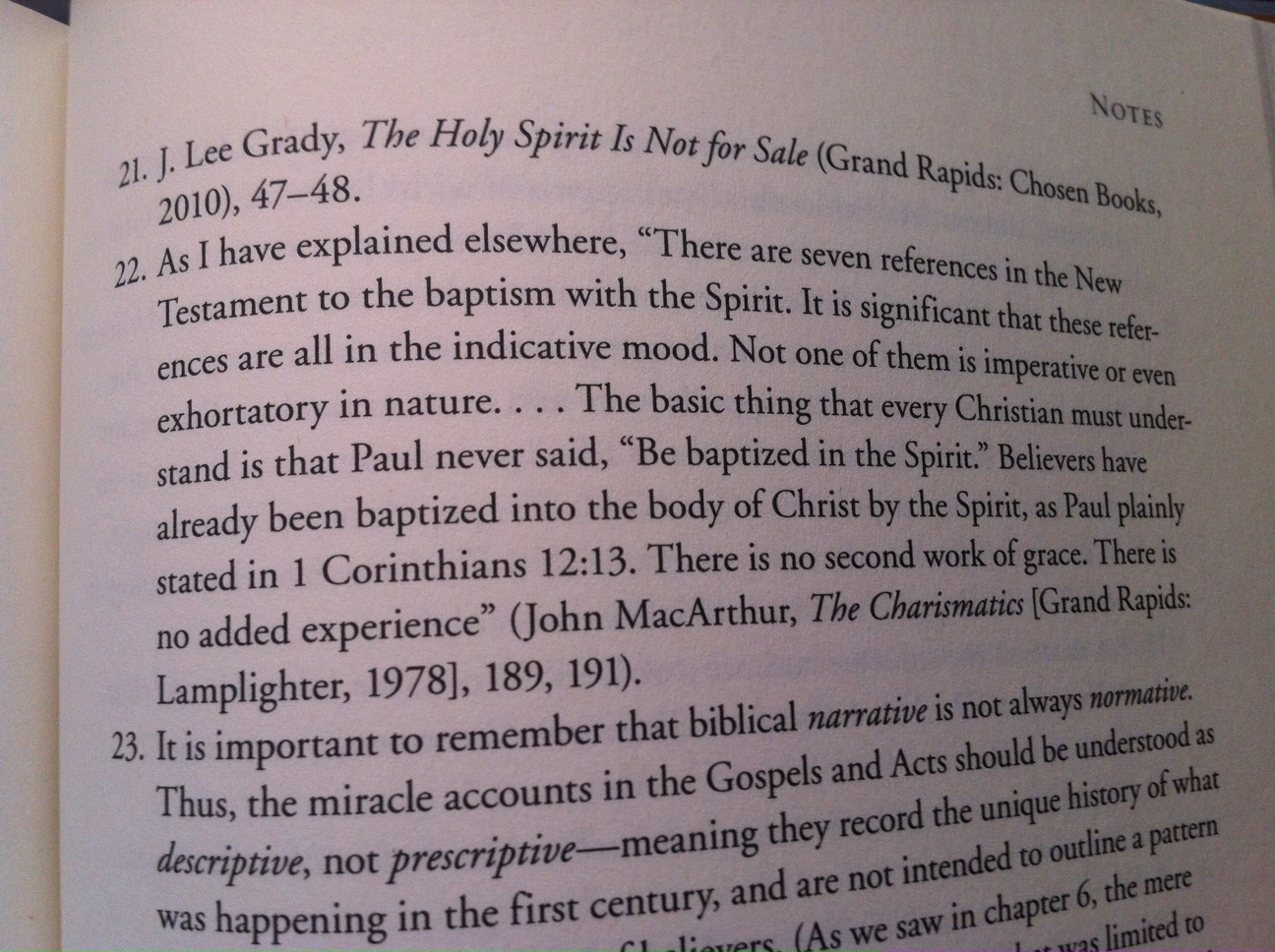
When MacArthur says, “There is no second work of grace. There is no added experience,” he estranges not only Pentecostal/charismatics but every Christian that has been influenced by the Wesleyan renewal movement. What do the Scriptures teach about this?








Elsewhere (Charismatic Chaos) MacArthur states that the New Testament doesn't record instances of people having dreams and visions. Apparently he forgot about Peter and the sheet in Acts 10, or John on Patmos. He seems to be selective about which scriptures he honors.
And he said, "Into what then were you baptized?" They said, "Into John's baptism."
Holy fire, or safe fire?
Extracts from Rickie D. Moore’s “The Fire and the Fence.”
“A long time ago there was a group of God-seekers who found themselves camping in a remote area in the country. . . . They had been driven here by others who lived in comfortable wooden buildings and who did not want these God-seekers bringing disturbance into their buildings any longer with their loud cries. . . .
…
Suddenly . . . it happened! A blinding ball of fire from heaven fell squarely into their midst. . . . There they stood, close to the fire, and close to one another, never again to be the same.
After awhile the flame suddenly vanished from their eyes, but continued to burn in their hearts. In the light and the heat of this inward fire, thee God-seekers pulled up stakes like there as no tomorrow and went streaming out in all directions, telling everyone everywhere what they had seen.
Years passed and these God-seekers grew in number and they had many children. . . . So some said, ‘Let us set up boundary markers to help those coming to know they are getting near and to help those going to know they are getting far from where the fire falls, for without the fire we will not stay together.’ So the markers were set up.
Many years passed . . . . They looked upon their children who had not yet seen the fire and they said to one another, ‘Let us build a fence between the markers to keep those who have not yet seen the fire from straying and to keep those who dwell in wooden buildings from taking them from us, for without the fence we will not stay together.’ And so they built a fence.
Time passed and those who build the fence worked hard on the fence to keep it in good repair. And they became good builders. . . . the children grew and learned how to climb upon it. And they became good climbers. . . .
And the climbers grew until they could look over the fence . . . . those who kept the fence saw this and posted guards and build wooden sheds. Then those who looked over the fence and those who looked after the fence began to burn inside against each other. . . .
So, out beyond where the markers had stood . . . other buildings were built, and some were brick. In all of these comfortable buildings they built comfortable nurseries to keep their children, just in case their children cried.
They took good care of their buildings, for they all knew that without these buildings they would not stay together.”
Rickie D. Moore, “A Concluding Parable: The Fire and the Fence,” in A Future for Holiness: Pentecostal Explorations, ed. Lee Roy Martin (Cleveland, TN: CPT Press, 2013), pp. 358-360.
Elsewhere (Charismatic Chaos) MacArthur states that the New Testament doesn’t record instances of people having dreams and visions. Apparently he forgot about Peter and the sheet in Acts 10, or John on Patmos. He seems to be selective about which scriptures he honors.